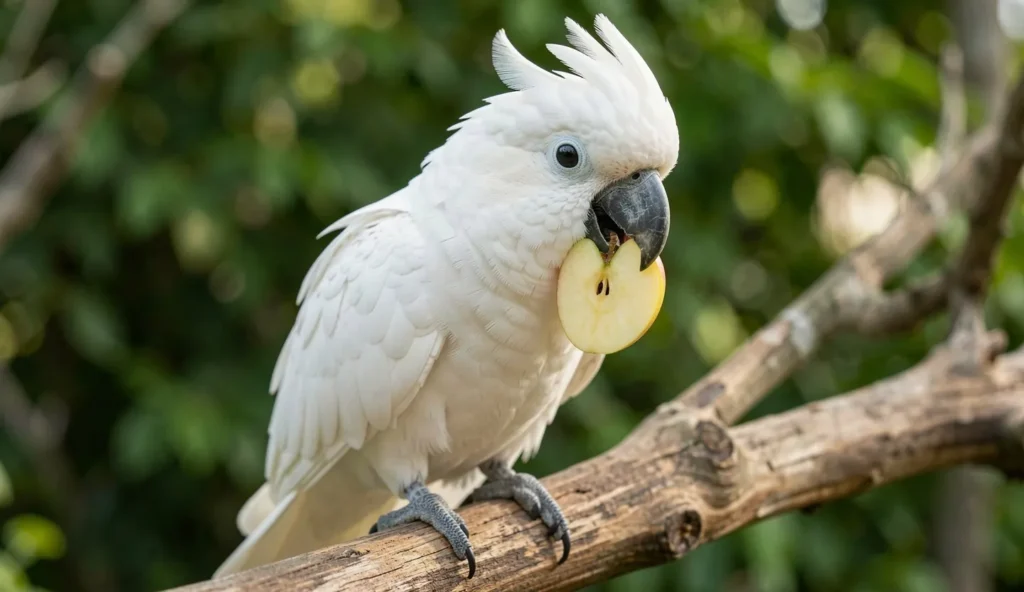
What Is a Goffin Cockatoo
Breed Origin and Key Traits
The Goffin Cockatoo, also known as the Tanimbar cockatoo (Cacatua goffiniana), is a small parrot native to the Tanimbar Islands of Indonesia. It is the smallest of the white cockatoos, measuring about 12 inches in length and weighing around 200 to 300 grams. This species stands out for its high intelligence, playful nature, and remarkable problem-solving abilities.
As a small cockatoo, the Goffin Cockatoo requires a diet and exercise regimen that matches its energy levels and metabolic needs. Bird owners seeking a medium parrot with a big personality often choose this species. Understanding the specific dietary and activity requirements is essential for keeping a Goffin Cockatoo healthy and happy.
Diet Essentials For A Goffin Cockatoo
A balanced cockatoo diet is the foundation of long-term health for the Goffin Cockatoo. Poor nutrition leads to obesity, feather problems, and shortened lifespan. The diet must include a variety of foods to mimic the natural foraging habits of this species in the wild.
Recommended Foods For A Goffin Cockatoo
High-quality pellets should form 70-80 percent of the daily food intake. Pellets provide balanced vitamins and minerals that prevent selective eating. Fresh vegetables are equally critical. Offer dark leafy greens like kale and collard greens, along with chopped carrots, bell peppers, and broccoli.
Small amounts of fresh fruit, such as apple, berries, and melon, provide natural sugars and antioxidants. Cooked grains like quinoa, brown rice, and oats add variety. Legumes like lentils and chickpeas offer protein. Always wash produce thoroughly and remove seeds from fruits like apples.
- High-quality pellets as the base (70-80%)
- Fresh vegetables: kale, carrots, bell peppers, broccoli
- Small portions of fruit: apple, berries, melon
- Cooked grains: quinoa, brown rice, oats
- Cooked legumes: lentils, chickpeas
Foods To Avoid For A Goffin Cockatoo
Several common foods are toxic to parrots and must never be offered. Avocado, chocolate, caffeine, and alcohol can cause severe illness or death. High-fat seeds and nuts, when given in excess, contribute to obesity and fatty liver disease. Salty or sugary human foods, including chips and sweets, disrupt electrolyte balance.
Dairy products like milk and cheese lead to digestive upset because birds lack the enzyme to break down lactose. Avoid fruit pits and seeds from apples, cherries, and peaches, as they contain cyanide. A strict, species-appropriate diet keeps the Goffin Cockatoo thriving.
- Avocado, chocolate, caffeine, alcohol
- Excessive seeds and nuts
- Salty or sugary human foods
- Dairy products
- Fruit pits and apple seeds
Supplements For A Goffin Cockatoo
Most nutrients come from a varied diet, but some conditions call for supplements. Calcium and vitamin D3 support bone health and prevent metabolic bone disease. Omega-3 fatty acids from flaxseed or chia seeds promote healthy skin and feathers. Probiotics aid digestion, especially after antibiotic treatment.
Always consult an avian veterinarian before adding supplements. Over-supplementation can cause toxicity. A vet can recommend specific products based on the bird’s age, health, and diet.
Exercise Requirements For A Goffin Cockatoo
The Goffin Cockatoo is an exceptionally active small cockatoo. In the wild, it spends hours flying, climbing, and foraging for food. Captive birds need ample physical and mental stimulation to prevent boredom and related behavioral problems.
Daily Exercise Needs For A Goffin Cockatoo
Provide at least three to four hours of supervised out-of-cage time each day. This time allows the bird to stretch its wings, climb, and explore. A bird-safe room with perches at different heights encourages natural movement. Supervised play ensures safety from hazards like open windows or electrical cords.
Walking on different surfaces, such as carpet, wood, and tile, helps maintain foot health. Many owners set up a play stand with toys and treat stations to keep the bird active throughout the day. Without sufficient exercise, a Goffin Cockatoo can become overweight and develop joint issues.
Enrichment Activities For A Goffin Cockatoo
Mental stimulation is just as important as physical activity. Puzzle toys and foraging boards challenge the bird’s problem-solving skills. Shreddable toys made of wood, paper, or palm leaves satisfy the natural urge to chew. Training sessions using positive reinforcement build trust and provide mental exercise.
Rotating toys weekly maintains novelty and prevents habituation. Foraging can be incorporated into mealtime by hiding pellets in foraging mats or wrapping treats in paper. The Goffin Cockatoo thrives on variety and will eagerly engage with new challenges.
- Puzzle toys and foraging boards
- Shreddable wood or paper toys
- Positive reinforcement training
- Weekly toy rotation
Flying And Wing Exercise
Flight is essential for cardiovascular health. Allow supervised flight in a bird-safe room with no ceiling fans or open doors. Some owners train their bird for outdoor flight using a harness. Flight harnesses require gradual desensitization but provide safe outdoor time.
If flight is not possible indoors, consider partial wing clipping to prevent full flight while still allowing controlled glides. Monitor the bird for signs of fatigue, such as heavy breathing or perching with wings drooping. Overheating can occur quickly in hot weather, so always provide fresh water and shade.
Common Health Issues Linked To Diet And Exercise
Improper diet and insufficient exercise cause several preventable health problems in the Goffin Cockatoo. Early recognition and correction of these issues are vital.
Obesity And Fatty Liver Disease
High-fat seed diets combined with little activity lead to obesity. Symptoms include lethargy, difficulty flying, and labored breathing. Fatty liver disease (hepatic lipidosis) develops when fat accumulates in the liver. Prevention relies on a balanced cockatoo diet and daily exercise. Regular weight checks help detect changes early.
Feather Plucking And Self-Mutilation
Boredom and under-stimulation are primary triggers for feather plucking. Nutritional deficiencies, especially vitamin A or calcium, can worsen the behavior. Providing enrichment, a proper diet, and regular social interaction reduces the risk. If plucking starts, consult an avian vet to rule out medical causes.
Calcium Deficiency And Metabolic Bone Disease
Inadequate calcium or vitamin D3 leads to weakened bones, seizures, and egg binding in females. Offer calcium-rich foods like dark leafy greens and cuttlebone. UVB lighting helps the bird synthesize vitamin D3. A diet lacking in these nutrients can be fatal if not corrected.
Is A Goffin Cockatoo Right For You
Considerations Before Adoption
Owning a Goffin Cockatoo requires a serious commitment to diet and exercise. Potential owners must have time for daily out-of-cage activity, toy rotation, and fresh food preparation. The species can live 40 years or more, so long-term planning is necessary.
Noise levels are moderate compared to larger species like the Blue and Gold Macaw, but the Goffin Cockatoo can still be loud. Those living in apartments should consider soundproofing. A well-exercised bird is quieter and more content. For owners who can meet these demands, the Goffin Cockatoo offers a rewarding, intelligent companionship.
Frequently Asked Questions
What is the best diet for a Goffin Cockatoo?
High-quality pellets should make up 70-80% of the diet, supplemented with fresh vegetables, small amounts of fruit, and cooked grains. Seed-heavy mixes and fatty treats should be limited.
How much exercise does a Goffin Cockatoo need?
At least 3-4 hours of supervised out-of-cage time daily, including opportunities for flying, climbing, and foraging. A variety of toys prevents boredom.
Can Goffin Cockatoos eat seeds?
Seeds can be given as occasional treats but not as a staple. A high-seed diet leads to obesity and nutritional imbalances. Limit seeds to less than 10% of total food intake.
What are signs of a malnourished Goffin Cockatoo?
Dull or ruffled feathers, lethargy, weight loss, beak and nail overgrowth, and changes in droppings or reduced appetite indicate malnutrition.
Do Goffin Cockatoos need toys for exercise?
Yes, toys provide mental and physical stimulation. Shreddable toys, puzzle feeders, and climbing structures are ideal. Rotate toys weekly to keep the bird engaged.
How often should I feed a Goffin Cockatoo?
Offer fresh food twice a day, morning and evening. Remove uneaten fresh food after a few hours to prevent spoilage. Pellets can be left available throughout the day.
Final Note
Encouraging Final Statement
Providing proper diet and exercise for a Goffin Cockatoo ensures a long, healthy, and engaging life. With consistent care and enrichment, this small cockatoo can be a delightful companion for decades.