What Is a Cuban Emerald
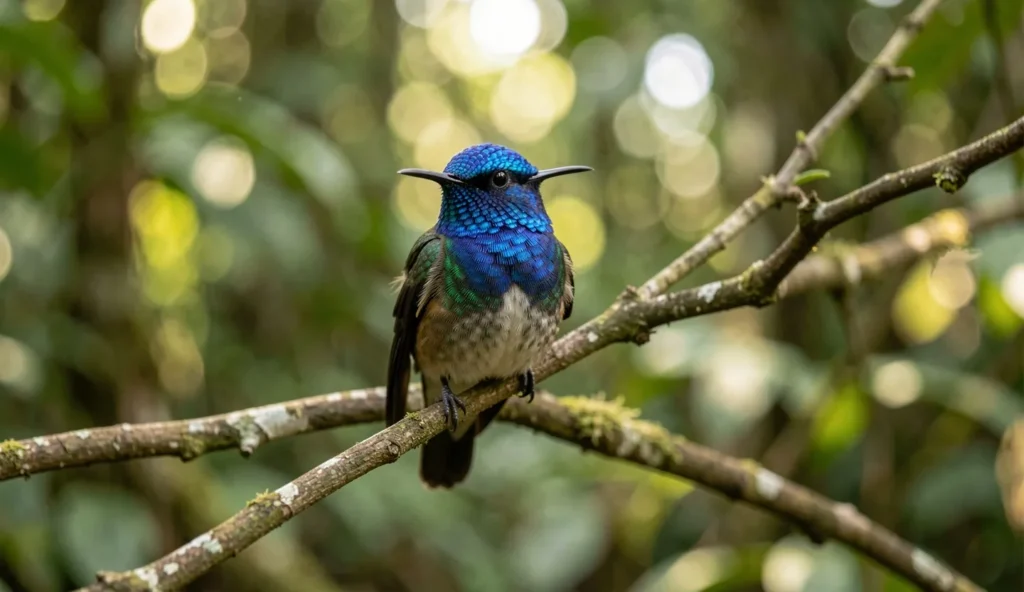
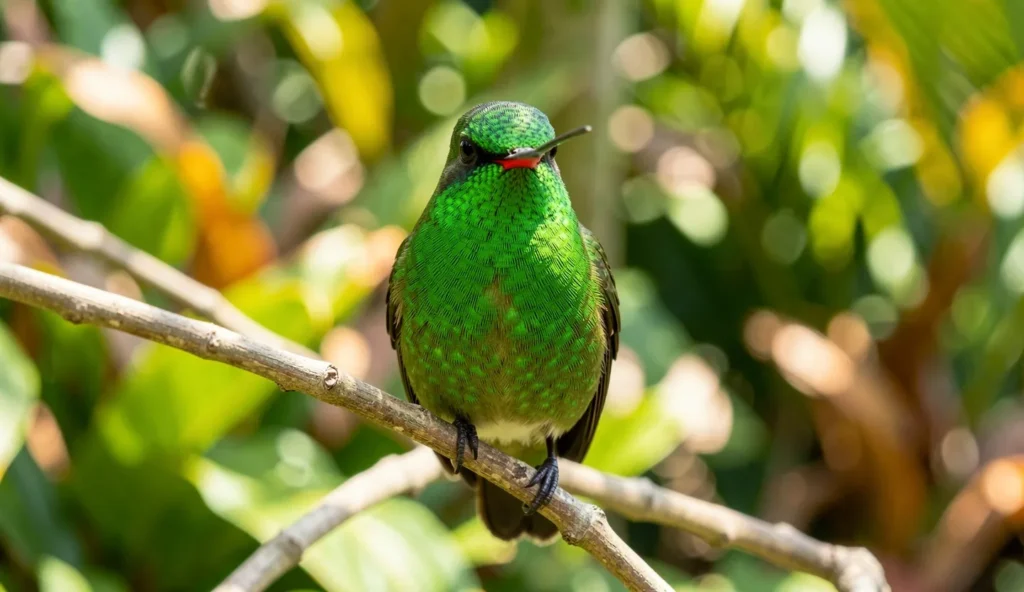
The Cuban Emerald is a small hummingbird native to Cuba, with occasional reports on nearby islands. This Caribbean gem is known for its bright green plumage and a striking red bill, a combination that often delights observers, including fans of the Ruby-throated Hummingbird.
Taxonomy and Classification
The Cuban Emerald’s scientific name is Chlorostilbon ricordii, and the common name is widely used in field guides to describe this small Caribbean hummingbird. It belongs to the Trochilidae family, and its genus, Chlorostilbon, includes several emerald-toned Caribbean relatives.
Geographic Range and Habitat
Endemic to Cuba and nearby Caribbean islands, the Cuban Emerald favors woodlands, scrub, and garden edges with abundant flowering plants. In practice, sightings on other islands remain rare, though occasional reports from nearby areas like the Bahamas highlight the species’ limited dispersal.
Distinctive Traits
The Cuban Emerald displays a green body with a distinctive forked tail that can flash blue-green in certain light. A bright red bill contrasts sharply with the plumage, aiding recognition in dense foliage. It is one of the smallest Caribbean hummingbirds, measuring about 7–9 cm in length.
Appearance and Physical Features
Size and Form: The Cuban Emerald is one of the smallest Caribbean hummingbirds, measuring approximately 7 to 9 centimeters in length. Its compact, aerodynamic shape supports rapid hovering and sudden dashes between blossoms.
Plumage and Colors: Upperparts and underparts are bright green, creating a seamless profile among leaves. Iridescent feathers catch sunlight, producing a shimmering effect that helps identify the species at a distance.
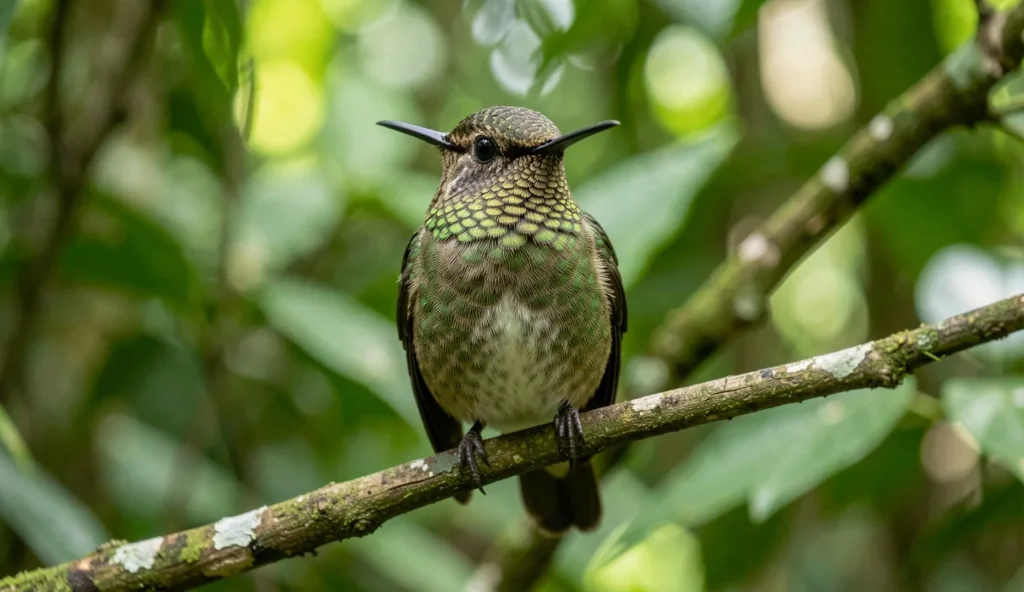
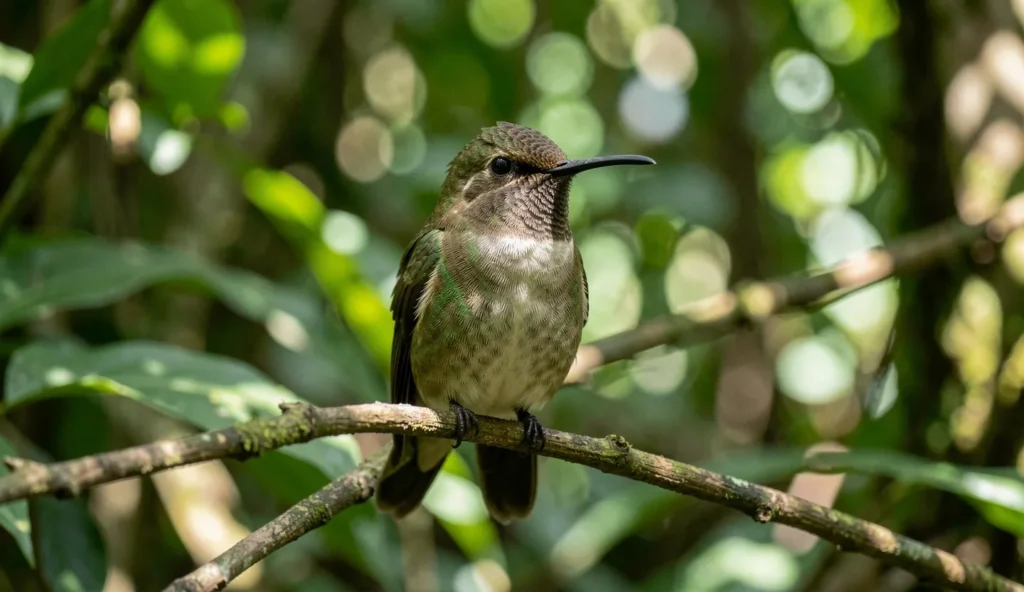
Beak and Eye Details: The beak is long and slender, optimized for nectar feeding from tubular blossoms. Dark eyes remain alert as the bird forages, often focusing on movement in the canopy. Note: Comparisons with other tiny Caribbean species, such as the Calliope Hummingbird, help illustrate size and feeding adaptations.
Behavior and Care Needs
Temperament and Interactions: The Cuban Emerald is highly energetic and territorial around nectar sources, yet it generally avoids direct aggression toward people. It is curious and responsive to motion, often approaching observers from a safe distance.
Flight and Exercise Needs: Its rapid wingbeats enable aerial maneuvers such as quick pivots and hover above flowers. Open, uncluttered habitat supports safe flight, escape routes, and reliable nectar access.
Nesting and Breeding Habits: In Cuba, females construct small cup nests tucked in shrubs or trees, and eggs are incubated by the female while both parents feed the fledglings. Breeding timing varies with flowering cycles across the Caribbean, and nesting sites are typically well concealed from predators. In some habitats, researchers observe nesting patterns that parallel those of the Broad-tailed Hummingbird.
Diet and Nutrition
Wild Diet Composition: Nectar from a variety of flowering plants provides the main energy source for the Cuban Emerald, supplemented by small insects for protein. Water from dew and rain supports hydration during dry spells.
Diet in Observation and Conservation Contexts: In garden settings, planting nectar-rich natives helps replicate wild feeding patterns for observers, mirroring natural foraging behavior. When designing yards, include species that attract hummingbirds like the Rufous Hummingbird to encourage natural visiting rhythms.
Is Cuban Emerald Right for You
Suitability for Observers and Enthusiasts: This species is best observed in natural Caribbean habitats with abundant nectar sources and minimal disturbance. It rewards patient watchers who provide access to vibrant, nectar-rich environments.
Conservation and Ethical Considerations: Because the Cuban Emerald is Cuba-centric, protecting its habitat is essential for survival. Observers should minimize disturbance and support habitat restoration to safeguard local populations.
Final Note
Preserving Cuban habitats ensures that the Cuban Emerald continues to enchant island birders for generations to come.
Frequently Asked Questions
What is the Cuban Emerald and where is it found?
The Cuban Emerald is a small hummingbird native to Cuba, with rare presence on nearby islands.
What are the distinctive features of the Cuban Emerald?
It has bright green plumage, a forked tail, and a red bill.
What do Cuban Emeralds eat in the wild?
Their diet is mainly nectar and small insects.
How do Cuban Emeralds nest and reproduce?
Females build small cup nests; eggs are incubated by the female and both parents feed the young.
Can Cuban Emeralds be kept in captivity or in a garden setting?
Captive keeping is rare and often restricted; preservation of natural habitats is emphasized.