What Is a Discus Fish and What Makes It Different
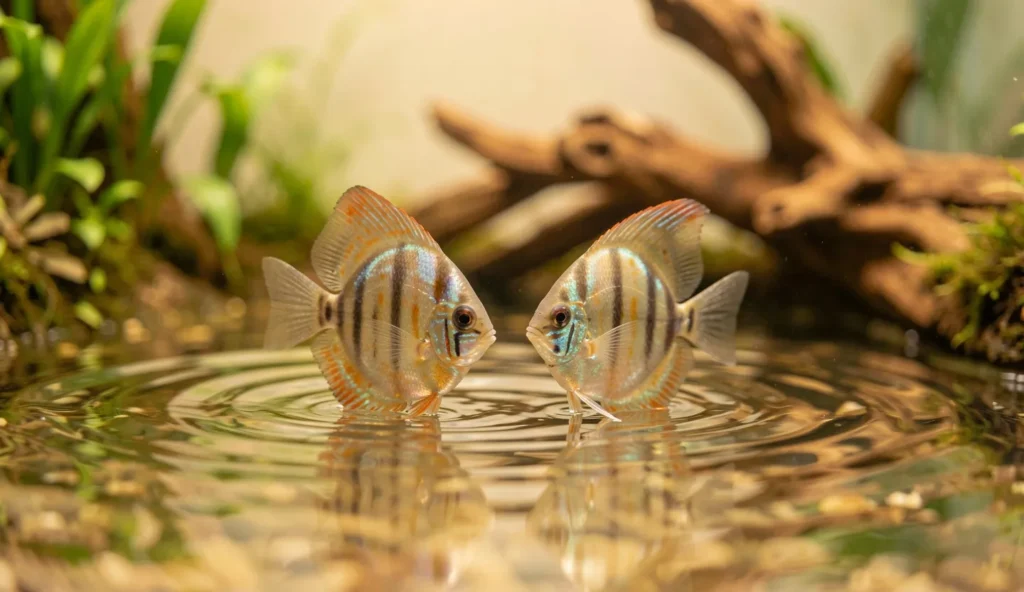
Discus fish are South American cichlids kept for their body shape and steady, show-quality appearance. Because discus fish care depends on stability, setup decisions directly affect stress levels, appetite, and long-term health.
Most keepers build their system around consistent water chemistry and a dependable high temperature. When those basics are maintained, discus fish show stronger color and feed more reliably.
Species Background and Common Tank Names
Discus fish come from the Amazon Basin region, where slow-moving water and soft mineral profiles are common. Many aquarists keep them in dedicated cichlid systems rather than mixed communities.
In hobby language, “discus” refers to both a group of fish and the specific disk-like body shape. That naming helps explain why discus fish are often considered display animals, not casual livestock.
Key Traits That Drive Tank Requirements
Discus fish respond quickly to sudden changes in temperature, pH, or dissolved compounds. Even short swings can trigger stress that later looks like poor feeding or faded coloration.
Strong filtration also matters because warm water affects biological processing. With high temperature comes higher oxygen demand and faster waste buildup, so the system must keep pace.
Typical Temperament in Community Setups
Discus fish are usually peaceful but still compete for territory and feeding access. In community tanks, dominant tankmates can block meals and raise stress.
Overcrowding increases competition and makes water quality harder to hold steady. For that reason, many cichlid enthusiasts prioritize a group size and conservative stocking.
Tank Size and Layout That Supports Discus Health
Tank size drives stability, especially in a warm, high-biodynamic system. A larger volume slows down parameter swings from feeding and reduces the impact of partial water changes.
Layout also affects waste control because flow patterns determine where detritus settles. Careful placement of intake and outflow helps deliver gentle, uniform movement across the tank.
Recommended Tank Volume by Group Size
For discus fish kept in a group, larger tanks usually stabilize temperature and chemistry better than smaller footprints. A group approach also supports calmer behavior because fish can establish less pressured spacing.
Smaller tanks require more frequent testing and more responsive maintenance. As a result, discus care becomes harder when the system holds less total water.
Stocking Density Guidelines for Advanced Keepers
Advanced aquarists often run higher stocking density, but it still raises the bar for filtration capacity and testing habits. Higher density means more waste input and a faster climb in ammonia and nitrate pressure.
Conservative stocking helps protect water quality and reduces stress signs like slowed feeding. If color fades or fish refuse food, density and routine often need review before treatment starts.
Flow Patterns and Dead Zone Prevention
Discus fish prefer gentle flow rather than strong jets that push them around. Circulation should reach corners to prevent debris accumulation where waste breaks down.
Dead zones can also affect oxygen levels because warm water reduces dissolved gas capacity. Even distribution from properly placed inlets and outlets supports healthier digestion and cleaner water.
Substrate and Hardscape Choices for Stability
Bare bottom setups simplify waste removal and reduce the risk of trapped debris. That choice can support new systems while biofiltration matures.
If a planted tank is desired, fine sand can work with careful maintenance. Hardscape materials should not leach unpredictable minerals, since chemistry swings can destabilize discus fish.
Water Parameters for Discus Fish That Prevent Stress
Stable water parameters define discus fish success more than any single product. The target is not only “correct numbers,” but the ability to keep those numbers consistent over time.
Warm systems also demand extra attention to dissolved oxygen and nitrogen control. That is why discus care is often described as routine-driven rather than equipment-driven.
Temperature Range and Heating Stability
Maintain a consistent high temperature that matches the keeping goals for discus fish. Most systems run in the warm range that supports digestion and growth, but daily swings must be avoided.
A reliable heater with a controller reduces instability, and a secondary safety device adds protection. When temperature control is steady, ammonia cycling and bacterial function tend to behave more predictably.
pH, Hardness, and Soft Water Targets
Discus fish are commonly kept as soft water fish, with low hardness profiles that better match their natural habitat. In practice, the system needs stable pH and low carbonate hardness to limit stress.
Water testing and water source evaluation must come first because tap water can vary by season. If source water differs, conditioning steps must remain consistent to hold target chemistry.
Ammonia, Nitrite, and Nitrate Limits
Ammonia and nitrite should stay at zero to prevent gill stress and immune suppression. Nitrate needs control through filtration performance and disciplined water changes.
High temperature increases metabolism and waste output, so nitrate can rise faster than expected. That is why filtration and water change volume should be planned together.
Oxygenation and Carbon Dioxide Considerations
Warm water holds less oxygen, so gentle surface movement and aeration matter for discus fish. Surface agitation supports gas exchange without creating harsh currents.
Planted tank setups can introduce CO2 that must stay balanced to avoid stressing fish. Monitoring helps prevent sudden swings that occur after lighting schedules or injection changes.
Test Routine and Data Logging
Testing should start early and continue after each water change until the system settles. Logging temperature, pH, hardness, nitrate, and water change volume provides a real pattern of stability.
Using consistent test kits reduces measurement noise. When results are tracked, parameter drift can be detected before fish show symptoms.
Filtration and Cycling Requirements for a Discus Tank
Filtration must handle both feeding waste and warm-water metabolism. For discus fish, filtration success usually starts with correct cycling, not with adding more media.
Systems should process ammonia efficiently and maintain clear nitrogen control under the planned feeding schedule. When that foundation holds, disease risk drops because water stress stays low.
Choosing Filter Types That Support High Bioload
Mature biological filtration processes feeding waste into less harmful compounds. Combining mechanical and biological stages can improve clarity while still protecting bacteria.
Canister or sump systems often fit discus fish setups because they allow accessible media and stable flow. If a filter supports predictable maintenance intervals, biological performance tends to remain consistent.
For advanced keepers comparing approaches, reviewing best practices around water movement can also help refine circulation. For example, settings designed for a large semi aquatic constrictor like Yellow Anaconda may highlight how strongly water movement and cleanliness impact animal health.
Media Placement and Maintenance Without Crashes
Media should not be washed with chlorinated water because chlorine can disrupt the beneficial biofilm. Cleaning schedules work best when based on flow and performance rather than a strict calendar.
Over-cleaning can remove beneficial bacteria and cause parameter spikes. When media needs attention, partial rinsing in dechlorinated tank water often helps preserve bacteria.
Cycling Approach for Sensitive Cichlids
Fishless cycling is preferred because it protects discus fish from ammonia exposure during establishment. Stability should be confirmed by repeated readings, not by a single “pass” result.
Once cycling completes, monitoring still matters because warm temperature can speed up bacterial activity. A feeding schedule that gradually increases load helps verify that the system can handle real waste.
Emergency Backup Plan for Temperature and Power Failures
Even with mature filtration, power interruptions can affect temperature and oxygen. A backup heater strategy and safe response plan should be ready before fish arrive.
Warm water oxygen drop risk also needs planning, including emergency aeration options. Dechlorinator and test supplies should stay on hand so water quality can be checked quickly.
Planted Tank Setup Options for Discus Fish
Planted tank designs can work with discus fish, but they require a balanced approach to nutrients and carbon. The main goal stays the same, which is stable water chemistry and gentle maintenance.
When planted tank decisions cause drastic swings, fish stress increases. That is why discus care in a planted tank often focuses on consistency.
Plant Selection That Handles High Temperature
Choose plants that tolerate warm tanks and stable lighting schedules. Avoid plants that demand frequent parameter shifts that would disturb soft water fish targets.
Hardy species usually give the best early results because maintenance stays predictable. If the tank is already stable, plants typically benefit without triggering rapid water changes.
Lighting, CO2, and Fertilization Balance
Lighting intensity should match the level of maintenance and the capacity for algae control. CO2 systems can be used, but they require careful monitoring to avoid sudden CO2 or pH swings.
Fertilization needs a conservative approach because nutrient spikes can raise algae and waste load. By keeping doses small and consistent, the system stays easier to manage for discus fish.
Some keepers also plan their broader water chemistry handling across species, which can be helpful when comparing other soft-habitat setups like an alabio duck enclosure. That kind of cross-review often reinforces the value of staying stable in warm, mineral-sensitive conditions.
Substrate Choices for Rooting and Easy Maintenance
Substrate should not strongly change water chemistry, especially if soft water fish targets are strict. Fine sand can support rooting but can also trap detritus if vacuuming becomes inconsistent.
A practical approach is to match substrate to maintenance ability. When algae or waste accumulates, switching to an easier cleaning method can protect water quality.
Water Change Schedule and Cleaning Steps for Discus Care
Water changes help control nitrate and remove dissolved organics that fish can struggle with in warm conditions. For discus fish, partial changes done consistently often outperform large infrequent swings.
Cleaning steps should protect biological stability by avoiding unnecessary disruption to filters and substrate. When routine matches tank load, health problems have fewer opportunities to start.
How Often to Change Water and How Much to Replace
Many discus care routines use frequent partial water changes to manage nitrate and keep chemistry stable. Frequency should match stocking density and feeding volume, because both affect waste production.
Large changes can also increase shock risk, especially when temperature and hardness shift. Instead, smaller changes that stay consistent help keep discus fish calm.
How to Match Temperature and Chemistry During Changes
Match replacement water temperature closely to the tank to reduce thermal stress. Matching pH and hardness as closely as possible also reduces chemical shock for discus fish.
Always use a dechlorinator, and treat replacement water before adding it. When needed, test treated replacement water to confirm it stays near target parameters.
Detritus Removal and Vacuuming Methods
Siphon waste gently so the cleaning process removes debris without stirring too deeply. Bare bottom tanks make spot cleaning easier and help keep ammonia pressure low.
In planted tanks, vacuum carefully to protect roots and avoid clouding. Cloudy water usually means the substrate released fine particles that then increase filtration load.
When to Pause or Increase Water Changes During Illness
If water quality deteriorates during illness, more frequent changes can help maintain nitrogen control. However, unstable medication dosing can add additional stress, so changes should stay consistent and measured.
After any intervention, parameters should be rechecked and recorded. That step narrows cause and reduces the risk of chasing symptoms with multiple adjustments.
Diet and Feeding Routine for High Temperature Fish
Diet quality and feeding routine directly affect waste output and digestive health in discus fish. High temperature increases metabolism, so digestion and water quality change faster than in cooler systems.
Stable feeding habits also make water change timing more predictable. With consistent portions and good food hygiene, discus care becomes easier to manage.
Core Diet Types That Support Growth and Color
Discus fish generally do best with protein-focused foods suitable for cichlids. Many keepers rotate high-quality prepared foods with frozen options to support variety.
Food choices should aim to minimize leftovers because excess waste quickly raises nitrate. When appetite is strong and feces stay normal, the diet typically matches the system.
Feeding Frequency and Portion Control
Small portions multiple times per day can reduce leftovers and limit ammonia pressure. Uneaten food should be removed promptly to prevent breakdown in warm water.
Portions should adjust based on body condition and appetite rather than a fixed schedule. When fish look bloated or refuse food, the feeding plan should be reviewed.
Water Quality Impact of Feeding
Feeding increases ammonia production, and warm temperatures accelerate the nitrogen cycle. Overfeeding pushes nitrate higher and can stress gills even if ammonia stays at zero.
Water changes should align with feeding volume so nitrate remains controlled. When feeding stays consistent, maintenance can be scheduled with less guesswork.
Food Storage and Hygiene to Prevent Bacterial Loads
Frozen foods should be thawed correctly and not repeatedly refrozen. Dry foods should stay sealed and stored away from heat and humidity to reduce spoilage risk.
Feeding tools can also transfer residues, so rinsing tools helps reduce cross contamination. Discus fish care benefits when feeding hygiene stays as consistent as water chemistry.
Common Health Issues Linked to Setup Mistakes
Many discus fish problems start with setup mistakes, especially unstable parameters or rushed cycling. When water chemistry drifts, fish show stress before the root cause becomes obvious.
Early detection depends on checking behavior along with test results. That combination helps avoid unnecessary medication that can complicate water quality.
Stress Signs That Point to Bad Water Conditions
Stress often shows through reduced feeding, reduced color intensity, or unusual hovering near flow. Gasping or staying near the surface can indicate oxygen or temperature issues.
Frequent food refusal also suggests something in the environment has changed. When those signs appear, ammonia and nitrate should be checked first.
Ich and Skin Problems After Temperature or Chemistry Swings
Sudden parameter changes can lower immunity and make discus fish more vulnerable to common outbreaks. Warm tanks still require consistent treatment planning if ich or skin issues emerge.
Quarantine for new arrivals can reduce the chance of introducing pathogens into an established group. Even strong filtration cannot fully prevent spread if pathogens enter the system.
Bacterial and Digestive Problems From Overfeeding
Uneaten food increases ammonia and nitrate pressure while also adding organic load. Digestive upset can follow abrupt diet changes or poor food quality.
Tracking feeding response, feces condition, and water readings together helps identify patterns. When the pattern is clear, adjustments can be made quickly without major disruption.
How to Use Parameter Checks to Narrow Root Causes
Parameter checks should start with ammonia and nitrite because those values reflect cycling performance immediately. Temperature consistency also needs confirmation before changing multiple variables at once.
A stepwise troubleshooting approach reduces the risk of accidental overcorrection. When one factor is changed, the next readings show whether the issue is improving.
Starter Checklist for Setting Up a Discus Fish Tank
This checklist helps validate the system before discus fish are added. Each item supports stability, which is the key requirement for discus care in warm, soft water conditions.
Using the list during planning reduces setup errors and helps keep early weeks manageable. It also supports advanced aquarists who prefer measured, repeatable processes.
Equipment and Water Preparation Items
- Heater with controller and a backup safety approach
- Filtration system with mature biological media readiness
- Thermometer plus reliable test kits for core parameters
- Dechlorinator and a method to match replacement water
- Gentle circulation plan to prevent dead spots
Parameter Targets to Verify Before Adding Fish
- Ammonia and nitrite at zero for multiple consecutive tests
- Stable temperature in the required high range
- Soft water targets with consistent pH and low hardness
- Nitrate controlled to match the planned stocking level
First Week Setup and Feeding Approach
- Start with conservative portions and watch for consistent appetite
- Test more often during settling and after each water change
- Keep cleaning steady and avoid large adjustments
- Remove uneaten food promptly to protect nitrogen stability
FAQs: Discus Fish Tank Setup Requirements
What Tank Size Is Best for Discus Fish Kept in a Group?
Use a larger volume to stabilize temperature and chemistry while allowing group swimming space.
What Water Temperature Do Discus Fish Need to Stay Healthy?
Maintain a consistent high-temperature range and avoid daily swings using a reliable heater and regulator.
Are Discus Fish Soft Water Fish and How Should Hardness Be Managed?
Discus are commonly kept as soft water fish, so the setup should target stable low hardness and carbonate levels.
How Often Should Water Be Changed for Discus Care?
Use frequent partial water changes to control nitrate, and adjust volume and frequency for stocking and feeding.
What Should Be Included in a Discus Fish Diet for Best Results?
Feed a protein-focused cichlid diet, rotate options, and control portions to reduce leftovers.
Why Do Discus Fish Get Sick After New Tank Setup?
Most cases relate to unstable parameters or incomplete cycling, so confirm ammonia and nitrite are zero and temperature stays consistent.
Final Note on Building a Stable Discus System
Strong discus care comes from stable water chemistry, reliable heating, and consistent maintenance routines. When those elements stay aligned, discus fish typically handle feeding and growth with fewer setbacks.