What Neon Tetra Behavior In A Group Looks Like
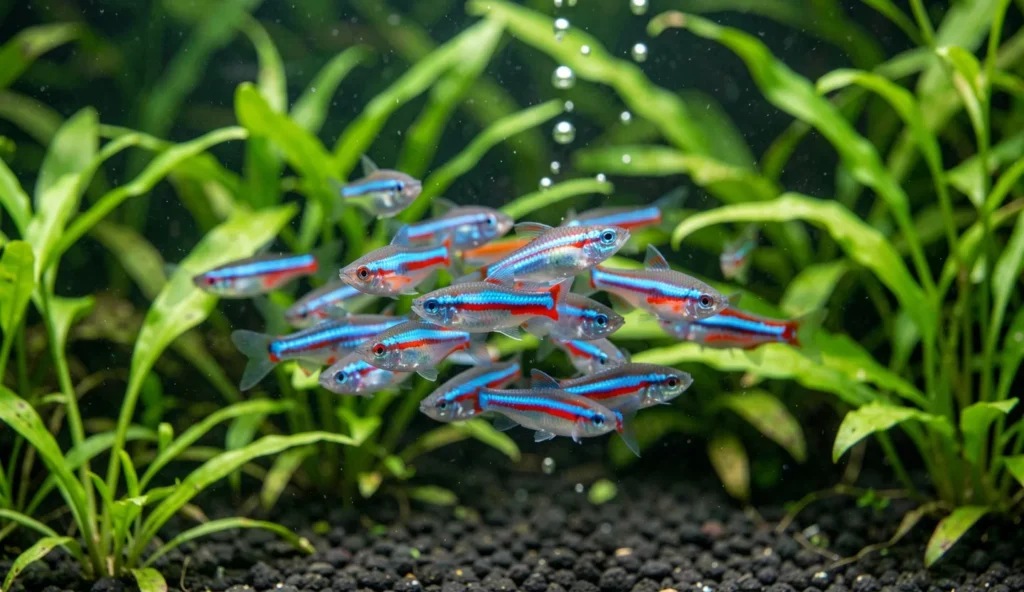
Neon tetra schooling is a natural group movement that helps small fish feel secure and stay calmer in a home aquarium. When conditions fit, the school often forms a loose cluster and moves together through the mid water.
Group schooling also supports consistent routine behavior, because fish respond to each other rather than reacting to every change. As a result, tetra care becomes easier when fish stay in a stable group rather than being kept alone.
Natural Behavior In Their Native Waters
Neon tetras live in dense shoals in slow-moving, shaded waters where visibility stays limited. Group movement helps reduce individual stress and increases shared alert attention.
Keeping them in groups supports calmer swimming patterns and makes bright striping look stronger. Therefore, neon tetra behavior often looks most natural when plants and shade create safe lanes.
Why Schooling Fish Need A Group Size
A larger group reduces constant darting and hiding because one fish does not carry all the risk. Small groups often show more stress behavior, including staying near the bottom or corners.
Neon tetra schooling is most obvious in the middle water level, where fish move in short synchronized bursts. If the school cannot form, fish may drift apart and the “schooling fish” effect becomes weak.
Signs A Neon Tetra Tank Is Not Meeting Group Needs
Fish that spread out and avoid open space usually signal a comfort problem in the setup. When neon tetras stay near the bottom or tank corners for long periods, stress often limits normal swimming.
Faster breathing or constant clamped behavior can also indicate that the tank is not supporting health. At that point, improving tank conditions for neon tetra schooling often matters more than changing food.
How Many Neon Tetras Should Be Kept Together
Group size directly affects how reliably neon tetra school in a small aquarium fish community. The right number also improves confidence so fish spend more time in the middle water instead of hiding.
Water stability and tank layout still matter, but group size usually drives the visible behavior first. For planted tank owners, a dense plant layout often makes larger schools feel safer and move more smoothly.
Recommended Group Size For Most Setups
Aim for at least 6 neon tetras in a community tank, especially for beginners who want consistent schooling. Prefer 10 to 20 for stronger schooling and calmer behavior in most tank sizes.
More individuals also increases confidence in open swimming space, because the school provides more “social coverage.” If a tank already includes other tetra care species, stocking slightly higher can help reduce competition-driven stress.
Minimum Tank Space Per School
Use a tank that allows steady horizontal movement rather than forcing tight turns. Bigger tanks dilute waste and stabilize water parameters, which helps the school remain active.
If the tank is very small, group size must remain realistic so water quality stays stable. Even when fish look healthy, overcrowding can reduce oxygen and limit normal schooling patterns.
What Happens When Groups Are Too Small
When groups are too small, stress can increase illness risk and cause poor coloration. Shoaling weakens, and individual fish become more reactive to light changes and tank movement.
Stress also reduces the feeding response, so some fish may get less food during mealtimes. That behavior often leads to uneven growth even when the diet seems appropriate.
What Tank Conditions Help Neon Tetras School Reliably
Neon tetra schooling usually improves when water stays stable and the habitat reduces glare. In practical terms, clean cycled water, gentle flow, and plant cover make the biggest difference for tetra care.
Because small aquarium fish rely on their environment for safety, consistent conditions reduce sudden stress reactions. When conditions shift, schooling fish often break formation before any visible illness appears.
Water Parameters For Comfort
Maintain stable temperature for long-term health, because neon tetras react to frequent changes. Use gentle filtration that does not create strong currents, since strong flow can pull fish out of formation.
Target slightly acidic water for typical tetra comfort, with clean cycling and safe ammonia levels. A cycled tank with stable chemistry helps schooling remain predictable rather than intermittent.
For comparison of how other small, schooling species respond to tank variables, owners may also review guidance on Pantropical Spotted Dolphin behaviors as a study in group movement needs, even though it is a different species group. That kind of cross-reading can clarify why schooling depends on stable conditions.
Lighting And Shade For Natural Looking Behavior
Use dimmer light or plant cover to reduce glare that can startle fish. Low to moderate lighting supports natural schooling depth where the school can stay together.
Avoid sudden bright light changes, because abrupt illumination can push fish toward hiding spots. When light stays consistent, neon tetras often return to the middle water level instead of clustering under plants.
Plants And Substrate That Reduce Stress
Dense plants create safe lanes for group movement and reduce the sense of exposure. A darker substrate also improves contrast and helps fish feel more secure.
Add floating plants if surface light feels too strong, especially in tanks with bright overhead LEDs. Plants also support the biofilm and micro-organisms that can improve overall system stability for small aquarium fish.
Filtration Flow And Oxygen Needs
Keep water well oxygenated without strong jets that keep pushing fish apart. Aim for consistent circulation across the tank so waste does not build up in dead zones.
Perform routine maintenance to avoid parameter swings, because even minor shifts can disrupt neon tetra schooling. When filtration and oxygen stay steady, tank mates also cause fewer surprises to the school.
Neon Tetra Diet That Supports Healthy Schooling
Diet supports neon tetra schooling by keeping energy stable and reducing stress during feeding. Proper tetra care includes small, frequent feedings that fish can finish quickly.
Feeding routines also influence how boldly fish swim in the open. When fish eat confidently, the school often stays tighter and moves more smoothly through the mid water.
What Neon Tetras Eat In The Aquarium
Offer small foods that fit the fish’s mouth, since neon tetras rely on fine particles. Use high-quality micro pellets or flakes designed for tetras as a base diet.
Include frozen or live foods for variety to support color and natural foraging behavior. Owners who want better food choices can also compare dietary notes from Pygmy Killer Whale feeding discussions to understand how species-specific diets affect activity, even though it is not a tank fish comparison.
How Often To Feed
Feed small amounts 1 to 2 times daily to prevent leftovers from breaking down in the tank. Remove uneaten food to prevent water quality issues that can stress schooling fish.
Adjust quantity based on how fast fish eat so they stay active but not overly full. Stable feeding times also help shy fish learn that food appears consistently.
Feeding Techniques That Encourage Group Feeding
Feed when lighting is moderate to reduce startle behavior and help the school remain in formation. Distribute food across the tank to reduce competition and encourage more fish to approach.
Watch for shy fish during feeding because some may lag behind in smaller groups. When food reaches more areas, tank mates interference becomes less likely and schooling stays steady.
Best Tank Mates For Neon Tetras
Choosing tank mates correctly helps neon tetra school without constant disruption. Many problems that look like “tetra care failure” actually come from incompatible tank mates chasing or competing for food.
Neon tetras do best with calm fish that do not claim open swimming space. With the right stocking plan, small aquarium fish can share the mid water and bottom zones without stress spiraling.
Tank Mate Traits That Work Well
Choose peaceful fish that stay in different areas and do not harass the school. Avoid fast bullies that chase the school, because chase behavior breaks coordinated movement.
Pick species with similar water parameter needs so the tank chemistry stays safe. When tank mates prefer the same range, maintenance becomes simpler and neon tetra schooling stays consistent.
Compatible Species Categories
Other small schooling tetras in similar size ranges often make reliable community choices. Small calm bottom dwellers can also work well if they do not graze on tank mates aggressively.
Carefully selected peaceful community fish usually share the same “do not attack” temperament. That match helps the school feel safe enough to swim through the open middle water.
Tank Mates To Avoid
Avoid aggressive cichlids and fin-nippers that can target neon tetras. Large predators also view small fish as food, even if the aquarium looks peaceful.
Very territorial species that claim open swimming space can disrupt the school and force constant hiding. When open water is unsafe, neon tetras stop schooling and spend more time in corners.
How To Introduce Tank Mates Without Disrupting The School
Add fish after the tank is stable and cycled to reduce early stress. Introduce new fish in the evening for reduced stress during lighting changes.
Provide plants so the school has escape space if fish circle too closely. If tank mates are added gradually, schooling often recovers faster and tetra care stays predictable.
Common Problems That Stop Neon Tetras From Schooling
When neon tetra schooling fades, the cause often comes from water quality, tank mates, or illness signs. Beginner aquarists can troubleshoot with a few checks before making multiple changes at once.
Small aquarium fish show stress through behavior, so early detection helps protect the whole group. If the school breaks formation, the tank environment usually needs adjustment.
Stress From Poor Water Quality
Ammonia and nitrite must be zero in a cycled tank for stable tetra care. Temperature swings also reduce comfort and feeding, which often leads to hiding and scattered swimming.
Frequent large changes can shock schooling behavior, even if the water looks clear. Instead, use routine maintenance and measured adjustments to keep parameters stable.
Incompatible Tank Mates And Competition
Chasing disrupts coordinated group movement and causes neon tetras to stay separated. Competition for food can also cause shy fish to delay feeding and lose energy.
Lack of safe plants increases hiding and stress, which reduces the chance that neon tetras regroup. When the school can not feel secure, schooling fish behavior often declines quickly.
Disease Clues That Need Fast Action
Clamped fins or unusual swimming can indicate illness that spreads stress across the school. Fading color may also link to stress or health issues that require attention.
Isolate sick fish early to protect the school and reduce spread risk. Timely action helps prevent a temporary behavior change from becoming a serious loss.
Quarantining New Neon Tetras
Quarantine helps prevent introducing disease to the main tank, especially when buying new neon tetras. Match temperature and use gentle acclimation to reduce stress during transfer.
Observe feeding and behavior for several days before mixing into the community. This step supports healthier schooling once fish join the group.
Neon Tetra Care Steps That Keep Groups Calm
Keep neon tetras in a group of 10 or more when possible and maintain stable temperature with slightly acidic, clean water. Use gentle filtration with moderate oxygenation and provide plants and shade so fish feel secure.
Frequently Asked Questions
How Many Neon Tetra Should Be Kept Together?
Keep at least 6, but 10 to 20 supports stronger schooling and calmer behavior.
What Tank Size Is Best For Neon Tetras?
Use a tank with enough swimming space, with larger tanks improving stability and water quality.
What Water Parameters Do Neon Tetras Need?
Maintain stable temperature, clean cycled water, and slightly acidic conditions for typical tetra comfort.
Why Are Neon Tetras Hiding Instead Of Schooling?
It is often stress from small group size, poor water quality, or aggressive tank mates.
Are Neon Tetras Good Tank Mates For Other Small Schooling Fish?
They usually do well with peaceful, similarly sized schooling species that share water needs.
A Simple Routine That Supports Neon Tetra Schooling
A stable tank and a proper group size keep neon tetra schooling reliable and reduce daily stress for fish. Consistency in feeding, plants, and water testing supports long-term behavior quality.