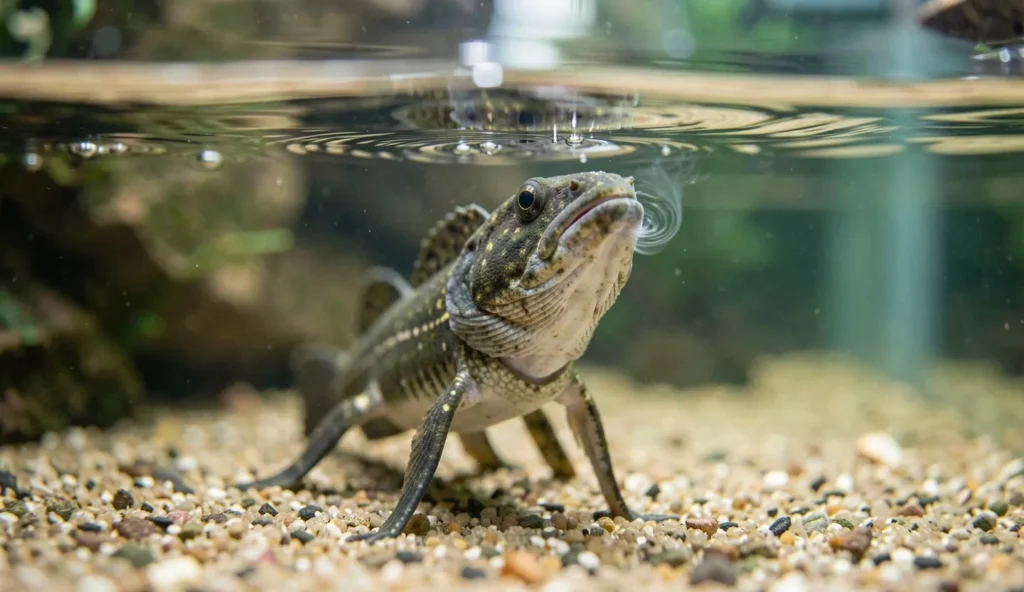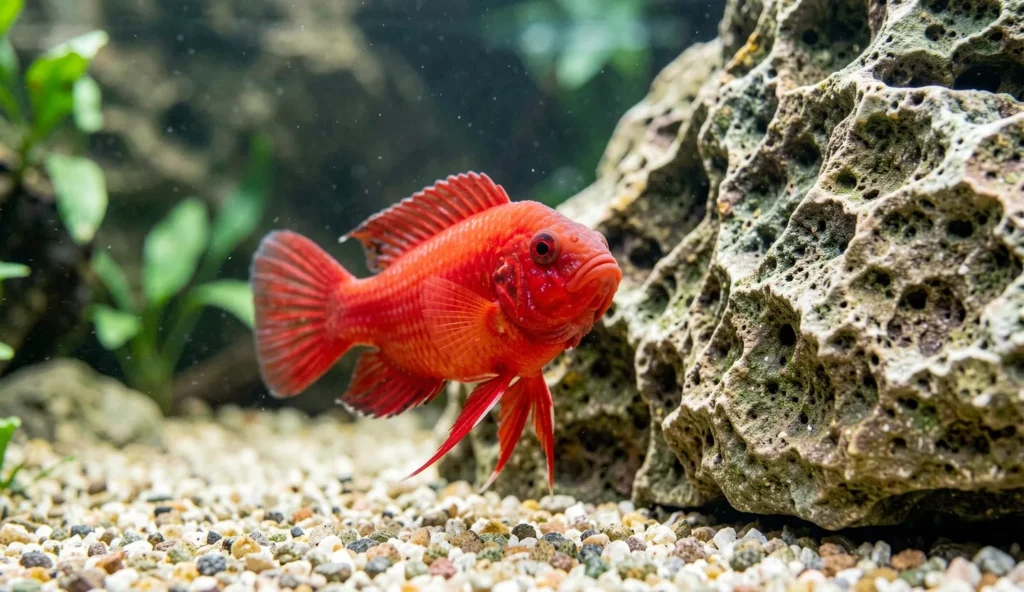
What Is A Red Devil Cichlid?
The red devil cichlid is a large freshwater cichlid known for intense territorial behavior and sharp, fast reactions. This fish belongs to the species Amphilophus labiatus and comes from Central America, where it forms strong in-water boundaries. A clear understanding of its personality helps avoid preventable stress and injury in captivity.
Species Background And Natural Behavior
Amphilophus labiatus naturally lives in warm freshwater systems and often holds a preferred area. In the aquarium, the same instincts can show up as active searching and strong site guarding. As maturity increases, territorial instincts often intensify, especially around breeding readiness.
Because the red devil cichlid uses space as a resource, it tends to defend locations rather than simply “get along.” That trait shapes how a keepers builds the tank, controls feed timing, and manages boundaries during routine care.
Why Personality Affects Tank Setup
The extreme territoriality of the red devil cichlid means the layout must create predictable boundaries. Stress rises quickly when shelter placement, space, or food access stays uneven. Feeding and visual barriers can reduce confrontations by lowering the chance of constant boundary testing.
For keepers who also keep other South and Central American cichlids, matchup planning matters, because temperament differences can still drive conflict. Species-only housing remains the safest approach for long-term stability with this fish.
Appearance And Physical Features That Influence Behavior
Body size and visible markings affect how the red devil cichlid communicates dominance. These traits influence chasing intensity, display frequency, and how quickly stress escalates during perceived intrusions. Even though personality drives much of the behavior, physical features often determine how the aggression plays out in the tank.
Size, Body Build, And Dominance Displays
As a large cichlid, this species typically shows power swimming and forceful chasing during territorial challenges. Bright coloration and bold posture can make dominance interactions more obvious to the human eye. Mature males often develop a stronger head and more assertive body angle, which can increase intimidation.
When the fish flares, turns its head repeatedly, or holds a tense swimming lane, the tank usually becomes a stage for repeated boundary checks. These patterns usually grow stronger when the fish cannot retreat to a separate escape route.
How Color, Growth Stage, And Sex Affect Temperament
Juveniles may act less aggressive at first, but territorial control often increases as the fish grows. Sexing can be unreliable without growth and behavioral cues, so pairing attempts can become unpredictable. Pairing tries also often trigger escalating fights if two fish end up competing for the same core zone.
For keepers trying to plan cichlid housing, understanding how similar species express aggression can help prevent mismatches. If tankmate planning becomes a concern, reviewing how other cichlid species behave under pressure can improve decisions.
For example, tank planning for an african cichlid can highlight how territory and visibility change aggression outcomes even when species are different. The principle still applies, since the red devil cichlid responds strongly to perceived intrusion.
Temperament And Personality Traits In A Home Aquarium
The red devil cichlid personality typically combines high intelligence with extreme territoriality. It often monitors routines, responds quickly to movement, and tests boundaries when conditions shift. These traits make the fish interesting to observe, but they also demand strict tank management from experienced keepers.
Highly Intelligent Behavior Patterns
This cichlid commonly learns feeding timing and responds fast to predictable care actions. It may show curiosity toward motion near the glass and tracks movement with steady attention. Over time, it often chooses specific routes for food access and shelter and then returns to them regularly.
Because of that learning ability, the red devil cichlid can react immediately when routine changes. Even a delayed feeding or a sudden change in water conditions can raise tension and increase defensive behavior.
Territorial Aggression And What It Looks Like
The fish establishes and defends a central or corner territory, then treats anything entering that area as a threat. It often uses chasing, head turns, and tense posture changes to test rivals. If another fish enters the defended zone, attacks can happen without long hesitation.
This behavior rarely stays “one-time” in a typical aquarium, because the red devil cichlid often repeats the same sequence. For safety, the setup should prevent repeated intrusions into the chosen boundary.
Stress Signals Before Injury Happens
Repeated pursuit without breaks, flaring that continues for long stretches, and relentless shadowing often signal escalation. Loss of appetite and increased hiding can follow when harassment continues. Clamped fins or frantic darting usually indicate fear, exhaustion, or a refusal to find safe routes.
At that stage, injuries can begin quickly, especially where sharp edges or tight corners trap the defending fish. Strong filtration and stable conditions help reduce the internal stress load, but they do not replace correct spatial planning.
Compatibility Reality For Advanced Keepers
Even experienced keepers often find that long-term results improve with species-only housing. Any non-cichlid tankmate often becomes a target, and many “compatible” fish still fail once the red devil cichlid holds full territory. Even same-species pair attempts can end in severe harm if boundaries overlap too often.
Some keepers explore other cichlid temperament patterns to understand aggression drivers. For example, angelfish care shows how territorial defense can shape space use in other freshwater cichlids, even though the setup goals differ.
Because the red devil cichlid uses space as a primary control mechanism, consistent isolation in one stable zone typically provides the safest behavior baseline. A solo tank also simplifies monitoring, which matters for advanced husbandry.
Housing Essentials For A Species-Only Solo Tank
Housing decisions determine whether the red devil cichlid stays stable or repeatedly escalates. A species-only solo tank design supports calmer territorial boundaries and reduces constant conflict triggers. With the right space, stable water, and safe rockwork, aggression can become more predictable.
Tank Size And Layout For Territorial Space
A large footprint helps reduce crowding and limits route overlap that can trigger confrontations. The layout should include a dominant zone and at least one secondary escape route. Avoid tight corners that trap a retreating fish, since blocked movement often increases panic and then aggression.
When the aquascape forms separate visual lanes, the red devil cichlid can defend a location without forcing constant collision. That matters most during active chasing cycles, when a trapped fish may respond with stronger counterattacks.
Filtration, Water Parameters, And Stability
Heavy waste output demands strong mechanical and biological filtration to keep water clean. Temperature stability lowers stress during territorial events, because sudden swings often amplify irritability. Regular testing prevents hidden changes that can raise aggressive intensity over time.
Instead of chasing numbers daily in a panic, advanced keepers typically track trends and maintain consistent routines. When conditions stay stable, the fish has fewer reasons to interpret the environment as a threat.
Substrate, Rocks, And Rockwork Design
Rock formations must remain stable and cannot collapse under digging or forceful body movement. Visual breaks through intentional spacing help separate lines of sight and reduce repeated flare cycles. The design should allow digging or resting without exposing sharp edges or unstable surfaces.
Safe rockwork also prevents minor wounds that can later become infection points. When the tank supports stable resting areas, tension usually stays lower between periods of active defense.
Solo Tank Strategy To Prevent Escalation
Single fish housing reduces rival competition and removes constant boundary testing. A predictable routine helps, because the fish learns what happens next and adjusts less aggressively. Feeding inside the established zone can also reduce defensive behavior by removing sudden “intrusion” cues.
Instead of frequent rearrangements, it helps to keep hardscape positions consistent. Any changes can reset the fish’s mental map and restart defensive behavior from the beginning.
When A Second Fish Is Considered
Adding a second fish should only happen with an advanced plan and a clear separation method ready before the introduction. A backup tank should be available for rapid isolation if aggression becomes severe. During monitoring, feeding times and visual access must be watched closely to avoid escalation.
Some keepers attempt more complex cichlid projects based on hybrid or different aggression patterns. For example, reviewing how a flowerhorn cichlid behaves can still clarify how head growth and dominance displays shape tank interactions, even though the setup goals differ.
Still, the red devil cichlid typically performs best as a species-only solo animal. That choice reduces risk and keeps behavior more consistent.
Feeding And Enrichment That Supports Behavior
Nutrition affects behavior because hunger can intensify territorial defense and chasing. Enrichment helps reduce boredom-driven stress, but it should not disrupt the fish’s established territory. When feeding stays consistent and enrichment stays controlled, aggression triggers usually decrease.
Diet Priorities For Growth And Health
High-quality cichlid pellets often form the best base diet for the red devil cichlid. Many keepers also add meaty foods to support protein needs and visible condition. Portions should finish quickly to limit leftover food and prevent water fouling.
Frozen options can add variety, especially when rotating proteins carefully. Consistent protein delivery supports healing potential, especially when small injuries occur after territorial flare-ups.
- Use quality cichlid pellets as the staple food
- Add occasional frozen meaty foods for variety
- Feed portions that the fish finishes within minutes
- Remove uneaten food to protect water quality
Feeding Schedule And Aggression Control
Feeding at consistent times reduces frantic boundary activity and repeated chase loops. If the tank is large, multiple smaller feedings can reduce single bursts of competition. Uneaten food removal also matters, because chemical stress from decaying matter can worsen aggression.
When routine feeding stays predictable, the red devil cichlid often focuses on the established route to food. That pattern can lower time spent testing boundaries.
Enrichment That Fits Territorial Fish
Rearrangement should happen sparingly because hardscape resets the fish’s territory map. Resting zones should remain stable so tension can settle between active periods. Rotating food type often offers a safer enrichment option than changing the layout frequently.
If more natural behavior is desired, enrichment can focus on safe resting surfaces and predictable feeding access. For bottom foraging species in general, it helps to understand how fish use tank layers, including species like corydoras catfish that spend time near the substrate.
That comparison helps keepers think through vertical space planning, even though the red devil cichlid is typically best without competing bottom dwellers.
Common Health Issues Linked To Stress And Aggression
Territorial pressure can lead to injuries and then to secondary health problems. Water quality issues can also compound stress, especially after overfeeding or reduced maintenance. For advanced keepers, prevention works best when stress signs are monitored early and responses remain fast.
Injury Risk From Territorial Fights
Aggression can cause fin tears, body abrasions, and visible skin damage during intense chases. Once wounds appear, bacterial infections can develop faster if water quality drops. Quarantine and rapid isolation can prevent minor injury from worsening.
Because the red devil cichlid may continue harassment until it controls space, waiting too long often increases injury severity. Stable filtration, safe rockwork, and correct tank separation strategies reduce the frequency of wounds.
Water Quality Problems After High Feeding
Overfeeding raises ammonia and nitrite risk, which then stresses the fish and intensifies behavior. Poor water quality can worsen immune function, making recovery slower. Strong maintenance and consistent feeding amounts keep the environment stable when territorial energy remains high.
Even when feeding seems reasonable, leftover food and detritus can build under heavy cichlid activity. Regular cleaning and careful portion control usually protect both health and temperament.
Stress Related Appetite Changes
Persistent aggression often reduces appetite and can slow recovery after any minor injuries. Tracking food intake and behavior daily helps detect early decline. Stabilize conditions first before starting any treatment, since chaotic water chemistry can mimic illness signs.
If appetite drops after a known trigger like layout changes or introduction attempts, a return to stable routines can help. The red devil cichlid responds best when stressors remain predictable and limited.
Is A Red Devil Cichlid Right For You
The red devil cichlid works best for advanced keepers who can deliver space, stable water, and quick separation options. Its intelligence and territorial drive can become manageable when the setup stays species-only and boundaries remain predictable. This fish suits owners who can observe behavior and act early when aggression shifts.
Solo Tank Readiness Is Essential For Long Term Stability
Solo tank readiness matters because it supports long-term temperament stability without rival pressure. Strong filtration and consistent water testing also reduce stress escalation. When separation equipment stays ready, chronic harassment stays less likely and injury risk declines.
For keepers building a system around large cichlids, planning for heavy bio-load usually improves results. The same mindset helps maintain predictable red devil cichlid routines and prevents avoidable swings in behavior.
Not A Good Match For Low Intervention Setups
Mixed community aquariums often fail because territorial aggression overrides compatibility attempts. Frequent aquascape changes can intensify territorial conflict by forcing repeated re-establishment of boundaries. Inconsistent feeding schedules can also increase defensive behavior by creating unpredictable cues.
When the environment stays stable and the fish stays alone, the red devil cichlid typically shows more controlled territory behavior. That makes it more suitable for experienced husbandry than for low intervention setups.
Final Note
The red devil cichlid personality demands careful tank planning, especially for a solo tank strategy. With stable space, consistent feeding, and secure rockwork, long-term care stays far more manageable.
Frequently Asked Questions
Can A Red Devil Cichlid Be Kept In A Community Tank?
Usually not, since extreme territorial aggression makes community living unreliable long term.
Does A Red Devil Cichlid Need A Solo Tank?
A solo tank is the most reliable setup because it prevents constant rival boundary testing.
Why Does A Red Devil Cichlid Attack Tankmates?
It defends territory and treats intruders as threats, especially when shelter and space overlap.
How Can Aggression Be Reduced In A Red Devil Cichlid?
Use species-only housing with a stable layout and consistent water conditions to lower triggers.
Frequently Asked Questions
What Tank Size Works Best For A Red Devil Cichlid?
A large footprint supports territory boundaries and escape routes, which reduces repeated chase loops.
What Are The First Signs Of Stress In A Red Devil Cichlid?
Appetite loss and hiding after repeated chasing often appear first, followed by fin damage in severe cases.
Final Note
A stable solo setup gives the red devil cichlid the space it needs to behave predictably.