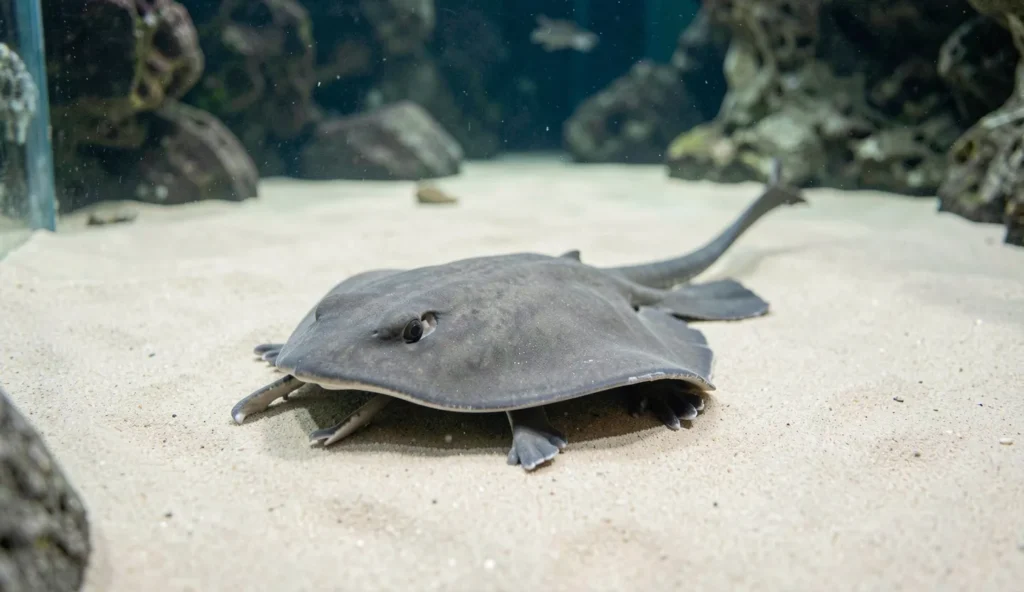
What Is a Freshwater Stingray?
Freshwater stingray typically refers to potamotrygon species kept in aquariums by advanced hobbyists. These cartilaginous fish have defensive stings that can cause painful injury, so aquarium safety planning matters before any maintenance.
In the aquarium trade, names often vary by source, but the safety priorities stay similar across potamotrygon. That means the tail area and capture method deserve extra care every time.
Common Species Names in the Aquarium Trade
Freshwater stingray often points to potamotrygon, commonly sold under group names or mix-and-match labels. Different potamotrygon species vary in size, adult disc width, and typical temperament under stress.
Some sellers market certain lines as rare fish, which can create uncertainty about adult growth and long-term space needs. For stingray care, this unknown adult size affects tool choice and how safely equipment can reach the tank.
Cartilaginous Fish Traits That Affect Care
Stingrays are cartilaginous fish with a different body structure than bony aquarium fish. When stress rises, defensive responses can increase even if the ray looks calm at first glance.
The skin surface and tail defenses react to handling pressure and sudden disruption. For that reason, venom safety must be treated as part of general stingray care rather than a separate topic.
Where Sting and Venom Risk Comes From
Most risk comes from the tail and the defensive area associated with it. The probability rises when the ray is startled, cornered, or trapped during tank work.
Even when venom presence varies by species and circumstance, safety planning still reduces the chance of serious injury. A steady routine and calm capture setup often lowers defensive behavior over time.
Freshwater Stingray Appearance and Physical Features
Correct identification helps keepers predict which body parts require careful handling. Freshwater stingray anatomy includes a disc body, a tail with defense structures, and a skin surface that can irritate under rough contact.
These physical traits also influence stingray care equipment choices, including net design, substrate selection, and how maintenance tools enter the tank. A clear view of the ray’s resting position can prevent sudden surprise movements.
Tail and Defense Area to Treat as High Risk
The tail is the main area associated with defensive stings, so direct contact near the tail base should never happen. Avoid contact near the working length of the tail, especially during transfers or rescues.
Tools should keep hands away from the tank floor area where the ray often rests. If a ray shifts unexpectedly, a prepared tool distance reduces the chance of a fast strike.
Disc Size and Adult Growth Expectations
Disc size affects tank footprint, how far tools must reach, and how safely a keeper can work from the front glass. Housing plans should assume adult growth instead of relying on juvenile appearance.
Taller rays or larger discs also make moves harder because the body can block access to the tail. That means early setup decisions shape later aquarium safety and handling practicality.
Skin and Substrate Interaction
Stingrays often rest on substrate, which means contact between skin and bottom materials matters. Sharp sand granules and rough decor can irritate skin and increase agitation during maintenance.
When irritation builds, defensive behavior can appear more quickly after disturbances. Substrate selection therefore supports both comfort and venom safety.
How Venom Safety Affects Freshwater Stingray Behavior in Tanks
Venom safety connects directly to behavior because defensive reactions usually follow stress signals. A keeper who understands aquarium safety triggers can reduce sudden tail tension and fast movements.
When conditions feel unstable, a ray may reposition repeatedly on the substrate. That movement can make capture harder and increase injury risk for the keeper.
Common Triggers That Increase Defensive Reactions
Sudden light changes and rapid movements near the tank often trigger defensive responses. Wrong water flow patterns and frequent handling interruptions can also raise stress over the same day.
Multiple disturbances during feeding and maintenance can stack stress effects. For aquarium safety, keeping one activity at a time and avoiding repeated interruptions helps lower reactivity.
Signs the Ray Is Stressed or Ready to Defend
Stressed rays may show increased tail tension or abrupt changes in disc positioning. Avoidance behavior and repeated repositioning on the substrate also suggest rising discomfort.
Some individuals reduce normal resting behavior, which can appear as persistent shifting rather than settling. When these signs appear, maintenance should wait and routines should become calmer and more predictable.
Why Minimizing Handling Helps Aquarium Safety
Fewer capture attempts reduce the chance of a defensive sting during transfer. Predictable training of tank routines can also lower surprise, which supports stingray care consistency.
Stable water conditions usually keep the ray calmer, so defensive risk declines. When handling is unavoidable, planning tool access and destination water reduces rushed movements.
Handling Precautions for Freshwater Stingray Venom Safety
Handling precautions should be built around hand placement, tool selection, and the chance of sudden tail movement. In practice, the safest method keeps the keeper out of the strike zone and avoids chasing behavior.
Experienced aquarists treat every move as a safety event, especially when rare fish stock changes routine. If a procedure feels improvised, venom safety steps need refinement first.
Use the Right Tools and Keep Hands Out of the Strike Zone
Tool access should be planned before maintenance begins, not after the ray starts moving. Long-handled nets and container-based transfer methods help keep hands away from the tank floor and tail area.
Reaching over the disc while the ray rests increases the chance of sudden repositioning. For stingray care, stable tool placement reduces the need to grab or poke if the ray resists.
When venom safety planning extends to other species, the same principle of separation applies to fish that require careful capture, such as a betta fish during tank transfers. Keeping hand distance from the primary action zone reduces injury risk across tank types.
Safer Capture and Transfer Methods
Obstacles should be removed or arranged so the ray can move without getting trapped behind decor or equipment. Calm and consistent movement prevents chasing behavior that can raise defensive reactions.
Destination container water should match key tank conditions to avoid added stress during the move. This step supports aquarium safety because stable conditions reduce restless repositioning.
Gloves, Clothing, and Physical Barriers for Aquarium Safety
Protective gloves designed for water work can reduce minor contact injuries, but they do not replace strike-zone rules. Eye protection helps when tools near the tank opening could shift unexpectedly.
Sleeves should stay secure to reduce exposed skin near tank edges. Even with gloves, the goal stays the same: keep the hands away from the tail and defense area.
For keepers also maintaining venomous or potentially dangerous reptiles, a clear safety mindset is useful, such as reviewing guidance on a Gaboon Viper and how venom systems change handling approach. The concept is similar even though the animals differ, because procedures must match the risk profile.
What to Do If a Sting Happens
A sting should be treated as a medical situation, with prompt professional care when symptoms appear. Rinsing gently and stabilizing without aggressive squeezing can reduce additional tissue damage.
Swelling, persistent pain, or breathing-related symptoms require quick action based on medical advice. After any event, the aquarium routine should pause and inspection should focus on why the ray was pushed into a defensive response.
Tank Setup That Reduces Injury Risk and Improves Stingray Care
A safer tank setup reduces defensive triggers and makes maintenance less stressful. With freshwater stingray, aquarium safety depends on how the substrate, layout, and water quality support predictable resting behavior.
When the ray can settle with minimal irritation, the keeper usually faces fewer urgent captures. That improves both health and venom safety outcomes.
Substrate Choices That Support Safe Resting
Use smooth sand designed for stingray substrate use to limit skin irritation. Avoid sharp gravel and irregular stones that can create persistent discomfort during resting.
Keep substrate depth consistent so the ray can remain stable while feeding and resting. Stable resting reduces sudden shifts that can bring the tail defense into tool range.
Aquarium Layout to Prevent Trapping During Maintenance
Limit tight gaps behind decor and equipment because trapped rays often show defensive behavior. Decor should be stable or removable so it does not shift under pressure during maintenance.
Enough open floor space helps the ray move smoothly during transfer. This layout also improves stingray care because routine work stays predictable and less stressful.
For keepers managing multiple rare fish, consistent capture planning also helps, similar to setting up safer aquatic systems for a Northern Water Snake’s environment planning concept. The animals differ, but the principle of preventing escape and trapping remains useful for aquarium safety decisions.
Water Quality, Flow, and Oxygenation for Less Stress
Stable temperature supports calm resting behavior and reduces repeated repositioning. Moderate flow helps prevent constant drifting that can increase agitation during the day.
Strong filtration maintains water stability, which supports comfort and reduces irritation-related stress. For aquarium safety, good oxygenation also lowers lethargy that can follow poor water conditions.
Feeding Practices That Reduce Defensive Incidents
Feed at predictable times using consistent routines so the ray expects activity rather than reacting to surprise. Hand feeding should be avoided to keep skin out of the strike risk zone.
Feeding tools that keep distance from the tail area improve venom safety while supporting normal feeding behavior. When feeding remains consistent, capture during maintenance becomes easier because the ray learns routine timing.
Common Health Issues Linked to Poor Aquarium Safety
Poor aquarium safety can create health issues that raise defensive risk. For freshwater stingray, skin irritation, stress reactions, and infection risk can all increase after rough substrate contact or frequent disturbances.
These problems often appear as behavioral changes before obvious physical signs. That makes early correction a practical part of stingray care and venom safety.
Skin Irritation and Stress Reactions
Irritated skin can increase agitation and trigger sudden movement during routine tank work. Substrate problems can also cause persistent discomfort that keeps the ray in a more reactive state.
Frequent disturbances worsen overall stress, which can shift behavior from calm resting to repeated repositioning. When stress rises, defensive reactions may arrive faster than expected.
Infections After Handling or Minor Trauma
Small injuries can become entry points for infection, especially if water quality slips. Quarantine and observation can reduce the chance of complications and help track healing.
Rapid response supports recovery and helps the ray return to normal resting behavior. In practice, preventing trauma during handling remains more effective than treating complications later.
Water Parameter Problems That Lead to Lethargy and Agitation
Low oxygen and unstable parameters increase stress responses and can reduce normal comfort. Poor filtration can raise irritation and reduce feeding behavior.
Unstable chemistry and inconsistent salinity can be harmful for sensitive potamotrygon. Stabilizing water and matching parameters during any transfer supports aquarium safety and lowers defensive risk.
Is a Freshwater Stingray Right for You?
Freshwater stingray care fits best when venom safety procedures are already routine and the setup supports safe access. Decision-making should focus on risk tolerance, experience with exotic fish handling, and the ability to maintain stable water conditions.
When rare fish collection adds uncertainty, the most important factor becomes whether the adult size can be accommodated. That includes space for safe tools and clear movement paths.
Owner Readiness Checklist for Venom Safety
Before bringing in a freshwater stingray, readiness should include comfort with tool-based maintenance rather than hand contact. Tank stability must also stay consistent, including temperature, oxygenation, and water chemistry.
Space for adult growth and safe access around the tank matters during routine work. An emergency response plan for a sting should be prepared so medical steps are not delayed.
- Tool-based maintenance is already practiced
- Stable water parameters can be maintained daily
- Tank footprint supports adult disc size
- Open floor space exists for smooth movement
- Emergency medical steps are ready
Best Fit for Experienced Aquarists Who Can Optimize Safety
Freshwater stingray is typically better suited to keepers who already manage exotic cartilaginous fish. Maintenance routines should remain consistent, with fewer interruptions and safer capture procedures.
A keeper who can plan tool access and keep handling predictable usually achieves stronger aquarium safety outcomes. That approach also supports lower stress, which can reduce defensive behavior.
Starter Checklist for Keeping Freshwater Stingrays Safely
A safe start reduces the need for rushed captures and supports long-term stingray care. This checklist focuses on aquarium safety items that reduce the chance of defensive incidents with potamotrygon.
Each item should be completed before the ray arrives so adjustments do not require urgent handling soon after purchase. If the setup needs changes, complete them first.
Before Bringing Home a Rare Fish Stingray
Confirm species identification and expected adult disc size so housing can match the animal. Select smooth stingray substrate, test tank stability, and verify consistent water parameters.
Create open floor space with minimal tight gaps behind decor and equipment. Choose long-handled nets and transfer containers ahead of time, and set a feeding schedule using non-contact feeding tools.
Finally, create a clear plan for medical care if a sting occurs. This preparation supports calm handling later and improves aquarium safety for the keeper and the ray.
Frequently Asked Questions
Are Freshwater Stingrays Venomous Or Just Sting-Capable?
Defensive stings can involve venom depending on species and circumstance.
What Is the Safest Way to Move a Freshwater Stingray During Tank Maintenance?
Use transfer containers and long-handled tools to keep hands away from the tail area.
How Can Tank Setup Reduce the Chance of a Defensive Sting?
Provide open substrate space, minimize trapping spots, and keep water stable.
Should Gloves Be Worn When Handling a Freshwater Stingray?
Protective gloves help reduce risk, but hands should still stay out of the strike zone.
Final Note
Freshwater stingray safety improves when setup, routines, and handling tools work together to minimize stress. Calm conditions support better stingray care and lower injury risk during aquarium work.