What Is a Cherry Barb Fish
The cherry barb is a small freshwater barb known for mild behavior and bright red color in the right conditions. This species, often sold as Puntius titteya, comes from forested waters and typically prefers calm community settings. Many community tank owners choose this fish because it adds a red fish accent without constant aggression.
Natural Origin And Typical Habitat
Cherry barbs come from freshwater streams and sheltered forest waters in Southeast Asia. In nature, they encounter moderate flow, high oxygen, and natural cover from plants and wood. Those wild conditions shape how the species reacts to stress at home.
Key Traits That Make It Peaceful
Cherry barbs tend to stay mild compared with other barb species that can be more pushy. They also usually swim in small groups rather than roaming alone around the tank. When kept with compatible fish, persistent fin nipping becomes less common.
Common Names And Scientific Name
Cherry barb is commonly linked to Puntius titteya, but sellers sometimes mix up similar-looking barb species. Name confusion can happen when fish are offered under broad trade names. Reputable sources help confirm the intended species ID before purchase.
Appearance And Color Changes You Can Expect
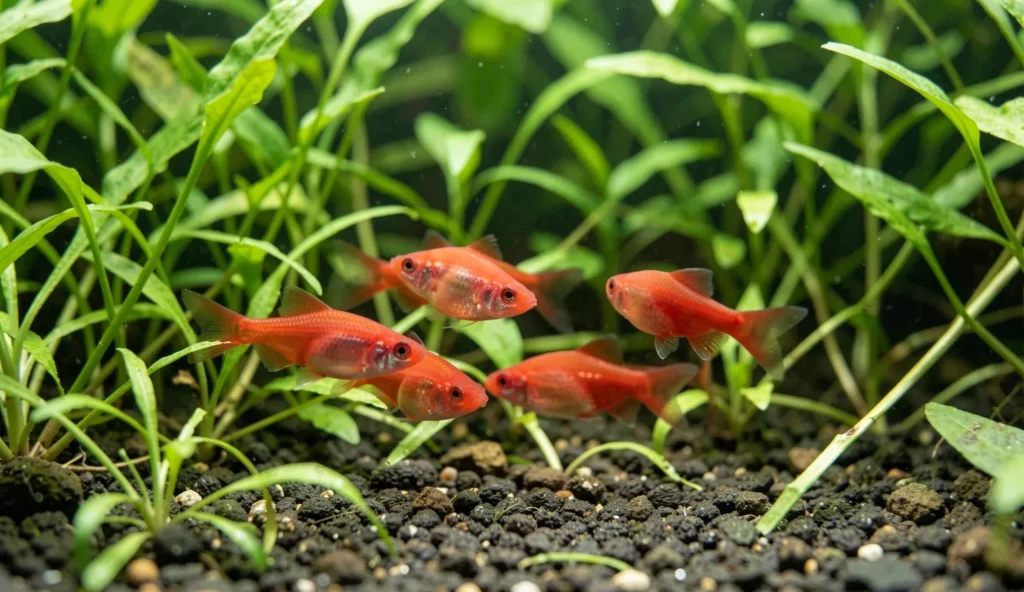
Cherry barbs show the most attractive red tones when conditions stay stable and feeding remains consistent. Color and pattern also shift with age, sex, and stress levels, so appearance may change after moving into a new tank. For community tanks, the goal is steady care so the fish display full color.
Physical Features
Cherry barbs have a small, streamlined body that suits steady group swimming. The barb body shape is laterally compressed, which supports quick, coordinated movement. A forked tail also helps the group maintain balance while they navigate plants.
Red Fish Color Intensity
Red and cherry-like tones usually appear strongest in healthy mature fish. During transport or after poor water conditions, red color can look dull for a short period. With clean water, regular feeding, and calmer tank mates, visible color often improves.
Sex Differences And When They Become Clear
Males often develop stronger red tones, especially during breeding readiness. Females typically look rounder when carrying eggs and may show less intense coloration. Sexing becomes easier once fish live in a mature group for long enough.
Tank Setup Essentials For a Planted Aquarium
A planted aquarium supports cherry barb comfort, because cover helps reduce fear and chasing. It also supports natural browsing and makes the tank feel secure during feeding. Proper setup matters because unstable water stresses this barb species and can dull red fish color.
Minimum Tank Size And Grouping
Cherry barbs do best in groups, since schooling reduces individual stress. A community tank works better when there is enough open swimming space for multiple fish to spread out. More fish in a larger tank often leads to calmer behavior than a small group in a tight aquarium.
Water Parameters To Aim For
Use stable tropical freshwater conditions and avoid sudden swings in temperature. Reliable filtration and gentle circulation help keep water clean and oxygenated. Then match parameters to the other peaceful community fish to reduce stress competition.
Plants, Flow, And Hiding Places
Plants help cherry barbs feel safe, especially when new fish are introduced to a planted aquarium. Moderate cover from live plants and pieces of driftwood or rocks provides visual breaks. Avoid overly strong currents, because small barbs may struggle in intense flow.
Substrate And Lighting Considerations
Softer, darker substrates often make red tones look more vivid in planted aquariums. Low to moderate lighting supports plant growth and can reduce harsh reflections that startle fish. Using a consistent photoperiod also helps maintain calm daily behavior.
Diet And Feeding Tips For Healthy Cherry Barb Color
Feeding practices strongly affect cherry barb color, energy, and long-term health. A varied diet also helps reduce micronutrient gaps that can weaken immunity. Community tank owners usually see the best results when feeding remains small, consistent, and tailored to a micro-feeding barb.
Best Foods For a Balanced Diet
Use quality small pellets or fine flakes as a staple food option for Puntius titteya. Add frozen or live foods for protein, which supports growth and active swimming. Plant-based options such as blanched vegetables or algae-based foods can improve digestive balance.
Feeding Schedule That Works In Community Tanks
Feed small amounts that the fish can finish quickly to prevent waste buildup. Many setups use once or twice daily feeding depending on stocking and food size. Overfeeding tends to reduce water quality, and the stress can show as dull red tones.
How Diet Affects Color And Stress Resistance
Stable nutrition supports vibrant red color and steadier behavior during tank changes. Variety also improves overall condition, which helps the fish tolerate minor shifts in routine. When breeding is planned, conditioning with higher-quality protein foods can support readiness.
When stocking a community tank, it can help to pair cherry barbs with fish that share similar feeding rhythms. For example, calm, mid-water community species can coexist well when all food targets land within a few minutes. Angelfish care routines also emphasize stable, well-fed conditions, which supports smoother interactions in mixed tanks.
Peaceful Tank Mates For Cherry Barbs
Choosing peaceful tank mates helps cherry barbs avoid constant chasing and fin stress. Because barb species can show more activity during feeding, tank mate selection must consider size, temperament, and feeding speed. A good mix keeps tank dynamics calm while still allowing natural schooling behavior.
How To Evaluate Compatibility In a Community Tank
Select similarly sized fish with calm temperaments to lower competition around food. Avoid very slow fish if cherry barbs become active during feeding times. After introduction, watch temperament closely for the first week and adjust if chasing increases.
Good Tank Mate Types
Cherry barbs usually do well with schooling fish that keep to their own zones. Small community bottom dwellers can also work because they do not compete for surface food. Some algae-eaters can match similar temperament and size when water conditions stay stable.
For ideas on peaceful schooling fish, neon tetra schooling behavior can provide a useful comparison for group dynamics. When fish move calmly as a group, cherry barbs often feel less pressured to chase for attention. This approach can also simplify feeding coordination across the community aquarium.
Tank Mates To Avoid
Avoid aggressive or territorial species that chase tank mates at feeding time. Some fish with known fin-nipping habits can cause unnecessary stress for cherry barbs. Very large fish also pose a risk, since small barbs may be treated as prey.
Keeping Groups Together To Reduce Stress
A larger group of cherry barbs spreads behavior across individuals and reduces fear reactions. Grouping also increases comfort in planted aquarium cover, since fish can choose safer positions. Stable tank conditions and consistent feeding reduce sudden bursts of activity that lead to chasing.
Tank mate balance also matters when adding other colorful livebearers to the same planted aquarium. Platy fish color morphs vary widely, yet many community keepers find these livebearers integrate best when water parameters match. With peaceful stocking choices, the tank maintains visual variety without constant conflict.
Cherry Barb Health And Breeding Basics
Health issues usually start with stress, so prevention focuses on stable water and correct feeding. For breeding, the key is conditioning and setting up a safe space for eggs and fry. When community tank owners plan ahead, breeding can succeed without harming adults.
Common Health Issues And Early Warning Signs
Stress can trigger color loss, weak behavior, and reduced appetite in cherry barbs. Watch for white spots, clamped fins, or sudden lethargy after tank changes. Poor water quality also increases susceptibility to disease, especially if waste builds up.
Care Steps That Prevent Illness
Maintain consistent partial water changes and test water parameters regularly. Keep filtration working and avoid sudden swings in temperature or chemistry. Feed a varied diet without leaving excess food to rot, and clean detritus in corners.
Quarantine new fish also reduces disease introduction risk, which helps protect the entire community. That habit supports long-term stability, even when adding other fish known for specific care needs. For example, betta fish care commonly includes strict water stability, and keeping similar discipline in community tanks helps barbs recover faster from minor stress.
Breeding Setup And Conditioning Tips
Use a separate breeding tank to improve egg and fry survival rates. Condition fish with higher-quality foods and keep water stable to encourage spawning behavior. Add plants or spawning surfaces so eggs have a place to attach or disperse safely.
Spawning Behavior And Fry Care Basics
Cherry barbs may scatter eggs among plants or onto spawning media depending on setup. After spawning, separate adults to protect eggs from being eaten or damaged. Fry require very small foods such as liquid fry foods or newly hatched live options until they grow.
Because breeding can change tank dynamics, planning the breeding stage separately can also reduce stress for other community members. When fish are moved, plant cover and stable filtration help new introductions settle without sudden chasing. For breeding comparisons with other small aquarium fish, Corydoras catfish species overview can help explain how safe hiding spaces improve fry survival in practice.
Is a Cherry Barb Right for a Community Tank
The cherry barb fits many community tank goals when peaceful tank mates and stable care are available. Its mild temperament and red fish appearance become more obvious as the group settles into a planted aquarium. For owners wanting a color-focused barb species without constant aggression, this species often performs well.
Best Reasons to Choose This Barb Species
Mild temperament suits many beginner community setups and supports calm schooling behavior. Color improves with stable water and a varied diet, making it a reliable addition to planted aquariums. This barb species also typically benefits from cover and gentle tank conditions rather than heavy currents.
Situations Where Extra Caution Helps
Very crowded tanks can increase stress and make chasing more likely between fish. Mixed groups may require adjustments if feeding competition becomes intense. Noisy, fast-flow setups also tend to stress small fish, even when tank mates look peaceful.
Quick Checklist Before Buying
- Plan a group size that reduces chasing behavior.
- Maintain stable filtration and consistent water parameters.
- Use a planted aquarium with cover and calm zones.
- Choose peaceful, similarly sized tank mates.
- Feed a varied diet for color and breeding readiness.
Frequently Asked Questions
Are Cherry Barbs Peaceful In Community Tanks?
Cherry barbs are usually mild when kept in groups, but compatibility still depends on stocking level and temperament.
What Tank Size Is Best For Cherry Barbs?
A tank large enough for a group to swim comfortably helps reduce stress and chasing.
What Do Cherry Barbs Eat?
Cherry barbs eat quality small pellets or flakes as a staple, plus frozen protein and plant-based foods occasionally.
Do Cherry Barbs Do Well In Planted Aquariums?
Cherry barbs do well in planted aquariums because plants add cover and create more secure behavior.
How Can Cherry Barbs Be Bred At Home?
Cherry barbs can be bred by conditioning fish in a separate breeding tank and protecting eggs from adults after spawning.
A Simple Path To Stable Community Color
Cherry barb success depends on stable water, consistent feeding, and a planted aquarium that supports calm schooling. With that routine in place, community tanks often show steady red fish color and fewer stress signs.