What Is A Harlequin Rasbora
The harlequin rasbora is a small freshwater fish from Southeast Asia, widely kept in planted community aquariums. It stands out for the black wedge marking and calm schooling behavior that becomes more noticeable in stable water.
Because the fish is sold under a few common names, many beginners start with rasbora care basics and then refine setup choices as they learn the needs of Trigonostigma heteromorpha.
Species Identification And Common Names
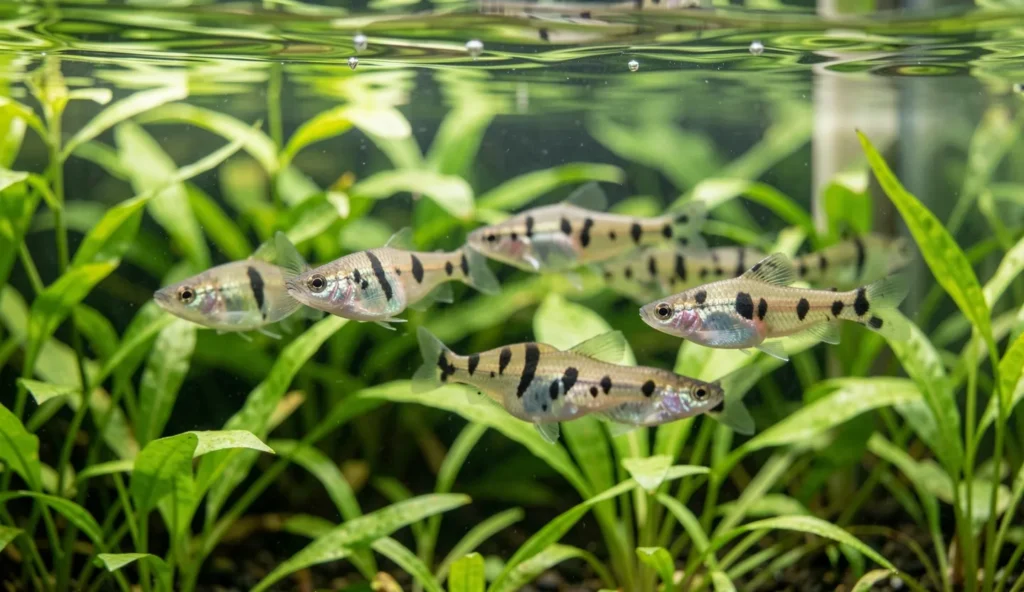
The scientific name is Trigonostigma heteromorpha, and most shops list it as harlequin rasbora or simply rasbora. The best visual identifier is the black wedge, which sits behind the head and continues toward the mid-body.
As a small schooler, it typically forms tight groups rather than cruising alone. When schooling numbers are low, the fish often appears less confident and may stay deeper in the tank.
Natural Habitat And What It Implies For The Tank
In nature, this species lives in slow-moving freshwater areas with dense plants and leaf litter. Water often stays soft with low to moderate hardness, and tannins from leaves can create a mild tea color.
Those conditions affect daily behavior and comfort, so the tank usually performs best with gentle filtration and a planted layout. For similar planted-tank planning, readers can also compare behavior patterns in neon tetra schooling setups.
Soft, lightly tinted water is not required to be identical, but instability can quickly increase stress. Stable conditions help the black wedge look sharper and keep swimming more coordinated.
Appearance And What To Expect From The Black Wedge
Harlequin rasbora appearance depends on color genetics, lighting, and water quality. Even healthy fish can look muted in bright direct light or during periods of stress.
The distinctive black wedge is the key trait most owners want to see, since it gives Trigonostigma heteromorpha its common name look.
Color Patterns And Body Shape
Most individuals show a reddish-orange to salmon body tone with the black wedge marking as a contrasting triangle. The wedge typically sits behind the head and runs across the area up to the mid-body.
The body is slender and built for schooling, which is why the fish often moves smoothly in coordinated lines. This shape also makes it easier for the harlequin rasbora to use midwater space in planted tanks.
How Stress And Water Conditions Affect Color
Poor water quality can dull coloration and reduce the sharpness of the black wedge. Inadequate schooling can also reduce visible activity, since the fish may hide more often.
Stable parameters usually improve contrast and give the school stronger cohesion. Quarantine and careful acclimation help reduce stress, especially when new fish arrive from different water conditions.
If a tank also keeps betta fish, be aware that stable warmth and clean water still matter, and it can change feeding response across tankmates. Guidance on general aquarium stability for betta fish can help owners think about consistent conditions across species.
Housing Essentials For Harlequin Rasbora
Good housing supports calmer schooling and helps protect fins and skin over time. A planted tank with soft water tends to work best for this small schooler.
When equipment and water chemistry stay consistent, harlequin rasbora care becomes far easier for beginners.
Tank Size And Stocking For Schooling
Plan for a school, not a single fish, since this species relies on group comfort. Larger groups reduce stress and increase natural movement, which improves feeding and color.
More swimming space also supports calm, even schooling across the tank. Overcrowding raises waste and disease risk, which often leads to sudden declines.
A practical approach is to start with enough fish to see coordinated movement, then adjust based on tank size and filtration capacity. Owners comparing fish choices should also consider how stocking affects stress in other community groups like platy fish.
Water Parameters And Temperature Targets
Aim for soft water with low to moderate hardness, since this species comes from calm Southeast Asian waters. Keep temperature stable in the typical tropical range used for many freshwater community fish.
pH often fits the common range for planted community setups, but sudden swings can still cause stress. Avoid rapid parameter swings during water changes by matching temperature and using gradual mixing if needed.
Filtration, Flow, And Oxygenation
Use gentle filtration suitable for small fish, because strong currents can exhaust a school. Moderate flow supports oxygenation without blasting the group.
Biological filtration must be fully cycled before fish enter the tank. Test ammonia and nitrite before adding fish, since even short exposure can trigger illness.
If breeding is planned later, consistent water stability also supports healthier spawning behavior, which is relevant for livebearer comparisons like swordtail fish communities. That kind of stability mindset often carries well to rasbora care routines.
Substrate, Plants, And Hiding Spots
Planted tanks are ideal for natural behavior, and dense planting makes fish feel secure. Fine substrate supports a planted base and helps keep the tank visually natural.
Adding leaf litter can support softer conditions and encourage natural foraging behavior. A tank that includes cover also helps new additions settle more quickly.
For owners expanding beyond rasboras, bottom foraging species like corydoras catfish can share planted setups well when water parameters match. That compatibility planning reduces the chance of chasing multiple, conflicting care targets.
Diet And Feeding For Healthy Schooling
Diet influences color, activity, and immune strength in harlequin rasbora care. Feeding should focus on small, easy-to-eat foods because this fish has a small mouth.
When meals are consistent and the school finishes food quickly, water quality stays cleaner and the black wedge remains more visible.
Best Food Types For A Small Rasbora
Offer small, bite-sized foods that the fish can pick up without struggling. High-quality flakes can work if the pieces sink appropriately and are not too large.
Frozen foods add variety and help with moisture and intake, especially when combined with flakes. Micro pellets can also work if the size matches the mouth of a small rasbora.
To support a planted-tank routine, it helps to think about how different diets affect waste, which is a lesson many owners learn from goldfish breeds as well. Waste control matters across species, even when tank sizes differ.
Feeding Schedule And Portion Sizes
Feed small amounts that the school eats quickly to prevent uneaten food from fouling the tank. Most setups do best with one to two feedings per day.
If the fish look less active, reduce feeding slightly rather than adding extra food. After feeding, promptly remove uneaten pieces to limit water fouling.
Foods To Avoid And Common Feeding Mistakes
Avoid large foods that the fish cannot eat, since it can lead to poor digestion or competition at feeding time. Overfeeding is also a common mistake that increases nutrient buildup and can worsen water stability.
Avoid sudden diet changes without acclimation, since stress can reduce feeding response. Do not rely on only one food type long term, because variety supports more complete nutrition.
Handling, Temperament, And Tank Mates
Harlequin rasbora temperament is generally peaceful, with most stress caused by isolation or unsuitable tank conditions. Group behavior helps them feel secure, which is why schooling appears stronger when kept in adequate numbers.
Tank mates should be chosen to support calm swimming and consistent water parameters.
Temperament And Social Needs
Harlequin rasbora is typically calm and works best in groups of its own kind. Keeping too few fish often reduces confidence, and the group may stay hidden more often.
They usually occupy midwater and move in coordinated groups when the tank feels safe. Calm schooling also makes feeding easier because multiple fish reach food without prolonged chasing.
Choosing Compatible Tank Mates
Choose peaceful community fish that match size and avoid species known for chasing or nipping. Avoid large fish that may treat small rasboras as prey.
Also consider other planted-tank species that tolerate soft water and similar temperatures. When tank mates share the same water needs, harlequin rasbora care remains more predictable.
Acclimation And Safe Introduction
Acclimate slowly to prevent shock during temperature and chemistry changes. Quarantine new arrivals when possible, since it reduces the chance of introducing parasites or ich.
Dim lighting initially can reduce stress while the school explores. During the first few days, observe feeding response and swimming patterns closely.
If aquarium management includes other small schooling fish, owners can use the same gradual acclimation mindset described in neon tetra behavior guides. Shared routines often make multi-species tanks easier to maintain.
Common Health Issues And How To Prevent Them
Health problems usually start after stress, which often comes from unstable water or abrupt changes. Harlequin rasbora are sensitive to ammonia, nitrite, and poor oxygenation.
Prevention depends on routine checks and consistent husbandry rather than frequent medication.
Most Common Problems In Rasbora Setups
Ich can appear when fish are stressed or when temperatures and parameters fluctuate. Fin issues can follow poor water quality and chronic exposure to high waste.
Swim problems may signal stress or unsuitable conditions, especially if oxygenation is low. Skin changes can also happen with parasites or long-term poor water management.
Prevention Through Water Stability And Husbandry
Keep ammonia and nitrite at zero at all times, since any rise can damage health quickly. Perform regular water changes with matched temperature to reduce shock.
Maintain consistent feeding habits and avoid overfeeding, since excess food drives waste. Use quarantine for new arrivals to reduce outbreaks before they reach the whole school.
Some owners expand to other fish breeds and learn disease cycles through experiences like corydoras catfish tank health practices. The same water discipline usually supports fewer flare-ups across the aquarium.
What To Watch For During Routine Checks
Watch for clamped fins, rapid breathing, or a sudden drop in feeding. Look for white spots, frayed fins, or reduced appetite compared with normal behavior.
Observe swimming patterns and group cohesion, since staying isolated can signal ongoing stress. Act early to isolate and treat when needed, especially when symptoms appear in multiple fish.
Is Harlequin Rasbora Right For You
Harlequin rasbora is a good match when a planted tank and soft water goals can be maintained. The fish fits beginner to intermediate aquarists who can prioritize stable cycling and careful acclimation.
Since the species is a small schooler, the tank setup should support group movement rather than isolated viewing.
Good Fit For Beginner To Intermediate Setups
This fish suits peaceful community planted aquariums and usually shows active schooling when conditions are right. Soft water preferences also align well with many planted community setups.
Stable cycling and gentle introduction reduce stress and help the black wedge look crisp. With proper feeding and tank maintenance, rasbora care stays manageable for most owners.
Not The Best Match If Water Cannot Be Stabilized
Stress often increases when soft water goals cannot be maintained consistently. Aggressive tank mates can also reduce well-being by causing constant chase behavior.
Inconsistent temperatures weaken immune systems and can increase susceptibility to disease. Too-small groups may lead to prolonged hiding, which makes behavior and feeding less predictable.
Frequently Asked Questions
What Tank Size Works Best For Harlequin Rasbora Schooling?
Choose a group plan with enough swimming room, and larger aquariums help keep water stable.
Do Harlequin Rasbora Need Soft Water?
They do best in soft water conditions, so aim for low to moderate hardness for stability.
How Many Harlequin Rasbora Should Be Kept Together?
Keep them in a proper school, since too few fish increases stress and hiding.
What Should Harlequin Rasbora Eat Each Day?
Feed small foods they can finish quickly, and offer a mix of quality flakes and frozen foods.
Why Do Harlequin Rasbora Hide After Being Added To The Tank?
Stress from new water conditions is common, so use slow acclimation and provide adequate plant cover.
Final Note
Harlequin rasbora care becomes simpler when schooling needs, soft planted conditions, and water stability stay consistent. With steady routines, the small schooler often shows stronger contrast and calmer behavior in the tank.