What Is a Flowerhorn Cichlid?
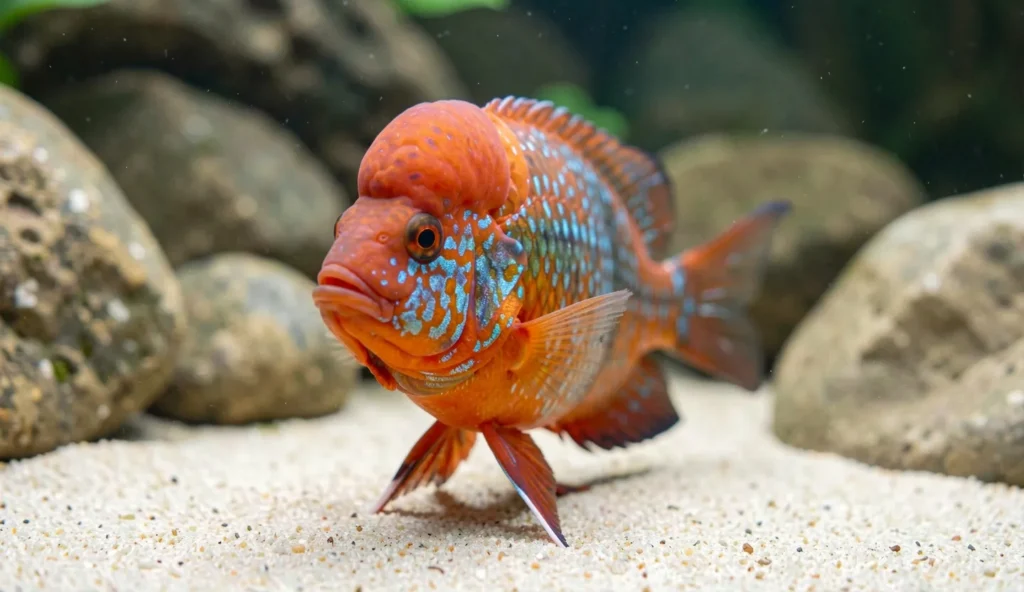
A flowerhorn cichlid is a hybrid freshwater cichlid known for bold body color and a standout head growth called the kok. This novelty fish is built through selective breeding, so traits vary across lines.
Many keepers choose flowerhorn cichlid fish for their visual presence and strong in-tank personality. That combination often leads people to plan dedicated housing and careful feeding routines.
Hybrid Origin and Selective Breeding History
Flowerhorn cichlids are hybrid cichlids created through selective breeding across different parent lines. Breeders select for head growth, color, and contrast patterns to create consistent visual traits.
Even within the same category, different lines can look noticeably different. For collectors, that difference is part of the appeal of hybrid cichlid lines.
Why Flowerhorns Are Considered Unique
Prominent head growth called the kok is the most recognizable trait. In addition, strong body coloration and high-contrast patterns can shift with age and lighting.
Behavior also stands out because many individuals show assertive, territorial habits. As stress rises, chasing can increase and colors may fade, which impacts overall display.
Typical Size and Growth Rate Expectations
Growth depends on tank space, water stability, and diet quality. Kok development usually becomes more noticeable as the fish matures over time.
Some individuals show faster growth than others even when they share the same general line. For that reason, growth targets should be treated as ranges rather than guarantees.
Appearance and Kok Growth Development
In a healthy adult, a flowerhorn cichlid typically shows a thicker body and a growing kok area. Kok growth reflects genetics, nutrition, and how consistently water quality stays within target ranges.
Because this feature develops gradually, it helps to evaluate growth patterns rather than expecting instant results. When the tank environment stays stable, the fish often builds condition steadily.
Key Physical Traits To Look For
Key traits include head shape that slowly develops a fleshy kok area. Many fish also show vivid body coloration with patterns that can look sharper as the fish ages.
A thick-bodied build usually comes with a strong swimming stance. That physique supports feeding behavior and can influence how the fish holds space in the tank.
How Kok Growth Works Over Time
Kok is a growth feature that develops gradually rather than appearing all at once. Genetics strongly influence the final kok size and how the shape forms.
Growth can slow when feeding quality drops or water parameters swing. Even short periods of poor conditions can reduce overall development for a time.
How To Enhance Kok Development Safely
Safe enhancement starts with stable parameters and a consistent schedule. A balanced feeding plan supports flowerhorn care goals without pushing the fish into waste-heavy overfeeding.
Feeding should include high-quality pellets and protein-rich additions in controlled portions. Using a suitable tank size also reduces stress and supports more reliable growth.
Water stability matters just like diet does, and that idea also shows up in other aquarium fish routines such as betta fish care. Stable warmth and clean water reduce stress across many species.
Common Misunderstandings About Kok Size
Supplements alone rarely produce guaranteed kok growth. Rapid weight gain can also fail to create healthier head development if water quality declines.
Illness and chronic stress often suppress overall growth. When the fish appears thinner or less active, kok progress usually stalls as well.
Temperament and Compatibility With Other Fish
Temperament drives most tank planning for a flowerhorn cichlid. Many fish act territorial and may guard a preferred feeding zone or corner of the tank.
Because aggression risk varies by individual and setup, compatibility decisions need to match real behavior. Stable routine can reduce sudden defensive reactions over time.
Typical Behavior in a Tank
Many flowerhorn cichlids are territorial and assertive, especially during feeding. Individuals may hover near the front or near caves and rocks they consider their space.
Stress can show as color loss and persistent chasing. When the fish holds posture but becomes less responsive, water quality problems often sit behind the change.
When Aggression Is Most Likely
Aggression often increases during pairing attempts or when multiple fish share the same limited territory. Overcrowding and a lack of hiding areas can raise conflict levels.
Sudden changes in routine, such as feeding time changes, can also trigger defensive behavior. For that reason, consistent flowerhorn tank requirements and predictable feeding often reduce conflict.
Similar planning matters for other novelty keepers, and snake housing examples such as Corn Snake routines show why stable schedules reduce stress. The same logic supports calmer interactions in many captive animals.
Tankmate Options and Cautions
Best results often come from a species tank setup. If sharing, choosing robust fish of similar size can improve odds of stable cohabitation.
Avoid mixing with small or slow fish that can become targets. Visual barriers, divided zones, and carefully placed rocks can reduce direct confrontations.
Even then, aggressive fish behavior may still appear. For many collectors, treating the tank as a single-fish display often simplifies hybrid cichlid management.
Tank Requirements for Flowerhorn Care
Strong equipment and stable conditions support long-term health for a flowerhorn cichlid. Because these fish eat heavily and defend territory, the tank setup must handle both waste and stress.
Tank planning also affects kok growth, since poor water quality usually slows development. Clean systems support better appetite and calmer behavior.
Tank Size and Layout Choices
Use larger tanks to support growth and maintain water stability. Provide open swimming space alongside visual barriers so the fish can claim territory without constant contact.
Avoid sharp decor that can injure heavy swimmers. Smooth rocks, sturdy caves, and stable arrangements reduce the risk of stress-related injuries.
Water Parameters That Keep Flowerhorns Stable
Maintain clean, oxygenated water with strong filtration. Temperature should stay consistent within typical cichlid ranges, and pH should avoid frequent swings.
Testing schedules help keep track of changes before they become stress events. When water parameters for cichlids stay steady, appetite and activity often remain consistent.
For keepers moving from other freshwater setups, the focus on stability mirrors common aquarium guidance seen across species. That mindset fits well with maintaining steady conditions for Axolotl tanks, where water problems also show quickly.
Filtration and Water Change Schedule
Pushing water through biological filtration supports heavy feeding and helps manage nitrates over time. Regular water changes remove dissolved waste that can otherwise build up.
Test kits should track ammonia, nitrite, and nitrate so adjustments happen early. This routine also supports cichlid filtration goals and reduces illness pressure.
Substrate, Plants, and Hiding Areas
Some keepers prefer rough or sandy substrate because it supports natural digging without trapping debris. Live plants often get disturbed, so hardy plant choices matter if plants are included at all.
Rocks and caves reduce stress when placed carefully and secured. Hiding options also provide breaks from visual pressure during aggressive moments.
Essential Equipment for Daily Stability
Reliable heating with temperature monitoring helps keep daily conditions consistent. Oxygenation comes from an airstone or good surface agitation, especially when feeding increases waste.
Routine cleaning should include siphoning and gentle substrate vacuuming to control buildup. Monitoring and maintenance make flowerhorn care more predictable.
Diet and Feeding Plan for Flowerhorn Health
Feeding supports condition, waste control, and kok development for a flowerhorn cichlid. A balanced plan also lowers the risk of digestive issues that often follow inconsistent or low-quality food.
Since hybrid cichlids can get protective at feeding times, portions should be timed and consistent. That approach reduces excess food sinking and breaking down in the tank.
What To Feed for Growth and Color
High-quality cichlid pellets often serve as the staple because they provide consistent nutrition. Protein-rich foods like frozen options can add variety and support muscle development.
Vegetables and spirulina-based foods in moderation can support digestion and nutrient balance. For keepers building a routine, cichlid feeding works best when every item supports the same core targets.
When choosing foods, it helps to compare how other specialists manage nutrition, like how Costa’s Hummingbird diet focuses on correct nutrition timing. Correct feeding structure reduces health issues in many keeper categories.
How Often To Feed
Juveniles generally benefit from smaller portions multiple times per day. Adults often do better with fewer feedings to reduce waste buildup.
Uneaten food should be removed quickly to protect water quality. This step also helps keep nitrate under control.
Feeding Amounts and Overfeeding Risks
Overfeeding increases ammonia and nitrate levels and can stress the fish. Poor water quality then undermines appetite, growth, and kok progress.
Portions should match appetite during a short window rather than letting food break down. With controlled amounts, kok growth and overall body condition tend to stay more consistent.
Common Health Issues and Prevention for Hybrid Cichlids
Most health problems in a flowerhorn cichlid connect back to water quality, diet, and stress levels. Because hybrid cichlids can be sensitive to swings, early signs should be handled fast.
Prevention works best when routine testing and quarantine practices are consistent. That stability limits outbreaks and supports recovery if issues begin.
Key Signs of Stress and Illness
Clamped fins and reduced appetite often signal stress or early illness. Faded colors can follow poor water quality or persistent chasing within the tank.
Visible spots or excess mucus can indicate infection or parasite activity. When symptoms appear, water tests should happen before adding any treatment products.
Ich and Common Parasites
Frequent temperature swings can worsen parasite outbreaks. Quarantine new fish before adding them to the main tank to reduce introduction risk.
Correct water conditions support immune health and reduce the chance of repeated flare-ups. A consistent environment supports recovery as well as prevention.
This quarantine and monitoring mindset also helps when planning for other animals, as shown in careful enclosure routines for Milk Snake keepers. Fewer variables make health assessment easier.
Bacterial and Skin Problems From Poor Water
High ammonia and nitrite levels can cause skin damage and stress the gills. Unclean substrate increases bacterial load and often leads to persistent irritation.
Regular testing and water changes reduce risk while supporting stable healing. Equipment maintenance also matters because filter performance directly affects water chemistry.
Diet Related Risks
Low-quality food can affect growth and overall condition. Overfeeding increases metabolic stress and raises waste levels that can compromise water quality.
A diet that supports balanced nutrition plus controlled portions helps protect skin, fins, and appetite. That combination supports steady growth goals for hybrid cichlid keepers.
Is a Flowerhorn Cichlid Right for You?
A flowerhorn cichlid fits best when tank stability and feeding control are realistic. These fish often do well in collector setups designed around one display fish and consistent maintenance.
For people seeking a novelty pet, the visible kok growth and bold coloration can deliver strong visual impact. Compatibility choices still matter because territorial behavior can limit community options.
Best Fit for Keepers Who Can Provide
Stable water testing and frequent water changes support better health and calmer behavior. A tank large enough for growth also reduces stress from territorial blocking.
A consistent feeding routine with portion control helps protect water quality. Quarantine and monitoring also protect the tank when new fish are introduced.
Where Expectations Should Stay Realistic
Aggressive fish behavior can limit community setups, especially with small or slow tankmates. Kok growth varies by genetics and overall health, so the same feeding plan does not guarantee identical results.
Disease prevention still depends on procedure, not just observation. Careful isolation practices and quick response protect the fish after any symptom appears.
When Species Tank Housing Works Best
Species-focused housing often reduces aggression risk and simplifies setup planning. Careful tankmate selection can work, but it should come with active monitoring.
Simple, sturdy equipment supports stability and reduces stress caused by system failures. That approach also pairs well with collector goals and long-term flowerhorn care consistency.
Getting Started With Flowerhorn Care Basics
Starting well helps reduce stress and supports kok growth from the beginning. When routine steps are clear, maintenance becomes easier to keep consistent.
Starter Checklist for New Owners
- Choose a tank size that supports adult growth comfortably.
- Install a reliable heater with temperature monitoring.
- Use strong biological filtration sized for heavy feeding.
- Test water weekly and log results for stability.
- Feed a quality pellet staple and add protein-rich foods carefully.
- Remove uneaten food quickly to reduce ammonia pressure.
- Quarantine new fish before adding them to the main tank.
- Plan for a species tank or a monitored tankmate attempt.
Frequently Asked Questions
How Long Does It Take for a Flowerhorn Cichlid To Develop a Kok?
Kok development becomes more noticeable over months as the fish matures.
What Tank Size Is Needed for Flowerhorn Cichlid Care?
Larger tanks help growth and reduce stress from territorial behavior.
How Can Kok Growth Be Enhanced Without Hurting the Fish?
Use stable water conditions and balanced high-quality feeding, not rapid overfeeding.
Are Flowerhorn Cichlids Aggressive With Other Fish?
Many are territorial and may bully tankmates, especially in overcrowded setups.
What Do Flowerhorn Cichlids Eat in a Home Aquarium?
High-quality cichlid pellets plus occasional protein-rich foods support good condition.
How Often Should Water Changes Be Done for a Flowerhorn?
Regular water changes help manage nitrates and protect against stress and disease.
A Practical Setup Supports Long Term Flowerhorn Care
With strong filtration, consistent water parameters, and controlled feeding, a flowerhorn cichlid can thrive and show healthier kok development. Proper planning also reduces stress and supports more stable behavior over time.