What Is a Madura Cattle
Madura cattle are a rare Indonesian breed known for their unique banteng ancestry. This tropical breed developed on Madura Island through centuries of natural selection. They offer excellent heat tolerance, disease resistance, and a distinctive appearance that sets them apart from other Indonesian cattle.
Origin and History
Madura cattle originated from a cross between the wild banteng (Bos javanicus) and domesticated zebu cattle. This hybridization took place on Madura Island off the coast of Java, where farmers selectively bred animals capable of thriving in hot, humid lowlands. Over many generations, the breed stabilized as a hardy, dual-purpose animal used for meat, milk, and draft work.
Unlike the Brahman Cow, which was developed in the United States for similar tropical environments, Madura cattle retain a stronger wild banteng influence. Their history reflects the agricultural traditions of the Madurese people, who relied on these animals for centuries.
Banteng Genetic Influence
The banteng heritage gives Madura cattle several distinct traits. They carry genes that provide superior heat tolerance and resistance to local parasites. Their body shape, coat color, and horn structure closely mirror the wild banteng. Conservationists consider them a living genetic reservoir, as pure banteng populations decline in the wild.
This genetic link makes Madura cattle valuable for research on hybridization and tropical adaptation. They represent one of the few domestic breeds that still exhibit strong wild ancestry.
Appearance and Physical Features
Madura cattle have a compact, muscular build with a clear banteng silhouette. Their appearance is both functional and striking, making them easy to identify.
Size and Weight
Mature bulls weigh between 400 and 500 kg, while cows range from 250 to 350 kg. Shoulder height typically falls between 110 and 130 cm. This moderate size suits smallholder farms and allows efficient foraging on rough pasture.
Coat Color and Pattern
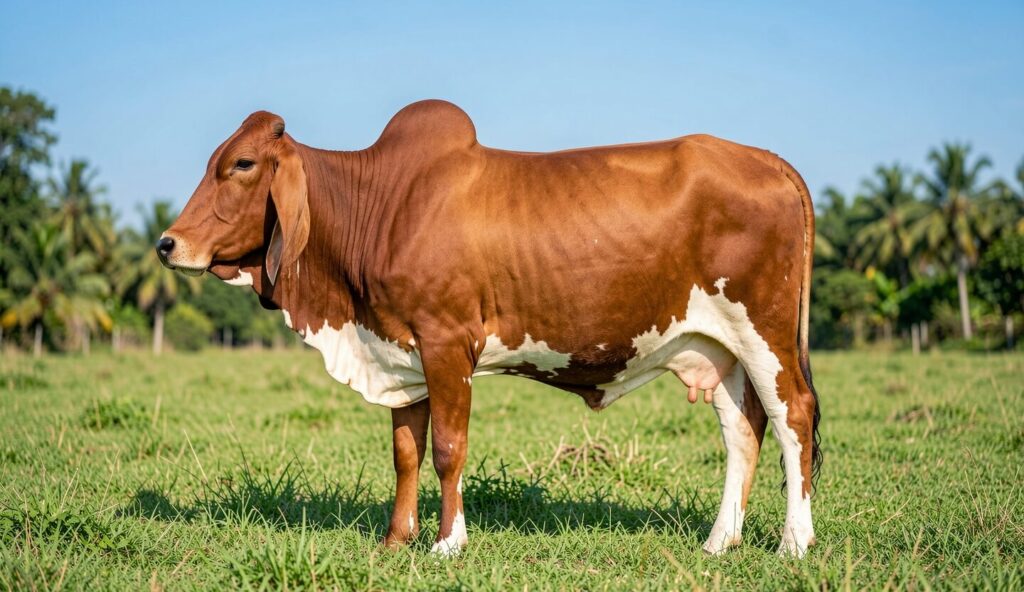
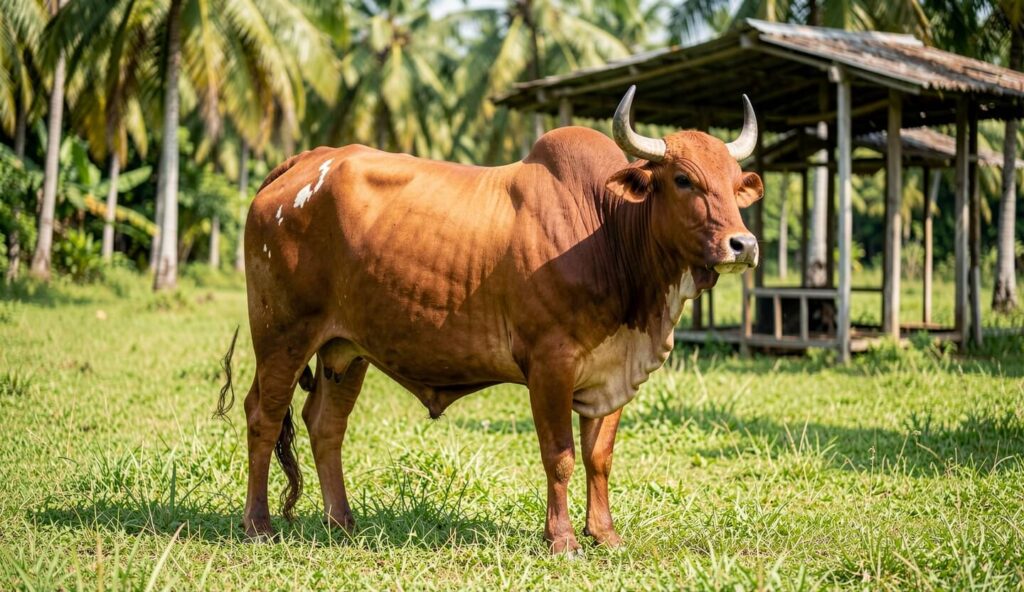
The coat is red-brown or chestnut, with a characteristic white patch on the rump. Legs and muzzle are usually darker, almost black. Bulls tend to be darker than cows, a feature that aids in camouflage within dense vegetation. The Sahiwal Cow shares a similar reddish coat, but Madura cattle display a more pronounced white rump patch.
Horns and Head Shape
Horns are short, thick, and curve outward and upward, much like the banteng. A noticeable hump sits over the shoulders, though smaller than that of zebu breeds. The head features a broad forehead and alert, forward-facing ears, giving an attentive expression.
Temperament and Personality
Madura cattle are generally calm but retain a degree of wariness inherited from their banteng ancestors. They adapt well to extensive management where human contact is limited. Cows show strong maternal instincts and protect their calves vigilantly.
Typical Behavior
In a herd setting, they establish a social hierarchy without excessive aggression. They prefer open spaces and become stressed in crowded pens. Unlike the Dajal Cow, which is known for its docility, Madura cattle may be more alert and reactive around strangers.
Handling and Trainability
With consistent, gentle handling, they become manageable for routine tasks such as vaccination or hoof trimming. Some Madura cattle are trained for draft work and even traditional bull races, a cultural practice on Madura Island. However, they are not suited for intensive confinement systems.
Housing and Environment
Madura cattle thrive in hot, humid tropical conditions. Their housing must provide shade, airflow, and protection from heavy rain. Simple open-sided barns with a dry bedding area work well.
Climate Adaptability
These animals tolerate temperatures above 35°C and high humidity with ease. They can survive on poor forage and limited water, though optimal health requires shade and constant access to clean water. Their thick skin and short coat aid in heat dissipation.
Shelter and Fencing
Open-sided shelters oriented to catch prevailing breezes are ideal. Strong fencing is necessary because Madura cattle can be agile and may attempt to escape if frightened. Barbed wire or electric fencing with posts set firmly in the ground works best.
Grazing and Space Needs
Each animal requires 1 to 2 hectares of grazing land. They browse on grasses, shrubs, and tree leaves, making them efficient foragers. Rotational grazing helps maintain pasture quality and reduces parasite loads. Similar to Cholistani Cattle, Madura cattle perform well on low-quality native forage.
Diet and Nutrition
Madura cattle are low-input animals that thrive on a forage-based diet. Supplementary feeding is minimal except during drought or lactation.
Forage and Roughage
Native grasses and legumes form the base of their diet. Farmers often supplement with rice straw, corn stover, or other crop residues. During dry months, hay or silage can maintain body condition.
Concentrates and Supplements
Growing calves and lactating cows benefit from small amounts of concentrate, such as bran or broken rice. A mineral block providing salt, calcium, and phosphorus should always be available. High-grain diets are unnecessary and can cause acidosis.
Water Requirements
An adult Madura cow drinks 20 to 40 liters per day, depending on temperature and workload. Water sources must be shaded and clean. In prolonged drought, offering water twice daily ensures adequate hydration.
Common Health Issues
Madura cattle enjoy robust health due to their banteng ancestry and adaptation to tropical diseases. However, standard preventive care remains essential.
Parasite Burden
Ticks and internal worms are common in humid environments. Regular deworming and acaricide treatment keep infestations under control. Pasture rotation, similar to practices recommended for the banni buffalo, reduces reinfection cycles.
Infectious Diseases
Vaccination against anthrax and hemorrhagic septicemia is routine in Indonesian herds. Foot-and-mouth disease poses a constant risk, so quarantine of new animals is vital.
Reproductive and Hoof Care
Calving typically occurs without human intervention. Hoof trimming may be needed if animals are kept on soft, muddy ground. Watch for mastitis in cows used for milk production.
Is Madura Cattle Right for You
Madura cattle suit smallholder tropical farms that prioritize low inputs and genetic conservation. They are not a mainstream commercial breed but offer unique advantages for those who can accommodate their needs.
Ideal Settings for Madura Cattle
These cattle excel in extensive systems with ample grazing land. They provide meat, draft power, and cultural value through traditional bull races. Conservation-minded owners appreciate their role in preserving banteng genetics.
Challenges to Consider
Finding Madura cattle outside Indonesia is difficult. They require large grazing areas and may be too wary for inexperienced handlers. Beginners are better suited to breeds like the Brahman Cow, which is more widely available and docile.
Frequently Asked Questions
How does Madura cattle differ from other Indonesian cattle breeds?
Madura cattle have distinct banteng ancestry, giving them a unique reddish coat with a white rump patch. They are smaller and more heat-tolerant than Bali cattle.
What is the average lifespan of a Madura cow?
With good care, Madura cattle live 12 to 15 years. Cows remain productive for about 8 to 10 calvings.
Can Madura cattle be raised outside of Indonesia?
Yes, but they need a tropical or subtropical climate. Availability outside Indonesia is very limited.
What is the primary use of Madura cattle?
They are a dual-purpose breed used for meat, milk, and draft work. Madura cattle are also valued in traditional bull races and ceremonies.
Do Madura cattle require special veterinary care?
Standard tropical cattle care covers most needs. Deworming and vaccination against local diseases are essential.
Final Note
Madura cattle offer a rare opportunity to own a living piece of Indonesia’s livestock heritage. With proper management, they reward keepers with resilience, utility, and genetic significance.