What Are African Cichlids And Why Tank Mates Matter
African cichlid keepers often run into trouble when species are matched by appearance instead of behavior. In many community tank setups, cichlid aggression rises when fish compete for food, shelter, or breeding access.
Territory drives a lot of the stress seen in Lake Malawi tanks. When routines and spaces do not fit each fish, intimidation can escalate fast.
African Cichlids Typically Compete For Territory
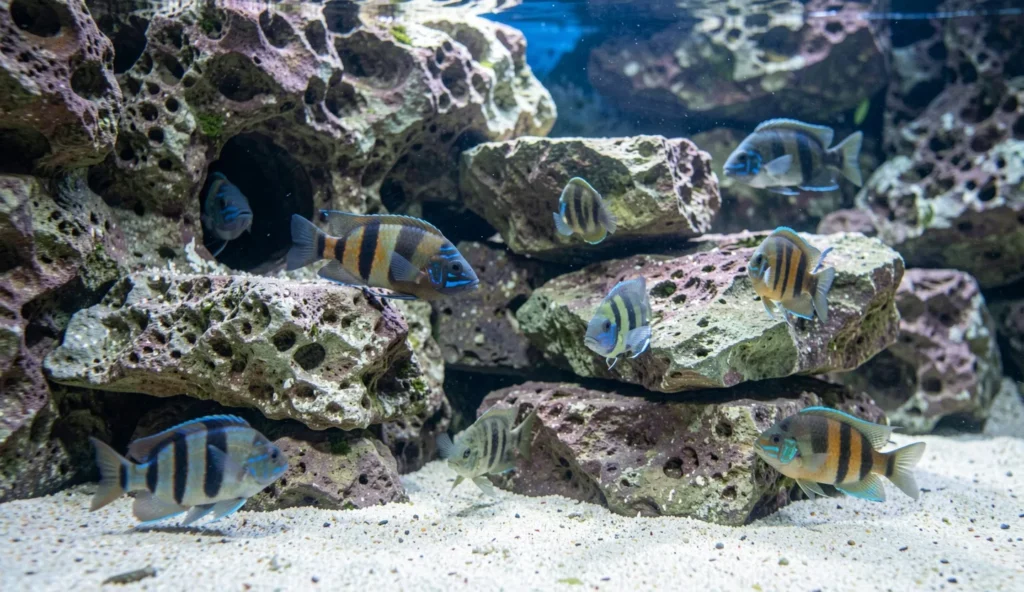
Many african cichlid species claim rock areas and defend them. As a result, chasing can spike when hiding space is limited or when multiple fish try to use the same cave openings.
Different species also tend to defend different zones in the aquarium. Some stay deep in rock, while others push in more open paths.
Species Differences Create Compatibility Challenges
Mbuna are often more boisterous and strongly tied to rock. Non-mbuna can be calmer, but many still act territorial around their preferred zones.
Combining very active hunters with slow fish raises stress risk. That stress can show up as missed meals, hiding, or delayed recovery after courtship sessions.
Community Tanks Still Need Structure And Space
Hardscape layout often determines how territories form. Stable water and consistent feeding reduce food-based conflict, even when behavior stays assertive.
Long-term success depends on monitoring and prompt action when problems appear. If the aquarium is set up to allow quick corrections, injuries remain less likely.
Which Lake Malawi Types Are Best For Community Tank Planning
Lake Malawi african cichlid groups behave differently depending on whether they match mbuna patterns. This matters because mbuna and non-mbuna often focus on different substrate and shelter styles.
Before stocking, it helps to map which fish will occupy rock, sand, or open water. That planning supports tank mate compatibility and reduces the chance of nonstop pursuit.
Mbuna And Their Usual Personality Pattern
Mbuna are often smaller, but many are very assertive. They typically prefer caves, crevices, and other rock shelter, so disputes usually center around access points.
Expect frequent chasing during feeding and breeding. Even when chasing does not cause immediate injury, it can still push weaker fish into prolonged hiding.
Non Mbuna And Their Typical Feeding Behavior
Non-mbuna may be less stone-focused depending on the species. Some are sand or open-water oriented, which changes how aggression is displayed.
Predation risk also increases if very small fish are added. This risk can be overlooked when stocking plans only consider adult size.
Different Species Size Ranges Change Outcomes
Large size gaps can cause one fish to dominate the group. Similar adult sizes usually reduce bullying and chase intensity.
Fry and juveniles behave differently from adults. That difference can make early compatibility seem fine until the larger fish mature and claim better locations.
Because Lake Malawi aggression patterns can shift with growth, some keepers study Congo lion characteristics to understand how researchers describe territorial populations. That type of comparison mindset supports better planning for aquarium behavior across African lineages.
How To Choose Compatible African Cichlid Tank Mates
Safe mixing starts with temperament and environmental fit, not just species availability. An african cichlid community tank works best when each fish can feed and retreat without constant contact.
Using a compatibility framework also helps experienced keepers adjust when one fish becomes more dominant during breeding behavior.
Match Temperament With Similar Activity Levels
Avoid pairing very calm fish with highly aggressive spawners in the same rock zone. Instead, pick tank mates that occupy different but overlapping areas.
Activity level matters because it changes how often fish share a narrow escape route. Even dither fish choices can affect how often chases trigger.
Prioritize Similar Size And Growth Rate
Choose juveniles that will stay near the same adult size at maturity. Rapid growers can become dominant later, which may require rebalancing the group.
Compatibility should also be rechecked after major growth spurts. If behavior shifts after a size jump, cichlid aggression may rise due to new territory claims.
Use Tank Geography To Reduce Direct Contact
Create multiple rock territories so fish split up rather than bunch into one hallway. Avoid leaving a single open corridor where chasing can become routine.
Cover placement also supports subordinate fish. When a smaller fish can retreat into a separate cave line, repeated intimidation often decreases.
Start With A Planned Stocking Ratio
Balancing males and females lowers constant courtship pressure during breeding behavior. Too many males often increases sustained chasing, especially around the same rock ledges.
Add fish in groups rather than single additions whenever possible. Group addition can reduce the chance that one newcomer becomes the only target.
For additional context on how separate roles can reduce pressure, keepers sometimes compare African fish eagle space use in the wild with aquarium zoning. That mental model helps clarify why territories must overlap in safe ways rather than collide.
Tank Setup That Supports African Cichlid Compatibility
Even the right african cichlid pairings fail when habitat support is weak. A community tank must reduce stress from waste, uneven territories, and constant competition.
When these elements are aligned, aquarium aggression becomes more predictable and less likely to spiral.
Rock Layout For Mbuna Territory Without Constant Fighting
Use stacked rocks with many sight breaks and separate entrances. Leave swim-through paths, but make sure each path has multiple escape options.
Anchor heavy rock securely to prevent collapses. Injuries from unstable hardscape often worsen aggression because damaged fish fall into the weakest social rank.
Sand Or Mixed Substrate For Different Malawi Zones
Sand can benefit open-water or sand-sifting types. A rock and sand mix can support both rock and digging preferences, which helps match different zones.
Avoid substrates that trigger constant uprooting in confined tanks. Persistent digging can turn into a direct conflict if territories overlap.
Filtration, Flow, And Water Stability Affect Aggression
Strong filtration helps reduce stress from waste, which supports steadier behavior. Maintain stable parameters so fish are not weakened by fluctuating conditions.
Avoid sudden temperature or salinity shifts because stress can lower resistance to bullying. If a tank has unstable chemistry, compatibility can break down even with a solid stocking plan.
Some keepers also review African House Snake Care Guide basics to understand how stable housing changes stress levels across species. That general husbandry lesson can be applied to African cichlid community tank stability as well.
Feeding Strategy To Prevent Competition Spikes
Feed small portions multiple times per day to reduce single-meal competition spikes. Offer foods that match natural diets and avoid starving fish for long stretches.
Remove uneaten food to keep water quality high. Better water quality supports calmer behavior and reduces irritations that trigger further chasing.
Dither Fish Options That Help African Cichlid Community Tanks
Dither fish can improve visibility and reduce fear responses in some african cichlid tanks. They also help many keepers manage introductions by keeping attention spread across the tank.
However, dither fish must match Malawi tank conditions and must not become easy prey.
Why Dither Fish Can Reduce Stress During Introductions
Dither fish occupy open water where predators are less focused on one specific corner. Their constant movement can distract and spread attention across multiple zones.
With more visible activity, fish often commit less to sudden territorial escalation. In many cases, this reduces the intensity of aquarium aggression during the first days after new additions.
Common Dither Fish Criteria For Malawi Setups
Choose fast swimmers that use midwater zones instead of hiding behind rocks. It also helps when the chosen dither fish are not small enough to be eaten easily.
Maintain a group size so dither fish stay confident and keep moving. A small dither group can hide, which reduces their ability to calm behavior.
When Dither Fish Should Not Be Used
Avoid dither fish that stay tiny, because they can quickly become live prey. Skip dither fish when the tank lacks stable hiding space for Malawi cichlids.
Remove dither fish if harassment turns into sustained aggression. If the dither fish repeatedly get pinned, the dither strategy will stop being helpful.
Step By Step Guide To Mix African Cichlids Safely
Mixing african cichlid species works best when the process is staged. A stepwise approach reduces surprise aggression and makes it easier to intervene before injuries occur.
This section focuses on practical handling, monitoring, and the quickest fixes for common failure points.
Plan The Order Of Additions And Quarantine First
Quarantine new fish to prevent disease introduction. Then add compatible species in a group when possible instead of adding one fish at a time.
Resist adding a single individual into a fully established group. A lone fish often becomes the default target, especially during feeding and breeding behavior.
Use Lighting And Feeding Changes To Support The First Week
Keep lighting consistent for predictable behavior and consistent viewing. Feed right after lights on and again later in the day to support fast settling.
Watch for gut-level feeding stress and reduce portions if fish refuse. If food competition spikes, smaller more frequent feedings help stabilize the community.
How To Spot Bullying Before It Becomes Injury
Look for long chase bouts and blocked feeding access. Then monitor for torn fins, scale loss, or repeated hiding with no recovery.
If bullying becomes intense, act early. One stubborn aggressor often keeps pressure high until separated or until territories shift.
Emergency Moves That Protect Tank Health
Use a divider tank section if only one fish is harmed. Temporarily reducing feeding competition during separation can lower stress for the rest of the group.
Treat illness quickly if aggression caused wounds. If injuries are left unmanaged, the social group usually becomes harsher over time.
Is A Malawi African Cichlid Community Tank Right For You
A Malawi african cichlid community tank fits keepers who can monitor closely. Daily checks often catch problems early and reduce the chance that aggression becomes permanent.
Readiness also depends on available space, reliable filtration, and access to quick corrections such as dividers.
Good Fit For Keepers Who Can Monitor Daily
Daily checks help confirm that all fish can feed and retreat. Stable feeding routines and planned water changes also reduce conflict buildup.
Proper gear such as dividers supports quick corrections. That setup makes it easier to protect injured fish without crashing the whole system.
Not Ideal When There Is No Space For Dividers
No backup plan increases loss risk during fights. Small tanks also reduce territory options and increase sustained chasing.
Weak filtration and unstable parameters make stress higher, which often triggers more aquarium aggression. If stability tools are missing, compatibility planning cannot fully offset the risk.
Frequently Asked Questions
Which Lake Malawi african cichlid combinations are most often compatible?
Choose similar adult sizes and matching temperament, then use rock territories and add fish in groups.
How many fish can be kept in a community tank without increasing cichlid aggression?
Stock conservatively and ensure strong filtration, and increase territories with rocks and sight breaks.
Do dither fish help reduce african cichlid fighting?
They can lower fear and reduce sudden cornering, and dither fish should not be small enough to be eaten.
What signs mean a tank mate needs separation right away?
Repeated long chases with blocked feeding and visible fin damage or persistent hiding are the most common signals.
Is it safer to mix mbuna with non mbuna in one aquarium?
It can work when diets, size, and territory are balanced, but the aggression patterns will still differ.
A Practical Compatibility Checklist For Malawi Cichlids
When aquarium design supports zoning, feeding, and fast correction, african cichlid compatibility becomes more manageable. Careful planning reduces cichlid aggression and increases the chance that the community tank stays stable.