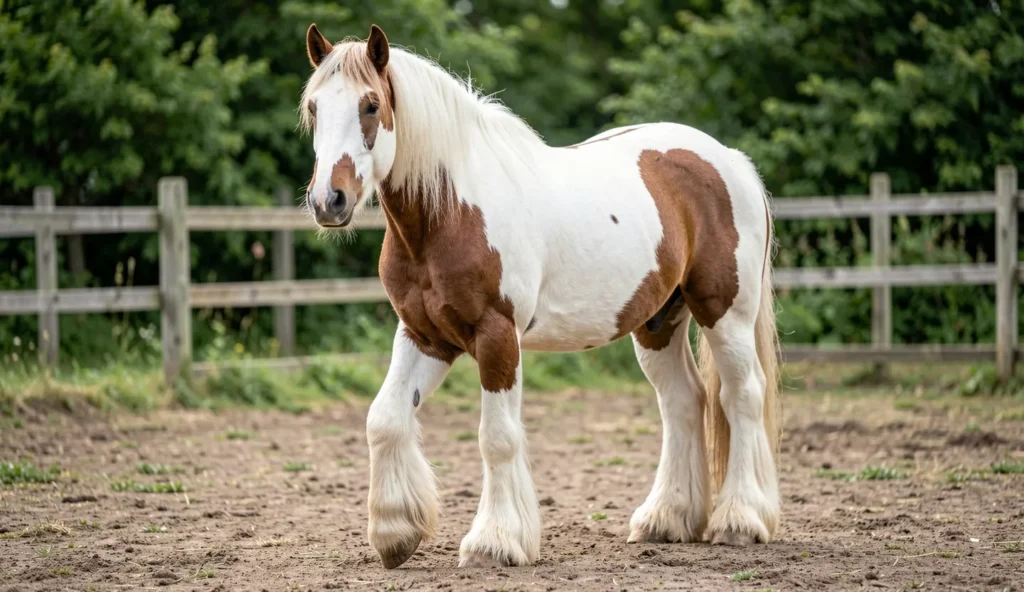
What Is A Gypsy Vanner Horse?
The Gypsy Vanner horse is a carriage-focused draft-type breed known for dramatic appearance and calm handling. It developed with the needs of Romani traveling life in mind, so reliable temperament and sturdy work ability mattered from early breeding. Today, many owners choose it for both driving and show settings, where type and feathering stand out.
Because this breed often features heavy Gypsy Vanner feathering on the lower legs and a bold piebald coat, buyers can spot it quickly. Still, the right expectations start with how the breed was shaped and what traits typically come with it.
Where The Breed Comes From
Gypsy Vanner history begins with Romani people who needed dependable horses for moving families, gear, and trade. They selected animals that stayed steady in new places and could handle regular work. Over time, the look became a priority too, including the distinctive coat patterns and long, feathered legs.
In Europe and the UK, the breed style matched family and carriage use, where a horse needed to appear impressive and behave predictably. Modern programs continue to build on that foundation, while also refining consistency in conformation, coat, and feathering.
Key Breed Traits At A Glance
Many first-time owners recognize the Gypsy Vanner horse by four visible traits: feathering, pattern, presence, and steady demeanor. These traits help the horse perform in driving roles and also fit many amateur handling routines.
- Heavy feathering on lower legs creates a full fringe look
- Commonly piebald or pinto patterns with clear white and darker sections
- Sturdy, compact build supports driving and show turnout
- Often calm, willing, and responsive when handled consistently
When a horse has the right balance of type and temperament, it usually makes training feel smoother. At the same time, each animal still has an individual personality and stress response.
Appearance And Coat Colors Including Piebald Patterns
The Gypsy Vanner horse appearance centers on a compact draft-style frame and striking coat markings. Most horses show a combination of broad presence, expressive head features, and dramatic white-on-color patterns. The breed’s piebald Gypsy Vanner look often becomes the main reason many color enthusiasts choose it.
However, identification works best when feathering and overall body type are considered together. Color alone can mislead, especially when comparing mixed or draft-influenced horses.
Body Shape And Size
Typically, this horse has a compact, well-muscled body with strong bone and balanced proportions. The chest often looks broad, and the head frequently reads expressive and refined for its draft-type build.
Because size can vary by line, measuring height and checking weight expectations for a given individual helps. Buyers should also look at overall balance, not just height numbers, since presence supports driving turnout.
Feathering On Legs And How It Looks Over Time
The signature feature is Gypsy Vanner feathering, the long hair on the fetlocks and lower legs that creates a fringed look. Feathering thickness may change by season, grooming routine, and individual genetics.
Grooming affects more than appearance, because wet clumps can mat hair and hold moisture. For that reason, owners often schedule leg cleaning around turnout and weather.
Common Color Patterns And Markings
Many horses display piebald or pinto patterns, with bold white patches paired with darker base colors. Facial markings and blaze patterns also vary, which makes each horse’s face unique even within the same type.
Some individuals may show additional spotting or irregular white distribution across the body. Still, the overall impression remains high-contrast and visually distinct from far away.
How To Tell Gypsy Vanner Type From Similar Horses
To spot a true Gypsy Vanner horse type, focus on feathering plus conformation together. Compare the overall body presence and how the coat pattern sits on the frame, not only the color.
Documentation and reputable breeder information matter because draft-influenced horses can share similar coat traits. When evaluating a horse, using consistent criteria also prevents rushed decisions.
For additional perspective on carriage-focused warmblood and draft-type looks, some buyers compare the breed with other driving styles such as the Tennessee Walking Horse while still prioritizing feathering and piebald type. Even with different movement styles, the comparison process helps clarify what matters visually.
Gypsy Vanner Temperament And Handling Style
Gypsy Vanner temperament is commonly described as calm, willing, and steady, especially for handling routines. Many lines were selected for carriage work and reliable daily behavior, so routine tasks often feel manageable. Still, each horse responds differently to pressure, noise, and new equipment.
Because Gypsy Vanner care includes daily grooming and regular tack prep, a cooperative personality helps owners stay consistent. The breed often rewards calm, predictable handling with smoother training progress.
Typical Temperament Characteristics
Many owners report a steady temperament that supports both casual handling and structured training. In general, the horse tends to be people-oriented and responsive to routine signals.
Even so, individual variation remains normal, especially for horses with different past experiences. A careful evaluation during grooming, leading, and tack fitting gives clearer answers than breed reputation alone.
Behavior Around People And In Stable Life
In stable life, a well-handled Gypsy Vanner horse often manages tack fitting, brushing, and carriage prep with fewer disruptions. Stable soundness also influences day-to-day comfort, which can change how calm the horse seems.
When routines stay predictable, stress levels often stay lower during busy preparation days. That matters because grooming feathering takes time and patience.
Driving Versus Riding Readiness
Many horses carry driving manners and show manners shaped by carriage work. However, riding readiness depends on individual training history, tack fit, and comfort with mounting and leg aids.
Training supports transitions when the groundwork stays consistent and harness exposure follows a gradual plan. Starting with proper tack fit and low-pressure vehicle introductions reduces the chance of confusion during driving sessions.
For carriage-focused comparisons across horse lines, some owners also look at the Hanoverian Horse in terms of trainability and presentation, even though feathering and coat patterns differ. This helps clarify how temperament and training style can vary by breed.
Exercise Requirements For A Feathered Gypsy Cob
Exercise for the Gypsy Vanner horse supports joint health, muscle tone, and mental balance. Because the breed often carries long Gypsy Vanner feathering, activity planning must also consider moisture and mud. The goal is consistent movement without creating prolonged wet conditions on the legs.
Exact needs change by age, fitness, workload, and training stage. Still, most horses benefit from regular turnout and low-stress exercise that fits their daily routine.
Daily Movement And Turnout Needs
Daily movement matters because it supports circulation and comfort in a draft-type body. Turnout also reduces stable boredom, which can help the horse stay easier to handle.
Owners should avoid sudden heavy work when introducing new exercise plans. Instead, the workload should rise slowly so the horse adapts without overloading joints or changing behavior abruptly.
Suitable Work Types For Most Horses
Suitable work types include light to moderate riding or driving sessions depending on the horse’s training. Groundwork and long-lining can help build coordination before full harness or vehicle work.
Walking sets often serve as warm-up and recovery, especially after turnout or after a busy grooming day. Consistent warm-up reduces stiffness and helps feathering settle during movement.
Feathering Considerations During Work
Wet and muddy conditions can mat feathering quickly, so timing and inspection matter. Owners who plan grooming schedules around weather often prevent debris buildup and keep leg skin drier.
After exercise, the legs should receive a quick check for rubbing and irritation. This step can reveal problems early, before the horse develops a more serious skin reaction.
During comparison shopping, some buyers also evaluate how other breeds manage coat-related care, such as the Icelandic Horse with its practical endurance management. Even when coats differ, the exercise-and-care thinking transfers well.
Training Tips For Driving And Everyday Manners
Training for a Gypsy Vanner horse focuses on calm handling and predictable responses. Since many owners want a carriage-ready animal, training often includes harness basics, steady driving cues, and routine manners. The best results usually come from short sessions and a consistent schedule.
Because feathered legs and driving gear both demand patience, training should build confidence through gradual exposure. This approach also supports calmer behavior during busy prep days.
Core Foundations To Build Before Carriage Work
Before a harness connects to work, the horse should handle lead work calmly and stand quietly during grooming. Basic responsiveness to voice cues and gentle pressure helps the horse stay manageable during equipment changes.
Desensitization supports day-to-day readiness, including calm reactions to stable noises and common tack sounds. When the horse accepts these inputs early, later harness steps tend to feel less stressful.
Training For Calm Driving Responses
Harness components should be introduced gradually and consistently so the horse learns what each part means. Short, low-pressure sessions help the horse connect the experience with calm outcomes rather than surprise.
Early practice often includes straight lines and controlled stops so the driver can set clear expectations. When transitions feel smooth, the horse usually settles faster during longer driving periods.
Managing Milestone Stress During New Experiences
Milestone steps include vehicle introductions, longer routes, and busier environments. Stress often increases when changes happen too fast, so challenge should rise gradually while rewards reinforce settled behavior.
Predictable routines help during outings because the horse knows what comes next. If stress signs increase or worsen, work should stop and reassessment should follow before repeating the step later.
Many carriage drivers also compare different temperament and training approaches across drafts and warmbloods, such as the Friesian Horse for presentation and show manners. The comparison supports better expectations about how different breeds respond to discipline, space, and gear.
Grooming And Daily Care For Gypsy Vanner Feathering
Gypsy Vanner care often revolves around leg feather management. The long hair can look impressive, but it also requires regular cleaning to prevent tangles, mats, and trapped moisture. Owners who maintain a daily routine usually keep feathering cleaner and healthier-looking over time.
Grooming also supports skin comfort, because the feathering can hide debris and irritation. Therefore, thorough but gentle handling matters for both appearance and welfare.
Daily Grooming Routine That Keeps Feathering Clean
Daily brushing helps prevent tangles and matting in the feathered areas. The process should include careful checks for debris after turnout or driving, since mud and grass fragments can cling to long hair.
After wet weather, rinsing feathering and drying promptly helps avoid long damp periods. Because feathering can trap moisture quickly, leaving legs damp increases risk for skin issues.
- Brush legs regularly to prevent tangles and matting
- Rinse and dry feathering quickly after wet turnout
- Check legs for debris after driving or groundwork
Bathing And Drying Steps For Long Hair Legs
Bathing should use warm water and gentle handling to avoid skin irritation. After washing, the legs need thorough drying so dampness does not linger under the hair.
Combing should happen carefully, removing clumps before hair tightens into mats. Owners often find it easier to detangle in small sections rather than trying to pull through thick tangles at once.
Hoof And Leg Health Checks
Leg health checks help catch early problems related to rubbing, irritation, or skin sensitivity. Owners should inspect the fetlock area and where hair meets skin because that transition zone can hide early sores.
Farrier care stays important for overall comfort, and hooves should remain clean during muddy stretches. If gait changes appear, a prompt soundness check can reveal the cause faster.
- Inspect feathering for redness, sores, or rubbing
- Check where hair meets skin near fetlocks
- Keep hooves clean and schedule regular farrier visits
Blanketing And Weather Protection Choices
Blanketing decisions depend on climate, coat condition, and riding schedule. Incorrect coverage can trap moisture, so the plan should protect without creating a damp environment.
Owners should reassess protection as seasons change, since feathering may shed or grow differently across the year. When blanketing changes are gradual, the horse adjusts with less irritation.
Hygiene Practices To Reduce Common Feathering Problems
Moisture control stands at the center of feathered-legs hygiene. Mud should get removed quickly, and prolonged dampness should be avoided whenever possible.
Stalls and bedding should remain dry and comfortable, since damp surfaces can transfer moisture back to the legs. Even during busy weeks, consistent grooming reduces the chance of deeper tangles and skin problems.
For owners also managing other heritage and weather-adapted animals, comparing routines to a breed like the Verata Goat can help reinforce the habit of matching care plans to coat and environment. Although the species differ, the moisture-management logic carries over.
Diet And Nutrition For Strong Condition And Healthy Coat
A healthy Gypsy Vanner horse diet supports energy for work, stable digestion, and coat quality. For many owners, feeding focuses on forage first because it supports steady gut function and helps maintain body condition. Coat and feather appearance improve best when the base diet meets the horse’s needs.
Feeding plans should account for workload, training intensity, and body condition score. When amounts match real needs, overfeeding and underfeeding both become less likely.
Base Of The Diet Should Be Forage
High-quality hay or pasture often forms the base of feeding for this breed. Amounts should adjust based on workload and body condition so the horse maintains an appropriate weight.
Steady schedules reduce digestive stress, and many horses respond calmly to consistent meal times. For carriage drivers, feeding around training also helps the horse arrive settled.
How To Choose Supplements If Needed
Supplements should be used only when diet analysis or vet guidance indicates a need. Mineral balance matters, especially because draft-type horses can require stable nutrition for muscle and overall comfort.
Over-supplementing concentrates can disrupt balance, so any added feeds should match the feeding plan rather than replace forage. When supplements are necessary, they should support a specific goal like mineral correction.
Water And Feeding Schedule Basics
Clean, fresh water should stay available at all times. Feeding at consistent times supports routine manners, especially for horses that work early or travel to driving events.
Planning meals around sessions helps prevent feeding-related discomfort. For example, many owners schedule heavier hay portions outside the immediate pre-work window to keep the horse comfortable.
Common Health Issues And Preventive Care
Owners planning Gypsy Vanner care should focus on preventive checks, since long Gypsy Vanner feathering can affect how skin and legs stay comfortable. Moisture trapped under feathering can lead to irritation, so early detection depends on consistent inspection. Hoof health also matters because soundness supports driving and daily movement.
Beyond coat-related issues, regular routine care keeps the horse stable and easier to manage. A preventive schedule reduces surprises and improves the odds that small problems get resolved early.
Feathering Related Skin And Leg Issues
Feathered legs can trap moisture and debris, creating conditions for skin irritation. Regular inspection catches problems before they worsen, especially after wet conditions. Owners should prioritize fully drying feathering after turnout and after driving.
If redness or odor appears, cleaning should happen immediately and a vet call should follow for persistent irritation. Prompt action often prevents a mild issue from becoming a prolonged treatment.
- Inspect feathering after wet weather for irritation
- Remove mud quickly to reduce moisture retention
- Keep feathering dry to protect skin health
Hoof Care And Overall Soundness
Consistent farrier scheduling helps support long-term comfort for the Gypsy Vanner horse. Clean hooves after muddy turnout and driving reduce the risk of problems linked to debris buildup.
Owners should monitor for stiffness or gait changes, since draft-type horses may show discomfort through subtle movement changes. Early soundness checks support better outcomes than waiting for major symptoms.
Routine Preventive Veterinary Care
Routine preventive care includes vaccinations and parasite control based on local recommendations. Annual wellness exams also support ongoing monitoring of weight, dental health, and overall body condition.
Tracking body condition score across seasons helps maintain steady feeding needs. When weight fluctuates, training tolerance and coat condition often change too.
For broader historical context on equine breeds that shaped working culture, some owners review Most Famous Horse Breeds in History to see how types evolved for specific work demands. That perspective can help frame why steady temperament remains a selection priority for breeds like this.
Is A Gypsy Vanner Horse Right For You?
The Gypsy Vanner horse can fit owners who want a visually striking carriage partner and who can manage feathering maintenance. It also suits people who value calm handling for grooming and tack preparation. Still, the breed’s long leg hair creates a care workload that must be planned into daily routines.
Deciding well comes from matching lifestyle, weather conditions, and realistic time for grooming. When those pieces align, the breed often performs best in driving and show environments.
Good Fit For These Owners And Uses
This breed often works well for carriage drivers who want a calm, steady driving companion with strong visual type. It also fits owners who can commit to regular feathering cleaning and drying, especially during wet seasons.
Color enthusiasts also choose the piebald Gypsy Vanner look for its bold contrasts and recognizable markings. When coat goals match routine capacity, ownership feels more sustainable.
Considerations Before Choosing
Feathering care demands consistent cleaning and prompt drying, which can change daily schedules when weather turns muddy. Weather and bedding management also affect leg health, so stable cleanliness becomes part of the care plan, not an afterthought.
Budget planning matters too, since owners often cover farrier visits, grooming supplies, and veterinary care for ongoing monitoring. With those expectations in place, the breed becomes easier to manage long term.
Frequently Asked Questions
How Much Grooming Does A Gypsy Vanner Horse Need For Feathering?
Regular brushing helps prevent tangles and matting. Rinse and dry feathering after wet turnout, and check legs frequently for debris and early irritation.
What Coat Colors Are Most Common In The Gypsy Vanner Horse?
Piebald or pinto patterns are often seen, with bold white and colored patches. Facial and body markings vary between individuals.
Are Gypsy Vanner Horses Good For Carriage Driving?
Many are bred with driving manners and type in mind. Training and harness introduction should be gradual, and calm handling supports steady driving responses.
What Should The Diet Include For Gypsy Vanner Horses?
Forage like hay or pasture should be the base. Feed amounts depend on workload and body condition, and supplements should be used only when diet needs them.
What Health Problems Are Most Important To Watch In Feathered Horses?
Moisture trapped in feathering can lead to leg skin issues. Regular leg inspection supports early problem detection, and consistent hoof care protects overall soundness.
How Should Living Conditions Be Set Up To Support Gypsy Vanner Care?
Dry, clean bedding reduces moisture-related leg issues. Manage turnout plans during muddy or wet weather, and plan grooming schedules around weather and exercise.
A Final Note On Owning This Feathered Breed
A Gypsy Vanner horse often rewards owners who combine consistent routines with weather-smart grooming. With steady care, feathering, comfort, and driving manners usually align well for long-term success.