What Is A Podenco Canario
The Podenco Canario breed is a Canary Islands hunting dog built for tracking and chasing small game. This Spanish rare breed developed on rugged islands, where scent work and speed mattered for daily hunts. A standout trait is the mix of alert vision and strong prey interest, which makes the island dog feel driven outdoors.
For hunters and Mediterranean breed fans, the Podenco Canario is not just a companion. It follows game with an efficient sighthound style, then switches into a fast chase when movement appears. Owners often choose this rare Spanish dog when they can match the dog’s energy and training pace.
Origin And Working Background On The Canary Islands
This dog traces back to the Canary Islands, where hunters relied on dependable scent and sight tracking. The working purpose centered on locating and pursuing small animals across rocky, uneven terrain. Because the environment demanded mobility, the body and hunting method developed together over generations.
Like other sighthounds, the dog uses fast visual checks and scent cues close to the ground. Then it transitions into explosive acceleration for pursuit once it commits to the track. Over time, the dog’s style adapted to island conditions where long straight sprints were less common than quick bursts.
Breed Name Confusion With Similar Types
Podenco is a broad Spanish term used across multiple hunting lines and regions. Podengo often appears in the same conversations, but it typically refers to related Portuguese hunting dogs with different local development. Ibizan Hound is another similar hunting sighthound that comes from Spain’s mainland, so it should not be treated as the same animal.
To avoid mix-ups, buyers should focus on documented origin and clear lineage. Breed differences show up in typical coat patterns, island-specific traits, and breeder records. When researching, it helps to compare the Podenco Canario temperament with other hunting breeds that share a similar body plan.
For readers comparing Portuguese and Spanish hunting types, a useful reference is the Portuguese Podengo breed, since it clarifies the Portugal side of the “podenco” naming confusion. Another helpful comparison is the Catalburun dog breed, which can show how specialized noses and hunting styles differ across regions.
Appearance And Physical Features
Correctly identifying the Podenco Canario starts with recognizing the lean hunting build and the very expressive ears. This sighthound often looks built for quick changes in direction rather than heavy sustained running. Overall, the island dog’s structure aims for speed, agility, and efficient movement on rough ground.
Physical traits also support the hunting style because the dog stays alert while scanning for cues. At the same time, the body needs to remain light, so excess weight can hurt performance. With that in mind, owners should evaluate both appearance and fitness when assessing a potential dog.
Size Proportions And Coat Types
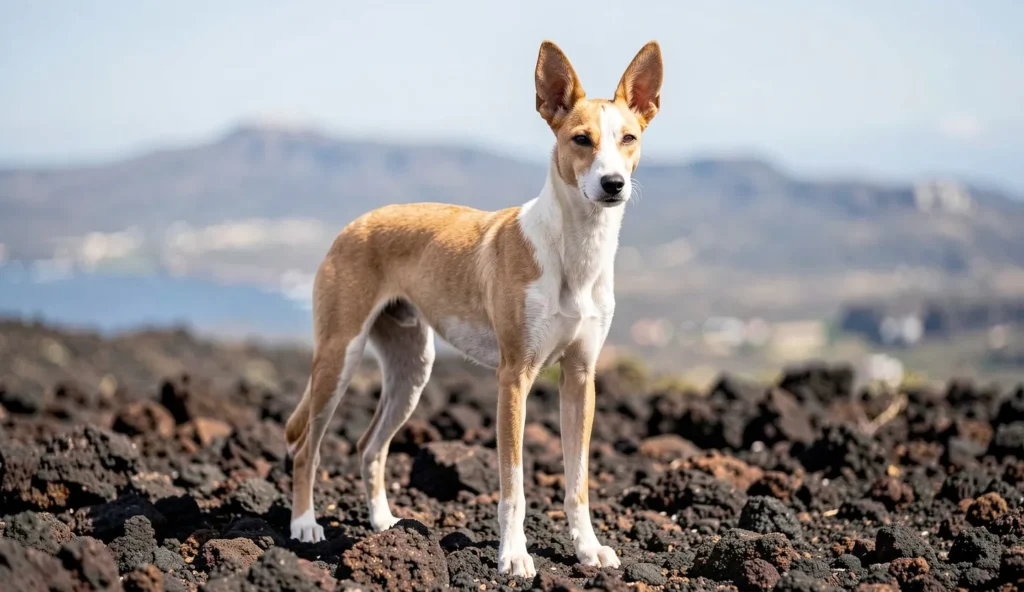
The Podenco Canario usually shows a lean, athletic frame that supports speed and agility. Ears tend to be tall, upright, and highly mobile, which helps with alert posture during hunts. The coat can vary by line, including short, wire, or longer styles depending on the breeding background.
Coat colors often include white with tan or reddish markings. Some dogs also show stronger patterning across the legs and face. When comparing a Podenco Canario vs Ibizan Hound, coat length alone may mislead, so line identification and overall build provide better clues.
Movement And Hunting Stance
Movement often appears light and efficient, with a quick stride that conserves energy. When tracking, the dog may keep a lower, focused stance that keeps attention close to the ground. Then, during a chase, the dog can switch into an alert upright posture with forward ears and a more direct line.
During work, acceleration often looks sudden and controlled, not chaotic. This shift matters for training because the dog may get locked into chase mode when triggers appear. Owners should plan leash skills and management around this natural hunting stance.
Podenco Canario vs Podengo And Ibizan Hound
Podenco Canario typically shows Canary Island specific lines, often reflected in the look of the coat and the general body proportions. Podengo commonly refers to Portuguese variations, which can show different coat patterns and breeding emphasis. Ibizan Hound can share a similar silhouette, but it comes from a different regional history and often shows differences in typical head and coat structure.
For buyers, official pedigrees and breeder documentation reduce confusion. If identification matters for hunting circles or breeding programs, request records rather than relying on photos alone. Training plans also differ because prey drive patterns can vary even among similar sighthound types.
For another angle on hunting sighthounds, the Pointer Dog offers a contrast in search style, since it focuses on pointing rather than sprint chasing. That distinction helps clarify how different hunting roles change training priorities for each breed.
Podenco Canario Temperament And Personality
The Podenco Canario temperament blends energy, alert focus, and an independent streak. Many dogs stay highly responsive to movement and scent, which makes them effective hunters. However, the same traits can create daily challenges indoors if the dog does not receive structured outlets.
Because this island dog often works with concentration, owners should expect less “passive” behavior than with casual companion breeds. The dog may appear calm when triggers are absent, yet it can become intense once it spots a cue. That pattern is a key reason this Spanish rare breed needs consistent training and realistic management.
High Drive And Strong Prey Instinct
Natural hunting drive often targets moving targets that appear at a distance. When scent or sight triggers occur, the dog may chase automatically, even if it understands a command at other times. For that reason, off-leash freedom needs a careful plan and a secure setting where mistakes remain unlikely.
In mixed environments, leash management becomes critical because one loose moment can start a pursuit. Owners who hunt with their dogs often build recall around repeated controlled wins. Still, the best approach uses prevention first, then training second, so triggers do not get the chance to overpower learning.
Independence And Sensitivity
Many dogs show independence outdoors and may seem self-directed while exploring. They can also react more strongly to harsh handling than some easygoing breeds. Positive reinforcement supports confidence, especially during early training stages when the dog is still learning rules.
Consistent routines reduce stress responses and make the dog easier to manage. Over time, a predictable schedule can support calmer indoor rest. When consistency stays high, independence often turns into calm focus rather than stubbornness.
Social Behavior With People And Other Animals
Social behavior can appear reserved with strangers at first, then warm gradually. Many dogs bond closely with familiar people and show steady attachment to household routines. Around other animals, prey instinct can rise quickly, especially with small pets that move unpredictably.
Early controlled exposure can support better manners, but it should not replace management. Introducing other animals at distance and rewarding calm behavior can help the dog learn boundaries. Still, the Podenco Canario temperament usually remains that of a hunter, so planning stays essential.
For readers seeking broader Mediterranean breed context, the Cane Corso dog profile helps compare temperament styles across working breeds. This can clarify how prey drive versus protective drive changes training and social planning.
Exercise Requirements For A Hunting Dog
Exercise for the Podenco Canario should match both physical needs and hunting-driven focus. This dog type often does not get fully satisfied with casual walking. Instead, the island dog benefits from repeated outdoor time plus structured games that meet prey interest safely.
When exercise fits the dog’s instincts, the household often sees improved indoor calm. If exercise stays short or repetitive, the dog may search for stimulation by itself. That pattern can lead to restlessness and increased reactivity around triggers.
Daily Physical Activity Levels
Many dogs need frequent exercise and regular outdoor time to maintain stable behavior. Active owners often find the best match, because the dog’s energy fits hunting routines and outdoor schedules. Long walks alone can help, yet they may not meet chase drive needs.
A practical approach includes at least one longer session daily plus additional shorter breaks. These outings can include walking, scent work, and controlled play sessions. The goal focuses on both stamina and arousal control, so the dog returns home ready to rest.
Safe Outings And Secure Containment
Secure fencing often supports safer daily exercise because prey triggers are harder to predict outdoors. Open areas without reliable recall create higher risk for chase behavior. A harness and sturdy leash can improve control during training and real-life walks.
Local leash laws and hunting-season rules should guide outing planning. During training, recall practice should occur only in spaces where failure does not become dangerous. This step helps keep the dog safe and reduces stress for the owner during intense moments.
Mental Stimulation For Calm Indoors
Mental stimulation reduces restlessness by giving the dog a job to do. Scent games and structured training sessions support focus and help the dog learn to look to the handler for guidance. Food puzzles can also support calmer indoor behavior when used as part of the routine.
Activity variety matters, so rotate games rather than repeating one pattern all day. Short training blocks usually work better than long sessions because arousal can rise with repeated chase cues. When the session ends at a good moment, the dog often stays motivated for the next one.
For households adjusting training routines, the Boxer dog guide can help show how high-energy breeds often need variety and structure. While temperament differs, the exercise planning mindset transfers well.
Training Tips That Work For Podenco Canario
Training the Podenco Canario requires strategies that respect the sighthound drive. The dog may learn quickly when rewards match the task, yet it may ignore commands if triggers become stronger than motivation. With the right steps, training becomes a practical system for managing prey instinct and building reliable routines.
Positive reinforcement generally works best because it supports trust and reduces fear. Training also improves when sessions stay short and end before frustration builds. In real life, management remains part of training for an island dog with high chase interest.
Start With Leash Skills And Recall Foundations
Begin inside or in low-distraction spaces so the dog can learn rules without competing signals. High-value rewards help maintain attention, especially because sighthounds notice movement quickly. Recall practice works better when triggers are minimal, so the dog can succeed repeatedly.
Punishing failed recall attempts often makes the dog avoid the handler. Instead, prevent the chase opportunity and redirect into the training plan. Over time, recall becomes more reliable when the dog associates returning with positive outcomes.
Use Positive Reinforcement And Clear Rules
Reward desired behaviors quickly so the dog links the action to the outcome. Commands should stay consistent, simple, and practiced in the same tone each time. Marker training using a consistent cue word can help the dog understand when it did the right thing.
Build duration gradually for skills like sit and stay. Short successes strengthen learning, while long waits can increase restlessness. Because the dog’s focus changes quickly outdoors, training should reflect real walking conditions and not only home practice.
Channel Prey Drive Into Training Games
Prey drive can become a training tool when games stay controlled. Target training and controlled chase toys can provide safe outlets for the hunt instinct. Scent trails with a leash give the dog a way to follow interest without instantly turning into a full chase.
Obedience during movement should arrive only after the dog can handle the earlier steps. If arousal rises too high, the session should end so the dog does not practice losing control. This approach keeps training productive while still respecting the dog’s role as a Canary Islands hunting dog.
Gating Behaviors During Real Life Triggers
Passing other animals at distance can teach controlled behavior without forcing close contact. Reward calm posture, loose-leash walking, and quick recovery after a trigger appears. Difficulty should increase gradually, so the dog learns to stay focused before real-life exposure becomes harder.
Management always comes first for unpredictable moments. That may include keeping distance, using secure containment, and choosing walking routes wisely. When planning stays consistent, the dog learns boundaries and the household remains safer.
To compare how different dogs handle training around movement and cues, the Kooikerhondje profile can help illustrate how some breeds manage stimulation through structure. The training frameworks overlap even when the prey drive levels differ.
Grooming Care Tips For Coat And Skin
Grooming for the Podenco Canario depends on coat type and how often the dog works outdoors. A simple routine helps maintain skin health and reduces debris buildup after rugged walks. With careful brushing and regular checks, the dog stays comfortable and the coat remains in good condition.
Because the dog spends time in natural environments, monitoring matters as much as grooming itself. Grass seeds, burrs, and small skin irritations can show up quickly after outdoor work. Therefore, routine inspection should happen alongside brushing.
Brushing And Bathing Basics
Brush frequency depends on whether the coat is short, wire, or longer. Short coats often need less frequent brushing, while wire coats may require regular coat stripping by a groomer. Bathing should happen only when necessary to avoid drying out the skin.
During grooming, check for tangles and loose hair. Also look for signs of irritation like redness or scratching. A consistent approach keeps the coat neat without stripping natural oils too often.
Ear Care For Upright Ears
Upright ears still need weekly checks for debris and any odor. Use a vet-safe cleaner on the outer ear as needed, and avoid inserting items into the ear canal. If redness appears or the dog shakes the head, a vet visit is the safest next step.
Because island dogs often move through scrub and grasses, ear checks help catch problems early. This step also supports better hearing comfort during hunting-style walks. Over time, good ear habits reduce the chance of recurring discomfort.
Nails Teeth And Skin Monitoring
Nails usually need trimming every few weeks based on surface wear. Teeth brushing several times weekly can support gum health and reduce bad breath. During grooming, scan the skin for dry patches, fleas, and irritation spots.
Routine monitoring helps detect issues sooner, when treatment is often simpler. Owners who handle grooming regularly usually find it easier to keep up with seasonal changes. This steady schedule supports overall wellness for an active sighthound.
Diet And Nutrition For A Lean Athletic Dog
The Podenco Canario diet should support a lean athletic body without excessive weight gain. Because the dog works with speed and agility, food choices should focus on steady energy and good muscle condition. Proper portioning also supports joint health over time, especially for active hunting days.
Feeding plans work best when they match training intensity and activity level. When meals and treats remain measured, the dog maintains body condition and training consistency. That balance matters for both indoor calm and outdoor performance.
Choosing A Complete Balanced Food
Select a complete and balanced dog food that provides nutrition for daily needs. Protein should form the main energy source in most diets, since active dogs rely on it for muscle. Sudden diet changes can cause digestive upset, so transitions should happen gradually.
Portions should be measured to keep a lean body condition. Overfeeding can reduce agility and can increase strain after intense activity. By focusing on consistent nutrition, the dog remains ready for daily exercise and hunting routines.
Feeding Schedule For Active And Hunting Days
Many adult dogs do well with two meals per day, then adjust based on activity level. Portions should change slightly during higher-exertion weeks, but they should never be exaggerated. Fresh water should stay available at all times, especially after long outdoor sessions.
Avoid very large meals right before intense exercise. Smaller pre-activity options can reduce stomach discomfort. This schedule planning helps keep the dog comfortable during both training and hunting travel.
Treats And Supplements
Treats should stay limited and counted as part of daily calories. Choose treats that support training goals, including high-value options for recall work. Avoid random supplements without veterinary advice, since extra products can affect nutrient balance.
Whenever the diet changes, monitor stool quality. If digestion becomes loose or very firm, the next step should be adjusting the plan and discussing with a vet if needed. A stable feeding routine reduces behavior issues caused by discomfort.
For general feeding structure across working breeds, the Exotic Dog Breeds overview can help readers think through how different dog types often require tailored routines. While it covers many breeds, it reinforces the value of matching needs to body condition.
Common Health Issues And Preventive Care
Health care for the Podenco Canario focuses on prevention and early detection. Active sighthounds can develop issues related to intense movement, even when they stay naturally lean. Regular monitoring and routine vet visits help catch problems before they become serious.
Most owners see the biggest everyday wins from parasite prevention, grooming checks, and joint-aware exercise. Because the dog may spend time in scrub and grasses, skin and parasite risks can also appear. With consistent care, the dog often maintains good function for training and hunts.
Heart Joint And Musculoskeletal Considerations
Even with a lean frame, conditioning and warm-ups matter for musculoskeletal health. Watch for limping after high-impact play or sudden sprinting on hard surfaces. Maintaining stable weight helps reduce strain on joints and supports long-term movement.
Warm up before intense runs, especially for dogs returning from rest. If pain signals appear, exercise should pause while a vet evaluates the dog. This approach helps avoid repeating the same injury pattern.
Eye Skin And Parasite Risks
Outdoor work can increase the chance of eye irritation, so owners should check eyes for redness or discharge. Skin checks help find burrs, grass seeds, or irritation after walks. Flea and tick prevention should follow a vet-recommended plan, especially in warm months.
During grooming, look for small pieces stuck in the coat and check between toes. These routine steps protect comfort and reduce secondary infections. Because this dog stays alert and active, owners often notice problems earlier when checks happen consistently.
Vaccines Parasites And Routine Vet Visits
Vaccinations should stay current based on a vet plan that fits the dog’s lifestyle. Regular fecal testing may help when recommended, since parasite risk varies by environment and hunting travel. Routine exams support early detection of issues that owners may miss at home.
For hunters, it also helps to request guidance for travel during hunting season. That includes timing for prevention products and advice on safe handling after outdoor exposure. Preventive care reduces interruptions to training and supports long-term health.
To broaden understanding of health and breed temperament factors, the Norwegian Lundehund Dog profile offers a reminder that distinct breed histories can shape unique risks. While the species differs, the preventive-care mindset stays useful.
Is Podenco Canario Right For You
The Podenco Canario breed can match well with hunters and Mediterranean breed fans who can provide daily exercise and training structure. This dog fits best when owners understand prey drive and plan management accordingly. When routines stay consistent, the island dog often becomes calm indoors between outdoor sessions.
However, the high drive and independence create challenges for beginners who want an “easy” off-leash lifestyle. The dog can still thrive in a home, but only when secure containment and positive training support success. That fit step matters more than appearance because temperament guides the daily experience.
Good Match Scenarios
This dog often fits active owners who provide daily exercise and enjoy structured training. People willing to use positive methods usually see faster progress in focus and leash skills. Households with secure fencing and controlled outings reduce risk and support calmer walks.
Buyers seeking a true island hunting dog profile often want a dog with real working instincts. If the household can meet exercise needs and manage triggers, the dog can become a dedicated partner for hunting-style activity. That compatibility helps the dog live safely and confidently.
Potential Challenges To Plan For
Off-leash freedom can be risky because prey triggers may override training in the moment. Independence can slow beginner training progress, especially if sessions are too long or too harsh. Other small pets may require careful management, since hunting behavior can activate from quick movement.
Time and space needs can also be greater than expected for households that want only brief outdoor time. Planning helps, but it also requires honesty about daily routines. When expectations match the breed, the Podenco Canario can thrive.
Frequently Asked Questions
What Is The Typical Podenco Canario Temperament In A Home?
Podenco Canario temperament often reads as focused, energetic, and independent. Prey drive can show up indoors and outdoors, so calm routines help the dog settle.
How Much Exercise Does A Podenco Canario Need Daily?
The dog typically needs frequent outdoor activity plus at least one longer session each day. Short training games can reduce restlessness, and exercise alone often cannot manage prey drive.
Are Podenco Canario Dogs Good Off Leash?
Off-leash freedom depends on reliable recall plus careful management. Prey triggers can overpower training quickly, so secure fencing is usually the safer choice.
How Should Podenco Canario Be Trained For Hunting Style Focus?
Positive reinforcement and short sessions usually work best. Recall and leash skills should come first, then chase or scent games can channel hunting interest safely.
What Are Common Health Problems In The Podenco Canario Breed?
Owners should watch for eye, skin, and parasite-related issues. Monitoring limping after intense activity and keeping regular vet visits supports early detection.
How Can Podenco Canario Be Distinguished From Podengo And Ibizan Hound?
Use official pedigrees and documented origin lines to avoid confusion. Podengo often refers to Portuguese variations, while Ibizan Hound comes from a different regional sighthound line.
Closing Note On Long-Term Care
The Podenco Canario breed can be a rewarding hunting dog when training, exercise, and management match its instincts. With steady routines and preventive care, the island dog often stays healthy and engaged for years.