What Is a Blue Fronted Amazon
The Blue Fronted Amazon is a medium to large Amazon parrot, scientifically named Amazona aestiva. This bird comes from South America and stands out for its bright blue forehead patch. Many intermediate owners choose it because the bird stays active, curious, and engaging.
In captivity, the blue-front amazon typically becomes a long-term companion with strong routines. That makes preparation essential before bringing one home. With the right setup and consistent Amazon care, the personality usually settles into a stable rhythm.
Scientific Classification and Origin
The scientific name for the Blue Fronted Amazon is Amazona aestiva. It is native to South America, with a range that includes Brazil, Bolivia, and Paraguay. The name often appears in pet literature as blue-fronted amazon or turquoise-fronted amazon.
Wild habitats include forest edges and woodland areas where flock noise and daily movement remain normal. Because this background shapes behavior, the pet version usually needs both mental stimulation and regular social time. Environmental boredom often triggers unwanted habits.
Key Characteristics at a Glance
A Blue Fronted Amazon measures about 14 to 15 inches in length. Many birds live roughly 40 to 60 years in captivity, so long-term planning matters. Physical cues include bright green plumage and the distinctive blue forehead marking.
Adults also commonly show yellow tones around the face and crown. The overall look helps people spot this species quickly compared with other Amazons. However, only a vet check confirms health for any individual.
Appearance and Physical Features
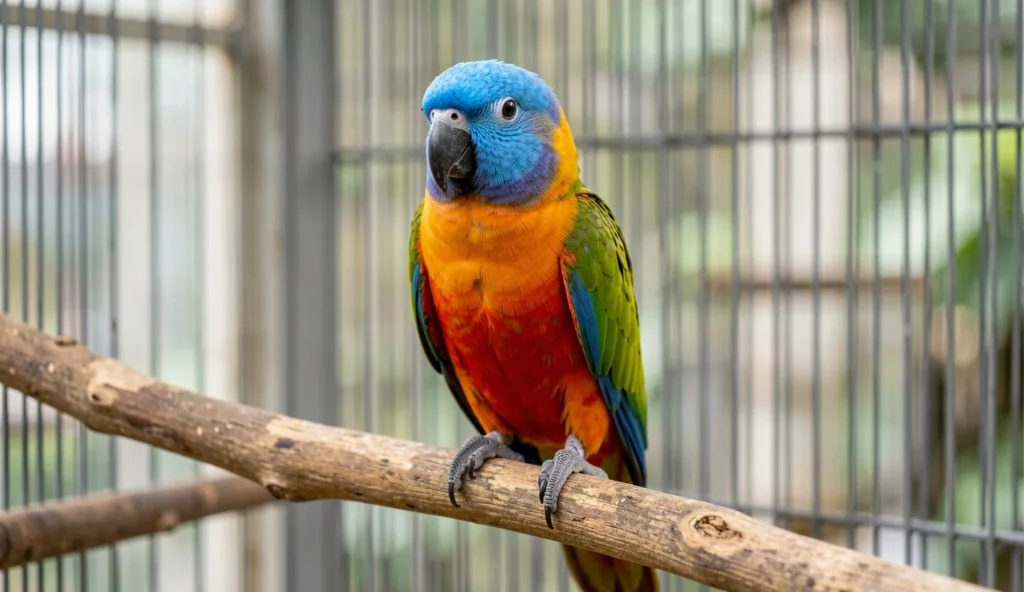
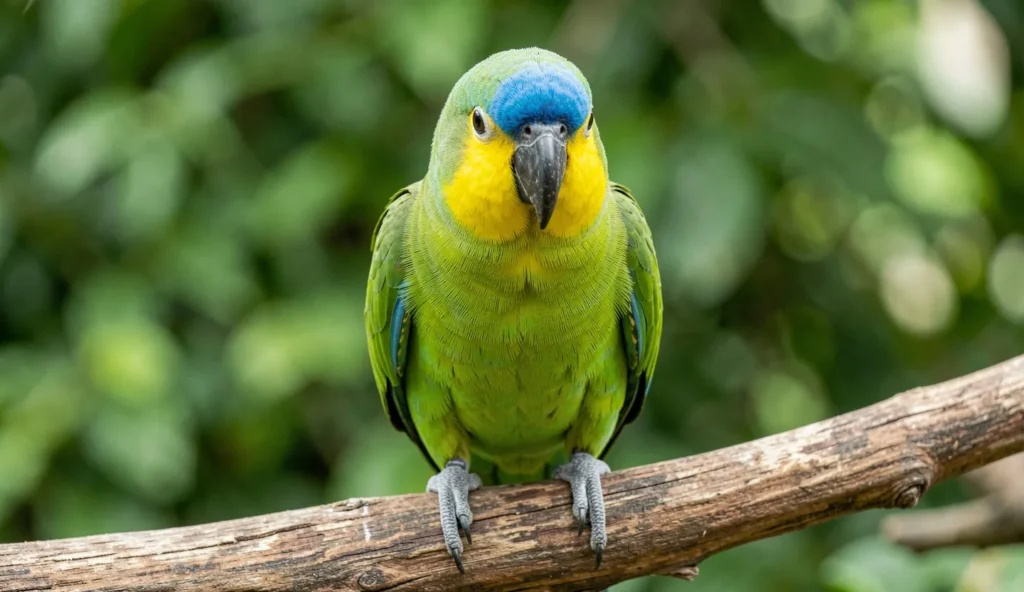
Blue Fronted Amazon appearance remains easy to recognize once the face and forehead details stand out. The bird typically shows bright green body feathers with additional yellow on the head. A clear blue patch sits on the forehead above the beak, varying in size from bird to bird.
This species also carries a strong, upright posture when alert. That posture supports a lively look that fits the category of playful amazon behavior. Even so, body condition signals can vary, and feather condition remains the best quick health check.
Plumage and Color Markings
The body feathers usually stay mostly bright green, with yellow on the face and crown. The blue forehead patch sits above the beak and often becomes the most memorable feature. Beak coloration tends to look horn-colored, while the legs are generally gray.
In adult birds, eyes often appear orange. Some young birds can look slightly different until they mature. Because color variation occurs naturally, comparing a new bird to breeder photos helps, but only veterinary evaluation confirms certainty.
Size and Weight
Most Blue Fronted Amazons measure around 14 to 15 inches from beak to tail tip. Weight commonly falls in the range of 300 to 450 grams. Males and females usually look similar, so sexing typically requires DNA testing or surgical methods.
Even with similar appearances, individuals may differ in body shape. That is why diet and activity should be tracked early. A healthy adult remains active, and excess weight tends to build quietly.
How to Identify a Healthy Bird
A healthy Blue Fronted Amazon usually shows bright, clean feathers and clear eyes. The beak should look smooth and free from cracks or overgrowth. Active behavior and a steady appetite also suggest the bird feels well.
Breathing should sound calm, with no open-mouth breathing or frequent sneezing. Droppings should look consistent and not watery. If any respiratory signs show up, prompt Amazon care requires a qualified avian vet visit.
Temperament and Personality
Temperament often drives long-term success with a Blue Fronted Amazon. These birds typically combine high intelligence with strong social attachment. Many owners describe them as playful, vocal, and demanding of daily interaction, especially when routine changes suddenly.
Because Amazon parrots can learn quickly, they also notice patterns in household behavior. That can be helpful for training, but it can also encourage persistent asking or loud attention-seeking. Smart management reduces conflict.
Intelligence and Talking Ability
The Blue Fronted Amazon is highly intelligent and can learn a large vocabulary with consistent practice. Many birds mimic words and sounds clearly once they get repetition. Mental stimulation remains essential because an understimulated mind often shifts toward problem behaviors.
Training and enrichment can double as learning time. Short sessions usually work better than long ones, especially for intermediate owners building consistency. When the bird enjoys the activity, progress tends to happen faster.
Playful and Social Nature
Playful amazon behavior usually shows through climbing, chewing, and toy interaction. The bird often builds a strong bond with caregivers and may want close proximity. That bond can feel rewarding, but it can also lead to demanding behavior when attention stops.
Daily interaction matters because this species stays active by nature. Many birds thrive when the same person handles daily routine tasks such as offering fresh foods and starting training. When attention becomes predictable, stress often decreases.
Potential Behavioral Challenges
Some Blue Fronted Amazons become loud, particularly during mornings and evenings. Loud calls can also increase when the bird feels excluded or when household sound patterns change. Managing light schedules and routine can reduce the intensity for many birds.
Feather plucking can occur when boredom, stress, or insufficient social time appears. Territorial behavior may also occur during hormonal periods, including breeding season. Owners should watch body language and consult an avian professional if aggression escalates.
Exercise Requirements
Exercise supports both physical health and mental stability in a Blue Fronted Amazon. Many birds gain the most from supervised out-of-cage time and safe play structures. Because this is a large parrot, movement needs typically exceed what small parrots require.
Activity also helps prevent common problems like obesity. It can also reduce stress behaviors such as repetitive calling or chewing furniture. With consistent scheduling, Amazon care becomes easier.
Daily Out-of-Cage Time
Most Blue Fronted Amazon owners plan for a minimum of 2 to 3 hours of supervised time outside the cage daily. Flight time in a safe, enclosed area can benefit the bird when weather and safety allow. Perches and play stands encourage climbing and allow natural wing stretching.
Supervision matters because parrots can taste anything reachable. A closed room with bird-safe surfaces reduces risk. Even with preparation, the bird should stay monitored during exploration.
Toys and Enrichment Activities
Foraging toys, chew toys, and puzzle feeders help satisfy natural instincts. Rotate toys weekly to prevent boredom and keep the bird engaged. Many Blue Fronted Amazons enjoy shreddable items, including paper, wood, and cardboard.
Enrichment should include variety rather than one type of toy. Owners can also add simple foraging tasks by hiding small portions of approved foods. This keeps the bird busy while encouraging calm, focused behavior.
- Provide multiple chew options to reduce furniture damage
- Use foraging puzzles to slow down eager eating
- Rotate toys weekly to keep novelty and motivation
- Include safe climbing areas on different levels
- Plan supervised training during calm parts of the day
Training Your Blue Fronted Amazon
Training helps a Blue Fronted Amazon become easier to manage and safer during handling. Positive reinforcement usually works best because it rewards desired behaviors without fear. Many intermediate owners also find training supports better behavior during high-energy periods.
Short, consistent sessions tend to produce better results than long practice blocks. Clear goals and simple cues also reduce confusion for both bird and owner. Over time, training can strengthen the bond and make daily care smoother.
Basic Obedience and Step-Up
Start with positive reinforcement using treats and calm praise. Teaching step-up early helps with handling for weigh-ins, health checks, and transport to the vet. Keep sessions short, often 10 to 15 minutes, and end on a win.
Owners should use the same cue and body position each time. Consistency supports learning, while mixed signals can cause the bird to resist. If the bird hesitates, the session can pause and resume after calm behavior returns.
Trick Training and Mental Stimulation
Blue Fronted Amazons often enjoy learning tricks such as waving or retrieving approved items. Clicker training can help shape behavior because it marks the exact moment the bird does the right action. Because this bird is a playful amazon, motivation usually increases when tricks include movement and rewards.
Training also prevents boredom and helps redirect attention when the bird gets restless. Owners should avoid rewarding unwanted actions, even if the behavior looks cute or funny. A consistent reward plan helps the bird understand what earns attention.
Dealing With Behavior Issues
When unwanted yelling starts, many owners reduce reinforcement by not reacting. Physical punishment can worsen fear and often increases problem behavior. Redirect biting by offering a toy or repositioning the bird to a safer perch.
If behavior issues become frequent or extreme, an avian behavior specialist can help. Sometimes feather problems or aggression tie back to medical causes. That is why veterinary checks remain important when behavior suddenly changes.
Grooming and Care Tips
Grooming protects health and improves comfort for a Blue Fronted Amazon. While the bird keeps many feathers neat, owners still need to monitor bathing, nails, and beak wear. Regular checks also help catch early signs of illness.
Consistent routines reduce stress, and stress reduction can lower the odds of feather plucking. In addition, grooming tasks support safer handling for both bird and caregiver.
Bathing and Feather Care
Bathing can include a shallow dish of water or a gentle misting routine. Many owners find bathing 2 to 3 times per week helps keep feathers clean. After bathing, the bird should dry in a warm, draft-free area.
Owners should avoid cold drafts and should not force water if the bird panics. Instead, many birds accept gradual introduction. When the bird bathes willingly, feather condition often improves over time.
Nail Trimming
Nail trims typically occur every 4 to 6 weeks, depending on wear. A bird-safe nail clipper helps prevent accidental injury. Styptic powder should remain available in case of bleeding during trimming.
For the first trim, some owners schedule an avian vet appointment to learn technique. A single rushed session can cause pain, and fear can make future trims harder. Calm handling and practiced timing usually make a difference.
Beak Maintenance
Cuttlebones and mineral blocks support natural beak wear and mineral balance. Owners should check for overgrowth, cracks, or improper closure. A healthy beak closes properly without gaps.
Beak issues can relate to diet, anatomy, or disease. If overgrowth appears quickly, an avian vet should evaluate the bird. Prompt action prevents discomfort and chewing problems.
Diet and Nutrition
Diet shapes long-term health for a Blue Fronted Amazon. A balanced program supports bright feathers, stable energy, and safe weight. For Amazon care, most owners prioritize formulated pellets alongside fresh foods.
Many health problems link back to seed-heavy feeding. When the diet stays consistent and includes variety, the bird often shows better appetite and fewer weight swings.
Staple Diet Pellets And Seeds
High-quality formulated pellets should make up about 60 to 70 percent of the diet. Seed mix should remain limited to roughly 10 to 15 percent to help reduce excess fat intake. Fresh, clean water should always be available.
Pellets make nutrition easier to measure, especially for intermediate owners. Over time, the bird may prefer pellets when variety and proper timing exist. If pellet introduction causes refusal, gradual changes usually work better than sudden switches.
Fresh Fruits And Vegetables
Fresh foods should include a variety of dark leafy greens, carrots, bell peppers, and broccoli. Fruits such as apples, berries, and mango can appear in moderation. These options add fiber, vitamins, and natural flavors.
Some foods require strict avoidance because they can harm parrots. Avocado, chocolate, caffeine, and high-fat foods should not enter the bowl. Owners should keep a simple food list near the prep area.
Supplements And Treats
Calcium supplements may become necessary for breeding females or birds with specific needs. Treats should stay intentional and limited, especially when weight is a concern. Nuts like almonds or walnuts can work as occasional training treats.
Sprouted seeds may add nutrients and encourage interest in eating. Still, sprouting and storage must stay hygienic to avoid contamination. Any supplement plan should align with vet guidance for the specific bird.
- Use pellets as the main daily food base
- Offer at least two fresh vegetables daily
- Include fruit in small portions, not daily large servings
- Provide safe chew items to support beak wear
- Limit nuts and high-fat items to training use only
Common Health Issues
Common health issues in a Blue Fronted Amazon often start quietly. That makes routine observation important for intermediate owners. Early detection can prevent serious complications, especially for respiratory and feather-related conditions.
In general, any change in appetite, breathing, droppings, or energy should prompt veterinary attention. Parrots can hide symptoms, so behavior changes often come before obvious physical signs. Preventive care plays a central role in long-term Amazon care.
Respiratory Infections
Respiratory problems can show as sneezing, nasal discharge, and labored breathing. Drafts, poor ventilation, or bacterial infections can trigger these issues. When breathing sounds change, immediate avian vet attention becomes necessary.
Owners should avoid aerosol sprays, smoke exposure, and strong fragrances. Clean air support can reduce irritants that stress airways. If one household product changes, monitor the bird closely.
Feather Plucking and Self Mutilation
Feather plucking can involve boredom, stress, or lack of social interaction. Environmental enrichment, stable routine, and adequate exercise often improve outcomes. Still, medical causes like skin infections must be ruled out.
Many cases improve when daily interaction increases and when owners reduce conflicting stimuli. The bird also benefits from consistent sleep schedules. If plucking accelerates, a vet exam should follow quickly.
Obesity and Fatty Liver Disease
Obesity often develops when seed-based diets dominate and activity stays low. Fatty liver disease can follow this pattern. Signs may include lethargy, difficulty breathing, and an enlarged abdomen.
Prevention focuses on a balanced pellet diet and daily movement. Owners should track weight with regular weigh-ins and adjust portions if needed. If weight increases despite changes, a veterinary check becomes important.
Psittacine Beak And Feather Disease
Psittacine beak and feather disease is a viral condition that can cause feather loss and beak deformities. It is highly contagious among parrots. There is no cure, so prevention and hygiene matter.
Quarantine procedures help when adding a new bird to a home. Cleaning and disinfection reduce spread risk. If any feather or beak abnormalities appear, a vet should evaluate quickly.
Is a Blue Fronted Amazon Right for You
A Blue Fronted Amazon can fit many intermediate homes, but it does not suit every schedule. The bird needs several hours of daily attention and reliable out-of-cage time. It also tends to be vocal, which can matter for apartment living and shared walls.
Because the lifespan can exceed 50 years, the commitment lasts long after the initial excitement. Owners should plan for changing work schedules, family moves, and future caregiving needs. When expectations match the reality of a large parrot, the experience tends to stay positive.
Time and Attention Requirements
Blue Fronted Amazon care depends on consistent interaction, training, and daily enrichment. Birds that receive too little contact can shift into loud attention behavior or self-soothing through feather damage. Those needing long work hours away from home should consider alternatives.
A consistent routine helps the bird feel secure. It also makes training and health checks predictable. Owners often see better behavior when the day structure stays stable.
Noise Levels and Living Space
These parrots can become loud, especially early morning and evening. Noise management depends on household routines and the bird’s access to calm stimulation. Apartment living may work only if neighbors can tolerate the sound level.
Space matters too because the bird needs room to move safely. A large cage helps, with a minimum size often described as 36 inches long by 24 inches deep by 48 inches high. Bar spacing should generally stay around 3/4 to 1 inch.
Long-Term Commitment and Planning
With a lifespan of 40 to 60 years, long-term commitment becomes a requirement, not a bonus. Owners should plan for future care coverage and ensure someone can handle Amazon care if schedules change. Adoption or rehoming should be a last resort because it creates stress for both people and birds.
Owning a large parrot also means budgets for food, toys, and routine avian vet visits. A stable plan keeps care consistent. When planning begins early, the bird usually adapts more smoothly.
Frequently Asked Questions
How Long Do Blue Fronted Amazons Live?
Blue Fronted Amazons typically live 40 to 60 years in captivity. Some individuals live longer with excellent diet, exercise, and regular veterinary care.
Are Blue Fronted Amazons Good Talkers?
Yes, Blue Fronted Amazons can be strong talkers and often learn a large vocabulary. Regular training and repetition usually improve clarity over time.
Can Blue Fronted Amazons Be Aggressive?
They can show aggression during hormonal or territorial periods, especially around breeding season. Socialization, consistent handling, and stable routines can reduce risk.
What Size Cage Does a Blue Fronted Amazon Need?
A common minimum guideline is 36 inches long by 24 inches deep by 48 inches high. Bar spacing often stays between 3/4 and 1 inch to support safety.
How Much Does a Blue Fronted Amazon Cost?
Prices often range from 500 to 2000 USD depending on age, breeder, and location. Adoption can reduce cost and may include starter care guidance.
Do Blue Fronted Amazons Need a Companion?
Many Blue Fronted Amazons bond strongly with humans and can live alone if daily attention is consistent. A second parrot can help only when the owner also manages introductions and training.
Keeping a Blue Fronted Amazon Thriving
Stable routines, balanced food, and regular enrichment support a healthy and steady personality in a Blue Fronted Amazon. With the right preparation, this blue-front amazon often becomes an engaged large parrot companion for many years.