What Is A Clydesdale Horse?
The Clydesdale horse is a Scottish draft breed known for its large size, calm handling, and feathered feet. Its body is built for heavy pulling, but its daily temperament often stays steady around people. Many enthusiasts also recognize the breed from Budweiser hitch horses. Clydesdale care focuses on grooming, hoof health, and feeding for draft-level work.
In many barns, this horse type stands out because of the long hair around the lower legs. That feathering looks dramatic, yet it also creates extra care needs. At the same time, the breed often suits public settings when trained with consistency. Clydesdale history links the breed to farm hauling and later display work.
Breed Origins In Scotland
Clydesdale history begins in Scotland, where local farmers needed powerful draft animals for everyday tasks. Selective breeding shaped a strong, working frame that could move reliably over farm terrain. Over time, the feathered lower legs became more common as a practical trait for colder weather. As demand grew, the breed later expanded into hauling and show settings.
Key Breed Traits At A Glance
The Clydesdale horse typically shows a heavy draft build with strong bone and a balanced stance. Feathered lower legs create a signature look that distinguishes it from many other draft breeds. Many owners describe the Clydesdale temperament as patient, especially when handling stays routine and calm.
Even so, individual horses vary based on training and socialization. Because the body is large, calm leadership helps prevent accidents and makes care easier. These traits often support Clydesdale uses in parades and ceremonial events.
Famous Clydesdale Uses In Modern Times
One of the most visible Clydesdale uses today involves hitch teams featured in parades and public ceremonies. The Budweiser hitch horses are the best known example for many people. Beyond marketing events, many Clydesdale horses also work in farms depending on conditioning and training.
Some handlers also use draft pulling for historical reenactments and local heritage displays. When the horse is prepared correctly, the breed can maintain steady posture and controlled movement. For comparisons to other equine types, it can help to review how different draft breeds work in public settings, such as the Arabian Horse for endurance-style performance.
Appearance And Physical Features
Appearance matters for Clydesdale horse owners because feathering, conformation, and movement all affect day-to-day Clydesdale care. The breed usually looks tall and powerful, with a draft-style build meant for pulling. Many buyers focus on the face markings, body color, and the length of feathering around the legs.
At the same time, owners should plan for grooming time and skin checks because feathered feet can trap moisture. Movement quality also matters, especially for hitch work and shows. When horses look impressive but move stiffly, hidden discomfort may exist. Care routines help protect both appearance and comfort.
Size And Build
A Clydesdale horse typically has a tall, heavy draft frame with strong shoulders and hindquarters. That structure supports pulling work and keeps the body stable under load. Long stride and steady balance also matter for hitch teams that need rhythm.
Because the horse is large, handlers should plan safe handling spaces. Sturdy gates, wide aisles, and reliable footing reduce stress during grooming and transport. These practical choices support safer training and easier daily care.
Coat Colors And Markings
Common coat colors include bay and brown, along with other draft-style combinations. White facial markings often show up in many individuals and can add to the breed’s classic look. Leg markings can vary, so two horses with similar body color may still look different in the feathering area.
When purchasing or selecting a horse, owners often evaluate the overall coat condition and the quality of feathering. Clean, healthy hair usually reflects better skin management. If feathering shows persistent redness or thick buildup, the issue may need treatment before the horse can stay comfortable.
Feathered Feet And Leg Structure
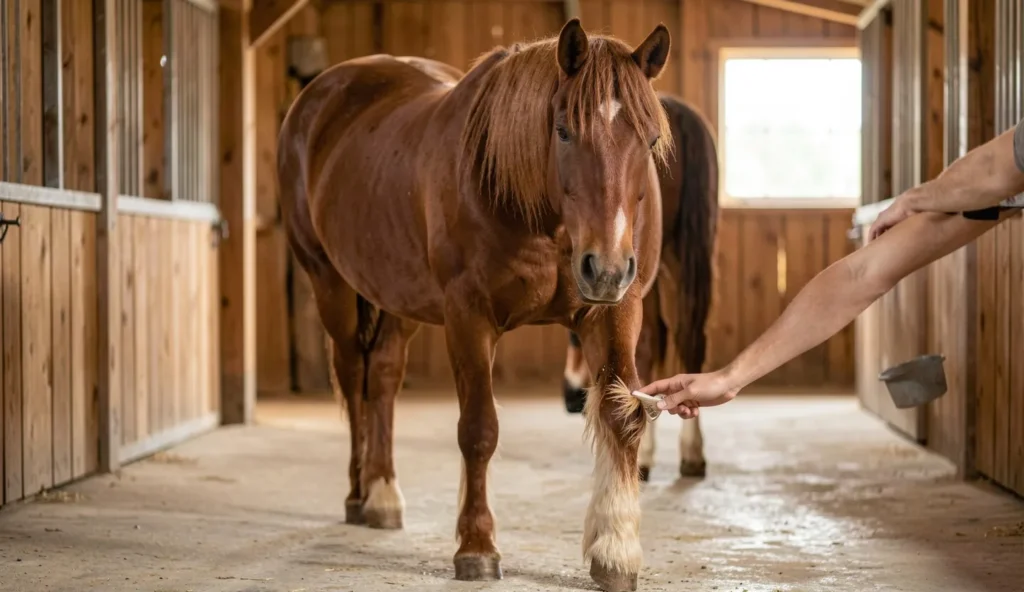
Feathered feet refer to long hair around the lower legs, usually down to the fetlocks or lower. This hair can help protect the skin in colder or wetter conditions. However, moisture, manure, and debris can also get trapped between hairs.
To keep skin healthy, owners must clean and dry feathers after turnout, rain, or wet bedding. If mud dries on the lower legs, irritation can develop under the coat. Care products should only support skin and be used as directed by a qualified professional.
Movement And Presence
Clydesdale horses often show controlled, steady draft movement suited to hitch work. In many public displays, handlers want balanced posture and consistent rhythm. Higher head carriage and confident stride can also improve turnout during shows.
Even so, movement should remain smooth and pain-free. Owners should watch for shortened steps, stiff joints, or reluctance to lift a hoof. Those signs can indicate hoof discomfort, skin irritation, or conditioning gaps that affect both health and show presence.
Clydesdale Temperament And Personality
Clydesdale temperament typically leans gentle and patient, especially with consistent handling. Many owners report that the breed responds well to calm leadership and predictable routines. At the same time, the horse’s size means even a “gentle” horse must get handled thoughtfully. Clydesdale temperament becomes most reliable when training builds trust over time.
Because each horse has a unique history, behavior can change based on prior training and social experiences. When daily care stays consistent, horses often learn fast and settle more easily. When care routines change suddenly, stress can appear in visible ways.
Typical Clydesdale Temperament
Many handlers describe Clydesdale horses as steady and cooperative when grooming, leading, and ground work remain routine. Large draft size can make calmness essential for safety. Individual personalities still vary, and some horses may take longer to relax in new barns or event spaces.
Socialization helps most horses feel comfortable around people, equipment, and other animals. Owners who provide structured care often see smoother health checks and easier training sessions. These habits strengthen Clyesdale temperament and support long-term Clydesdale care.
Handling And Human Interaction
Regular grooming can improve trust because it gives the horse a predictable daily routine. It also creates time for owners to check ears, coat, skin, and legs for early issues. Approach slowly and avoid sudden movements near the legs, since the feathering can hide sensitive irritation.
Using a calm voice and steady handling patterns often supports cooperative behavior. When work changes, such as switching from pasture to stall, gentle transition routines help prevent fear. For those interested in other large, calm equine personalities, breed comparisons like the Percheron horse can show how draft traits overlap across types.
Behavior Around Other Animals
Clydesdale horses usually do well with herd routines when introductions happen safely. Space matters because large bodies can overwhelm smaller animals during first contact. Dominance behavior can occur, so close observation helps prevent injuries.
Supervision remains important for horses introduced to unfamiliar animals. During early weeks, rotating turnout groups and monitoring feed access can reduce conflict. With careful setup, many horses settle into stable relationships that support calmer daily routines.
Stress Signs Owners Should Watch For
Stress signs can show up as pinned ears, tail swishing, repetitive pacing, or refusal to approach routine handling. If the horse refuses food, discomfort or illness may exist and should be addressed. With feathered horses, leg sensitivity can also signal skin irritation under the hair.
When stress appears repeatedly around certain people, locations, or noises, the cause often relates to prior experiences. Owners benefit from tracking triggers and adjusting handling. If symptoms persist, veterinary input helps rule out hidden pain.
Exercise Requirements For A Clydesdale Horse
Exercise requirements for a Clydesdale horse should match the horse’s workload and body condition. Draft horses need regular movement to support joints, circulation, and digestive health. However, conditioning must build gradually, especially after rest or seasonal changes. Clydesdale care includes exercise planning that reduces stiffness and supports pulling readiness.
Because feathered feet can hide skin problems, exercise also provides a chance to observe leg comfort after walking. Owners should watch for heat, altered stride, or swelling that appears after work. When the horse stays comfortable, training often improves faster and more safely.
Daily Movement And Turnout
Daily turnout supports mobility and joint comfort for large draft horses. Regular walking helps circulation and can reduce the risk of stiffness that builds during stall time. Owners should avoid sudden high-intensity work without warm-up, particularly for horses returning to training.
When turnout includes wet ground, feather management becomes critical. Mud buildup can lead to irritation, so owners should inspect lower legs more frequently after rainy conditions. Dry bedding and clean resting areas also help keep the feathered coat comfortable.
Walking Work And Light Conditioning
Walking work provides a practical conditioning base for many Clydesdale horses. Sessions often start short, then increase over weeks as fitness improves. Consistent surfaces help early conditioning because irregular footing can stress joints and hooves.
During training, monitor the horse for heat, stiffness, or altered movement. If the horse shortens a stride or shows reluctance, owners should reduce workload and evaluate hoof and joint comfort. This approach supports long-term Clydesdale care and safer progression.
Hitch Work And Draft Conditioning
When Clydesdale uses include hitch work, conditioning supports pulling stamina and posture control. Practice sessions help the horse learn rhythm while maintaining steady focus. Draft conditioning also benefits from rest days, since fatigue can affect form and increase soreness risk.
Event preparation usually requires gradual increases in time and load, not sudden jumps. When the harness program stays consistent, many horses gain confidence in pulling sessions. That confidence often supports calm behavior in public spaces and parades.
Common Exercise Mistakes
One common mistake is working too hard too quickly after rest. Joints may respond poorly when the horse returns to training without a build-up period. Ignoring hoof care is another risk because soreness can change stride and increase stress.
Skipping warm-up can also raise stiffness and injury chance. Owners should plan short walking and gentle movement before any pulling practice. When these basics get followed, exercise becomes safer and more productive.
Training A Clydesdale Horse For Handling And Pulling
Training a Clydesdale horse requires patience because size changes how quickly a mistake can become dangerous. A draft horse often learns best when pressure stays consistent and sessions remain short. Foundational handling builds the skills needed for harness, public events, and safe team work. For owners planning event use, training supports both Clydesdale temperament and safe Clydesdale care.
Because Clydesdale horses can appear confident while still feeling uncertain, training should include desensitizing and clear progression. Owners should avoid forcing a fearful horse into stressful situations. Instead, steps should build confidence gradually.
Foundational Training Basics
Foundational training usually starts with leading, standing, and tolerating gentle grooming. Horses should learn quiet acceptance of the halter, lead rope, and everyday handling patterns. Short sessions with consistent cues often help the horse stay focused without getting overwhelmed.
Owners should also train the horse to stand calmly for routine leg checks. Feathered feet make leg inspection essential, so the horse must learn that touch stays normal. This stage supports both health checks and later harness fitting.
Desensitizing For Public Events
Desensitizing supports performance in parades, crowds, and roadside events. Horses often need gradual exposure to sounds, vehicles, and visual movement in controlled steps. Calm behavior should get reinforced with routine and steady handling.
When fear appears, owners should slow the process and reduce pressure. Forcing a horse into stressful situations can increase risk for both horse and handlers. With consistent training, many Clydesdale horses can handle public environments more confidently.
To see how other breeds adapt to training for events, owners sometimes compare preparation styles across equine types, such as reviewing Tennessee Walking Horse temperament during show preparation. Even though that breed differs in gaits, the training discipline remains relevant.
Harness And Hitch Introduction Steps
Harness and hitch introduction should happen in stages over many short sessions. Equipment should never get fitted aggressively, and fit should get checked frequently to prevent rubbing and skin injury. For feathered horses, watch for friction near the lower legs and fetlocks during ground work.
Groundwork should come before any pulling practice. The horse should understand how to respond to cues while moving slowly with equipment attached. That sequence helps reduce confusion and improves safety when pulling begins.
Training Safety For Large Draft Horses
Training safety matters because large drafts require careful spacing and secure footing. Handlers and helpers should maintain clear communication during sessions and avoid clutter near hooves. Owners should stop training if the horse shows pain or persistent refusal to participate.
Because horse size increases the force involved in sudden movement, safety rules should remain strict. Using proper equipment, maintaining stable footing, and using calm pacing all support safe progress. When safety stays consistent, Clydesdale care remains focused on long-term comfort.
Grooming And Care Tips For Feathered Feet
Grooming and care for feathered feet define comfort for many Clydesdale horses. The breed’s long lower-leg hair can look elegant but also traps dirt, moisture, and debris. Therefore, grooming must become routine rather than occasional. Effective Clydesdale care reduces skin irritation and helps owners notice health issues early.
Feathering management usually combines brushing, rinsing when needed, and thorough drying after wet conditions. Owners also benefit from checking the skin and pastern area during daily care. If irritation persists, veterinary advice can prevent more serious skin problems.
Routine Grooming Schedule
A routine grooming schedule supports both coat condition and easier health checks. Brush regularly to remove dirt and reduce matting in the feathering. During grooming, check ears, coat, and skin for signs of irritation or unusual swelling.
Clean tack areas also reduce friction. If harness or bridles sit in the same spots daily, rubbing can build over time. When cleaning and friction control happen consistently, feathered feet stay more comfortable during work and public events.
How To Keep Feathering Clean And Dry
To keep feathering clean and dry, rinse and dry feathers after wet turnout or rain. Remove mud buildup from between hairs so moisture does not stay trapped at the skin surface. Only breathable products should get used, and only as directed by a vet or qualified professional.
After cleaning, drying matters just as much as rinsing. Hair that remains damp can encourage skin irritation and odor. Owners often find that a towel dry plus time in a dry environment reduces issues.
Common Feathering Problems To Look For
Moisture can increase the risk of skin irritation, especially when the horse stands on wet ground. Sweaty storage or damp bedding can worsen discomfort and create odor. Owners should watch for soreness, redness, persistent swelling, or a horse that resists leg handling.
When any of these signs appear, action should be quick. Cleaning, drying, and checking for harness rubbing often help first. If symptoms persist, a vet can confirm whether fungal or bacterial skin changes exist.
Hoof Care And Leg Health Support
Hoof care supports whole-body comfort for draft horses, especially those with heavy frames. Schedule farrier work on an appropriate timeline based on hoof growth and wear. Keep bedding dry to reduce hoof moisture issues that can lead to discomfort.
During grooming, inspect pasterns and lower legs for tenderness. Feathered hair can hide early swelling, so careful visual checks matter. When hoof and leg health stays stable, the horse often moves more comfortably in training and events.
Diet And Nutrition For A Clydesdale Horse
Diet and nutrition for a Clydesdale horse should support a draft horse’s energy needs without creating digestive issues. Most feeding plans start with forage, then add concentrates when workload and body condition require them. Draft horses often need steady calories to maintain muscle and support training. Clydesdale care includes monitoring hay intake, adjusting rations seasonally, and ensuring clean water.
Because body size can be large, total feed amounts can also become large. Owners should focus on ration balance rather than only total weight of feed. Overfeeding concentrates can create health risks, while underfeeding can affect strength and coat condition.
Forage First Feeding Base
Forage such as hay or pasture should form most of the daily diet. Feeding amounts should match body condition and work level rather than using a single fixed number. Safe storage reduces dust and mold risk, which supports respiratory and digestive health.
During rest seasons, forage portions may need adjustment to prevent weight gain. Body condition scoring helps guide changes. If body condition stays high, reducing calorie density while keeping fiber helps protect joints.
Grain And Concentrate Feeding Guidelines
Concentrates provide extra calories when a Clydesdale horse needs additional energy for work. Many plans introduce concentrates gradually to avoid digestive upset. Choosing feeds that match draft work schedules helps keep energy stable without sudden spikes.
Workload changes, such as preparing for a parade, can raise calorie needs. Even then, concentrates should get added carefully and then removed as the workload decreases. Monitoring droppings and appetite can provide early signals of diet tolerance.
Minerals And Supplements Considerations
Minerals help support bone health, muscle function, and overall metabolism. Mineral needs depend on forage quality and regional soil conditions. Owners should avoid adding supplements without understanding whether they address a real deficiency.
Working with a veterinarian or equine nutrition professional supports tailored recommendations. This approach helps prevent unnecessary supplementation and reduces the risk of unbalanced intake. When performance or weight changes occur, diet reviews should happen with guidance.
Water Intake And Electrolyte Basics
Clean water should stay available daily, and troughs must remain clean. Monitoring needs increase during hot weather or long work days. Electrolytes may support horses that sweat significantly, especially during training sessions.
Water intake also affects digestion and recovery. If water access changes or water quality declines, appetite can shift. Keeping water clean and consistent supports both health and training progress.
Body Condition Monitoring
Body condition monitoring protects joints by avoiding unhealthy weight gain. Diet adjustments should respond to seasonal changes, workload, and body score trends. Owners also track hay intake during rest periods to spot gradual increases or decreases.
When condition changes, rations should adapt before problems become obvious. A steady plan supports draft strength and helps feathered coats stay healthier. This monitoring routine also supports better decision-making for Clydesdale uses in public events.
For owners exploring feed strategies across other large animals, it can help to compare how different breeds manage workload and hardiness. For example, Highland cattle care discussions often emphasize forage quality and climate adaptation, which parallels basic nutrition planning for large herbivores.
Common Health Issues In Clydesdale Horses
Common health issues in Clydesdale horses often relate to skin, joints, and hoof management. Draft horses carry more body weight, so joint strain can develop if conditioning and hoof care lag. Feathered breeds also face unique skin risks because moisture can remain trapped in long lower-leg hair. Clydesdale care should include prevention, early detection, and routine checks.
Health management works best when owners do small daily observations instead of waiting for major symptoms. Feathered legs, in particular, need frequent inspection after wet weather. If discomfort appears, action helps prevent progression.
Skin And Feather-Related Problems
Moisture trapped in feathers can irritate skin and contribute to discomfort. Mud buildup can increase inflammation and create an environment that supports skin issues. If redness or swelling persists, owners should seek veterinary advice.
Consistent cleaning and drying remains the main preventive strategy. Tack rubbing and wet bedding can also worsen skin problems. When leg handling becomes more difficult, it often signals that skin or underlying tissue may require care.
Joint And Mobility Concerns
Large body size increases load on joints, especially when fitness levels decline. Conditioning and appropriate hoof support help reduce ongoing strain. After rest or reduced movement, stiffness may appear, so gradual re-entry to exercise often helps.
Owners should watch for altered stride, reluctance to move, or visible stiffness after workouts. Early intervention can improve comfort and maintain working ability. When planning training, it helps to match workload to current joint tolerance.
Hoof Health And Laminitis Risk Management
Hoof health depends heavily on moisture control and a consistent trimming schedule. Draft horses may face laminitis risks when diet and metabolic balance do not stay within safe ranges. Diet balance helps prevent high-risk feeding situations that can trigger inflammation.
If laminitis risk factors exist or symptoms appear, owners should follow veterinary guidance immediately. Treating underlying metabolic issues often provides better long-term outcomes than addressing hooves alone. Prevention-focused feeding and monitoring remain the safest approach.
Parasites, Vaccines, And Routine Checks
Parasites, vaccines, and routine checks support long-term stability for Clydesdale horses. A parasite control plan should follow local guidance and be adjusted based on risk factors. Vaccinations should remain on schedule with veterinary direction.
Routine checks include weight monitoring, coat condition assessment, and frequent leg and hoof inspections. When issues get caught early, treatments often become simpler. Owners who track changes over time usually manage health risks more effectively.
Is A Clydesdale Horse Right For You?
A Clydesdale horse can fit many draft horse enthusiasts and parade fans, but suitability depends on housing, handling capability, and time. The breed needs safe space, reliable equipment, and grooming routines that support feathered legs. Owners should also consider whether daily care time matches the feathering needs. These factors define whether Clydesdale care stays sustainable.
When a horse will work in public events, training time and desensitizing planning must also fit into the owner schedule. A structured routine often helps maintain calm behavior. For many large horse owners, the gentle nature of the Clydesdale horse becomes a strong advantage when care stays consistent.
Space, Equipment, And Handling Requirements
Draft size needs sturdy shelter, strong gates, and safe fencing built for large horses. Trailers and lifting safety procedures should match the horse’s weight and body dimensions. Feathered legs also require extra grooming time and careful drying after work and turnout.
Stable layout matters because handlers need clear access for brushing, leg checks, and tack cleaning. Wet areas near entry gates can also increase feather problems. Planning the physical setup early reduces daily friction during care.
Time Commitment For Grooming And Feeding
Feathered feet benefit from frequent cleaning and drying, especially in wet seasons. Daily checks for skin and leg comfort help catch issues early. Feeding also needs monitoring because work levels may change week to week.
Adjusting rations based on body condition protects joints and supports stable energy. When time constraints prevent regular feather care, skin problems may worsen. For this reason, time commitment becomes a key deciding factor.
Best Fit Owners And Use Cases
Parade and hitch enthusiasts often value the Clydesdale horse’s calm presence and strong draft look. Farms with structured care routines can also benefit because grooming and hoof checks happen regularly. Owners who can handle routine hoof and skin management usually manage feathered breeds more successfully.
Some owners also appreciate the breed’s visibility in cultural events, where a steady temperament matters. If the goal includes public showing, training for crowds and harness readiness should start well before event dates. For additional context on other draft-like choices, reviewing Warmblood horse can help clarify how different sport breeds approach conditioning and training schedules.
Frequently Asked Questions
How much space does a Clydesdale horse need?
Clydesdale horses need turnout space for daily movement and stable, non-slip footing. Sturdy fencing and safe shelter access matter because the horse is large. Dry bedding also supports feathered leg comfort.
What do Clydesdale horses eat each day?
Most daily feeding should rely on hay or pasture forage, then concentrates when work level and body condition require extra calories. Portions should match body condition and be guided by a veterinarian if adjustments are needed. Clean water should stay available at all times.
Why do Clydesdale horses have feathered feet?
Feathering developed as protection for the lower legs in colder conditions. Feathered feet require careful cleaning and drying because moisture can trap against the skin. Keeping moisture under control helps reduce irritation.
Are Clydesdale horses good for beginners?
Clydesdale horses can be gentle, but their size requires confident handling. Beginner suitability improves when experienced training support helps with leading, grooming, and harness basics. Consistent routines also reduce stress during care and early training.
How often should a Clydesdale horse be groomed?
Grooming should happen regularly to manage coat condition and reduce matting in feathering. Feathered legs need cleaning and drying more often after wet turnout or rain. Frequent skin checks during grooming help spot early issues.
What health problems are most common in Clydesdale horses?
Skin issues can occur when moisture remains trapped in feathering. Joint and mobility concerns are important due to the breed’s heavy body weight. Hoof health, parasite management, and routine checks also support long-term comfort.
Keeping A Clydesdale Healthy And Comfortable
With steady routines for grooming, feeding, and exercise, the Clydesdale horse often stays calm, functional, and comfortable. Consistent care also helps protect the feathered feet and supports long-term joint and hoof health.