Rarest Goat Breeds in the World
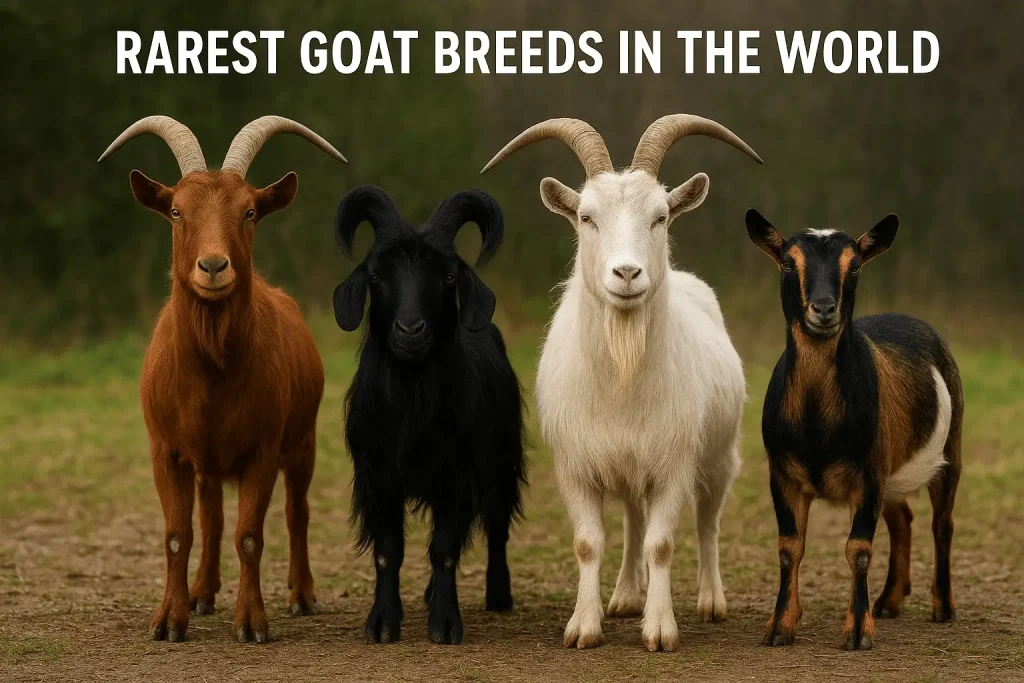
While some goat breeds like the common Nubian or Alpine are found on farms worldwide, others are so scarce they teeter on the edge of extinction. These rare breeds hold irreplaceable genetic traits, cultural heritage, and remarkable adaptations to extreme environments. In this article, we’ll explore some of the rarest goat breeds in the world — the ones that truly stand out for their beauty, resilience, and uniqueness. From the twisted horns of the Girgentana to the fainting reflex of the Myotonic, each breed tells a story of survival and human partnership.
1. Arapawa Goat (New Zealand)
The Arapawa Goat is one of the rarest goat breeds, native to Arapawa Island in New Zealand. Thought to be descended from Old English goats brought by European settlers, this breed developed independently for generations. Known for their long, twisted horns and multicolored coats, Arapawa goats are hardy and adaptable to harsh environments. Conservation efforts are ongoing to preserve this rare genetic line, and their story shares similarities with other heritage breeds like the Bagot goat, which also carries a rich history tied to European ancestry.
2. San Clemente Island Goat (USA)
Originating from San Clemente Island off the coast of California, this goat breed was once nearly extinct. The San Clemente Island goat is small, agile, and easily recognized by its reddish-brown coat and backward-curving horns. These goats have become a focus of conservation programs due to their unique genetic makeup and historical importance. Their small size and hardiness make them a fascinating comparison to the Pygmy goat, another compact breed valued for its adaptability.
3. Girgentana Goat (Italy)
Native to Sicily, the Girgentana Goat is famous for its beautifully twisted horns that can grow up to a meter long. Unfortunately, the breed has faced a significant decline in population. However, local farmers and breeders are working hard to preserve it as part of Italy’s agricultural heritage. The Girgentana’s milk is rich and flavorful, often used to make premium cheese varieties. For those interested in dairy goats with exceptional milk quality, the Toggenburg goat offers another example of a breed prized for its rich milk production.
4. Myotonic Goat (USA)
Also known as the “fainting goat,” the Myotonic Goat carries a rare genetic condition called myotonia congenita, which causes its muscles to stiffen temporarily when startled. Despite this unusual trait, they are gentle, friendly, and productive animals. They’ve become popular in sustainable farming systems for their easy care and strong meat quality. For a deeper look into this unique breed, our Myotonic goat breed guide covers their care, temperament, and history in detail.
5. Valais Blackneck Goat (Switzerland)
This striking goat breed, native to the Swiss Alps, is recognized by its distinctive black front half and white rear half. The Valais Blackneck is valued for both its milk and its thick, lustrous coat. Due to its limited breeding area and slow reproduction rate, it remains rare even in Switzerland. Farmers and goat enthusiasts across Europe are working to maintain their numbers through selective breeding programs. Their alpine hardiness is reminiscent of the Alpine goat, a breed that also thrives in mountainous terrain and is known for its excellent dairy output.
6. Markhor (Pakistan)
While technically a wild goat, the Markhor is one of the rarest and most majestic species in the world. Found in the mountainous regions of northern Pakistan, it is known for its impressive corkscrew-shaped horns and sure-footed climbing ability. Once critically endangered, conservation efforts have helped the Markhor population recover significantly, making it a symbol of wildlife preservation success.
7. Kaghani Goat (Pakistan)
The Kaghani Goat, native to the northern valleys of Pakistan, is known for its long, soft hair and ability to survive in extreme cold. It is mainly raised for its fine wool, used to produce high-quality textiles. Unfortunately, its population has been declining due to changing agricultural practices, making conservation essential for maintaining genetic diversity in the region. Another breed from the same region, the Kamori goat, is admired for its elegant appearance and is also a focus of preservation efforts in Pakistan.
8. Damascus Goat (Middle East)
The Damascus Goat, also called the Aleppo Goat, is a rare and beautiful breed known for its distinctive face and high milk yield. Originating in Syria and Lebanon, it has gained attention worldwide for both its unique looks and dairy qualities. Selective breeding has helped preserve this ancient goat, which plays an important role in the region’s agricultural heritage.
Preserving Rare Goat Breeds
Each rare goat breed represents a piece of agricultural history and biodiversity. These goats have adapted to different environments and human needs, making them valuable genetic resources. Conservation programs, ethical breeding practices, and global awareness can help protect these breeds from extinction while supporting sustainable farming communities. Supporting breed-specific organizations and choosing heritage breeds for small-scale farming are practical ways to contribute to their survival.
Conclusion
The rarest goat breeds in the world remind us of nature’s diversity and resilience. Whether thriving on remote islands or mountainous slopes, these goats are living treasures that deserve recognition and protection. By valuing their unique characteristics and supporting conservation initiatives, we can ensure that these remarkable animals continue to enrich our world for generations to come.