What Is A Halfmoon Betta
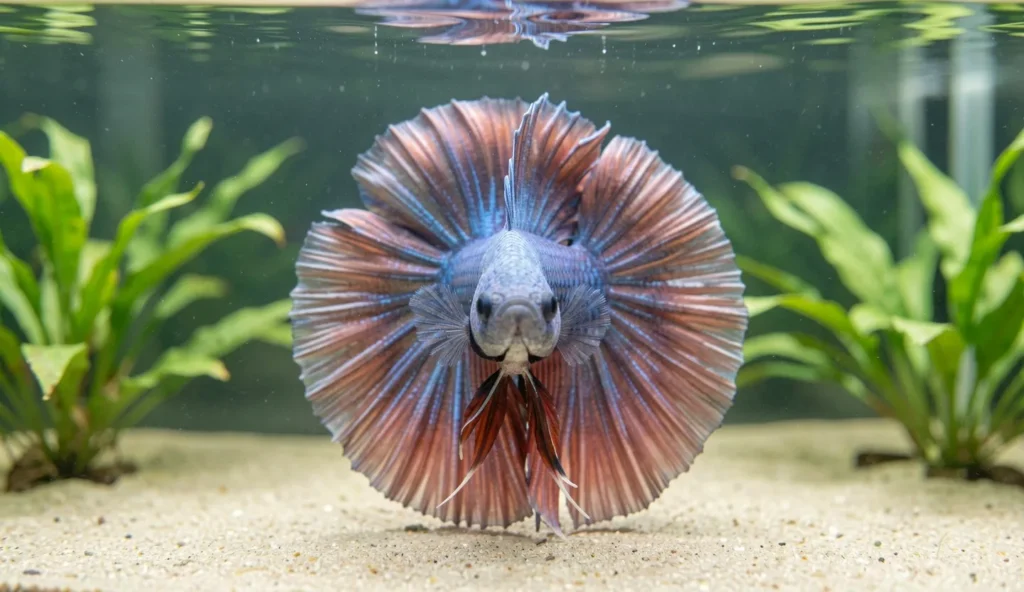
The halfmoon betta tail is known for a near semicircle spread when fully flared, with ray structure that holds shape in front view. This trait stands out most during display, and it helps explain why many breeders focus on halfmoon betta genetics for show fish.
Halfmoon also sits in the longfin group in many betta shows and hobby discussions. Because judging standards can vary slightly by organizer, clear expectations help set realistic goals for both owners and breeding programs.
Where The Halfmoon Tail Shape Fits Among Betta Tail Types
Halfmoon refers to a tail spread that forms a near semicircle rather than a long, narrow point. Tail width, spread, and ray structure all affect what the tail looks like at maturity.
Different breeders may use slightly different judging standards, even when the target is the same look. As a result, halfmoon is often grouped with longfin categories when fin length and flow matter most.
Key Features That Identify Halfmoon Tails
A halfmoon tail typically shows a broad spread when fully flared, creating a smooth outline. Outer rays form a rounded semicircle, and the central portion provides the stiffness needed for a stable fan.
Meanwhile, shorter or narrower spreads can suggest a related shape rather than true halfmoon. Fin fullness and how evenly the rays support the outer edge also help confirm the tail type.
Halfmoon Betta Tail Types You Might See
Even within halfmoon betta tail varieties, tail edges and spread patterns can look different across lines. Owners often notice these differences first when the fish flares and when the tail relaxes between displays.
In practice, the biggest visible changes involve edge shape, fin fullness, and how consistently the fish flares without droop. Those details also influence breeding decisions and fin health outcomes over time.
Classic Halfmoon With Full Semicircle Spread
This variant shows strong spread with good edge continuity across the semicircle. Rays appear balanced from the center to the outer sections, which helps the tail look even in photos.
Tail length supports flare width without heavy droop, especially when the fish remains unstressed. Because stable flare matters for show fish, many breeders treat classic spread as a priority trait.
Halfmoon With Rounded Edges And Smooth Ray Flow
Some fish show edges that curve cleanly rather than looking jagged or uneven. Good ray alignment supports a consistent flare that holds the rounded arc across most displays.
This look often comes from careful line selection and consistent rearing conditions. Over time, well-grown rays can make the tail appear fuller, with less edge fraying at rest.
Halfmoon With Slight Tapering Toward The Outer Rays
In tapering styles, the outer rays narrow and can reduce the overall semicircle fullness. At rest, the tail may still flare near halfmoon, but it can show less width than classic examples.
Such tails can also change as the betta matures and the rays fully develop. For breeders, this means flare quality may improve after growth cycles rather than declining.
Semi Full Halfmoon Versus Full Show Halfmoon
Some fish flare strongly only under ideal conditions, such as stable temperature and clean water. Full show lines tend to maintain spread more consistently across common hobby conditions.
Juvenile tails often improve after several growth cycles, because ray thickness and edge continuity develop later. When tail quality looks inconsistent early, patience plus correct fin health routines usually matters more than quick assumptions.
Halfmoon Vs Delta What Differences Matter
Halfmoon vs delta is one of the most common comparisons in betta tail discussions. The difference shows up in tail spread behavior and how the tail forms a shape when fully displayed.
Understanding the shape also helps breeders plan pairings and owners interpret photo angles. That clarity supports better selection for show fish and long-term fin health in either line.
Tail Spread Shape And Flare Behavior
Halfmoon typically forms a near semicircle when flared, with a rounded arc that resembles half a circle. Delta forms a wider triangle shape with a more open base and a different flare angle.
Because halfmoon emphasizes the rounded arc, the edge can look smoother during display. Delta often appears more dramatic, especially in the outer taper when the tail drops into a triangle form.
Ray Length And Edge Shape Differences
Halfmoon usually shows even outer ray flow, which supports a more continuous semicircle outline. Delta often has more noticeable triangular tapering, where rays create a broader base and narrower point visually.
Edge finish also depends on genetics and conditioning, not only tail type. For example, stable water and gentle feeding help prevent fin erosion that would blur the intended edge shape.
Breeding Goals For Halfmoon Versus Delta Lines
Halfmoon breeding goals focus on width and stable semicircle flare at maturity. Delta breeding goals often prioritize an open spread and a more consistent triangular profile.
Line selection can reduce variability across generations, especially when breeders track tail changes from juvenile stages. When breeding focuses on fin health along with shape, fewer defects appear during growth.
For broader community context on livebearer genetics and breeding behavior, some keepers also study related species routines in articles like swordtail fish breeding behavior. Betta breeding differs, but pattern tracking and careful rearing habits still translate across experiences.
Genetics And Breeding Basics For Halfmoon Betta Tail Types
Halfmoon betta tail form can vary across siblings even when parents both show strong semicircle traits. This means breeding programs rely on careful selection, not a single predictable formula.
At the same time, breeding always affects show fish potential and fin health outcomes. When tail structure develops poorly, it also tends to increase the chance of fraying during normal movement.
How Tail Shape Selection Works In Breeding Programs
Tail form traits can shift across siblings as rays thicken and edges refine with age. Selection typically focuses on flare quality at maturity, because juvenile tails can mislead expectations.
Health and fin structure matter as much as appearance, since damaged fins often regrow weaker. Because of this, fin health traits often get treated as selection criteria in addition to shape.
Pairing Strategies Used By Breeders
Many breeders use proven halfmoon lines to stabilize semicircle spread in future generations. Pairing strategies also avoid known fin-fragile fish when show goals depend on clean edge continuity.
During rearing, tracking tail changes from juvenile to adult stages helps identify which siblings keep a stable fan. That tracking supports better retention of halfmoon show characteristics as the batch grows.
What To Look For In Show Fish Quality Development
Show fish development usually includes even ray length and strong edge definition. Minimal fin erosion during growth is a key sign that maintenance and water stability support growth.
Stable flare without frequent tearing also matters, since repeated stress can weaken ray structure. Breeders who focus on fin health prevention tend to see cleaner results later in development.
Common Mistakes That Reduce Tail Quality
Overcrowding and poor water conditions during rearing often lead to fin splits and weakened edges. Feeding gaps that reduce nutrition can slow regrowth and reduce fin thickness.
Rough handling also damages tail rays, which can permanently affect the intended halfmoon vs delta look. When tail rays break early, later flare may never fully return, even with good care.
Some keepers compare how other fish maintain adult form by reading guppy fish care and breeding notes. Even though betta rearing differs, stable environments and consistent feeding schedules remain key themes across fish care.
Housing Essentials That Protect Halfmoon Fin Health
Halfmoon fin health depends heavily on the tank environment, since long fins catch on rough edges and weak flow areas. Housing that reduces snags and stress helps the tail curl less aggressively and flare more smoothly.
When the environment stays stable, the halfmoon betta can build stronger rays and keep edges intact longer. That stability also supports fin rot prevention by limiting stress-driven weakness.
Tank Size And Stress Reduction
Provide enough space for full flares and comfortable turning, since cramped tanks limit display behavior. Avoid sharp décor that can snag fins and cause small tears that later spread.
Tank mates must be compatible with calm coexistence, because aggressive chasing often leads to edge damage. If compatibility remains uncertain, housing separately prevents hidden nipping.
Water Parameters That Support Strong Fins
Use stable temperature and a consistent filtration system suited for bettas with gentle flow. Perform regular partial water changes to remove dissolved waste before it stresses the fish.
Remove uneaten food quickly, since leftover feed breaks down and raises ammonia risks. With stable water quality, the tail can maintain structure rather than fraying.
Substrate And Plant Choices For Gentle Movement
Smooth surfaces reduce friction and lower the chance of tearing when the betta swims near the bottom. Live plants can stabilize water quality and encourage calmer behavior.
Avoid aggressive current that strains the tail, because constant pressure can break fin edges. Low drag flow lets the fins move naturally and supports a cleaner halfmoon silhouette.
How To Reduce Fin Nipping And Tail Tearing Risk
Watch for aggression signs and separate the betta immediately if nipping appears. Avoid housing with similarly patterned fish if aggression triggers during competition.
Remove sharp items and check decorations for loose parts that could catch rays. Regular inspection helps protect the delicate outer rays that define halfmoon shape.
When other aquarists manage community setups, tank mate guidance can help reduce accidental damage, such as in angelfish care. Betta setups need calmer companions, but the principle of reducing fin stress holds across species.
Feeding, Maintenance, And Fin Health Routines For Halfmoon Betta
Feeding, cleaning, and early response determine how long the halfmoon betta tail maintains clean edges. With long fins, even small issues can show quickly as fraying or uneven spread.
Strong fin health usually comes from predictable routines that support immune function. Those routines also reduce bacteria growth that contributes to fin rot prevention.
Best Diet For Fin Support And Overall Condition
Feed high quality pellets or flakes designed for bettas as the main diet. Add protein rich treats in controlled portions to support muscle and fin tissue.
A consistent schedule prevents digestive stress, which can otherwise lower resilience. Uneaten leftovers should be removed to keep water clean between feedings.
Water Change Schedule And Cleaning Practices
Use partial water changes on a regular schedule rather than rare large changes. This approach reduces shock and keeps beneficial bacteria stable.
Clean debris from bottom areas without disturbing substrate deeply. When rinsing filter media, rinse it in removed tank water to preserve beneficial bacteria.
How To Prevent Fin Rot In Halfmoon Betta
Spotless water limits bacterial growth that can attack stressed tissue. Avoid temperature swings because unstable warmth weakens immune defenses.
Quarantine new fish to reduce disease introduction, then watch for signs before combining. If fraying or red edges appear, treat early so the damage does not spread along the rays.
What Fin Damage Looks Like And When To Act
Frayed edges often precede worse splitting, especially on outer rays where halfmoon spread is most visible. Red streaks or patches can indicate infection risk that needs faster intervention.
Tail ray breaking can also happen from snagging or aggression during feeding. In those cases, separate the injured fish to prevent further tearing and allow regrowth.
Routine Handling And How To Minimize Tail Stress
Use gentle netting and keep time out of water as short as possible. Frequent chasing during tank moves increases stress and raises the chance of tearing.
Use soft tools and return the betta quickly to stable water conditions. Handling care matters because halfmoon rays show damage faster than shorter tail types.
Fin Regrowth Expectations After Injury
Regrowth quality depends on diet and clean, stable water conditions. Early damage often corrects better than long standing splits.
Condition also influences flare ability, so a healthy halfmoon betta may show improved spread after fins heal. Monitoring weekly works better than daily checks that increase stress.
Because some keepers expand into other fish systems, reading neon tetra schooling behavior helps explain how water stability changes how fish act in groups. While bettas are mostly solitary, the same link between stable water and calmer movement applies.
Starter Checklist For Halfmoon Betta Owners And Breeders
Preparation prevents many fin health problems that otherwise show up during growth. The checklist below supports both daily care and breeding rearing setups.
Must Have Setup Items
- Heater and thermometer for stable temperature
- Filtration with gentle flow suited to bettas
- Decor with no sharp edges or snag points
- Smooth net and soft container for transfers
- Water test kit for consistent ammonia and nitrite monitoring
Daily And Weekly Habits
- Feed measured portions and remove uneaten food
- Observe flare quality and check tail edges weekly
- Perform partial water changes on a consistent schedule
- Keep tank mates compatible or house separately to avoid nipping
Making Halfmoon Betta Tail Quality A Consistent Goal
Strong halfmoon betta tail quality comes from consistent water quality, careful feeding, and quick action when edge damage appears. With disciplined fin health routines, halfmoon bettas can maintain show worthy tails longer.
Frequently Asked Questions
How Can A Halfmoon Betta Tail Be Identified In A Store Or Photo?
Look for a near semicircle spread with a smooth rounded edge when flared.
Why Does A Halfmoon Betta Tail Look Smaller At Rest Than In Photos?
Halfmoon spread changes with age, stress, and water conditions, so resting tails often look narrower.
What Conditions Help Prevent Fin Rot In Halfmoon Bettas?
Stable temperature, clean water, and prompt removal of waste and leftover food reduce rot risk.
Can Halfmoon Bettas Still Show Good Tails If They Are Kept With Tank Mates?
Yes, but only if tank mates are non aggressive and no nipping or snagging occurs.
At What Age Do Halfmoon Betta Tails Usually Reach More Consistent Quality?
Tail quality often improves after adulthood growth when rays thicken and edges stabilize.
Final Note On Halfmoon Betta Tail Care
Halfmoon betta tail care stays manageable when routines stay consistent, especially for breeding and show fish development.