Asiatic Lion – The Last Roar of India’s Forests
Introduction
Few big cats carry the weight of history and survival like the Asiatic Lion, also known as the Indian Lion or Persian Lion. Once roaming from the Middle East to northern India, this rare and majestic subspecies of lion now survives only in the Gir Forest of India. With a population that has rebounded from fewer than 20 individuals in the early 1900s to over 600 today, the Asiatic lion stands as one of the world’s most remarkable conservation success stories. Distinguished by its slightly smaller size and less developed mane compared to its African cousin, the Asiatic lion is a proud symbol of biodiversity resilience and cultural heritage.
Habitat and Distribution
Once roaming from the Middle East to northern India, Asiatic lions (Panthera leo persica) are now confined to:
- Gir National Park and surrounding sanctuaries in Gujarat, India
- Protected zones managed by the Gujarat Forest Department
These lions inhabit dry deciduous forests, scrublands, and open grassy plains. Unlike the African lion, which ranges across multiple countries and ecosystems, the Asiatic lion’s entire wild population exists within a single, protected region.
Physical Characteristics
The Asiatic lion shares similarities with its African counterpart but also displays unique features:
- Size: Males measure about 6.5–9.5 feet, including tail
- Weight: Males: 350–420 lbs, Females: 240–300 lbs
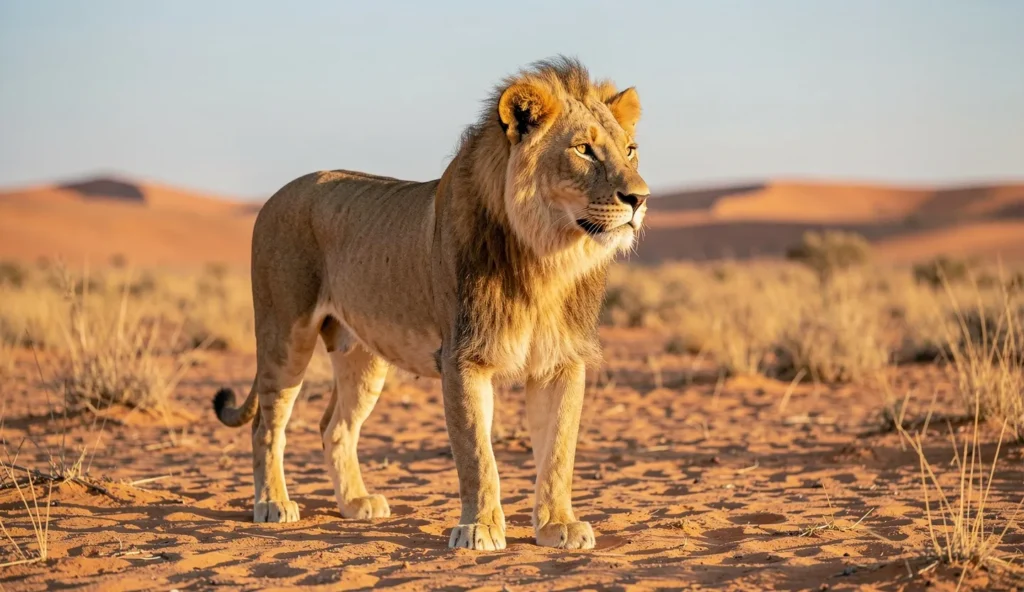
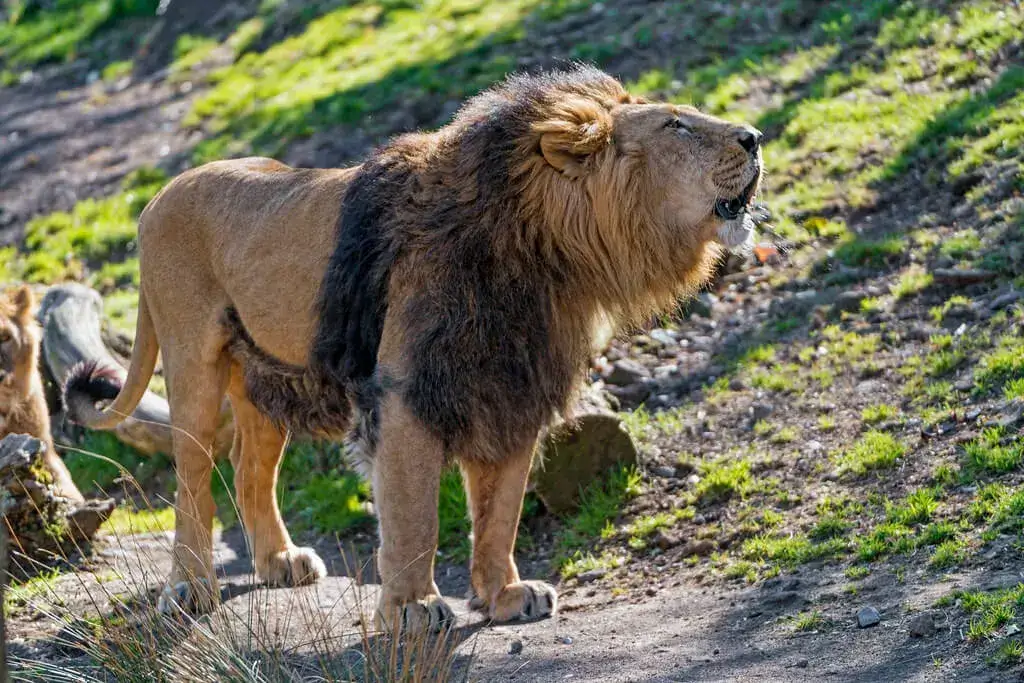
- Mane: Shorter and sparser, especially on the sides
- Distinctive Fold: Long skin fold along the belly, unique to this subspecies
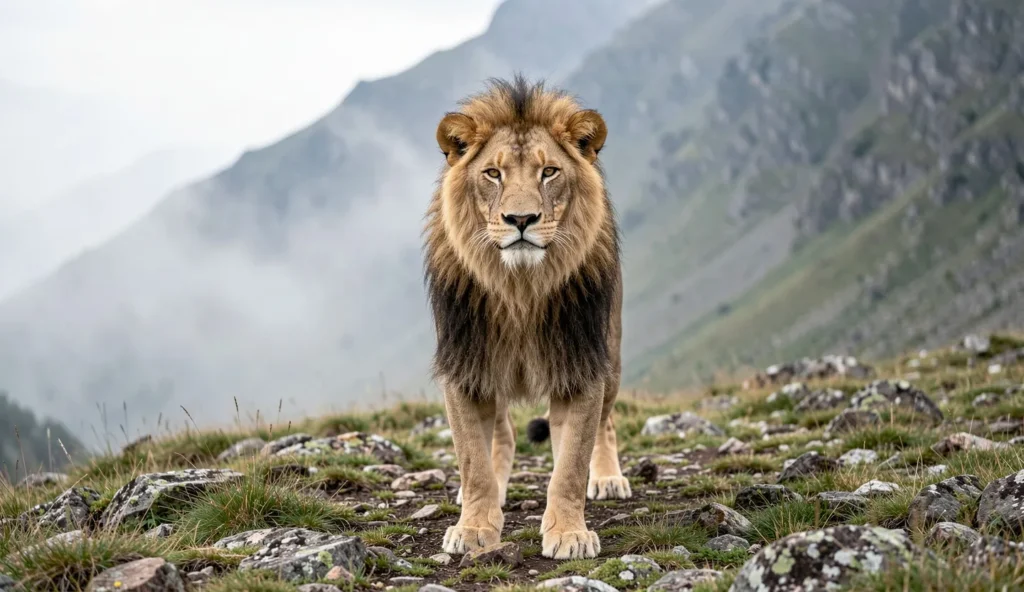
Their slightly smaller stature allows them to move more easily through dense Indian undergrowth. For comparison, the Masai lion of East Africa tends to be larger and more robust, reflecting the different habitats and prey availability across continents.
Social Behavior
Asiatic lions live in smaller prides compared to African lions:
- Groups often consist of 2–3 females and 1–2 males
- Males are more solitary and may form coalitions to control territory
- Females remain with the pride and are the primary caregivers to cubs
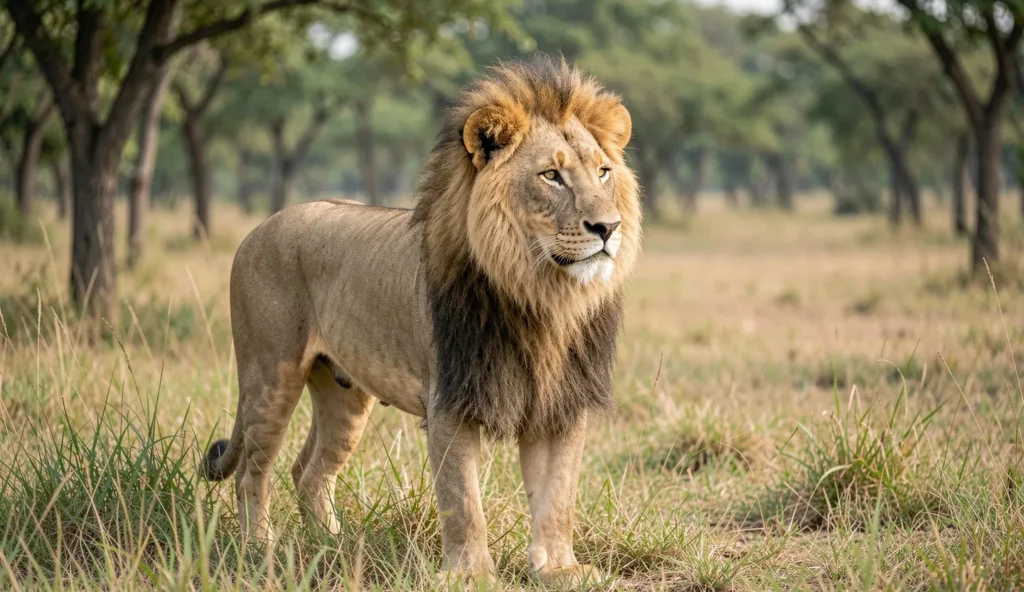
Smaller group sizes help reduce competition for food in resource-limited habitats. This social structure contrasts with the larger prides seen in the West African lion, which must adapt to the sparse prey base of the Sahel region.
Diet and Hunting Habits
These lions are carnivorous predators, feeding on:
- Deer species like chital and sambar
- Wild boars and livestock (occasionally)
- Antelopes and other herbivores
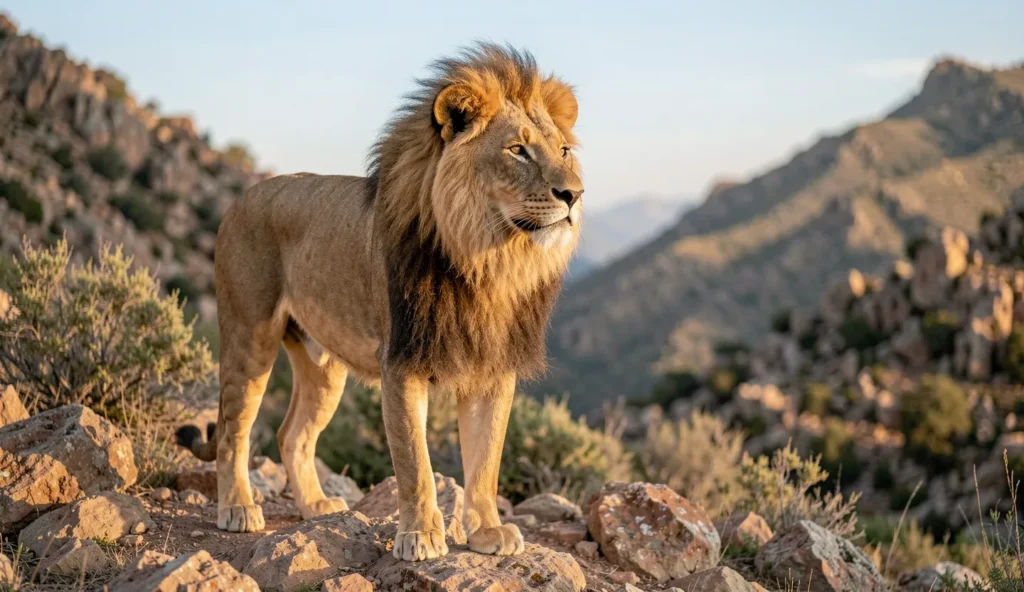
Asiatic lions typically hunt at night and rely on stealth and cooperation. Their diet overlaps with that of the Barbary lion, though the now-extinct North African subspecies once preyed on larger game like Barbary sheep and wild cattle.
Cubs and Reproduction
Reproduction follows patterns similar to African lions:
- Gestation lasts about 110 days
- Litters consist of 2–4 cubs, born blind and helpless
- Lionesses care for cubs while males protect the territory
Cub survival is enhanced by protected environments and conservation efforts.
Threats and Conservation
The Asiatic lion was once nearly extinct, but focused conservation has led to a significant recovery:
- Poaching and human-wildlife conflict remain risks
- Disease outbreaks like canine distemper can devastate small populations
- Habitat fragmentation due to agriculture and human expansion
Conservation initiatives include:
- Gir Forest protection and buffer zones
- Community involvement and education
- Plans for establishing a second population outside Gir
Thanks to these measures, their numbers have grown from below 20 in the early 1900s to over 600 today. A practical observation from field researchers: the success of the Gir conservation model has become a blueprint for protecting other critically endangered big cats, including the Ethiopian lion, which faces similar threats of habitat loss and genetic isolation.
Cultural Importance
The Asiatic lion holds deep cultural and historical significance:
- National emblem of India, symbolizing courage and power
- Featured in ancient Indian, Persian, and Middle Eastern art
- A source of local pride and tourism in Gujarat
Respect for lions in Indian culture supports continued efforts to protect them.
Fun Facts About Asiatic Lions
- They are genetically distinct from African lions
- Their roars are softer but still powerful
- Males mark their territory with scent and roaring
- They have less genetic diversity due to past population bottlenecks
Frequently Asked Questions
Q1: How many Asiatic lions are left in the wild?
A: As of the latest estimates, there are over 600 Asiatic lions, primarily in and around Gir Forest, India.
Q2: Are Asiatic lions different from African lions?
A: Yes, they are slightly smaller, have a distinctive belly fold, and live in smaller prides.
Q3: Where can I see Asiatic lions?
A: Gir National Park in Gujarat is the only natural habitat for Asiatic lions.
Q4: Are Asiatic lions endangered?
A: They are listed as Endangered by the IUCN due to their limited range and population size.
Q5: What is being done to protect Asiatic lions?
A: India’s government and conservationists have implemented habitat protection, population monitoring, and relocation plans.
Conclusion
The Asiatic Lion represents resilience, heritage, and the success of focused conservation. Though its numbers remain small, ongoing protection efforts and cultural reverence offer hope. By continuing to safeguard its habitat and promote awareness, we can ensure that the last roar of India’s wild continues to echo for generations to come.