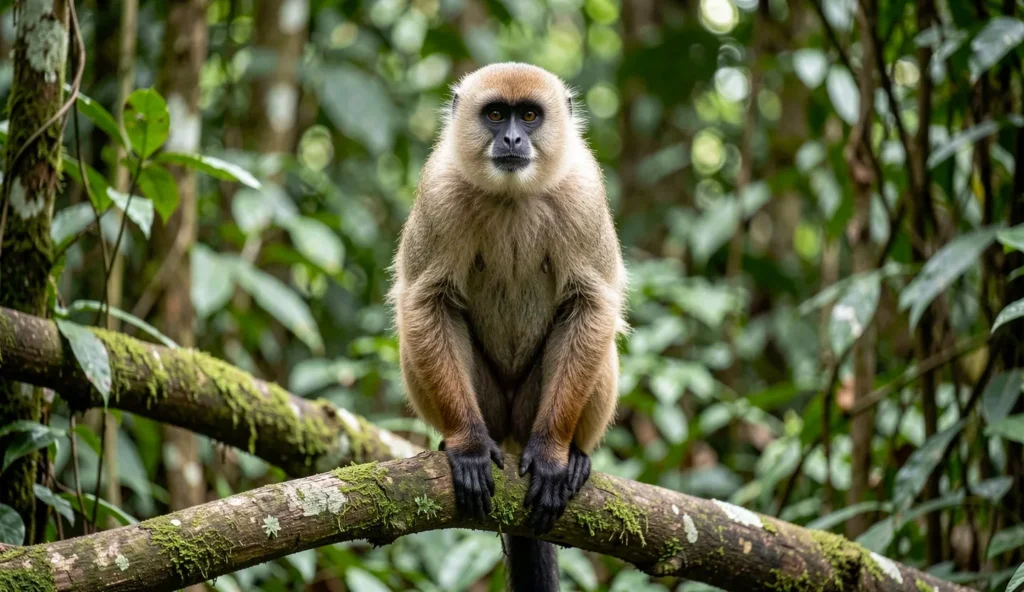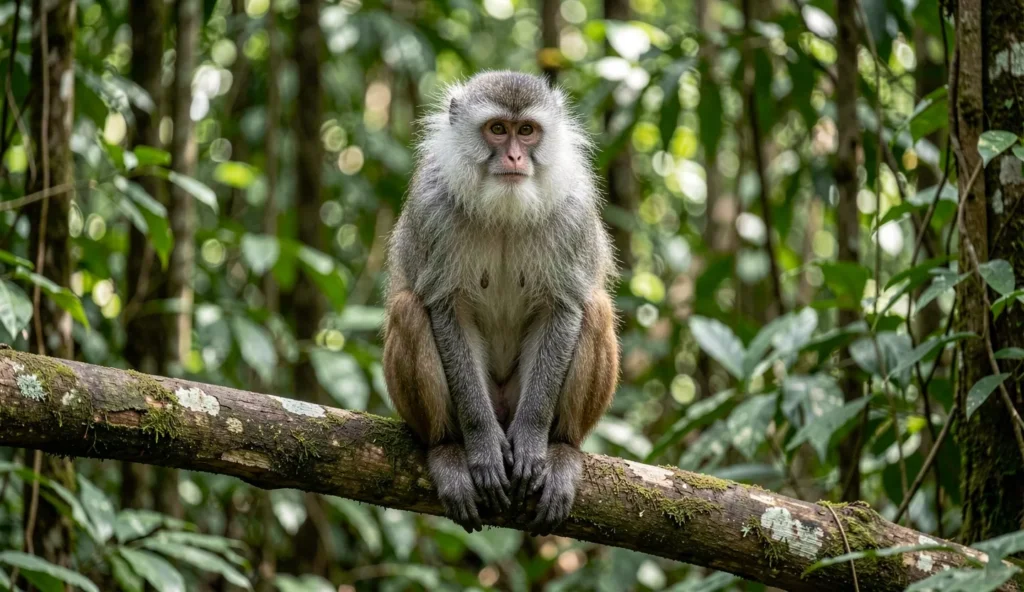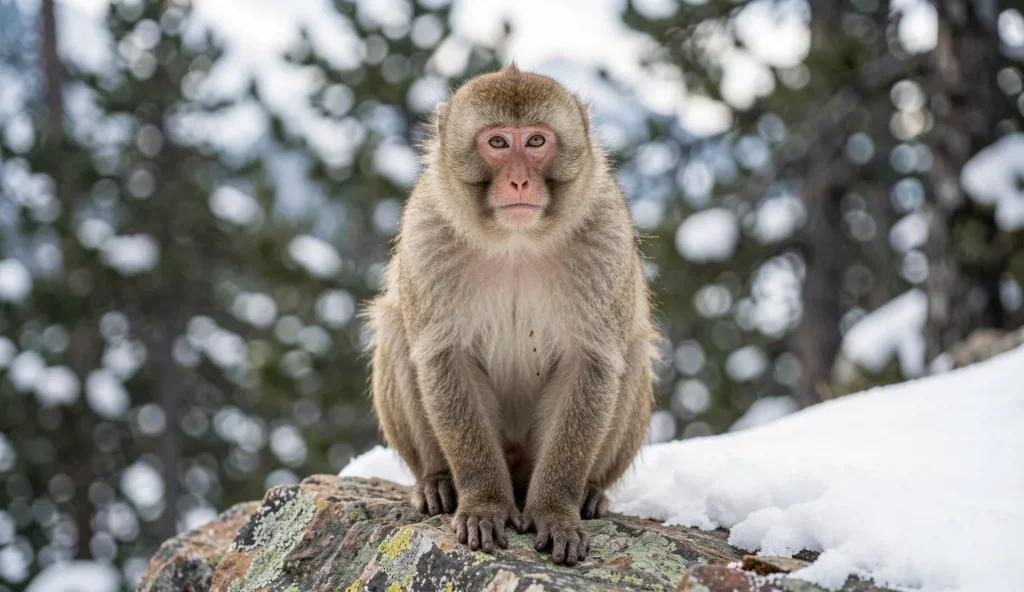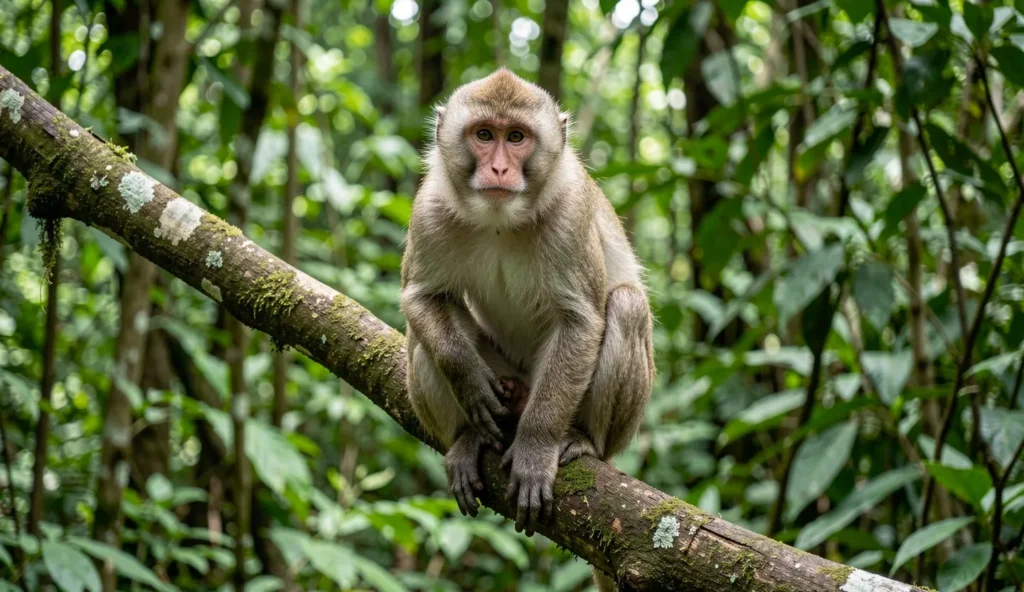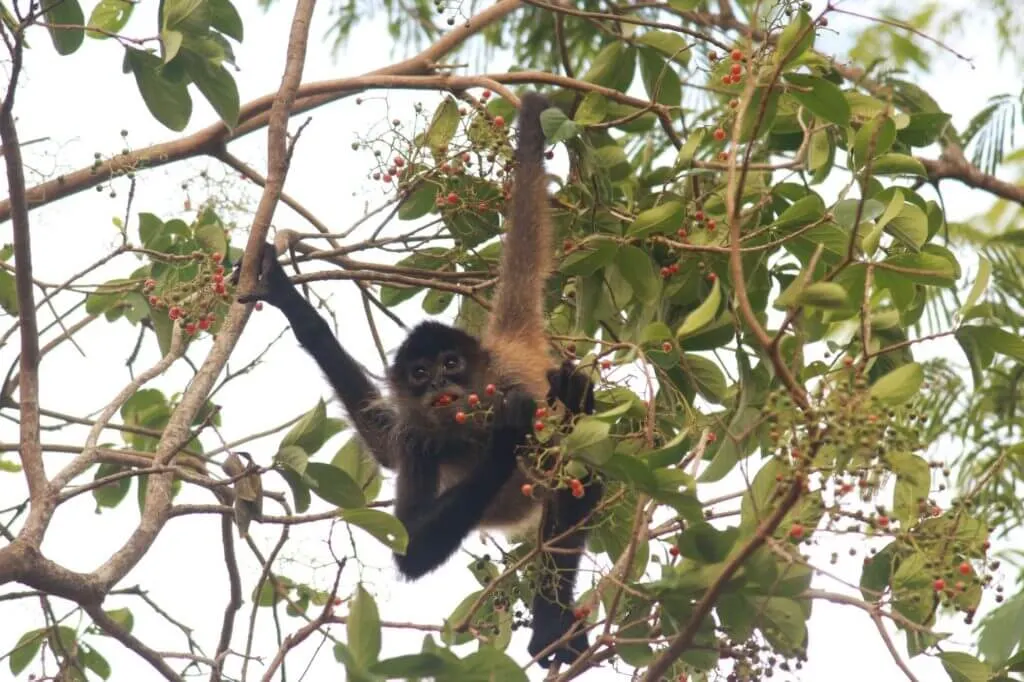
Spider Monkey – The Graceful Acrobat of the Rainforest
Introduction
With a prehensile tail that acts as a fifth limb and limbs so long they inspired their name, the Spider Monkey is one of the most agile and intelligent primates found in the lush rainforests of Central and South America. Unlike many other primates, these monkeys can hang by their tail alone while using all four limbs to feed, making them true aerial artists of the canopy. With their strong social bonds and playful nature, Spider Monkeys are fascinating creatures that play a vital role in forest ecosystems.
Natural Habitat
Spider Monkeys thrive in tropical rainforests, particularly in the upper canopy where sunlight filters through the trees. Countries like Brazil, Colombia, Mexico, and Peru provide ideal habitats for these tree-dwelling primates. They rely on undisturbed forest areas with tall trees and abundant fruit to survive. While they share their range with other primates like the squirrel monkey, Spider Monkeys occupy a higher canopy niche that requires their unique adaptations for brachiation.
Physical Characteristics
Spider Monkeys are built for life in the treetops:
- Long, slim limbs and a prehensile tail act as a fifth limb for grasping branches
- Weight: 13 to 20 pounds
- Body Length: 16 to 24 inches, with tails often longer than their bodies
- Fur colors range from black, brown, golden, to reddish tones
- They have a hairless face and expressive eyes that reveal their emotions
Their tail is so powerful and flexible that they can hang from it while using all four limbs to feed or groom.
Behavior and Intelligence
Spider Monkeys are highly intelligent and exhibit complex social behavior. They:
- Communicate using barks, whistles, and screams
- Live in communities of up to 30 individuals
- Split into smaller groups during the day for foraging
- Display memory skills and problem-solving abilities
They also form deep social bonds, often grooming and cuddling each other to maintain harmony in their groups. Their intelligence is comparable to that of the Capuchin monkey, another primate known for its cognitive abilities and tool use in the wild.
Diet and Feeding Habits
Spider Monkeys are mainly frugivorous, meaning they love fruit, but their diet includes:
- Fresh fruits and berries
- Leaves and flowers
- Nuts and seeds
- Occasionally, insects or small bird eggs
They play an important ecological role by spreading seeds throughout the rainforest, supporting tree regeneration. Unlike the howler monkey, which relies heavily on leaves, Spider Monkeys depend more on ripe fruit sources, making them especially vulnerable to deforestation that reduces fruit availability.
Reproduction and Parenting
Female Spider Monkeys give birth every 2 to 4 years after a gestation of about 7.5 months. Newborns cling to their mother’s belly and later ride on her back. Mothers are the primary caregivers, and the close-knit group helps protect and support the young.
Health and Lifespan
In the wild, Spider Monkeys live around 20–25 years. In protected environments like sanctuaries or zoos, they may live up to 40 years. They are generally healthy but vulnerable to:
- Habitat destruction
- Diseases, especially from human contact
- Illegal wildlife trade
Regular monitoring and conservation efforts are vital to their well-being. Modern conservation programs now focus on creating wildlife corridors that connect fragmented forests, allowing Spider Monkeys to access diverse food sources and maintain genetic diversity across populations.
Environmental Role
As fruit lovers and seed dispersers, Spider Monkeys are essential to the rainforest ecosystem. They help maintain the health of their habitat, which in turn supports countless other plant and animal species. A single Spider Monkey can disperse thousands of seeds each year, making them one of the most important seed dispersers in their ecosystem.
Conservation Status
Many Spider Monkey species, including the Black-headed and Brown Spider Monkeys, are listed as endangered or critically endangered due to:
- Deforestation and habitat fragmentation
- Hunting and illegal pet trade
- Climate change affecting food sources
Organizations like the IUCN and various local NGOs are working to protect Spider Monkeys through habitat conservation, reforestation, and anti-poaching efforts.
Interaction with Humans
Spider Monkeys are sometimes kept in captivity, but this practice often leads to physical and psychological harm. These primates need social interaction, complex environments, and freedom to thrive—conditions that are difficult to replicate in captivity.
Ethical eco-tourism allows people to observe them in the wild without harming their natural behavior.
Fun Facts About Spider Monkeys
- Their tail is so strong, they can hang from it and pick fruit with their hands
- They are named for their spider-like shape while moving through trees
- Each monkey has its unique vocal calls
- Some groups have been observed using basic tools, like sticks
Frequently Asked Questions
Q1: Are Spider Monkeys friendly?
A: In the wild, they are social within their groups but avoid human interaction. While curious, they are not suited for domestication and may become aggressive when threatened or stressed.
Q2: Can Spider Monkeys be kept as pets?
A: No. Keeping them as pets is harmful to their well-being and is illegal in many countries. They belong in the wild or protected sanctuaries.
Q3: How do Spider Monkeys move?
A: They use a movement called brachiation—swinging from limb to limb using their arms and tail with incredible grace.
Q4: What is their conservation status?
A: Several species are endangered or critically endangered due to habitat loss and hunting. Conservation programs aim to protect them.
Q5: Why are they important to the rainforest?
A: They help spread seeds by eating fruit and moving through the forest, contributing to forest regeneration and biodiversity.
Conclusion
The Spider Monkey is an agile, intelligent, and essential resident of the tropical rainforest. With their playful personalities and important ecological role, these remarkable primates deserve respect, protection, and admiration. By supporting conservation efforts and promoting responsible eco-tourism, we can help ensure that future generations also witness the beauty and brilliance of the Spider Monkey swinging freely through the treetops.