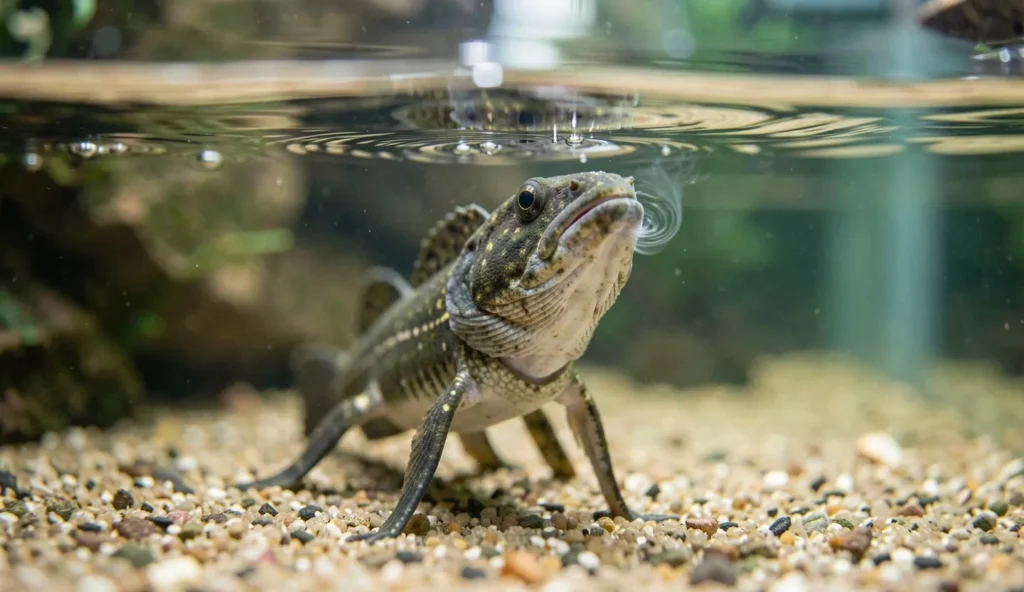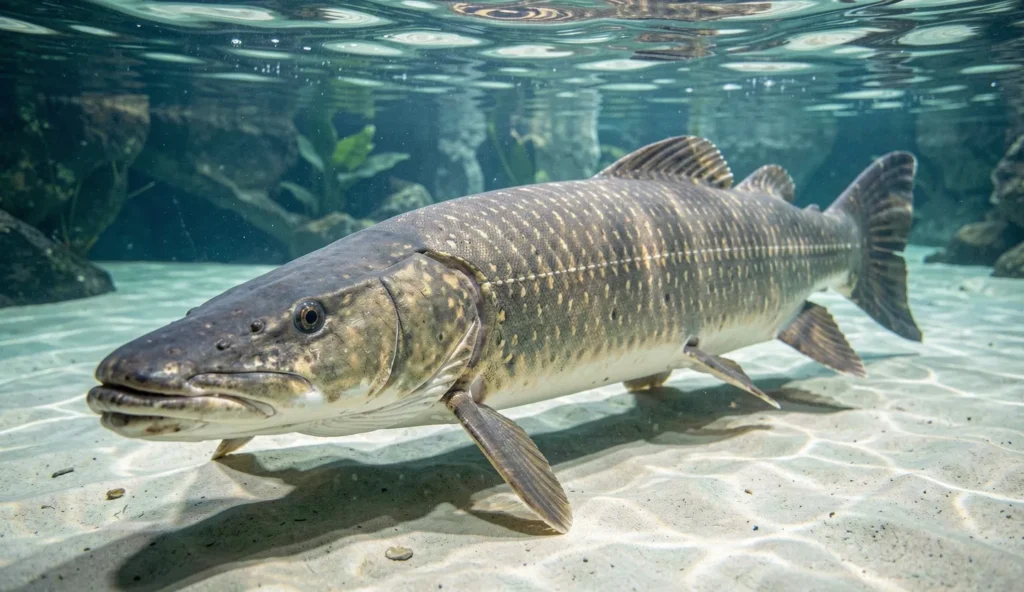
What Is An Arapaima Fish?
The arapaima fish is a giant freshwater fish from South America that reaches exceptional adult size. Because it grows fast and produces a heavy waste load, it works for massive ponds and public aquariums, not typical home setups.
Natural behavior and physiology shape every tank requirement, from oxygen availability at the surface to long, uninterrupted swimming space. For advanced keepers and public aquarium staff, proper arapaima care depends on scaling infrastructure before intake begins.
Species Background And Natural Range
Arapaima species evolved in slow-moving rivers and flooded forest areas in South America. Seasonal shifts in water conditions influence natural feeding patterns and daily activity.
In the wild, prey availability and water level changes drive how often feeding occurs. Those patterns matter when planning predictable meals inside a large aquarium.
Why Tank Keeping Is Not Practical For Most Setups
Full adult size creates space demands that standard tanks cannot meet safely. Strong life support systems also become mandatory because the biomass and waste output are extreme.
Most home aquariums cannot provide the growth space, oxygen stability, and filtration capacity required by arapaima fish. In contrast, large ponds and public aquariums can include redundant monitoring and planned maintenance windows.
Key Traits That Affect Aquarium Design
Large body size increases waste volume and raises the need for efficient mechanical filtration and steady circulation. The breathing behavior of arapaima fish also increases sensitivity to surface conditions and oxygen stress.
Powerful swimming requires long, stable water flow planning, not a layout built around tight viewing corners. These traits affect water volume strategy and how hardscape should be arranged.
Arapaima Fish Appearance And Growth Expectations
Arapaima fish are built for strong, continuous movement and reach very large lengths over time. Facilities that plan a large aquarium exhibit need realistic size benchmarks, not estimates based on juvenile appearance.
Growth planning also affects filtration sizing, staffing time, feeding logistics, and public safety procedures during transfers. For facilities that share workflows across species, arapaima care parallels the way discus fish tank planning emphasizes stable systems.
Typical Adult Size And Length Benchmarks
Arapaima can reach very large adult lengths, so planning must assume maximum realistic growth potential. Early stocking decisions should include expansion capacity rather than short-term viewing goals.
Growth rates vary by diet quality, water stability, and health status. Monitoring length and body condition early helps facilities adjust capacity targets before the exhibit becomes undersized.
Body Shape And How It Impacts Swimming Space
The streamlined body of arapaima fish uses long swimming routes to support comfort and effective movement. Wider body profiles increase displacement and contact risk with barriers.
Tight corners reduce escape routes and can increase stress during feeding or startled moments. For exhibit design, open volume and smooth perimeter boundaries usually work better than complex partitions.
Sexing Challenges And Stocking Planning
Sexing is difficult during most juvenile stages, which complicates group planning. For arapaima fish, many facilities treat single specimen housing as the safest early approach.
When groups are attempted, public aquariums typically manage behavior by careful observation and fast response to aggression cues. That operational caution matches tank mate planning used with angelfish care programs, even though the species differ greatly.
Arapaima Tank Requirements For Water Volume And Layout
Arapaima fish tank requirements are dominated by scale, because water volume drives oxygen stability and waste dilution. Any design for a large aquarium exhibit should assume the animal will reach adult size.
Layout also determines how safely the fish can breathe and swim without zones of low flow or repeated collisions. Facilities should build the water plan first, then match filtration and maintenance schedules to the exhibit.
Minimum Water Volume Guidance For Public Facilities
Water volume is the primary constraint for arapaima fish, especially when the filtration load increases over time. Facility-specific growth models help translate biomass into water turnover limits and monitoring intervals.
Planning should support expansion rather than focusing only on initial stocking. A massive pond design and a public tank design both reduce risk because both allow larger buffer volumes during maintenance.
Tank Or Pond Dimensions That Support Swimming
Length matters more than height for an exhibit built around continuous movement. A stable surface area also supports surface-oriented breathing behavior.
Partitions and sharp dividers can create stress zones through uneven flow or difficult escape paths. Smooth, open circulation routes generally reduce avoidance behavior and support consistent swimming posture.
Substrate, Hardscape, And Safety Considerations
Bare bottoms can simplify cleaning and waste removal in massive systems. If substrate is used, it must not trap debris or uneaten food that can raise ammonia and nitrate.
Hardscape needs rounded edges and safe placements that protect large body surfaces. Sharp edges also raise injury risk when fish surge during feeding or handling events.
Water Flow Patterns That Keep Waste Suspended Without Stress
Gentle circulation helps prevent dead zones where solids settle and decompose. Uniform oxygenation and predictable waste movement support stable water quality and reduce sudden parameter swings.
Animal posture offers a useful flow check, because avoidance of certain areas often signals poor circulation. Observing arapaima fish behavior during routine feeding helps confirm flow design before water quality shifts.
Water Parameters And Filtration That Keep Arapaima Fish Healthy
Water parameters determine how well arapaima care can succeed in large, high-load systems. Stability typically matters more than chasing exact numbers for brief periods.
For a massive pond or public aquarium, redundant monitoring and correctly staged filtration help offset unavoidable waste spikes. Those principles also show up in how facilities plan filtration for other demanding species like oscar fish.
Temperature Range And Thermal Stability
Maintain a stable warm temperature range appropriate for arapaima fish. Rapid swings during feeding and maintenance can increase stress and reduce feeding response.
Large water volumes still benefit from redundant heating because equipment failures have amplified impact at scale. Planning should treat power interruptions and heater downtime as known risks.
Dissolved Oxygen And Surface Access
Dissolved oxygen supports respiration needs and links directly to surface behavior. Prevent surface film buildup so air access stays consistent.
Oxygen monitoring should include times around peak feeding, since waste and stirring can change demand quickly. Staff should treat surface access like a design feature, not an accidental outcome of circulation.
pH, Hardness, And Water Stability Targets
Water stability reduces stress, which improves feeding consistency and growth. Buffering helps reduce daily swings caused by biological activity and maintenance routines.
Parameters should be tracked around water change events so facilities can see patterns rather than reacting to a single test result. Consistent trends support safer long-term planning.
Filtration Design For High Waste Loads
Filtration must handle heavy bio load from the start, because waste output rises as arapaima fish grow. High-capacity mechanical stages capture solids before they fully break down.
Many massive exhibits use external sumps or pond-integrated filtration because these systems expand capacity beyond typical stand-alone aquarium filters. When filtration capacity is designed for a high load, nitrate and solids accumulation remain easier to control.
Water Change Strategy And Waste Removal Routine
Large water exchanges can be logistically complex, which often limits the frequency of very large swings. Predictable maintenance intervals typically work better than irregular bursts that disturb stability.
Routine vacuuming or scheduled removal of settled solids reduces buildup and supports reliable oxygen performance. In practice, waste removal procedures drive outcomes as much as any single filtration component.
Arapaima Fish Diet And Feeding Requirements
Arapaima fish diet requirements focus on high protein and consistent feeding schedules that avoid water fouling. Feeding a giant freshwater fish with extreme biomass requires planning for food supply, portion sizing, and immediate cleanup.
Without tight feeding control, leftovers and waste can overwhelm even large filtration. That is why arapaima care programs emphasize measurable intake rather than occasional large meals.
Natural Diet And Captive Protein Needs
Arapaima are predatory fish with high protein needs to support growth and energy demands. Captive diets should stay consistent and nutrient-balanced to prevent nutritional gaps.
Low-nutrient scraps or overly fatty foods can increase water issues and reduce health stability. A consistent protein-focused food plan usually creates better results than frequent diet changes.
Feeding Frequency And Portion Planning
Feeding schedules depend on growth stage, body condition, and observed intake rates. Portion limits prevent rapid fouling and help keep ammonia and nitrate trends predictable.
Recording intake and body condition each session supports better adjustments over time. When refusals or changes appear, water quality should be checked before altering diet choices.
Best Food Types For Public Aquariums
Facilities often use thawed frozen fish or formulated high-protein diets suited for large carnivores. Food size must match mouth capacity to reduce choking hazards and stress.
Uneaten food should be removed quickly because large aquarium systems still suffer when solids accumulate. Staff workflows can borrow documentation styles from guppy fish breeding programs, since feeding logs also matter for breeding consistency.
Handling Feeding Aggression And Stress Signs
Feeding can trigger dominance behavior, so routines should avoid sudden movements and unnecessary disturbances. During feeding, staff should plan entry timing and observation angles to minimize startle responses.
Stress signs include refusal to feed, abnormal swimming, and gasping at the surface. When these appear, immediate checks of water parameters and flow patterns usually guide the first corrective steps.
Tank Maintenance And Health Risks For Arapaima Fish
Tank maintenance for arapaima fish requires daily monitoring and careful biosecurity practices. Health risks often start with water stability problems, because oxygen and waste control directly influence gill function and skin condition.
Public aquarium staff often rely on standardized checklists because consistent routine reduces missed early signs. The same disciplined approach that keeps corydoras catfish stable in shared water systems also improves outbreak control.
Routine Monitoring Checklist For Staff
Track temperature, pH, dissolved oxygen, and ammonia daily using calibrated equipment. Monitoring nitrate trends and visual solids accumulation helps catch problems before they become acute.
Appetite and body condition should also be reviewed at each feeding session. When trends shift, staff can connect feeding changes to water parameter behavior.
Common Health Issues In Large Predatory Fish
Water quality problems commonly drive stress-related illness in giant freshwater fish. Skin and gill issues can appear when oxygenation is insufficient or surface access is compromised.
Parasite risks may increase when diets include frequent live or mixed sources. Many facilities reduce risk through controlled sourcing, strict storage, and quarantining practices.
Signs Of Stress And What To Do First
Gasping, erratic swimming, or constant hiding often indicate stress that deserves immediate investigation. The first step usually involves reviewing water parameters and flow conditions before changing feed types or equipment.
Quarantine and isolation can help if facility design allows safe temporary housing. Staff should avoid repeated netting because handling stress compounds existing oxygen and waste pressure.
Biosecurity, Quarantine, And Equipment Cleaning
Quarantine new arrivals reduces pathogen introduction and helps staff confirm feeding and tolerance before joining the exhibit. Nets and tools should be disinfected between uses based on facility policy.
Cross-contamination between tanks and ponds should be avoided through dedicated equipment and controlled workflows. This protects the entire exhibit system rather than only the newest specimen.
Is Arapaima Fish Right For A Facility That Cannot Expand?
Arapaima fish only work when long-term scale planning exists, because adult size quickly limits safe housing options. If expansion is not possible, the main risk becomes chronic undersizing and instability over time.
Smaller exhibits may still succeed with giant freshwater fish choices that fit real facility constraints. Any decision should match arapaima care to operational capacity, not just short-term viewing goals.
When It Makes Sense To Plan A Massive Pond Or Public Tank
Planning can make sense when the facility has room for adult growth and a stable life support system. High waste and oxygen demands require monitoring frequency that staff can sustain long term.
Operational readiness also includes safe handling for transfers and emergency procedures. A plan built around public aquariums typically budgets these needs from day one.
Common Operational Constraints To Review
Filtration capacity limits and maintenance labor limits often decide whether arapaima fish can stay healthy. Space constraints also limit safe handling, netting, and storage of large food quantities.
Food supply consistency and safe storage practices reduce diet disruption and leftover buildup. These constraints can become major when scheduled maintenance overlaps with feeding windows.
What To Do Instead For Smaller Exhibits
Smaller facilities can consider other giant freshwater species that reach more realistic growth ceilings for the available large aquarium volume. Compatibility and welfare planning should still include oxygen access and waste handling capability.
Specialist input can help evaluate exhibit fit when the plan cannot expand. For example, tank mate planning concepts used in angelfish care can guide behavioral risk checks even when the species differ.
Final Note On Planning Arapaima Fish Exhibits
Successful arapaima care depends on scale, stable water, and consistent monitoring across the entire life support workflow. Where those basics cannot be met, the safest choice usually becomes a different species or a larger facility design.
Frequently Asked Questions
What Tank Size Does An Arapaima Fish Need?
Arapaima fish require massive water volume and space to support adult growth.
Can Arapaima Fish Live In Home Aquariums?
Most home tanks are impossible due to size, oxygen, and waste load.
What Water Parameters Matter Most For Arapaima Care?
Water stability and dissolved oxygen are critical for arapaima fish health.
How Often Should Arapaima Fish Be Fed?
Feeding frequency should match growth stage while preventing leftover waste buildup.
Why Is Surface Access Important For Arapaima Fish?
Surface access supports breathing needs and helps prevent oxygen stress.