What Is An Oscar Fish And Why Feeding Matters
Oscar fish are large South American cichlids known for bold, fast feeding and a protein-focused appetite. Feeding habits shape growth, body condition, and even how often aggressive fish behavior appears during mealtimes.
Because oscars often claim food quickly, routines become part of cichlid feeding success in a large aquarium. Careful feeding also limits waste buildup that can happen when Uneaten food stays in the tank.
Natural Diet And Feeding Behavior
In the wild, oscars hunt and scavenge for animal matter across different depths. They often respond quickly when food hits the water, so timing matters for steady feeding behavior.
As a result, consistent feeding time reduces stress and lowers competition. Many keepers find that a predictable schedule helps even when tankmates are present.
How Diet Affects Growth And Health
A high-protein diet supports muscle development and faster growth for young fish. When diet quality stays high, digestion usually remains more stable in an established filtration setup.
Overfeeding, however, increases fat storage and can reduce swimming stamina. Then, uneaten portions can foul water quickly, especially in a large aquarium where dead zones sometimes form.
Key Challenges In Cichlid Feeding
Oscar fish can bully tankmates during feeding, which makes portion control and feeding strategy essential. If food reaches only one corner, slower fish may miss meals.
Also, some foods are high in fat, raising obesity risk over time. That risk grows when a protein diet becomes heavy on fatty blends instead of lean proteins.
Even with strong filtration, feeding habits often control water quality more than equipment alone. This is why an approach built around monitoring and adjustment works better than guesswork.
What Do Oscar Fish Eat In Captivity
In captivity, oscar fish feeding usually relies on pellets first, with live foods and frozen foods used as supplements. This structure makes it easier to measure portions and maintain a consistent protein diet.
Beyond nutrition, the way food is presented affects how aggressive fish behavior shows up. If food arrives in one area, oscars may monopolize it, so layout and type both matter.
Commercial Pellets And Flakes Basics
Pellets simplify portion tracking and reduce the mess that flakes can create. For large cichlid feeding, choose high-protein options that match carnivorous fish needs.
It also helps to pick foods labeled for large cichlids or carnivorous fish. When the nutrition label includes reliable protein percentages, diet decisions become more predictable.
For variety, flakes can work during short transitions, but pellets typically stay easier to manage. If pellets are not immediately accepted, softening them briefly can reduce hesitation.
Live Foods For Natural Hunting Instincts
Live foods can increase acceptance because oscars often respond to movement. They also encourage hunting behavior, which some keepers prefer for natural feeding activity.
At the same time, live foods can increase disease and nutrient imbalance risk. That is why live feeding works best occasionally, not as the main diet.
If live feeding is planned, items from trusted sources reduce risk. When possible, quarantine supports safer cichlid feeding and lowers the chance of introducing parasites.
Frozen Foods And Fresh Options
Frozen foods keep nutrient quality more stable than many fresh items. They also reduce contamination risk when thawing and handling follow clean routines.
Fresh foods require careful preparation and consistent sourcing, which can be harder for beginners. Rotating proteins helps prevent nutrient gaps when the diet changes seasonally.
For people switching from live to frozen, start with small portions and observe stool and appetite. Consistency helps confirm the food suits the fish.
How Much To Feed By Body Size
Start with small portions that the fish consumes within a few minutes. After that, adjust slowly based on appetite and body condition changes.
A practical target is eating within minutes, not hours. If pellets remain after a short window, portion size likely needs to drop to avoid fat storage and water quality issues.
For reference on other species feeding patterns, some keepers also compare routine timing with Hourglass Dolphin feeding behavior in their research. That kind of comparison highlights how consistent schedules support health across aquatic animals.
Best Pellet Varieties For Oscar Fish
Pellets can anchor the whole oscar fish feeding routine because they are portionable and repeatable. With the right pellet size and nutrition, feeding stays easier to control in a large aquarium.
Also, pellet choice can influence how quickly food reaches the fish during feeding. When the presentation matches the fish’s behavior, aggression over food often decreases.
Pellet Size And Floating Versus Sinking
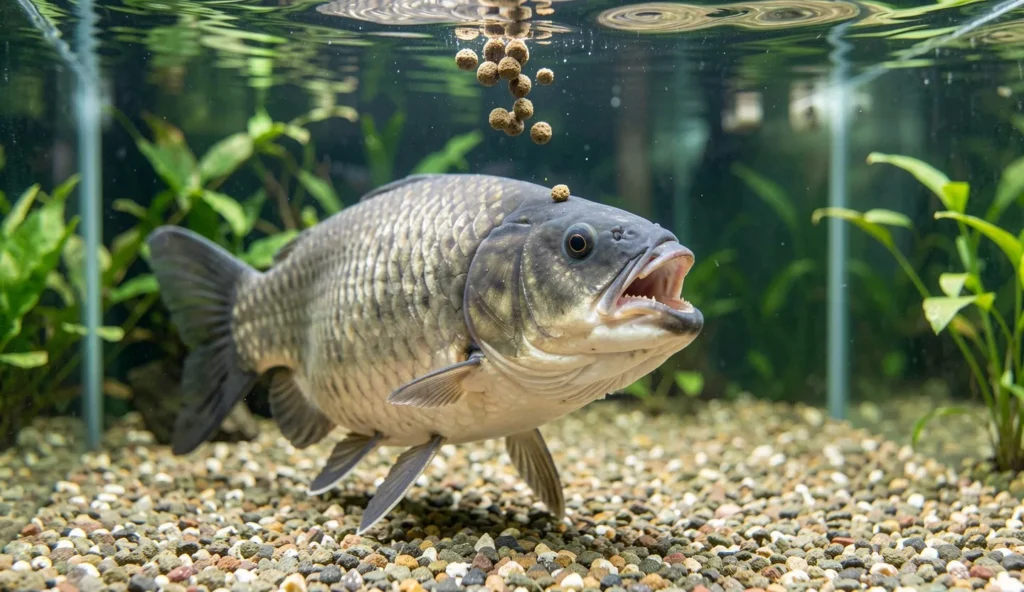
Choose pellet size based on mouth size, since oversized food can discourage feeding. Sinking pellets often help if tankmates stay near the bottom or if surface competition becomes intense.
Floating pellets can make intake easier to monitor during each meal. Yet, they can also encourage surface rushing, which may increase bullying if other fish are slower.
In mixed setups, sinking pellet feeding can reduce chase time because oscars may still investigate multiple spots. That strategy often supports more even cichlid feeding access.
Protein Targets And Ingredient Priorities
Look for formulas aimed at carnivorous fish with clear animal-protein ingredients. When the main ingredients support a protein diet, growth and condition usually track better.
Avoid overly fatty blends as a frequent base when obesity prevention matters. Even if fish eat a lot, diet composition drives how much excess fat builds over weeks.
Reputable brands also provide consistent labeling that helps keepers avoid random nutrition swings. When labeling changes, it can be a clue to retest portion size and monitor output.
How To Thaw Or Soften Pellets If Needed
Some oscars accept pellets faster when softened slightly, especially during early transitions. Brief soaking in tank-temperature water can make texture easier for reluctant feeders.
Do not soak long enough to spoil, because decomposing food quickly harms water quality. After softening, feed immediately and remove any leftovers promptly.
If food hesitancy occurs, reduce portion size and keep the routine consistent. Stable timing often improves pellet acceptance over repeated sessions.
Feeding Schedule Using Pellets
Use small meals more consistently when intake needs to be controlled. Feeding multiple smaller pellet meals helps track appetite and reduces the chance of overfeeding.
Adjust frequency based on growth stage and tank conditions. If water becomes cloudy after feeding, the schedule likely needs smaller portions or fewer meals.
When pellets are the base, adding occasional supplements becomes easier to plan. That reduces the chance that cichlid feeding becomes unintentionally too rich.
Live Foods And Frozen Foods That Work Well
Live and frozen foods can strengthen variety while still supporting a protein diet for oscar fish. The key is using them as supplements rather than replacing controlled pellet meals entirely.
Because oscars can behave as aggressive fish during feeding, portion control still matters with supplements. If only one spot contains food, the dominant fish may consume everything.
Common Live Food Options And How Often
Brine shrimp often suit smaller or younger fish because pieces stay manageable. Many keepers use bloodworms as a nutrient-dense option, but they should remain limited.
Feed live foods occasionally to support natural behavior without shifting the whole diet. If a supplement becomes daily, obesity risk usually climbs over time.
- Brine shrimp can support early-stage feeding variety
- Bloodworms work best as an occasional treat
- Daphnia can offer a lighter, variety-based option
- Blackworms may appeal to hunting behavior
Frozen Meaty Foods For A Protein Diet
Frozen beef heart is commonly used, but it can be fatty if fed too often. Frozen shrimp and fish pieces provide useful animal proteins without relying on a single source.
Limit high-fat items and rotate through different proteins. When different proteins appear across weeks, nutrient coverage usually improves while obesity prevention stays more practical.
Also, avoid feeding frozen foods straight from the package when possible. Thawing first helps keep tank conditions stable during oscar fish feeding.
Food Safety And Contamination Control
Thaw frozen food in a clean container and remove excess liquid before feeding. Then, any cloudy discharge stays out of the tank where it can increase waste load.
Avoid unknown wild-caught items because disease risk rises without proper testing. When feeding frozen foods purchased from reputable suppliers, the contamination risk typically drops.
Rinsing some foods can reduce clouding and visible waste. This habit supports water stability in a large aquarium even when feeding volume increases during growth periods.
Portion Control For Aggressive Fish During Feeding
In mixed tanks, oscar fish may monopolize food, leaving tankmates underfed. Feeding strategies that reduce chasing often work better than adding more food.
Offering food in multiple spots helps spread attention and reduces bullying. When tank layout supports different feeding zones, aggressive fish behavior often becomes less intense.
For keepers who manage stress during feeding, it can help to observe how each tankmate responds. Adjustments based on actual behavior usually prevent problems faster than theory alone.
Feeding Schedule For Growth And Adult Maintenance
Feeding frequency changes as oscar fish move from juvenile growth to adult maintenance. A schedule that once supported rapid growth can easily lead to obesity if portions stay the same.
Because feeding habits affect body condition, consistent routines help spot trends before fat storage becomes obvious. Then, adjustments become easier and calmer for both fish and keeper.
Feeding Frequency For Juveniles
Juveniles typically eat more often than adults because their metabolism supports steady development. Small, frequent meals also help prevent long gaps that can reduce consistent feeding behavior.
Stop feeding if food spills or sits uneaten. Uneaten pellets quickly degrade water quality and can raise overall stress levels during oscar fish feeding.
- Offer smaller meals more times per day
- Use pellets for measured portions
- Add live or frozen foods sparingly
- Observe belly shape after repeated meals
Feeding Frequency For Adults
Adults usually need fewer feedings per day because growth slows and energy needs drop. Feeding less often lowers obesity risk while keeping digestion manageable.
Use a consistent routine to track body condition changes over time. If the belly looks round for long periods, portion size likely needs reduction.
When tank bioload is higher, even adult feedings can need smaller amounts. Water quality feedback often guides the most effective schedule changes.
Fast Days And Why They Help
Occasional fasting can reduce overfeeding patterns and help protect against fat storage. Some keepers choose a weekly or biweekly rest day, depending on appetite and tank conditions.
Adjust fasting plans based on appetite, growth stage, and bioload. If a fish loses condition quickly, fasting can become too aggressive and should be reduced.
Feeding less often can also reduce uneaten food accumulation in a large aquarium. That benefit helps both water quality and long-term body condition.
Other aquarium feeding habits also highlight how controlled intake supports healthier condition. For example, keepers studying Hourglass Dolphin diet timing sometimes notice similar patterns in routine management for aquatic animals.
How To Avoid Obesity In Oscar Fish
Obesity prevention relies on controlling portion size, choosing lower-fat options, and monitoring condition after each change. Oscar fish eating habits can make overfeeding easy, especially in large aquariums where leftovers may hide.
Therefore, feeding control matters as much as food selection. With the right protein diet balance, weight stays healthier without reducing normal feeding behavior.
Signs Of Overfeeding And Poor Condition
A rounded belly can signal excess fat storage in oscar fish. Reduced movement after meals may also suggest heavy feeding and slowed activity.
Loose stool or frequent waste can follow high feeding volume. If waste increases suddenly after meals, portion size likely needs adjustment.
Not all body changes come from fat, but patterns across days often reveal feeding issues. That makes observation a practical part of obesity prevention.
Portion Guidelines That Prevent Excess Weight
Feed amounts small enough for fast consumption. Measuring portions helps when multiple feedings occur daily.
Remove uneaten food to protect water quality and reduce extra calories. This step also supports better digestion because fish avoid scavenging leftovers between meals.
If aggression causes competition, portion guidelines should still focus on fast intake rather than total volume. Multiple feeding zones can help tankmates receive food without increasing overfeeding.
Choose Lower Fat Options More Often
Prefer leaner protein sources as the main rotation. Limit fatty items like certain organ meats and fatty blends to keep obesity prevention realistic.
Keep protein varied to support balanced nutrition while controlling fat. When proteins change, appetite can stay stable without feeding larger quantities.
For routine variety, pellets with consistent nutrition can act as the baseline. Supplements should then fit into the schedule rather than replace measured meals.
Tank Considerations In A Large Aquarium
Large tanks may hide uneaten food longer than expected because food disperses and sinks unevenly. Even with strong filtration, feeding control remains essential to prevent excess waste.
Monitor water parameters since more waste follows overfeeding. If ammonia or nitrite readings rise after feeding changes, feeding amounts are likely too high.
To stay accurate, observe feeding areas during each meal. Then, adjust portions based on whether food disappears quickly each time.
Is The Oscar Feeding Style Suitable For Every Tank
Oscar fish feeding habits often work best in tanks designed around controlled portions and manageable aggression. In mixed setups, feeding strategy must reduce chasing and ensure other fish access food.
Therefore, feeding compatibility depends on tankmates and layout, not only on food type. When tankmates stay slow, competition can quietly affect health.
Compatibility With Mixed Tank Setups
Oscars can be aggressive during feeding times, especially when food arrives at the same point. Slow tankmates may not get enough food, which can lead to weight loss and stress.
Separate feeding or single-species setups can reduce pressure. If separation is not possible, multiple feeding spots help distribute access during cichlid feeding.
When aggression persists even with multiple spots, feeding times may need to change to reduce competition windows. Observing behavior after each adjustment helps confirm what works.
When To Reassess Diet And Routine
Reassess if weight increases quickly despite portions. That pattern often means the diet is too rich or feeding schedule needs reduction.
Change feeding types if stool issues appear. Also adjust the schedule if appetite becomes unreliable, since inconsistent intake can signal stress or mismatched food texture.
Feeding success improves when changes stay small and measured. Then, oscar fish feeding becomes easier to manage across growth stages in a large aquarium.
Frequently Asked Questions
How Many Times Per Day Should Oscar Fish Be Fed?
Juveniles often need more frequent small meals than adults.
What Are The Best Pellets For Oscar Fish?
Choose high protein pellets made for large carnivorous cichlids.
Can Oscar Fish Eat Bloodworms Every Day?
Bloodworms are better as an occasional supplement, not a daily base.
How Can Obesity In Oscar Fish Be Prevented?
Use portion control, avoid fatty foods often, and consider rest days.
Do Oscar Fish Prefer Live Or Frozen Food?
Many oscars accept both, but frozen is often easier to manage safely.
Why Do Oscar Fish Leave Food Uneaten?
Portions may be too large, food may not match preferences, or stress may be present.
Final Note On Building Healthy Feeding Habits
Oscar fish feeding works best when portions match fast intake and the diet stays protein-forward. With routine control, a large aquarium can support good condition while reducing obesity risk.