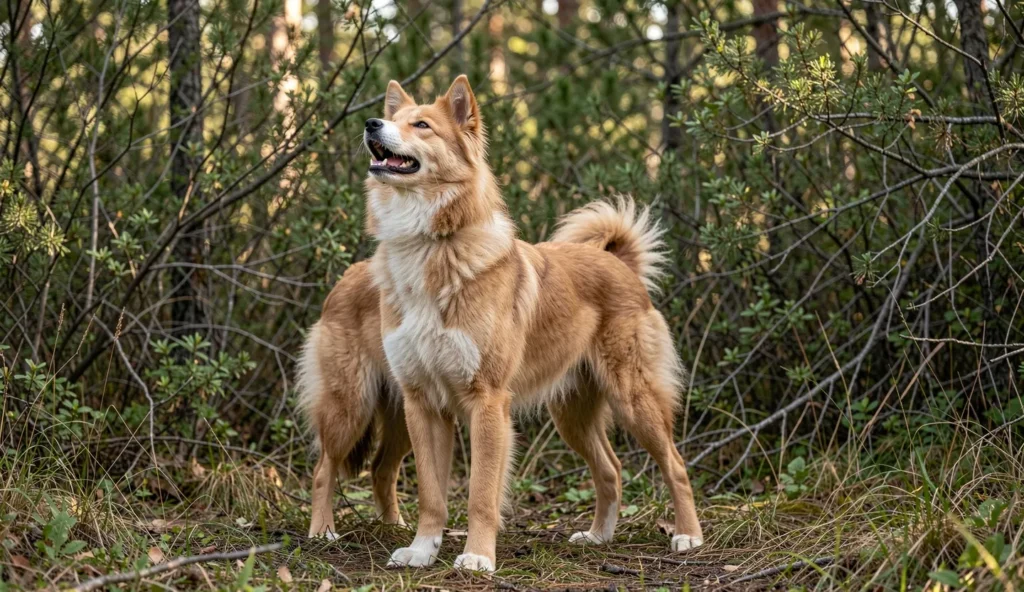
What Is A Finnish Spitz
The Finnish Spitz breed is a medium-sized spitz from Finland, built for locating and indicating birds during hunts. This rare breed gained attention among hunters and birders because it signals bird scent with a distinctive voice pattern. A Finnish Spitz temperament also stands out, as many dogs stay alert and focused while working in cover.
Origins And Historical Job
Finnish Spitz dogs developed in Finland for hunting birds and small game in cold, forested regions. Hunters relied on the dog’s tracking and staying power to find birds without constant human searching. Over time, the breed became known for voice work that indicates bird movement or confirmed scent.
Because the work mattered, the dog learned to keep attention on the handler while staying close enough to guide the next step. That built a hunting dog style that many owners recognize right away, especially during controlled training sessions. For context on similar working signals, some bird hunters also compare the Finnish Spitz to a Pointer Dog’s pointing approach, even though the vocal method differs.
How The Breed Works In The Field
In the field, a Finnish Spitz often tracks in a controlled search pattern and then indicates once scent gets strong. The dog stays engaged as it moves, and then it uses barking to help communicate what the handler needs to know. Handlers typically watch for changes in pace, posture, and vocal intensity as the bird becomes more likely.
That pattern supports practical decision-making during upland work. The Finnish Spitz can adapt its movement based on cover density and scent conditions, slowing down when airflow or ground scent strengthens. Meanwhile, the handler reads the work and adjusts stance for a better shot angle or safer release.
Why The Barking Style Matters For Grouse
Barking bird indication plays a specific role in grouse hunting where birds can hold tight in thick cover. A Finnish Spitz can help locate where scent is confirmed, which supports finding grounded birds rather than pushing them too early. As the dog barks, the handler can move in a controlled way to avoid flushing at the wrong distance.
Additionally, the voice work helps the dog stay engaged during waiting periods. When trained well, the barking becomes a signal rather than nonstop noise. The goal for many owners is clear communication so the hunt stays steady from first contact to final shot.
Appearance And Physical Features
Finnish Spitz dogs have a recognizable spitz look that supports hunting function. Their compact, sturdy frame and thick double coat help them work through brush and cold weather. Most people first notice the coat texture and warm red or gold tones, which show up clearly in both photos and field conditions.
Size, Coat, And Color
The Finnish Spitz breed typically measures in the medium range with a balanced build meant for agility. Most dogs show a thick double coat, including a prominent ruff around the neck. Common coat colors include red or golden hues, often with lighter shading on the muzzle and legs.
That coat provides practical protection in northern weather and dense cover. During seasonal changes, shedding can increase, which affects grooming needs. For owners who prefer a similar compact working style, some also research other spitz-like breeds, such as the Norwegian Lundehund Dog, but the Finnish Spitz coat and head shape remain distinct.
Distinctive Head And Tail Set
The head often looks alert, with a pointed muzzle and bright, focused eyes. Erect ears support sound awareness and help the dog track faint cues in the environment. Many Finnish Spitz dogs also carry a curled tail over the back, which helps maintain balance during quick direction changes.
These features do not just affect appearance. They influence field posture and the way the dog holds position when it detects bird scent. In many hunts, the handler can read the indication more easily when the dog’s ears, tail, and head angle stay steady.
Build Traits That Support Hunting
Agile movement helps the Finnish Spitz search through cover efficiently without losing scent control. Strong legs support quick turns and changes in pace as the dog follows scent trails. Meanwhile, the protective coat helps reduce discomfort from brushy terrain.
Because the breed works actively, body condition matters for performance. Proper feeding, exercise, and weight management help the dog maintain the mobility needed for consistent field work. If weight drifts up, pace can slow and indication behavior can change.
Finnish Spitz Temperament And Personality
The Finnish Spitz temperament often combines independence with strong attention to movement. Many dogs stay alert, watchful, and responsive to the handler’s direction. That combination makes the breed useful for hunters and birders who want a dog that actively searches and then communicates results.
General Temperament For Hunters And Birders
Most Finnish Spitz dogs show a strong drive for tracking and staying engaged in scent work. During a hunt, they often focus on changes in wind, scent concentration, and cover edges. Many dogs also pay attention to the handler’s movement, which supports coordination during controlled field steps.
Because the breed can think independently, training needs consistency. Clear cues help the dog understand when to search, when to indicate, and when to reset. When training fails, a working style can shift from signal to frustration, which may increase unwanted barking.
Social Behavior With People And Other Dogs
With strangers, many Finnish Spitz dogs tend to be reserved rather than openly aggressive. Still, social exposure matters, especially for pups and young adults. With proper early handling, many dogs can coexist with other dogs in supervised settings.
Overstimulation or undertraining can increase vocal behavior, especially around excitement triggers. For example, frequent greetings without calm training can turn natural voice into persistent noise. Training and structured outlets help maintain stable home behavior.
Understanding The Barking Bird Indication
The voice is used as a working signal rather than constant noise by default. Barking often increases when the dog confirms bird scent close by, and it can shift as the bird moves. Handler presence supports a smoother transition from indicate to the next action sequence.
This barking bird indication can feel unusual at first to new owners, particularly those who expect silent pointing dogs. However, it can be trained into a predictable pattern. Over time, a Finnish Spitz often becomes more communicative during work and quieter during resets.
Exercise Requirements For A Hunting Dog Lifestyle
Finnish Spitz dogs need regular movement and mental work to stay calm at home. For hunting goals, exercise should support scent focus and controlled behavior. Without those outlets, boredom can show up as restless pacing and more frequent barking.
Daily Physical Activity Needs
Most owners need to provide regular daily activity rather than occasional long outings. Brisk walks help, but field-like practice often produces better results for this hunting dog. Activity levels should match age, fitness, and the season’s intensity.
During heavier hunting schedules, shorter breaks between training sessions can help keep focus steady. During milder seasons, longer scent sessions can replace some of the hard running. Consistent routines also support a calmer voice pattern during quiet hours.
Mental Stimulation For Scent And Voice Work
Scent games build focus and reduce unwanted barking by giving the dog a job. Short training sessions keep motivation high and help the dog connect cues with rewards. Varied terrain can also increase confidence for cover searching.
One effective approach includes structured scent drags followed by a quiet reset cue. That teaches the dog that scent work and calm waiting can exist together. Over time, barking becomes tied to the correct trigger conditions rather than generalized excitement.
Energy Management In The Off Season
Off-season exercise still needs structure, even when there is no hunt. Controlled scent drags and recall drills help maintain working habits and stable temperament. It also helps prevent the dog from storing excess energy that later turns into noise.
To manage energy, avoid long inactivity periods without enrichment. Consistent daily contact, short sessions, and predictable routines often reduce stress-related barking. For owners comparing energy patterns across breeds, some also examine Siberian Husky routines, although the training priorities may differ.
Training Tips For Voice Control And Field Indication
Training for the Finnish Spitz breed should treat voice as a tool with rules. The goal for hunters and birders is predictable barking bird indication, plus safe behavior around birds. This requires early obedience, scent coordination, and specific practice around when barking starts and stops.
Start With Basic Obedience And Recall
Begin with sit, stay, and reliable recall early in the dog’s training career. Reward-based methods build confidence and keep sessions positive. Practice should start in low distraction places and then move gradually toward field conditions.
When recall becomes dependable, the handler can manage the dog safely during hunting and training. It also helps prevent the dog from self rewarding by chasing or wandering. Many owners find that building a strong base reduces voice problems later.
Train The Barking As A Signal Instead Of Noise
Voice control training focuses on reinforcing barking only when bird scent is present. The handler can add a cue that signals when barking should begin, then use a second cue to stop. Rewards should follow quiet behavior during resets, which teaches the dog how to transition.
Because the Finnish Spitz may increase barking when it confirms bird scent close by, training should capture those moments. Then the dog learns that the correct response leads to calm handling. If the dog barks without clear scent cues, the handler can interrupt calmly and reset the session with better scent placement.
Leash Skills For Wet Brush And Cold Weather
Leash skills matter before the first real outing in heavy brush. Practice controlled loose-leash walking so the dog stays responsive while moving through cover edges. Calm walking habits help reduce sudden lunging when scent hits.
In cold or wet conditions, traction becomes a safety issue. Using a proper fit harness or collar that does not slip can prevent discomfort during quick turns. After field practice in dense terrain, owners should inspect skin and coat for rub points.
Field Etiquette For Grouse Hunts
Field etiquette includes training to hold position until a release cue. Controlled movement before flushing helps maintain safe spacing for the handler and other hunters. Many owners also set clear boundaries for gun safety zones and keep the dog managed during transitions.
Training should reflect real hunt timing, including waiting periods when the bird stays grounded. During those times, the Finnish Spitz can bark as an indication, but the handler should still manage distance and posture. This approach supports a steady hunt while keeping behavior controlled.
Grooming Care Tips For A Double Coat
Grooming helps the Finnish Spitz stay comfortable and keeps the double coat in good condition. The thick fur traps some debris during hunting, so routine care supports easier coat maintenance. When grooming gets skipped after brushy days, skin irritation can become more likely.
Brushing Schedule And Shedding Season
Regular brushing manages loose coat and helps reduce shedding around the home. Seasonal coat changes often bring heavier shedding, so de-shedding becomes more frequent during those periods. After hunts, removing leaf litter and burrs prevents the coat from matting.
Brushing should be gentle and thorough, focusing on the ruff, legs, and undercoat areas. Many owners find that longer sessions during shedding season work better than short daily brushing. Good grooming habits also create a calmer moment between outdoor trips.
Bathing And Coat Condition
Bathe only when needed to avoid drying the skin and stripping natural oils. After rain or wet field conditions, thorough drying helps reduce odor and skin irritation. Using a gentle dog shampoo formulated for sensitive skin supports better coat health.
After bathing, coat should dry fully before the dog returns to cold weather. Damp fur can trap moisture and create comfort issues. For most owners, spot-cleaning muddy areas first reduces the need for full baths.
Nail, Ear, And Eye Checks
Nail trimming reduces discomfort and helps prevent slipping on uneven ground. Ear checks matter after dense brush because dirt can gather in the ear folds. Wiping around the eyes and removing grit after hunting trips also supports comfort.
These checks help catch early issues before they grow. Owners who keep a quick post-hunt routine often prevent minor problems from turning into vet visits. This is also the time to inspect pads for wear from rough cover.
Diet And Nutrition For Active Field Work
Diet supports energy levels, coat quality, and overall health for the Finnish Spitz breed. Active field work increases calorie needs, but portion control still matters to prevent weight gain. A balanced complete diet helps the dog recover after training and hunts.
Choosing A Suitable Food
Pick a complete diet formulated for active dogs rather than a maintenance-only option. Protein levels should match the demands of hunting season, especially during periods of frequent outings. For sensitive dogs, selecting a food with digestible ingredients helps reduce stool issues.
Owners should also consider whether the dog has allergies or intolerances. A veterinarian can recommend an elimination plan if reactions appear. Some owners also compare nutrition approaches with other athletic breeds such as Beagle, though each dog still needs individualized portions.
Feeding Schedule For Hunt Days
Feeding on a consistent schedule reduces stomach upset and supports better performance. Many handlers use small pre-hunt portions when the timing near meals matters. After hard exercise, portions can remain similar but should adjust after rest days depending on activity.
Hydration must be monitored, especially in cooler weather where thirst can be overlooked. Clean water available before and after hunts supports recovery. If the dog seems reluctant to eat after strenuous work, smaller meals often help.
Healthy Treats For Training
Treats support voice and recall training, especially when barking and quiet cues need reinforcement. Bite-sized options keep the reward efficient and reduce the chance of overfeeding. Limiting treats to training time helps keep daily calories balanced.
Easy-to-digest treats work best during frequent sessions. If stool gets loose, treat types and amounts should change. Stable digestion supports steady training and consistent field behavior.
Common Health Issues To Watch For
Most health problems in Finnish Spitz dogs relate to general athletic dog concerns, coat and skin comfort, and age-related changes. Early attention helps prevent minor symptoms from becoming bigger issues. Regular monitoring also supports long working years for a reliable hunting dog.
Conditions Seen In Similar Spitz Types
Owners should monitor joints and mobility changes, especially as dogs age. Skin irritation can also happen when coat care slips or when burrs remain embedded after hunts. Eye discomfort may show as squinting, watery discharge, or rubbing at the face.
Because the breed has thick fur, hidden irritations can develop under layers. Careful grooming and quick checks can reveal redness, swelling, or matting early. If symptoms persist, veterinary guidance becomes necessary.
Preventive Care For Field Dogs
Preventive care keeps field dogs ready for outdoor work. Vaccinations and parasite prevention should follow schedule recommendations from a veterinarian. After long hunts, checking paws and pads helps catch wear, cuts, or embedded debris early.
Ticks and burrs also require quick inspection in brushy terrain. Removing burrs soon after returning home reduces the chance of skin damage. A routine that includes these checks supports better long-term comfort.
When To Contact A Veterinarian
Contact a veterinarian if limping persists, if behavior changes suddenly, or if there are signs of pain. Chronic itching, recurring ear odor, or repeated scratching can signal underlying problems. Breathing trouble or repeated vomiting should receive prompt attention.
For hunting dogs, quick response matters because small issues can worsen after exertion. Owners who document symptoms and triggers make it easier for the clinic to diagnose. Safe and timely care protects both health and hunting plans.
Is A Finnish Spitz Right For You
The Finnish Spitz breed can fit hunters and birders who want a vocal hunting signal and active field performance. Many dogs work best when they receive regular training, mental tasks, and outdoor time. Still, planning helps because the barking bird indication and shedding require real day-to-day routines.
Best Fit For Hunters And Birders
Finnish Spitz dogs often work well for grouse hunts where barking helps locate birds. The dog’s controlled search style can support following the hunt without constant flushing. Birders who want to track upland birds may also value a dog that stays focused on scent and indicates rather than instantly chasing.
This breed typically suits homes that can handle consistent training and outdoor schedule demands. When expectations match the dog’s work needs, the Finnish Spitz temperament often becomes a stable partner. For people comparing rare breed options and hunting roles, researching the Catalburun dog breed can also clarify how different scent and locating strategies work.
Lifestyle Challenges To Plan For
The Finnish Spitz needs consistent mental and physical exercise to prevent barking from escalating. Without outlets, voice can increase and the dog may show restlessness at home. Shedding happens year-round, with heavier seasonal changes that require more grooming attention.
Because the dog may act independent, training must stay clear and frequent. The breed also tends to be more reactive when overstimulated or undertrained. Owners who plan for structured daily routines usually manage these challenges better.
What To Look For In Breeders And Starters
When searching for a rare breed starter, ask about working background and temperament testing. Confirm health screening relevant to the Finnish Spitz and request documentation where possible. Puppies should receive early handling and socialization so they learn calm responses to common home experiences.
It also helps to ask how early training supports voice behavior. A good start reduces later frustration around barking, especially during the hunt-building stages. Some owners who compare Finnish Spitz goals to other working breeds may review the Karelian Bear Dog The Finnish Bear Hunter page for insight into how temperament selection matters across hunting breeds.
Frequently Asked Questions
How Does A Finnish Spitz Barking Style Help With Grouse Hunting?
Barking bird indication helps the handler locate where scent is confirmed. Voice often increases when the dog has bird scent close by, and training helps control when barking starts and stops during the hunt.
Are Finnish Spitz Dogs Good For Birders Who Hunt Upland Game?
The breed supports bird hunting focus and cover searching, which fits upland work. Reliable voice signals can help following the hunt, but obedience training still matters for safe field control.
Do Finnish Spitz Dogs Bark A Lot At Home?
Some vocal behavior is natural for the working style, especially if the dog lacks outlets. Boredom and lack of exercise can increase noise, while training and daily stimulation keep barking more appropriate.
How Much Exercise Does A Finnish Spitz Need Each Day?
Most owners need regular daily walks plus field-like mental work. Activity needs typically exceed simple backyard time, and they should adjust for age, weather, and hunting intensity.
What Grooming Does A Finnish Spitz Need For Its Double Coat?
Regular brushing manages loose fur and reduces shedding around the home. De-shed more often during seasonal coat changes, and check paws, ears, and skin after hunting in brushy areas.
What Health Problems Are Finnish Spitz Owners Most Likely To Watch For?
Owners should monitor joints, skin irritation, and eye comfort. Preventive vet care and parasite control help, and symptoms like persistent limping or abnormal discharge should trigger a veterinary visit.
Keeping A Finnish Spitz Comfortable In Real Hunt Conditions
With the right training plan and daily routines, the Finnish Spitz breed can deliver clear barking bird indication while staying manageable at home. Consistent grooming, diet, and exercise also support long-term comfort and field readiness.