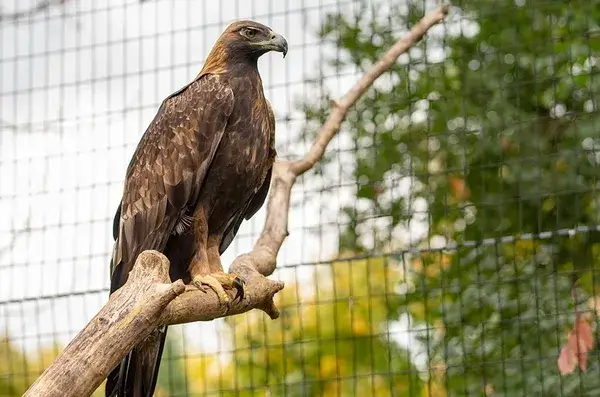
Golden Eagle – The Majestic Guardian of the Skies
Introduction
The Golden Eagle is one of the most powerful and admired birds of prey in the world. With a wingspan reaching over seven feet and eyesight eight times sharper than a human’s, this raptor dominates the skies across four continents. Known for its stunning golden-brown feathers, sharp vision, and strong wings, this bird represents freedom and strength. Golden Eagles can be seen gliding above mountains and open lands, capturing the attention of bird lovers and nature enthusiasts everywhere. Unlike the Bald Eagle, which prefers coastal and river habitats, the Golden Eagle thrives in remote mountainous terrain and expansive grasslands.
Cultural and Historical Significance
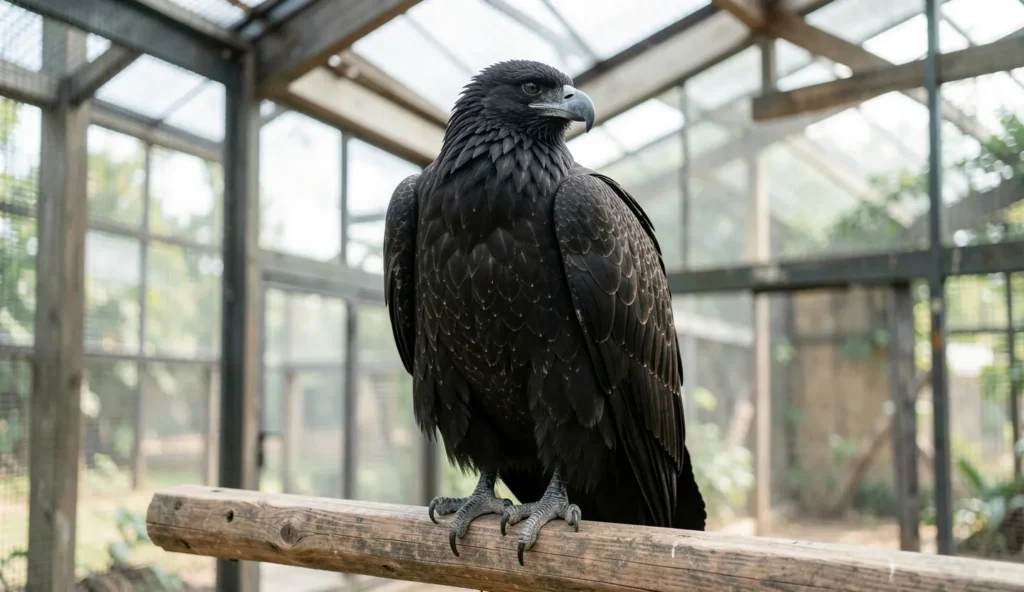
Golden Eagles hold deep meaning in many cultures. In Indigenous communities, they often symbolize courage, leadership, and spiritual connection. In Mongolia, some people still practice traditional eagle hunting, showing mutual trust between humans and birds. Several countries, including Mexico and Kazakhstan, use the Golden Eagle as a national symbol. This bird has also inspired awe across Africa, where the Martial Eagle holds a similar place of reverence as the continent’s largest eagle.
Physical Characteristics
Golden Eagles are large, strong birds built for life in the sky. Some key features include:
- Length: 26 to 40 inches (66–102 cm)
- Wingspan: 6 to 7.5 feet (1.8 to 2.3 meters)
- Weight: 6 to 15 pounds (2.7–6.8 kg)
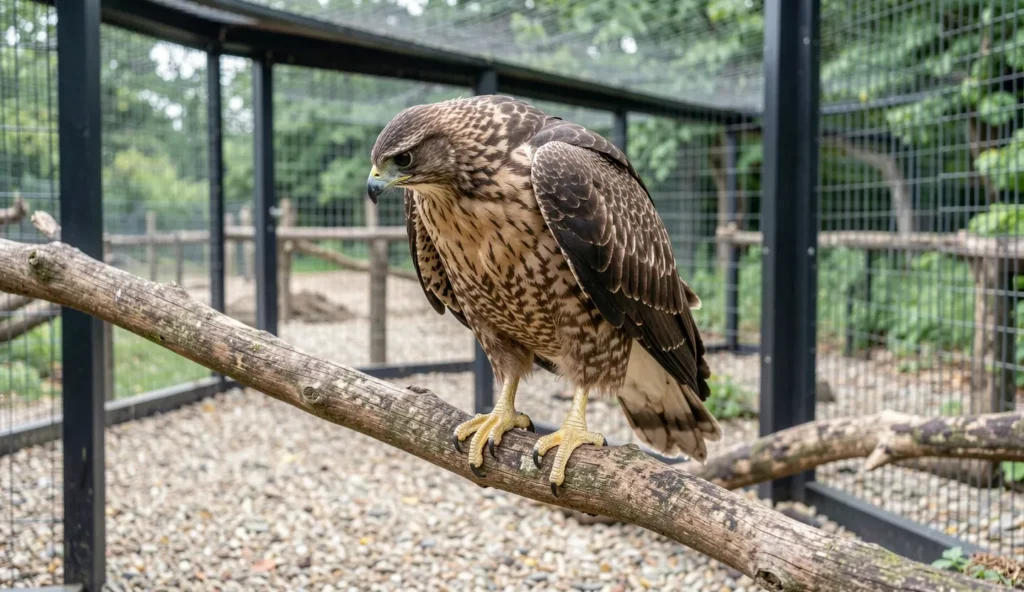
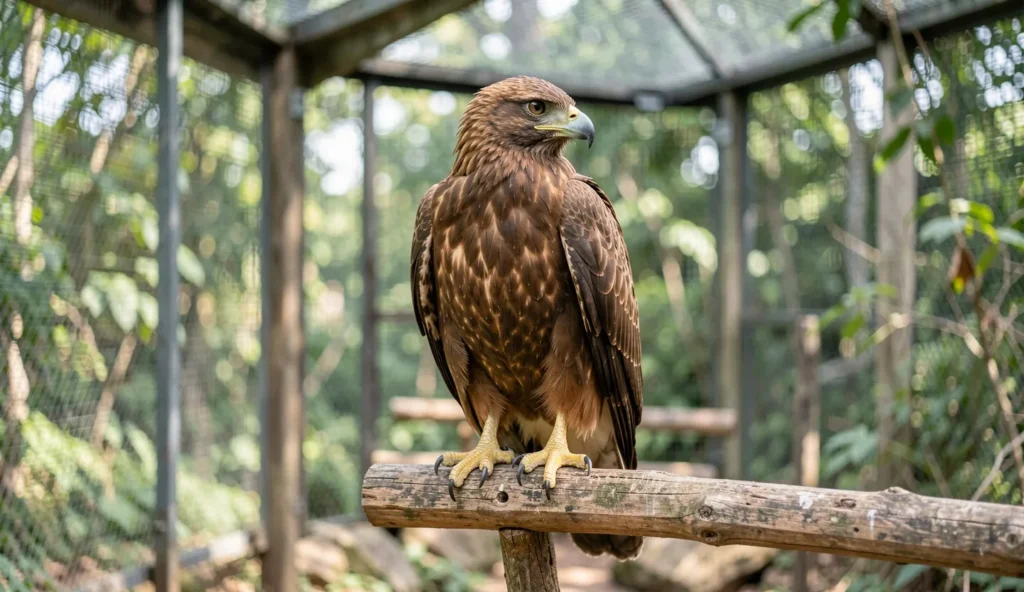
- Color: Dark brown with golden feathers on the head and neck
- Eyesight: Up to 8 times sharper than human vision
Their strong legs and powerful talons help them catch and carry prey with ease. For comparison, the Harpy Eagle of Central and South America has even larger talons, adapted for snatching monkeys and sloths from the rainforest canopy.
Habitat and Range
Golden Eagles live across the Northern Hemisphere. They prefer wide open spaces where they can easily fly and hunt. Some of their favorite habitats include:
- Mountain areas
- Grasslands and steppes
- Forest edges
- Dry, rocky regions
These birds are territorial and need large areas to thrive. A single pair may defend a home range spanning over 60 square miles. In Europe, their habitat sometimes overlaps with the White-tailed Eagle, though the latter sticks closer to coastlines and large lakes.
Diet and Hunting Skills
Golden Eagles are skilled hunters. They eat a variety of animals depending on what’s available in their region. Common prey includes:
- Rabbits and hares
- Ground squirrels and prairie dogs
- Young deer (on rare occasions)
- Birds, snakes, and carrion (dead animals)
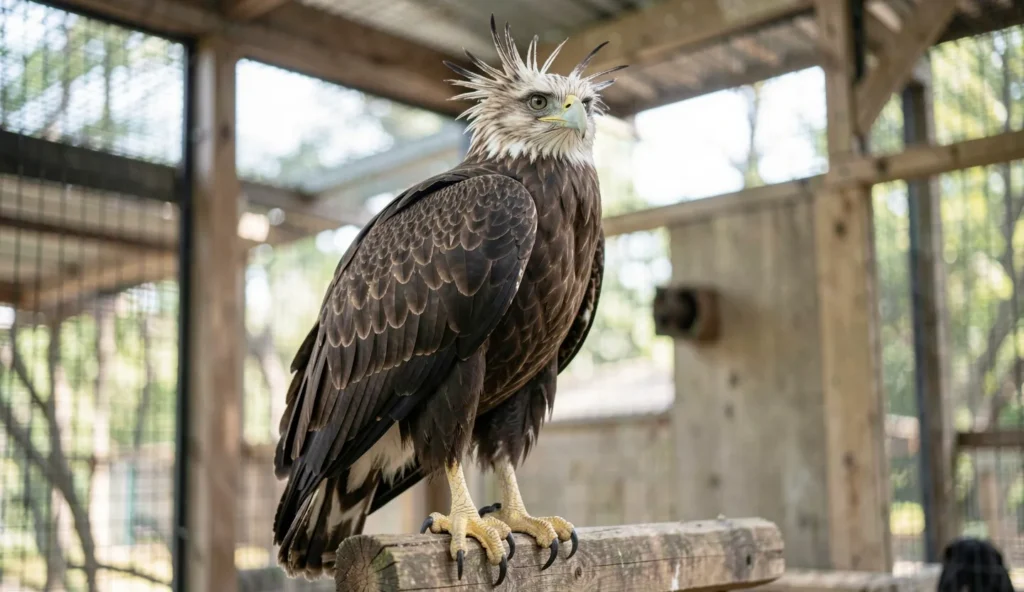
They can dive at speeds of up to 150 miles per hour, making them one of the fastest hunters in the sky. Unlike the Crowned Eagle, which hunts primarily within dense African forests, the Golden Eagle relies on open terrain to spot and pursue prey from great distances.
Nesting and Family Life
Golden Eagles usually mate for life. They build large nests, called eyries, on cliffs or tall trees. These nests are reused and added to every year and can grow quite large.
- They lay 1 to 3 eggs each season
- Both parents care for the eggs and young chicks
- Chicks stay in the nest for about 10 to 12 weeks
After leaving the nest, young eagles often stay nearby as they learn to hunt and survive. It can take four to five years for a young Golden Eagle to develop its full adult plumage.
Behavior and Intelligence
Golden Eagles are smart and observant. They’ve been seen:
- Working in pairs to hunt animals
- Using wind currents to glide for miles without flapping
- Showing strong memory and problem-solving skills
They are quiet, alert birds that rely on patience and planning to succeed in the wild. A practical observation from field researchers: Golden Eagles often return to the same hunting perches day after day, memorizing the best vantage points in their territory.
Conservation and Protection
Golden Eagles are not endangered, but they still face threats in some areas, such as:
- Hitting power lines or wind turbines
- Losing natural habitats due to development
- Exposure to toxic substances like lead or pesticides
They are protected under laws like the Bald and Golden Eagle Protection Act in the United States. Conservationists are working to protect nesting areas and educate people about these amazing birds. Modern conservation efforts also include retrofitting power poles to prevent electrocution and working with wind energy companies to reduce turbine collisions.
Human Interaction
Golden Eagles are wild animals and should live freely in nature. Instead of trying to keep them in captivity, people can enjoy them through birdwatching, ethical photography, and education.
Some ancient hunting traditions, like those in Central Asia, continue today in a respectful and sustainable way. For those interested in learning about other impressive raptors, the Wedge-tailed Eagle of Australia offers a fascinating comparison, as it is the largest bird of prey on that continent and shares many behavioral traits with the Golden Eagle.
Fun Facts About Golden Eagles
- Their grip is strong enough to break bones
- They can live over 30 years in the wild
- Found on four continents: North America, Europe, Asia, and Africa
- Their eyesight helps them see prey from 2 miles away
Frequently Asked Questions
Q1: Are Golden Eagles dangerous to humans?
A: No, they are shy and prefer to avoid humans. They are not aggressive toward people.
Q2: Can Golden Eagles be kept as pets?
A: No. They are protected by law and belong in the wild where they can live freely.
Q3: How are Golden Eagles different from Bald Eagles?
A: Bald Eagles have white heads and often live near water. Golden Eagles have golden-brown feathers and prefer open land.
Q4: What do Golden Eagles eat?
A: They eat small mammals, birds, reptiles, and sometimes carrion. They’re excellent hunters.
Q5: Are Golden Eagles social?
A: They usually live alone or in pairs, especially during breeding season. They are loyal to their partners.
Conclusion
The Golden Eagle is one of the most impressive and respected birds in the world. With powerful wings, sharp eyes, and deep cultural meaning, these birds are symbols of nature’s strength and balance. By learning more about them and protecting their habitats, we help ensure they keep flying high for future generations to enjoy. Whether you are comparing them to the White-tailed Eagle of Europe or the Wedge-tailed Eagle of Australia, the Golden Eagle remains a true icon of the avian world.