What Is a Nubian Ibex
The Nubian Ibex is a wild goat species scientifically classified as Capra nubiana. This agile animal belongs to the Bovidae family and the genus Capra, which includes other ibex and wild goats. The Nubian Ibex stands out for its long, thin, backward-curving horns and its ability to thrive in some of the harshest desert environments on Earth. Unlike domestic goat breeds such as the Nubian Goat, which is raised for milk and meat, the Nubian Ibex remains a truly wild species with no history of domestication.
Scientific Name and Taxonomy
The full scientific name is Capra nubiana nubiana, though some authorities treat it as Capra nubiana. It is a distinct goat species classification within the order Artiodactyla. Ibex are a type of wild goat, and the Nubian Ibex is one of several ibex species found across Africa and Asia.
How to Identify a Nubian Ibex
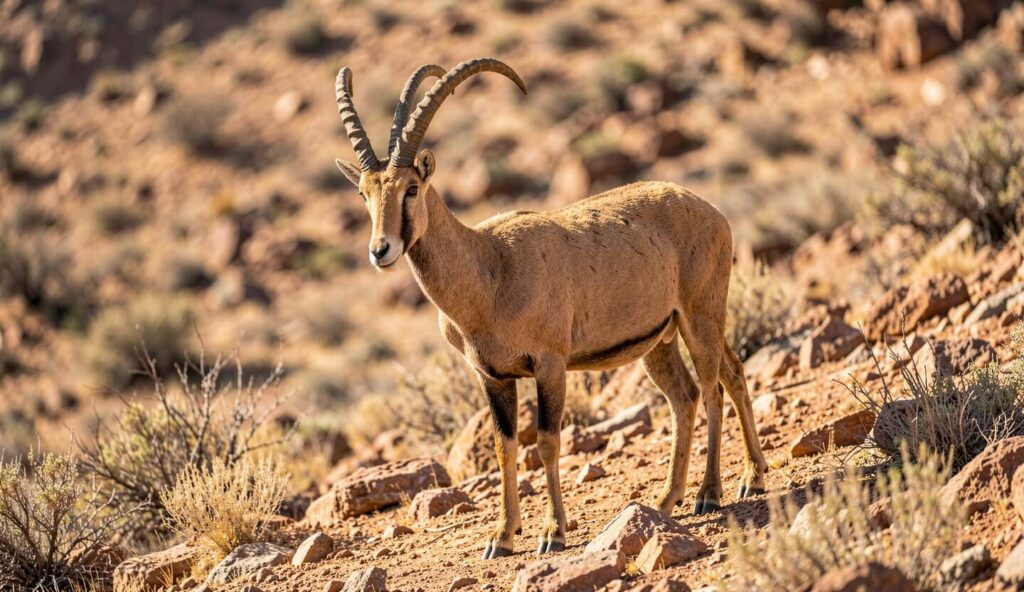
Identifying a Nubian Ibex requires attention to several physical traits. Both males and females have horns, but the size and shape differ dramatically between sexes. The coat also carries distinctive markings that set it apart from other wild goat types.
Horns and Body Size
- Males grow long, thin, curved horns that can reach up to 1 meter in length.
- Females have shorter, less curved horns, typically under 30 cm.
- Body length ranges from 105 to 125 cm.
- Shoulder height is 65 to 75 cm.
- Weight varies between 25 kg (females) and 60 kg (males).
Coat and Markings
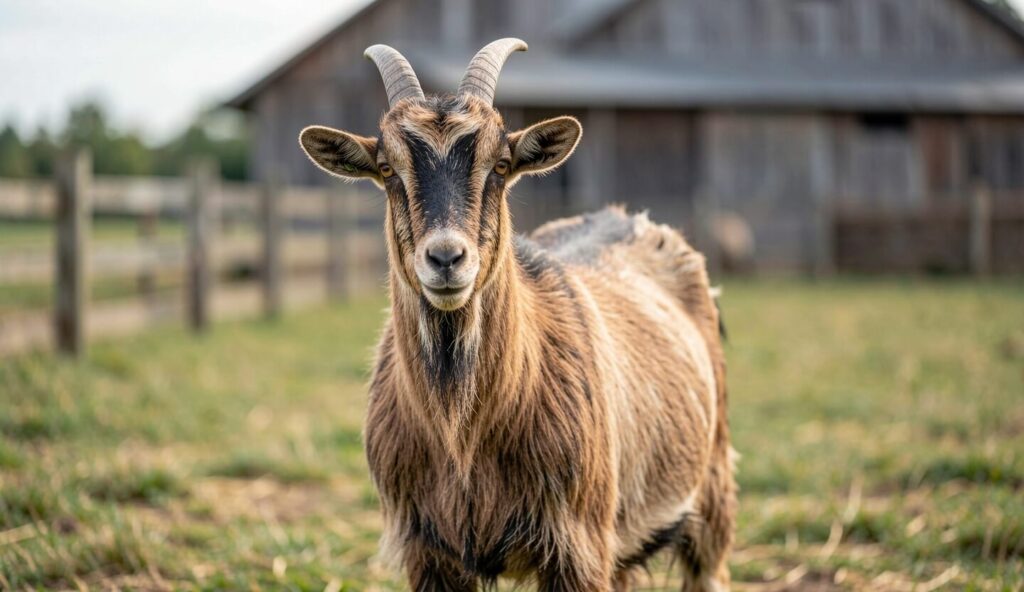
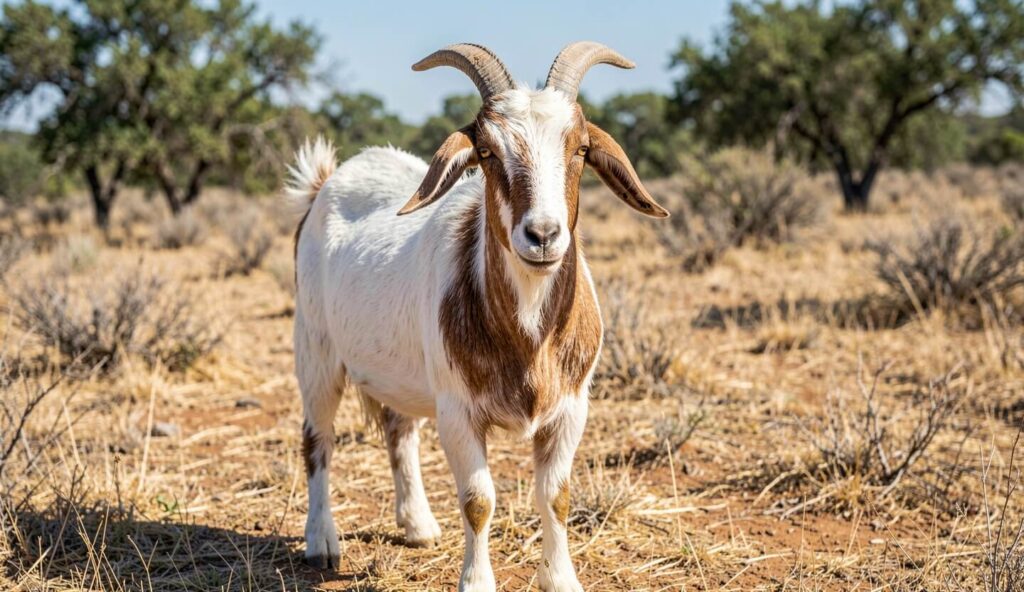
The coat is short and sandy-brown, providing camouflage against rocky desert terrain. A darker stripe runs along the back, and males develop a black beard. White patches appear on the rump and lower legs, creating a striking contrast. These markings help distinguish the Nubian Ibex from other goat species classification groups.
Where Do Nubian Ibex Live
The Nubian Ibex inhabits rocky, mountainous deserts across northeastern Africa and the Arabian Peninsula. Its native range includes Egypt, Sudan, Eritrea, Ethiopia, Israel, Jordan, Saudi Arabia, Yemen, and Oman. These animals prefer steep, rugged cliffs and wadis where they can escape predators and find shade.
Native Range and Altitude Preferences
Ibex typically occupy elevations between 500 and 2,500 meters. In the Sinai Peninsula and along the Red Sea coast, they are often seen on granite and limestone slopes. The arid climate demands specialized adaptations, such as the ability to conserve water and tolerate extreme heat. Unlike domestic breeds like the Alpine Goat, which thrive in temperate pastures, the Nubian Ibex is a true specialist of desert mountains.
What Do Nubian Ibex Eat
The Nubian Ibex is a herbivore that feeds on grasses, leaves, and shrubs. It browses on acacia, thorny bushes, and other desert vegetation. These animals can go long periods without drinking water, obtaining moisture from the plants they consume.
Diet Composition and Foraging Behavior
Foraging occurs mainly in the early morning and late afternoon to avoid midday heat. In the dry season, ibex travel farther to find food, sometimes descending into valleys. This wild goat type uses its hooves to dig for roots and tubers when surface vegetation is scarce. A comparison with domestic goats, such as the Beetal Goat, reveals a similar browsing strategy but with different habitat constraints.
How Do Nubian Ibex Behave
Nubian Ibex are social animals that form mixed herds of females, kids, and young males. Adult males often live in separate bachelor groups or remain solitary outside the breeding season.
Social Structure and Reproduction
The mating season occurs in autumn, with males competing fiercely for access to females. After a gestation period of 150 to 165 days, a single kid is born, usually in spring. The kid can stand and follow its mother within hours. This rapid development is crucial for survival in a predator-rich environment. Herds exhibit strong vigilance, with sentinels warning others of danger.
Are Nubian Ibex Endangered
The Nubian Ibex is listed as Vulnerable on the IUCN Red List. Population numbers have declined due to habitat loss, overhunting, and competition with livestock for water and forage. Conservation efforts include protected areas in Israel, Jordan, and Oman, as well as anti-poaching patrols.
Conservation Status and Threats
Threats vary by region. In some areas, illegal hunting for meat and trophies remains a problem. Infrastructure development, such as roads and mining, fragments habitats. Climate change further stresses populations by reducing water availability. Organizations working to preserve rare goat species also focus on the Nubian Ibex, which is considered a flagship species for desert ecosystems. Readers interested in global goat diversity can explore the rarest goat breeds in the world for a broader understanding of conservation priorities.
Nubian Ibex vs Domestic Goats Key Differences
While the Nubian Ibex shares the genus Capra with domestic goats, several differences separate them. The Nubian Ibex is classified as a goat species classification within the wild group, whereas domestic goats like the Nubian Goat are a separate subspecies, Capra aegagrus hircus. Physical traits, behavior, and habitat preferences set them apart.
Differences in Taxonomy and Behavior
Domestic goats have been bred for docility, milk production, and meat yield. The Nubian Ibex retains wild instincts, including flight distances and aggressive defense during mating season. Horn shapes differ markedly: domestic goats have varied horn types, while ibex have uniform, scimitar-like curves. Wild goats also require larger home ranges and cannot adapt to confinement.
Is the Nubian Ibex a True Goat
Yes, the Nubian Ibex is a true goat. It belongs to the genus Capra, the same taxonomic group that includes all wild and domestic goats. This goat species classification is based on genetic, morphological, and behavioral evidence.
Genus Capra and Evolutionary Relationships
The Nubian Ibex is closely related to other ibex such as the Alpine Ibex and the Siberian Ibex. It also shares ancestry with domestic goats, though domestication occurred thousands of years ago from the Bezoar Ibex (Capra aegagrus). For readers familiar with Oberhasli Goat or other dairy breeds, the evolutionary link is evident in similar digestive systems and social behaviors. Misconceptions arise because the term “ibex” is sometimes used loosely, but taxonomists agree on the inclusion of Capra nubiana within the goat group.
Frequently Asked Questions
What is the scientific name of the Nubian Ibex?
The scientific name is Capra nubiana. It belongs to the Bovidae family and genus Capra.
How large is a Nubian Ibex?
Males stand 65 to 75 cm at the shoulder, with a body length of 105 to 125 cm. Weight ranges from 25 to 60 kg depending on sex and region.
What do Nubian Ibex eat?
They eat grasses, leaves, and shrubs, including acacia and thorny bushes. They can go long periods without drinking water.
Where do Nubian Ibex live?
They inhabit rocky mountainous deserts of northeastern Africa and the Arabian Peninsula, including Egypt, Sudan, Israel, Jordan, Saudi Arabia, Yemen, and Oman.
Are Nubian Ibex endangered?
They are listed as Vulnerable on the IUCN Red List. Populations are declining due to habitat loss, overhunting, and competition with livestock.
How long do Nubian Ibex live?
Average lifespan is 10 to 12 years in the wild. In captivity, they can live up to 18 years.
Final Note
The Nubian Ibex represents a remarkable example of adaptation to extreme desert conditions. Learning about this wild goat type deepens appreciation for biodiversity and the need to protect fragile ecosystems. Whether you study goat species classification or simply admire nature, the Nubian Ibex offers a fascinating window into the world of wild goats.