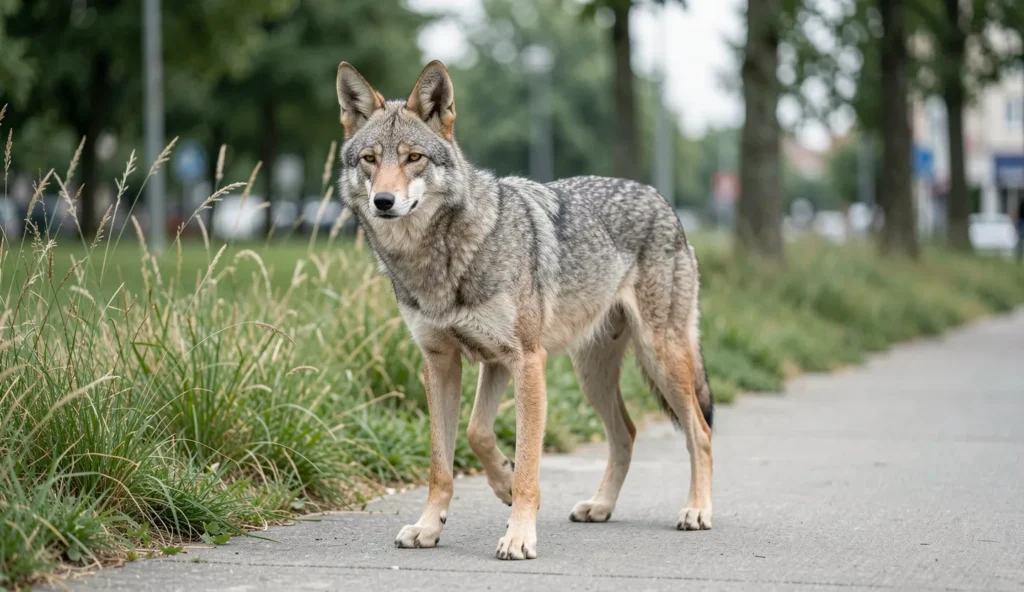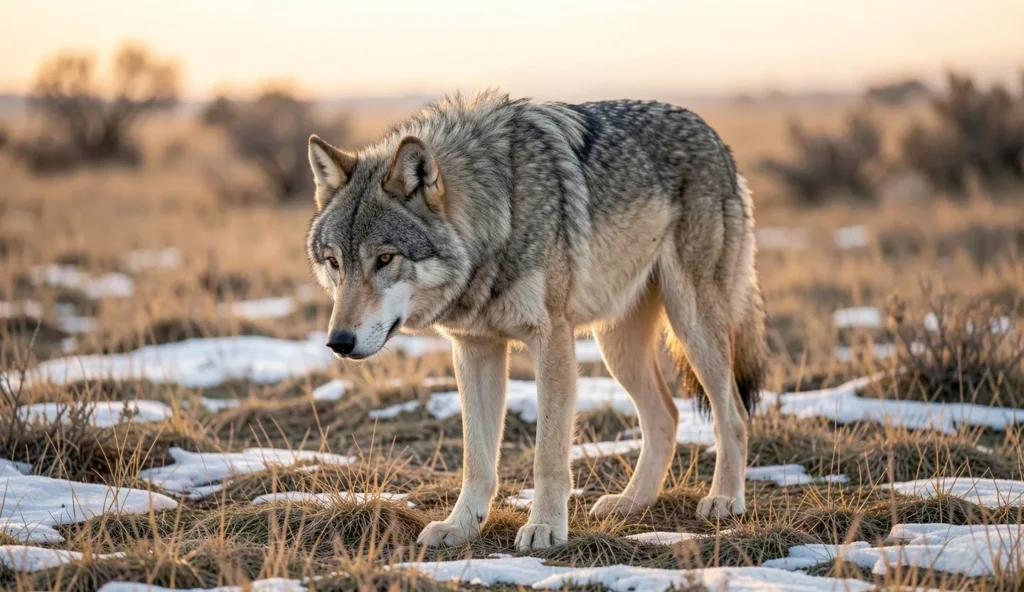
What Is A Saskatchewan Wolf?
The Saskatchewan wolf is a regional wolf label used for wolves associated with Saskatchewan’s plains and grassland belt. Field and research discussions often connect this label to Canis lupus griseoalbus, especially when describing northern prairie forms. For prairie ecologists, the key value comes from linking this identity to how wolves function across open terrain and seasonal extremes.
To interpret “Saskatchewan wolf” patterns correctly, comparisons with nearby populations matter. For example, a great plains wolf reference helps separate prairie-wide conditions from local differences in snow and land cover. Similar caution applies when using Manitoba wolf comparisons, since snow regimes and habitat mosaics can shift prey access and movement behavior.
Classification And Common Naming
“Saskatchewan wolf” typically functions as a practical geographic name rather than a single laboratory-confirmed designation. In many studies and field conversations, the term connects broadly with Canis lupus griseoalbus, but exact label use can vary by dataset and region. Nearby labels may be applied when researchers focus on adjacent ecological zones.
Because naming practices differ, interpretation should use both geography and ecological context. When readers need background on related prairie-adapted forms, reviewing Great Plains wolf descriptions can clarify how open habitat shapes selection pressures. This also helps prevent overgeneralizing from one region to another when sample sizes stay small.
Where This Wolf Population Occurs
Wolves in the Saskatchewan context associate with prairie grasslands, mixed cover mosaics, and riparian corridors across Saskatchewan. River valleys, draws, and shelterbelt edges often create movement lines that wolves use in winter and during denning seasons. In agricultural areas, wolves may also travel between grassland blocks where cover remains sufficient.
Additionally, Great Plains movement corridors link prairie habitat to broader North American distribution patterns. Low density changes how “presence” gets detected across that space. Ecologists often face a patchy observation record, which then affects how territory boundaries and survival rates get estimated.
Why Plains Adaptations Matter For Ecology
Plains adaptations connect directly to prey availability and seasonal weather. When snow depth and crusting change prey vulnerability, wolves adjust hunting timing and travel routes. These links matter for grassland trophic dynamics and for interpreting how predators influence ungulate behavior.
Wolves also shape nutrient flows by redistributing carcasses and affecting where prey feed and rest. When population sizes remain small, monitoring becomes even more sensitive to detection gaps and short-term fluctuations. That is why prairie wolf adaptations often get evaluated using multiple evidence streams, such as scat, track surveys, and prey movement data.
Appearance And Physical Features For Prairie Life
The physical traits of the Saskatchewan wolf support movement across open ground and survival through cold seasons. In prairie settings, pelage, body condition, and limb structure all contribute to hunting performance. These traits also influence how ecologists interpret field evidence, including track impressions and fur persistence on carcasses.
Temperature swings and wind exposure drive seasonal demands on thermoregulation. Meanwhile, open terrain changes how wolves manage energy during long searches and short capture windows. Because detection methods depend on physical evidence, appearance and form become important for study design.
Coat Color And Seasonal Changes
Pelage tone typically varies with season, often appearing darker in summer and more insulating in winter. Winter coats usually support cold exposure and wind-driven heat loss, especially when wolves rest in exposed grass. During seasonal shedding, wear patterns and the timing of molt can also differ where grassland winds remain strong.
Field observations in prairie regions sometimes report visible coat transitions that align with temperature drops and snow onset. These patterns help distinguish fresh evidence from older material, which can improve the dating of observations. For ecologists tracking small populations, better age classification can reduce bias in seasonal survival estimates.
Body Size And Condition Indicators
Body condition links to prey pulses across the Great Plains. When prey recruitment events occur or when carcasses become available through natural mortality, wolves can rebuild fat reserves. During harder winters, energy deficits can drive rapid weight loss, which in turn affects movement speed and hunting attempts.
To track these shifts, ecologists use body condition scoring from captured individuals when permits allow, or infer condition from observational indicators. Those indicators include how quickly wolves approach carcasses, how long they remain near feeding sites, and how often they travel long distances without feeding. Energy balance becomes a core variable when evaluating survival risks in wolf habitat Saskatchewan monitoring projects.
Build For Long Distance Movement
Limb and paw features support travel across snow patches and wet grass. In open terrain, wolves may rely on steady travel rather than quick bursts when visibility remains limited by wind or blowing snow. Snow depth and surface firmness also shape gait choices, which affects what tracks look like.
Because open landscapes reduce visual cover, ranging behavior may increase to locate prey. That affects detection methods, including sign surveys along likely travel lines. When tracking relies on snow or crust conditions, ecologists often need to schedule surveys around weather windows to avoid missing activity.
Sensory And Thermal Limits
Scent and hearing operate as primary detection channels in grasslands where visual cover stays thin. Wind strongly affects how scent travels, so wolves may shift routes to place themselves upwind during approaches. Temperature also affects heat loss during active searching and resting, which then changes the time budgets for hunting.
During colder periods, wolves may conserve energy by reducing unnecessary travel between feeding opportunities. Heat loss management matters during predation attempts, since chasing can become costly when prey remains mobile. These constraints also influence how wolves select resting areas near water sources and deeper cover.
Temperament And Pack Behavior On The Great Plains
Wolf behavior on the Great Plains reflects both pack social structure and the demands of open habitat. In Saskatchewan contexts, small population size can influence how territories get spaced and how individuals disperse. As a result, behavior patterns may appear less stable when compared with larger populations.
Pack coordination affects hunting efficiency and the ability to defend feeding sites. However, open landscapes reduce cover for ambush and can increase reliance on pursuit strategies shaped by weather and visibility. Ecologists reading these patterns should focus on the relationship between space use, prey movement, and evidence density.
Pack Structure And Territory Use
Packs often maintain spacing that reduces direct encounter risk, especially where prey distribution remains uneven. In open habitat, territory boundaries can shift because wolves can travel efficiently and quickly find alternative routes. For small populations, overlap risk can rise if territories remain similar in shape but differ in core-use intensity.
Fragmentation also changes territory shape when cropland blocks break up grassland cover. Fences and travel barriers can redirect movement lines toward rivers, coulees, and other travel corridors. If these corridor patterns persist, ecologists may see repeated use of the same travel lines and consistent den proximity patterns.
Hunting Strategy In Grassland Landscapes
Hunting in grassland landscapes often uses stalking and then pursuit, with success influenced by where vegetation provides brief cover. Weather changes the effectiveness of pursuit, since wind can distort scent cues and blowing snow can reduce prey awareness. Grazing pressure can also modify vegetation height, which shifts encounter rates and the ease of concealment.
When vegetation cover declines, prey may detect wolves earlier, forcing wolves to either adjust timing or shift toward prey that remains more predictable. Conversely, when cover increases near riparian edges, wolves may rely more on short approach windows. These mechanics connect wolf behavior in grasslands to measurable habitat variables used in monitoring.
Seasonal Movement Patterns
Winter often concentrates activity near deeper cover and water sources where thermal and foraging conditions remain more stable. In spring and summer, wolves may expand around denning areas and where prey concentrates during calving or seasonal feeding. Fall reorganizes ranging behavior again, often aligning with prey aggregation and movements.
Dispersal also influences seasonal patterns, especially for subadults leaving the natal territory. Even when dispersal distance remains variable, low-density settings can leave fewer nearby territories to recruit into. That dynamic affects encounter probability for ecologists and can create gaps in sign-based records.
Diet And Feeding Ecology Of The Saskatchewan Wolf
The Saskatchewan wolf diet in prairie systems depends on what prey remains available across seasons. Wolves often show a mix of predation and scavenging, especially when carcasses remain accessible from prey mortality. Diet also responds to land use patterns, such as livestock proximity and road access that can increase carcass availability.
For prairie ecologists, linking diet to prey age structure and seasonal vulnerability helps interpret how predation pressure distributes. Feeding decisions also reveal energy budget constraints, which matter in small population contexts. When kill frequency changes, the spatial pattern of wolf presence changes too.
Primary Prey Types On The Prairies
Major prairie ungulates may form a central prey base, with seasonal prey switching when vulnerability changes. Prey age structure affects hunt success because juveniles and subadults can differ in endurance and behavior. Wolves may also exploit predictable movement routes, particularly when grass cover and topography channel herds.
Scavenging becomes more likely when carcasses appear from natural causes and when feeding sites remain stable. If carcass availability rises during certain months, wolf feeding duration can increase. That helps explain why wolf activity can appear clustered around a few resource points during those periods.
How Seasonal Conditions Change Food Availability
Snow depth and snow crusting can change how easily prey can evade pursuit and how quickly wolves can travel. When snow surfaces become hard or uneven, prey may tire faster or change movement patterns. That then shifts where wolves focus hunting and how often pursuit attempts occur.
Drought and grass die-off affect prey body condition and behavior. Reduced forage can force prey to concentrate near remaining vegetation or water, increasing encounter rates. Insect seasons also shape prey behavior indirectly, since feeding patterns and activity times can change with insect pressure.
Foraging Efficiency And Energy Budget
Small population size can make kill frequency patterns especially relevant for survival and reproduction. If kills occur less often, each feeding event becomes more critical for rebuilding energy reserves. Pack coordination influences risk tradeoffs, since individuals involved in pursuit may face higher injury chances during longer chases.
Den proximity often reflects feeding efficiency and planning. When feeding resources remain near den sites, wolves can reduce time spent traveling for food. That reduces energy costs for nursing and juvenile provisioning, which supports more stable seasonal reproduction.
Human Influences On Prairie Diet
Livestock proximity can increase diet flexibility but also raises conflict risk drivers. When wolves encounter livestock carcasses or injured animals, they may adjust feeding behavior to exploit those resources. Road and farm infrastructure can also affect prey movement, which can indirectly alter where wolves hunt.
Some areas provide more consistent scavenging opportunities than others due to carcass distribution and infrastructure patterns. These changes can shift the spatial pattern of wolf presence and may affect how ecologists interpret prey selection. Because those influences can blur natural prey ecology, careful study design matters for wolf diet prairie ecosystems assessments.
Where possible, comparisons with other arctic-adjacent forms can help separate weather-driven changes from habitat-driven changes. For background on how climate and temperature extremes shape wolf behavior, reviewing arctic wolf adaptations offers useful context, even if conditions differ from Saskatchewan’s plains.
Housing Essentials For Field Researchers And Prairie Monitoring
Habitat requirements for prairie wolves translate into practical field needs for monitoring and research. Observers often target cover types, travel lines, water points, and denning constraints to document presence and activity. In Saskatchewan small population settings, these choices affect detection probability and the ability to estimate territory persistence.
Monitoring also needs to account for connectivity and landscape structure across the Great Plains. When movement corridors remain narrow, wolves may concentrate sign activity in fewer locations. That concentration can improve detection in some areas but increase the risk of missing wolves if surveys stay too limited.
Key Habitat Features In Prairie Wolf Ranges
Cover types support resting and ambush opportunities, even when vegetation remains low compared with forested regions. Water sources influence travel lines, since wolves must manage hydration and thermoregulation during warm and cold seasons. Edges between cropland, grassland, and riparian zones often become predictable movement connectors.
Field teams can use these features to plan sign transects and remote monitoring points. Because the Saskatchewan wolf may operate at low density, covering likely travel routes typically increases observation quality. Where possible, surveys should also include adjacent corridor edges rather than only core grassland blocks.
Denning Site Characteristics And Constraints
Den landscapes often include coulees, sheltered ground, and areas with limited human disturbance. Wolves choose locations that balance concealment, safety, and access to nearby prey movement. In small populations, disturbance sensitivity can have outsized effects, since lost reproductive events can take longer to replace.
Predator and scavenger pressures can influence den success and pup survival. As a result, monitoring plans should account for timing, weather, and access constraints that reduce the chance of repeated disturbance. When interpreting signs near dens, ecologists often separate transient visits from consistent use to avoid overestimating den occupancy.
Landscape Connectivity In Great Plains Systems
Connectivity supports dispersal and gene flow, which becomes more important under low population density. Dispersing individuals need passage routes that balance cover, safety, and distance. Even where wolves can move across open ground, long gaps in cover or barriers can still reduce recruitment success.
Fences and cultivated blocks can create pinch points, concentrating crossings along certain corridors. Those pinch points shape where wolves travel, and they also shape where field evidence accumulates. For broader geographic context, reviewing northwestern wolf habitat notes can help illustrate how prairie-adjacent systems still depend on corridor structure, even when vegetation differs.
Common Health Issues And Survival Risks For Plains Wolves
Health risks for the Saskatchewan wolf include parasites, injury hazards, disease exposure, and demographic vulnerability. Prairie weather can intensify stress during winter, especially when prey scarcity increases movement. Injury risk can also rise due to pursuit across open ground where footing can change quickly under crust or thaw.
For small populations, survival risks carry additional weight because each mortality event affects future reproduction and genetic stability. Ecologists often combine noninvasive sampling with observational records to estimate risk patterns without repeated handling. That approach matters in regions where encounter opportunities remain limited.
Parasites And Winter Stressors
Winter weather can change parasite loads by shifting host survival and prey behavior. When wolves face energy deficits, immune function can decline, making parasite burdens more impactful. Stress from prey scarcity also increases the likelihood that wolves take more risky routes or spend extra time searching.
Monitoring can use scat and noninvasive sampling to estimate parasite presence and to evaluate diet-linked exposure. Timing of sampling matters, since parasite signals can vary seasonally. By tracking those changes, prairie ecologists can relate parasite pressure to snow severity and prey condition.
Injury Risks From Terrain And Prey Pursuit
Injury risks increase during long chases across open ground, especially when snow and ice surfaces alternate over short distances. Leg and paw impacts can occur when wolves travel over crusted snow, wet grass, or thawed mud. Prey scarcity can amplify these risks because wolves may pursue less suitable targets more often.
Field signs like abnormal track patterns, reduced movement, and delayed recovery after suspected hunts can indicate injury. Ecologists should treat these observations as indirect evidence and avoid assuming causality without supporting data. When injury indicators align with low prey availability, risk assessment becomes more reliable.
Disease Considerations In Prairie Food Webs
Disease can spread through shared prey species and through carcasses used by multiple predators and scavengers. If wolves feed near other carnivores, contact risk can increase, even without direct interaction. Herd health also shapes exposure levels, since sick prey can introduce pathogens into the local food web.
Scavengers contribute to disease dynamics by moving carcass material and sharing feeding sites. Over time, repeated shared carcass use can create recurring exposure pathways. When researchers evaluate disease risk in wolf population at low density contexts, they often need to consider sampling bias and intermittent exposure events.
Small Population Vulnerability Factors
Low density can reduce mate availability and slow demographic recovery after loss events. When territorial vacancies remain hard to fill, breeding success may drop and dispersal opportunities may shrink. Genetic diversity can also decline if gene flow from nearby regions becomes limited by habitat barriers.
Demographic stochasticity becomes more important when numbers remain small because random events like harsh winters can trigger larger proportional effects. Cumulative threats can then compound survival risks across seasons. For ecologists, this means monitoring should prioritize consistent methods that reduce uncertainty in trend estimates.
For cautious regional comparisons, Manitoba wolf studies can inform what changes with snow regimes and land cover. However, Saskatchewan plains conditions can differ enough that conclusions should stay Saskatchewan-specific. When interpreting Manitoba contrasts, the label “useful comparison” should remain a hypothesis source rather than a direct substitute.
Is The Manitoba Wolf A Useful Comparison?
The Manitoba wolf label can help frame how different climate and land cover modify prey vulnerability and movement costs. Yet, Saskatchewan’s specific Great Plains and grassland belt structure can shift outcomes, especially under different snow patterns. Comparisons remain best when study metrics align across regions.
To strengthen regional context, ecological adaptation summaries like Greenland wolf survival discussions can highlight how isolation and climate interact, although those systems differ from prairie landscapes. Such references help separate general wolf biology from Saskatchewan-specific prairie wolf adaptations. The key is using comparisons to generate testable expectations rather than assuming uniform behavior across provinces.
Is The Saskatchewan Wolf Right For Prairie Conservation Goals?
The Saskatchewan wolf can fit prairie conservation goals when monitoring priorities match trophic and habitat impact questions. Wolves can influence prey behavior, grazing distribution, and where nutrient pulses occur across grassland mosaics. This role becomes measurable when territory persistence, prey movement, and carcass distribution get tracked together over seasons.
However, low density increases sensitivity to disturbance near denning areas and to conflict risk drivers tied to infrastructure. Road density, livestock overlap, and seasonal prey decline can raise mortality risk in ways that may not appear in larger populations. For that reason, conservation planning often needs extra controls that reflect the small population scale.
When Monitoring Priorities Align
Monitoring works best when datasets target territory persistence and measurable trophic outputs such as prey movement changes. Tracking sign density, movement corridors, and seasonal feeding patterns can link predator presence to habitat function. In small populations, choosing appropriate spatial and temporal scales reduces false negatives and improves inference quality.
- Track territory use and overlap risk across seasons
- Measure prey behavior around known movement corridors
- Estimate feeding site persistence and carcass distribution
- Relate detection gaps to weather and survey timing
When Risks Need Extra Controls
Disturbance sensitivity near dens can require strict timing controls and access limits. Increased road density can also elevate conflict patterns that lead to avoidable mortality during harsh weather. Contingency planning should include prey decline scenarios and seasonal survey scheduling around winter severity.
- Reduce disturbance frequency during denning windows
- Assess conflict risk near roads and farm infrastructure
- Plan sampling around crust and snowfall variability
- Account for dispersal uncertainty when numbers stay low
Final Note On Saskatchewan Wolf Adaptations
Prairie systems shape the Saskatchewan wolf through coat performance, movement efficiency, and diet flexibility under seasonal constraints. When monitoring aligns with those plains adaptations, small-population patterns become easier to interpret.
Frequently Asked Questions
What Makes The Saskatchewan Wolf Different In Great Plains Conditions?
Open habitat influences hunting and movement, while winter severity and prey distribution reshape seasonal energy demands.
Is The Saskatchewan Wolf The Same As Canis Lupus Griseoalbus?
Labels may align with Canis lupus griseoalbus in usage, but naming can vary across studies and datasets.
How Does Prey Availability Change Wolf Diet On The Prairies?
Seasonal prey switching and scavenging increase when snow depth, crusting, and drought change prey vulnerability.
How Do Small Saskatchewan Wolf Populations Affect Monitoring Results?
Lower detection probability and higher demographic variability can bias trend estimates, especially when dispersal uncertainty is high.
How Can Habitat Connectivity Influence Saskatchewan Wolf Survival?
Connectivity supports dispersal and mate finding across fragmented landscapes, while fences and cultivated blocks can reduce recruitment.
Final Note
A detailed understanding of prairie wolf adaptations helps prairie ecologists interpret field evidence and plan monitoring under low-density conditions.