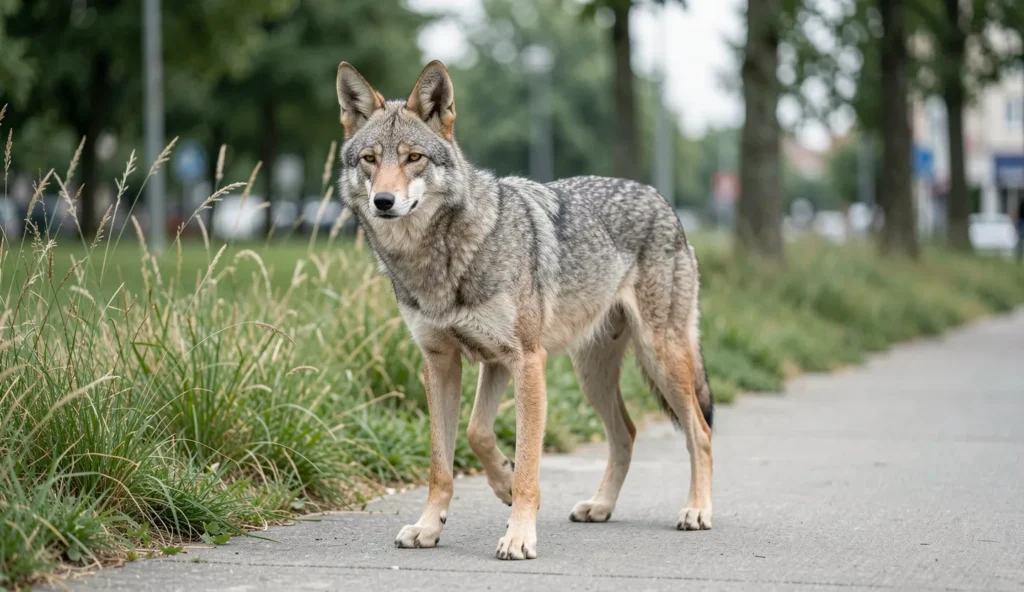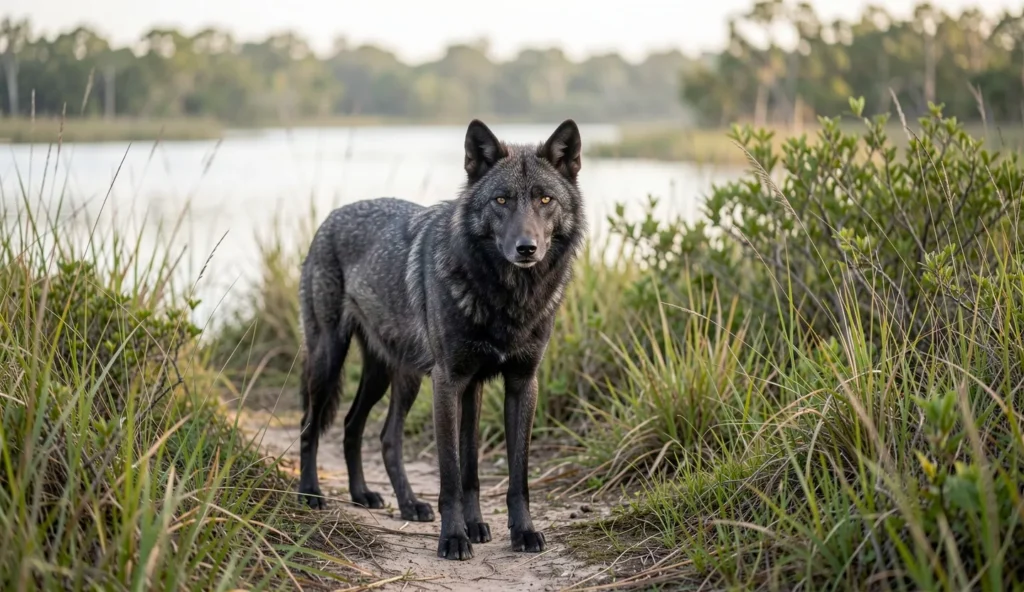
What Is The Florida Black Wolf Claim About
The florida black wolf label appears in cryptozoology and older regional discussions about wolves in Florida. It usually refers to reports of unusually dark or black pelage associated with historical wolf mentions in the Southeast US. Many readers also connect the claim to the name Canis lupus floridanus, but that linkage needs careful evidence review. In practice, the florida black wolf topic sits at the border between folklore, misidentification, and limited historical records.
Because the topic blends popular language and taxonomy, the scope must stay narrow. The focus stays on what the florida black wolf claim means, how the term gets used, and what types of evidence could support or refute an extinct wolf scenario. Cryptozoologists often need to treat each record as its own testable unit rather than part of a single confirmed story. That method helps avoid turning repeated claims into assumed facts.
Name Variants And How People Use The Term
People use “florida black wolf” as a practical shorthand for dark pelage sightings. The phrase often merges two ideas: a Florida location and a black or near-black coat color. In many accounts, “black wolf” describes color variation rather than a distinct species.
Some reports treat “black wolf” as a marker for Canis lupus floridanus, while others use it as a generic descriptor for any wolf-like canid with dark fur. These approaches lead to different evidence needs. Records that only mention color without diagnostic details usually cannot resolve taxon-level questions.
Across Florida regions, the claimed locations can shift between wetlands, uplands, and near-settlement areas. Those shifts matter because habitat context influences how observers identify species. Also, modern writers often extrapolate from late or vague mentions to create an unbroken survival narrative.
Where The Reports Tend To Cluster And Why That Matters
Repeated “florida black wolf” mentions often cluster around older settlement zones and hunting activity. Some claims place dark wolves near waterways, swamps, or scrub edges, which can align with how people described wolf activity elsewhere. However, those habitat statements remain difficult to evaluate without precise documentation.
Separately, writers sometimes blur habitat claims with claims about wolf range. Wolf range discussions tend to rely on a broader body of records than a single dark pelage report. When the two get mixed, a record that only supports “dark canid” can be stretched into “Florida wolf population survived longer than expected.”
Additionally, late records get reinterpreted by modern readers who try to connect them to older subspecies labels. This can create a false sense of continuity. A dated mention becomes less informative when later retellings stop preserving observer details.
Evidence Types That Matter For The Florida Black Wolf
High-value evidence typically includes physical specimens, dated and location-specific records, and properly documented imagery. For the florida black wolf claim, specimens or museum material would offer the strongest check against misidentification. Photographs can help, but only if provenance and metadata make the image usable.
Another key factor involves verifiability. Cryptozoology evidence standards often depend on chain of custody for physical samples and on observer reliability for written reports. Firsthand accounts with consistent details usually carry more weight than secondhand retellings that repeat the same phrases.
Where the egyptian wolf? No, where the evidence collapses is usually at the “who, where, when” layer. Vague descriptions like “a black wolf was seen” rarely let researchers test species identity. Therefore, the evidence evaluation must separate what a record directly supports from what later readers infer.
What Canis Lupus Floridanus Refers To In Wolf Taxonomy
Canis lupus floridanus often appears in discussions that try to tie Florida reports to a named gray wolf subspecies. In many taxonomic histories, subspecies labels represent population-level traits, not guaranteed historical presence in every local report. The gulf between a subspecies name and a specific, verifiable “black wolf” sighting stays a major issue.
To interpret the florida black wolf label responsibly, taxonomic context needs to stay front and center. Subspecies naming practices have changed over time, and older classifications did not follow today’s genetic criteria. That evolution affects how extinct wolf narratives get built from mixed sources. When modern readers treat older labels as fixed facts, they often underestimate classification uncertainty.
Subspecies Naming History And Why It Gets Confused
Subspecies names were historically assigned using morphology, geography, and limited specimen sampling. That meant a label could reflect regional traits rather than a distinct evolutionary unit confirmed by genetics. Over time, taxonomists revised or merged labels as more data became available.
In the Southeast US, the wolf history record also involves uncertainty due to inconsistent sampling. Some accounts used broad regional descriptors, then later writers attached Florida-specific subspecies names to them. That pattern can lead to circular reasoning where a name reinforces the interpretation of the same weak records.
The confusion becomes stronger when “florida black wolf” narratives assume that pelage color automatically indicates Canis lupus floridanus. In reality, pelage color can vary within populations. Subspecies labels require more than one trait, even if older literature sometimes emphasized coat differences.
Color Variation And Black Pelage In Wolves
Wolf populations can show dark pelage, including very dark gray or near-black coats. Color variation can arise from genetics, seasonal changes, and local environmental effects on appearance. Because observers often notice color first, “black wolf” can quickly dominate the story.
That does not mean a “black wolf” report proves a different subspecies. It may only show that the animal had darker fur that day. Without diagnostic anatomical details or verified identification methods, pelage alone cannot resolve taxonomy.
In many Southeast US accounts, dark pelage likely contributed to folklore-based naming. Those naming conventions sometimes persisted long after formal taxonomy moved on. As a result, the florida black wolf label may represent a descriptive category rather than a taxon that can be treated as confirmed.
How Modern Taxonomy Challenges Old Labels
Modern taxonomy increasingly uses genetic evidence and standardized criteria for classification. Those methods can merge older subspecies or reassign populations when new data show they do not match earlier morphological groupings. When old names remain in circulation, readers may keep using them as if they reflect current scientific consensus.
Because of that, the extinction discussion around an “extinct wolf” in Florida can gain momentum even when evidence quality stays low. A label that once seemed meaningful can become ambiguous when taxonomic boundaries shift. Therefore, the texas? No. The key is that the label’s meaning depends on the time period and the evidence used to justify it.
Researchers who evaluate the florida black wolf claim should treat Canis lupus floridanus as a historical taxonomic term, not as automatic confirmation of any modern or anecdotal “black wolf.” The question remains what records support Florida wolf presence and what records support dark pelage specifically.
Evidence Used To Support The Florida Black Wolf Myth
Evidence for the florida black wolf myth usually comes from a mixture of regional reports and older record-keeping. Each source type has a different failure mode, so cryptozoologists should avoid assuming that one weak record automatically validates another. Also, repeated statements can make an unverified claim look more reliable than it is.
To evaluate the claim, it helps to map evidence categories to credibility. Dated material with verified provenance generally outperforms undated rumor. Where written sources lack observer details, the strength drops even if the story sounds consistent. This is where cryptozoology evidence standards become essential rather than optional.
What Written Records Commonly Mention
Written mentions often appear as letters, hunting notes, newspaper-like summaries, or local testimony recorded later. Dates and locations can sometimes be provided, but often they remain generalized. Those missing details matter because they affect how researchers can compare a record against known wolf history and other canid reports.
Another common weakness involves description language. Accounts that only state “black wolf” without size, tail shape, ear posture, or track details rarely let specialists rule in or out a gray wolf context. Instead, such descriptions can fit multiple dark canids or even misidentified domestic dogs.
Observer reliability changes across records. Some reports include who saw the animal, how far away it was, and what conditions existed. Other retellings remove those context elements, then later writers treat the summary as if it preserved the original observation quality.
Specimens, Skins, And Museum Material What To Look For
When evidence involves physical specimens, catalog records provide a clear starting point. The most testable details include collection location, collection date, and how the specimen was identified at the time. If the specimen exists, it can be compared against modern morphological expectations and, where possible, against genetic research methods.
Specimen labeling errors create a major risk. Location swaps and incorrect dates can cause later authors to connect a specimen to the wrong region. This can distort the florida black wolf extinction narrative by making a sample look like it came from Florida when it actually originated elsewhere.
Therefore, pelage-related claims should not be treated as automatically trustworthy. Physical examination matters because descriptive labels can oversimplify coat color. If the specimen supports a “black” description, researchers should still verify that the animal is a wolf and not another canid.
Photographs, Tracks, And Field Notes Their Usability Limits
Photographs help only when camera provenance and metadata support a credible identification. Without timestamps, image dates, or source documentation, even a dark canid image remains hard to interpret. For the florida black wolf claim, a photo should ideally link to a named, documentable observer or archive.
Tracks often fail species-level identification because track shape overlaps among canids. Tracks can support “wolf-like canid presence,” but assigning them to Canis lupus floridanus usually needs measurements and comparison data. Even then, substrate, speed, and partial impressions can skew track appearance.
Field notes are valuable when they include consistent measurement details. Researchers should look for descriptions of gait, claw marks, stride length, and environmental conditions. When notes remain vague, field records turn into narrative material rather than test evidence.
How Retelling And Confirmation Bias Distort Claims
Retelling can amplify errors through a citation ladder. A later publication may repeat the same original mistake while adding new speculation, which then spreads through more retellings. Over time, the “florida black wolf” story can harden into a tradition even when the earliest source remains weak.
Confirmation bias also plays a role. Observers who expect a “black wolf” may interpret a dark gray wolf as exactly that label, ignoring uncertainty. Meanwhile, non-wolf canids with dark coats can be incorrectly absorbed into the same narrative category.
A practical method involves tracing each claim back to the earliest documented source. If the earliest source lacks specifics, later supporting citations may not truly add new information. This is why cryptozoologists treat repetition as a warning sign rather than a validation signal.
The Extinction Discussion What Happened To Wolves In Florida
Extinction or extirpation claims about Florida wolves often get framed as a simple story with a clear end date. In reality, the distinction between local loss and total disappearance matters. The florida black wolf label sometimes gets merged into a broader idea of an extinct wolf in the Southeast US, even when the record supports only local disappearance.
To evaluate what happened to wolves in Florida, a timeline approach and evidence hierarchy help. Some records may indicate wolf presence at certain times, while silence in later years may reflect hunting pressure, surveying effort, or both. That means the absence of reports does not automatically prove extinction. Instead, it signals that survival cannot be confirmed by existing documentation.
Extirpation Versus Extinction In The Context Of Wolves
Extirpation means the local disappearance of a species from a region while the species may still exist elsewhere. Extinction means the species no longer exists anywhere. Popular writing often uses “extinct wolf” loosely when the topic actually describes extirpation from Florida.
Because the florida black wolf narrative often uses emotional language, it can push readers to assume total extinction. Cryptozoology and wildlife history discussions benefit from separating these terms early. That separation prevents a weak regional record from being treated as global evidence.
Local loss can still happen even when the broader gray wolf population persists. For instance, regional wolf histories in other areas show how pressure and habitat change can disrupt presence without eliminating wolves everywhere. Those patterns support careful language in the Southeast US debate.
What Factors Are Commonly Cited In Southeast US Wolf Declines
Human-caused pressures are often cited in wolf declines, including hunting, persecution, and predator control efforts. These pressures can reduce numbers quickly and then limit breeding opportunities. Habitat change and prey depletion can add additional stress by shrinking viable territories and food sources.
Barriers to recolonization can also matter, especially when settlements and agriculture create fragmented landscapes. Long-distance dispersal may become unlikely when animals must cross inhospitable areas. In that setting, even if wolves exist nearby, recolonization into Florida could remain unlikely.
To understand the florida black wolf extinction discussion, it helps to compare how other regional wolf stories evolved. For background on how wolf forms and regional descriptions get debated in historical contexts, the “gray wolf” and “Eastern Wolf” materials can illustrate why labels change over time. Those comparisons do not prove the Florida claim, but they highlight common patterns in how evidence gets interpreted.
A Practical Timeline For Researchers To Reconstruct
A timeline should start with the earliest reliable mentions of wolves in Florida and continue through the latest credible records. For each entry, researchers should note the evidence type such as specimen, dated observation, or secondary report. When entries rely on retellings, the timeline should mark them as lower strength evidence.
Gaps in the timeline require careful interpretation. A gap could mean absence, but it could also mean fewer observers, reduced reporting, or changes in survey effort. Cryptozoologists should avoid treating a gap as proof of survival or proof of extinction by itself.
To keep the timeline grounded, each record must be checked for internal consistency, including location and wording. If multiple later sources cite the same earlier publication, those later items should not count as independent confirmations. This method keeps the florida black wolf extinction narrative from inflating confidence through repetition.
What Modern Wildlife Records Can And Cannot Confirm
Modern wildlife records often focus on confirmed detections from surveys, cameras, or verified reporting. Even so, the absence of detections across a region does not necessarily mean wolves disappeared long ago. Survey effort varies, and detection probability depends on habitat type, season, and observer coverage.
Therefore, wildlife databases and modern surveys support boundaries on presence rather than definitive extinction proof. If an extinct wolf claim exists for Florida, it must rely on historical evidence plus an absence pattern that aligns with known decline drivers. Otherwise, the claim remains a hypothesis.
In the broader Southeast US context, comparisons to other debated wolf accounts can help frame expectations. For example, the way populations get described and classified in materials about “Red Wolf” and other canids shows how uncertainty can persist in regional histories. Those resources can improve methodological thinking, even though they do not solve the Florida black pelage question directly.
How To Evaluate New Claims About The Florida Black Wolf
New florida black wolf claims often appear through recent sightings, social media-style posts, or reinterpretations of older records. A repeatable investigative framework keeps evaluation consistent and avoids emotional overreach. Because cryptozoologists work with incomplete information, the framework must prioritize provenance, diagnostics, and independent verification.
Most importantly, the evaluation should separate species-level identification from coat color interpretation. Many claims stop at “black fur,” but black fur can occur in multiple contexts. Without diagnostic confirmation, the claim cannot be treated as evidence for Canis lupus floridanus. Instead, it should be treated as a prompt to gather higher-quality material.
Create A Claim Intake Checklist Before Any Verification
Before verification attempts, claim intake should capture exact location details and time. Researchers should record nearest landmarks, coordinates if possible, and the date and time of the sighting. Environmental context such as weather, lighting, and animal behavior can influence whether the report is testable.
Observer details also matter. A proper intake includes who observed the animal, how many witnesses exist, and whether the observers knew what a wolf looked like. Also, researchers should request original media files rather than screenshots that can strip metadata.
When the florida black wolf claim includes hunting stories or legacy accounts, the checklist should request the earliest version. Later retellings typically remove details that would otherwise help evaluate reliability. That makes citation tracing a core step at the start, not an afterthought.
Verify Species Level First Then Pelage Claims
Species-level verification comes first because multiple canids can share a dark coat appearance. Domestic dog breeds with dark fur can confuse identification, especially at distance or in low light. Likewise, other wild canids may produce “wolf-like” silhouettes that trick observers.
Researchers should focus on diagnostic traits used in wolf identification rather than stopping at coat color. Tail carriage, head shape, body proportions, and track measurements can help narrow identification. Only after species-level plausibility rises should pelage interpretation enter the analysis.
Then the question shifts from “was it black” to “was it a wolf consistent with the claimed regional context.” This step prevents the florida black wolf label from becoming a color-only category that cannot test Canis lupus floridanus.
Plan Field Steps That Produce Evidence With Provenance
When field work is involved, evidence generation should follow protocols that preserve provenance. Camera trap setup should use time-stamped captures and stable placement records. Researchers should document who installed cameras and how long they ran.
Track collection needs measurement and handling protocols where possible. If casts or samples are collected, chain of custody should remain documented. Genetic material requests should follow sampling documentation so results can be traced back to the original animal and location.
Because cryptozoology often gets criticized for weak documentation, provenance becomes a trust-building tool. Even if evidence does not confirm Canis lupus floridanus, well-documented species identifications still advance the record. That is the practical way to test the florida black wolf claim without overpromising.
Coordinate With Archives And Museum Databases
Archival research helps evaluate whether the claim repeats older errors or points to an overlooked dataset. Museum catalogs and historical hunting records can confirm whether physical material exists and where it came from. Researchers should cross-check collection dates against known regional wolf record patterns.
During archival work, conflicting labels must be treated as a red flag. Location swaps, catalog entry mistakes, and inconsistent naming can create false links to Florida. If possible, researchers should inspect specimens or seek curator notes that explain labeling decisions.
This archival approach also benefits from comparison to other wolf histories that show how labels travel. For example, learning about “great plains wolf” descriptions and how they were treated historically can help identify similar naming patterns. Comparable caution applies to “hudson bay wolf” and “Greenland wolf” discussions, where geography shapes how labels get assigned.
Use A Confidence Scale Instead Of Binary Belief
Claims should be graded using a confidence scale that reflects evidence strength. A tier can separate direct, high-provenance specimens from lower-provenance retellings. This avoids the all-or-nothing mindset that fuels myths.
Uncertainty language also matters. If evidence is indirect, the assessment should explicitly state what cannot be confirmed. This keeps the florida black wolf narrative aligned with evidence quality rather than storytelling momentum.
Confidence scales also help track what future evidence would change the assessment. For instance, verifiable specimens and genetic results with documented sampling would increase confidence. Meanwhile, black pelage-only reports would likely stay in a lower confidence tier until identification improves.
Is The Florida Black Wolf Claim Likely Or Merely A Mislabel
The most practical way to synthesize the florida black wolf claim is to compare what the evidence pattern can realistically support. Several mechanisms can produce “black wolf” stories without requiring a confirmed Canis lupus floridanus population in Florida. Those mechanisms include pelage variation within gray wolf contexts, vague observation details, and reuse of subspecies labels in later retellings.
In cryptozoology, it helps to treat a myth as a data signal rather than as proof of a hidden species. The myth can still indicate that records exist somewhere, but it may point to misidentification or mislabeled material. That stance keeps the research focused on documentation improvement rather than belief systems.
Most Common Explanations That Fit The Available Pattern
Darker pelage can naturally generate “black wolf” reports. If observers saw a dark gray individual, they might describe it as black, then later writers might interpret the description as taxon-level evidence. This path does not require an extinct wolf that matches a specific subspecies label.
Another explanation involves loose reuse of subspecies names across regions. Historical literature sometimes applied labels based on geography, then later works merged accounts when boundaries blurred. In that case, Southeast US wolf mentions could get blended into Florida narratives under one name.
The american? No. The key point stays that extrapolation amplifies uncertainty. A single Florida-like mention can become a “Florida black wolf” story when authors combine separate accounts without tracing them to their earliest sources.
What Would Change The Assessment In The Future
High-confidence confirmation would come from verifiable specimens linked to Florida with clear catalog documentation. Genetic results could support a subspecies or population claim, but only if genetic sampling includes rigorous provenance records. Repeated independent confirmations with consistent metadata would also increase confidence.
Strong photographic evidence also helps when metadata is preserved and the identification reasoning is transparent. If tracks or field notes include measurements and diagnostic trait descriptions, they can support a wolf presence claim even without a specimen. However, color-only evidence would remain insufficient for Canis lupus floridanus-level conclusions.
If future work finds that old “florida black wolf” labels were attached to mislabeled material, the myth would shift from a plausible extinct wolf hypothesis to a documentation error story. That change still advances research because it clarifies where the record went wrong.
Where The Myth Still Has Value For Research Questions
Even if the florida black wolf claim ends up as mislabeling, the myth can guide better archival triangulation. It can highlight overlooked records where observers mentioned wolves but did not preserve diagnostic detail. It also encourages better documentation standards for future sightings.
In that sense, the myth can improve investigative framing. Researchers can treat “black wolf” language as an early clue, then verify species-level traits and evidence provenance before drawing taxonomy conclusions. That approach supports cryptozoology evidence standards without forcing the story into a single conclusion.
Comparison across other wolf histories can strengthen method and reduce repetition errors. For example, reviewing “Italian wolf traits” can show how regional variation and naming history affect interpretations. Likewise, examining “Ethiopian Wolf” discussions can remind researchers how taxonomy revisions reshape public understanding. These comparisons do not resolve Florida, but they improve evaluation discipline.
Frequently Asked Questions
Is The Florida Black Wolf A Real Subspecies?
Subspecies labels have been revised historically, and dark pelage can occur within gray wolves, so “florida black wolf” does not automatically confirm Canis lupus floridanus as a distinct, proven population.
Are Florida Wolf Extinction Claims The Same As Extinction?
Most claims describe local loss, or extirpation, and popular writing often uses “extinct wolf” imprecisely.
What Evidence Counts Most For A Wolf Claim?
Dated, verifiable physical specimens and properly documented photos count most, and genetic material only helps with clear provenance documentation.
Why Do Southeast US Wolf Stories Get Mixed With Florida Records?
Subspecies names and regional descriptions were reused loosely across accounts, and retellings can merge separate stories into one narrative.
Can Dark Fur Alone Prove A Florida Black Wolf Sighting?
No, color variation alone cannot establish a taxon, so species-level identification should come first.
How Can Researchers Trace A Claim Back To The Earliest Source?
Researchers should trace citations to the first documented publication and compare dates, locations, and evidence types across references.
Final Note On Evidence Driven Wolf History
Florida wolf stories remain debated because the best evidence is uneven and older labels changed over time. A careful evidence hierarchy keeps the florida black wolf topic testable and reduces myth growth from repeated, low quality details.