What Is An Amethyst Woodstar?
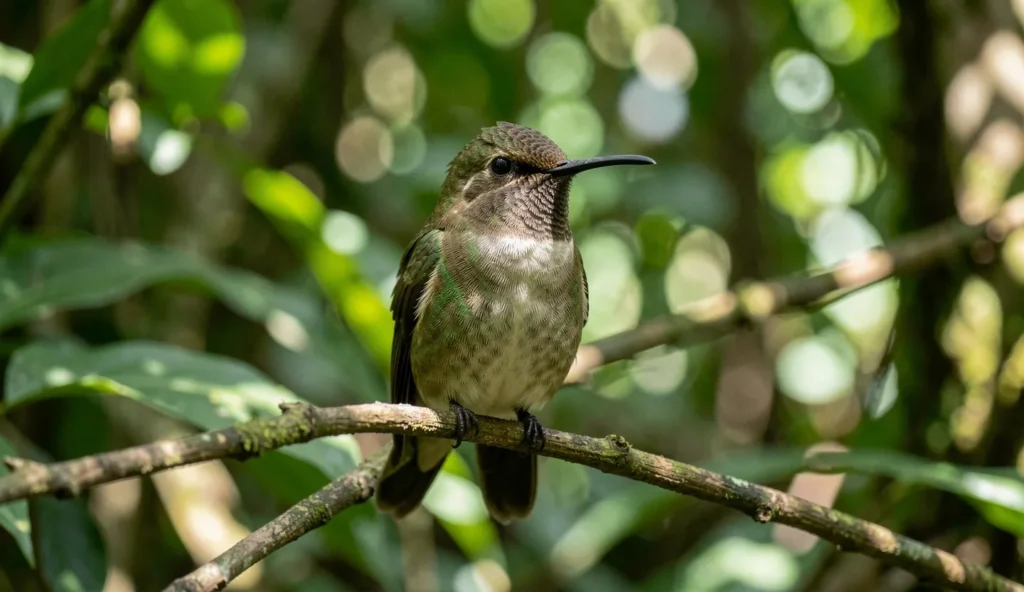
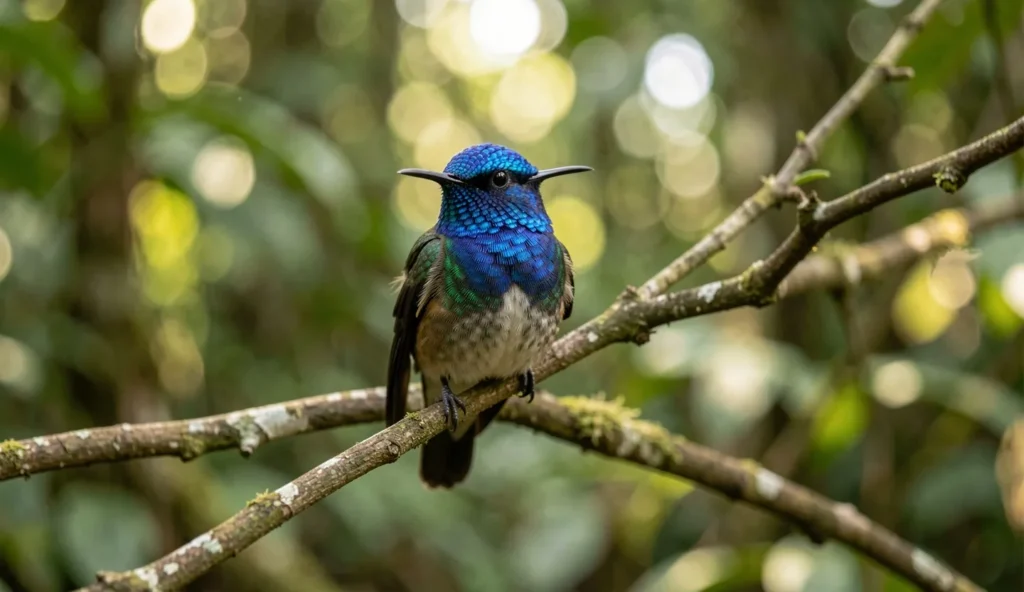
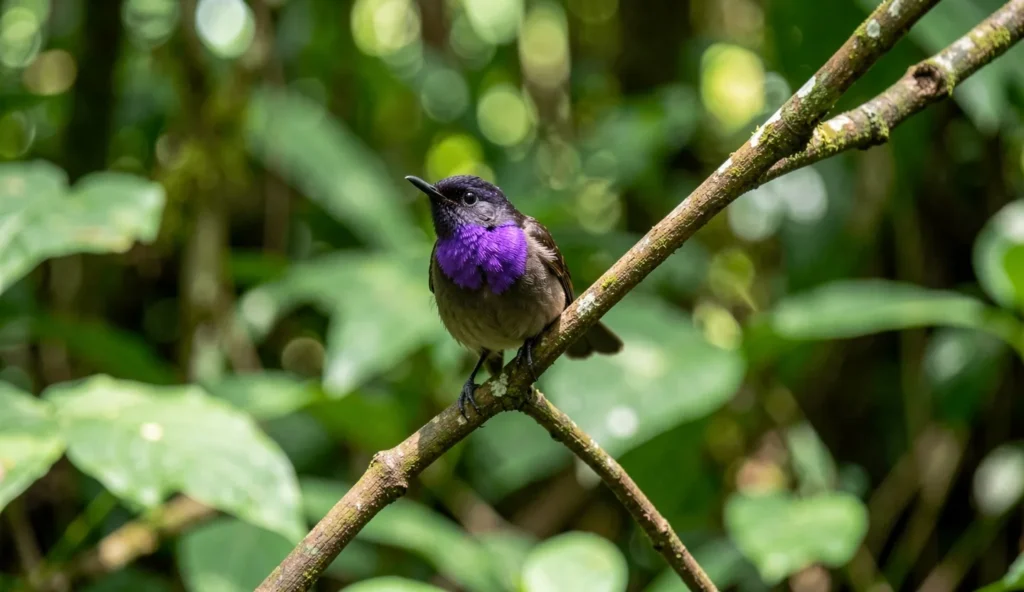
The Amethyst Woodstar is a diminutive hummingbird native to the Amazon basin in northern South America. The species is scientifically named Calliphlox amethystina, and a standout trait is the vivid purple throat visible on males.
Key Facts About The Amethyst Woodstar
- Scientific name Calliphlox amethystina
- One Of The Smallest Hummingbirds
- Found In Parts Of South America, Especially The Amazon Basin
This Amethyst Woodstar is among the smallest hummingbirds, measuring only about 8 to 9 centimeters in length.
For reference, the Lucifer Hummingbird illustrates another tiny nectar specialist.
Appearance And Physical Features
The Amethyst Woodstar presents a compact, streamlined silhouette with rapid wingbeats that aid maneuverability through dense tropical foliage. Its plumage is muted in females but striking in males, especially in the throat region.
Size And Body Structure
Tiny body length around 8 to 9 centimeters.
Slim, compact build with rapid wingbeats.
This Amethyst Woodstar is among the smallest hummingbirds, measuring only about 8 to 9 centimeters in length.
Observers often compare the Amethyst Woodstar with other tiny species in South America.
Coloration And Gorget Details
Male displays a vivid purple gorget that shimmers in light, earning the bird its common name in many field guides.
Females have more muted coloration and lack the bright gorget.
More enrollment examples, such as the Plain-capped Starthroat, show how throat coloration varies across species.
Temperament And Personality
In the wild, Amethyst Woodstars remain elusive and quick to move between nectar sources.
They often defend patches rich in nectar from rivals.
Behavior In The Wild
These birds typically exhibit high agility, flitting among blossoms with short bursts of speed.
Quiet, high-energy pursuits characterize their daily routine as they forage.
Vocalizations And Courtship
Vocalizations are high pitched and rapid, serving as warnings and territory signals.
Male displays during courtship flights often involve fast aerial acrobatics to attract a mate.
Diet And Nutrition
The natural diet centers on nectar from tropical blossoms, supplemented by small insects for protein.
In captivity or close observation, nectar sources and insect offerings remain essential, though expert care is required.
Natural Diet In The Wild
Primarily nectar from tropical blossoms.
Insects provide essential protein.
For contrast, the Ruby-throated Hummingbird demonstrates a similar nectar focus with regional differences.
In Captivity Or Observation
Captivity requires expert care and permits in many regions.
Nectar sources and insects remain the core diet components.
Habitat And Range
The Amethyst Woodstar is found in the Amazon basin and surrounding tropical forests of northern South America.
Dense rainforest environments with plentiful nectar sources support their foraging and nesting needs.
Where It Lives In South America
Amazon basin and surrounding tropical forests.
Endemic to select Amazonian regions.
Other Amazonian species, such as the Costa’s Hummingbird, share overlapping habitats.
Typical Habitat Features
- Dense rainforest with flowering trees
- Areas with abundant nectar sources and insects
Within its range in South America, the Amethyst Woodstar prefers dense Amazonian forests.
Is Amethyst Woodstar Right For You
Ideal reader profile centers on experienced birders and tropical enthusiasts who value niche, visually striking species.
Observers who appreciate rare, small hummingbirds and natural habitats will find this species particularly engaging.
Ideal Reader Profile
- Best for seasoned birders and tropical enthusiasts
- Appreciates rare, small hummingbirds and natural habitats
The Amethyst Woodstar appeals to seasoned birders who value rare, tiny species.
Fans of rare, tiny hummers may also study the Magnificent Hummingbird for broader context.
Frequently Asked Questions
What is the Amethyst Woodstar and where does it come from?
The Amethyst Woodstar is a tiny hummingbird native to the Amazon basin in northern South America.
How big is the Amethyst Woodstar compared to other hummingbirds?
It is among the smallest hummingbirds, typically just a few centimeters long.
What does the Amethyst Woodstar eat in the wild?
Its diet consists mainly of nectar from tropical flowers and small insects for protein.
Where in South America can you spot Amethyst Woodstars?
They are found in the Amazon basin and surrounding tropical forests of northern South America.
Final Note
The Amethyst Woodstar represents a delicate, nectar-focused ecology within the Amazon, inviting careful observation and respect for its natural habitat.