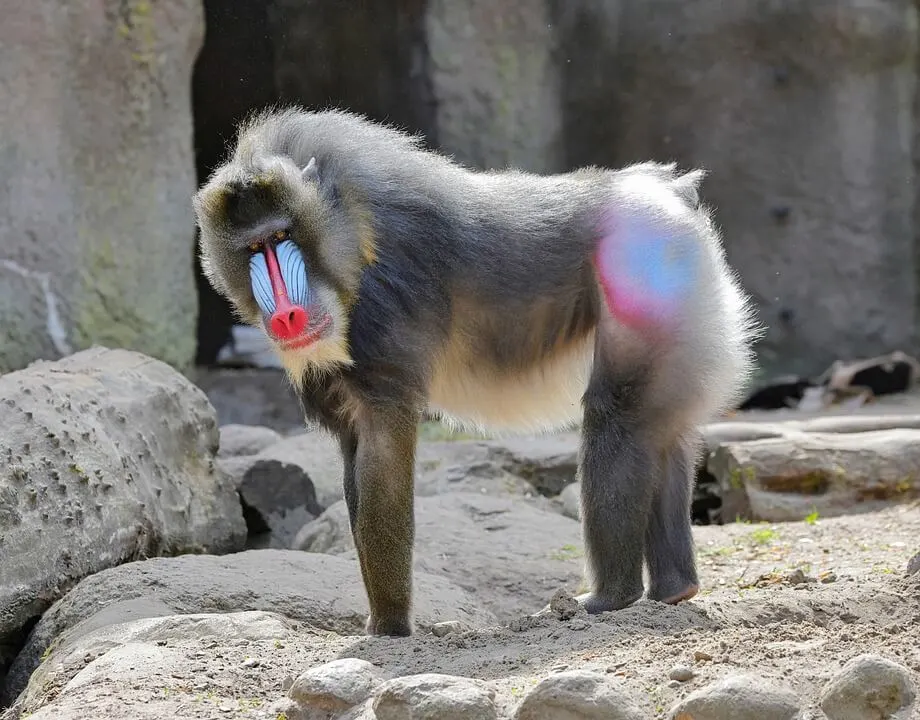
Mandrill Monkey – Nature’s Most Colorful Primate
Introduction
With faces painted in brilliant blues and reds that rival any artist’s palette, the Mandrill Monkey stands as the most colorful mammal on Earth. Native to the rainforests of Central Africa, this extraordinary primate is not just a visual spectacle but also one of the most intelligent and socially complex animals in the wild. As the largest monkey species, Mandrills play a critical role in maintaining forest health through seed dispersal. In this comprehensive guide, we’ll explore everything from their striking appearance to their conservation needs, helping you understand why these primates are so remarkable.
History and Natural Habitat
Mandrills are found in the lush tropical forests of southern Cameroon, Gabon, Equatorial Guinea, and the Republic of Congo. They thrive in humid, forested environments with rich plant life and water sources.
Closely related to baboons and drills, Mandrills belong to the same family as the baboon monkey, yet they stand out due to their spectacular appearance and complex social lives. Unlike some primates that prefer open savannas, Mandrills are true forest dwellers, relying on dense canopy cover for protection and food.
Physical Characteristics
Mandrills are easily recognized by their dazzling features:
- Colorful Faces: Especially among adult males, bright blue and red facial ridges make them one of the most visually stunning mammals.
- Golden Beards and Mane: A signature look shared by individuals of all sexes.
- Size: Males can weigh up to 100 pounds (45 kg), while females tend to be smaller, yet equally essential in group dynamics.
- Adaptable Limbs: Built for both moving on the ground and climbing trees when needed.
This visual diversity helps Mandrills express their emotions and status within their community. Their coloration is so unique that researchers can identify individual males by their facial patterns alone.
Behavior and Social Life
Mandrills live in social communities known as hordes, which can include dozens to hundreds of members. These groups are led by dominant individuals, often supported by strong kinship bonds. In fact, some hordes have been documented exceeding 1,000 individuals, making them one of the largest primate social groups in the world.
- Social Grooming: An important activity for trust and bonding.
- Communication: Through facial expressions, vocal calls, and body movements.
- Mating Displays: Bright colors and scents help communicate readiness and health to potential mates.
These intelligent primates rely on collaboration and community for safety, learning, and emotional connection. Their social structure shares similarities with other forest-dwelling primates like the colobus monkey, though Mandrills are far more colorful and ground-oriented.
Diet and Feeding Habits
Mandrills are omnivorous, enjoying a rich and diverse diet such as:
- Fruits and seeds
- Leaves, roots, and fungi
- Insects and occasionally small animals
They often forage on the forest floor but also climb trees for seasonal fruits. Their diet helps maintain forest health by spreading seeds. A single Mandrill can disperse thousands of seeds daily, making them essential for rainforest regeneration.
Ideal Environment
Mandrills are most at home in:
- Dense rainforests for cover and food
- Areas with reliable freshwater
- Tropical climates with seasonal rain
They are sensitive to habitat loss, which threatens not only their populations but also the delicate ecosystems they support. Unlike more adaptable primates such as the squirrel monkey, Mandrills have very specific habitat requirements that make them particularly vulnerable to deforestation.
Reproduction and Lifespan
Mandrills usually give birth during the rainy season when resources are plentiful. After about six months of pregnancy, caregivers—most often mothers—nurture one infant at a time.
- Infants stay close to their caregivers during early months
- Strong caregiver-young bonds ensure learning and safety
They can live up to 25 years in the wild, and even longer in conservation-focused environments. In well-managed sanctuaries, some individuals have reached their early 30s.
Health and Conservation
Mandrills are classified as Vulnerable by the IUCN due to:
- Deforestation and land use change
- Hunting and illegal wildlife trade
- Human-wildlife conflict in shared regions
Efforts from global and local organizations, like the Wildlife Conservation Society (WCS), focus on education, protected habitats, and ethical eco-tourism. Recent conservation initiatives have established new protected corridors in Gabon, helping connect fragmented Mandrill populations. For those interested in primate conservation, learning about species like the tamarin monkey can provide additional perspective on the challenges facing forest primates worldwide.
Relationship with People
While Mandrills are not domestic animals and should not be kept as pets, they play an essential role in biodiversity and environmental balance. Conservation-friendly experiences, such as ethical tourism and wildlife education, offer meaningful ways to support their survival and understand their value. Unlike smaller primates such as the marmoset monkey, Mandrills require vast territories and complex social structures that cannot be replicated in captivity outside of accredited zoos and sanctuaries.
Fun Facts About Mandrills
- Mandrills are the most colorfully marked mammals in the world.
- Males’ facial colors brighten further during excitement or social interaction.
- They use a range of sounds and facial cues to communicate emotions and alerts.
- Their social groups can grow to over 1,000 individuals!
Frequently Asked Questions
Q1: Are Mandrills friendly to humans?
A: Mandrills are wild animals. While they are intelligent and expressive, they should be observed respectfully in their natural habitats or ethical sanctuaries.
Q2: Why are Mandrills so colorful?
A: The vibrant colors help them communicate social rank, health, and mood, especially during the mating season.
Q3: Do Mandrills live in families?
A: Yes! They live in large social communities often made up of family groups with strong social bonds.
Q4: How do Mandrills contribute to the environment?
A: By eating and spreading seeds, Mandrills support forest regeneration and biodiversity.
Q5: What can we do to protect Mandrills?
A: Support ethical conservation programs, reduce deforestation through eco-conscious choices, and help raise awareness about wildlife protection.
Conclusion
The Mandrill Monkey is not only a symbol of nature’s artistic flair but also a vital part of forest ecosystems. Their intelligence, emotional depth, and colorful presence make them truly remarkable. Through conservation and respectful awareness, we can ensure that these amazing animals continue to thrive and inspire for generations to come. Whether you are a wildlife enthusiast, a student of primatology, or simply someone who appreciates the wonders of the natural world, the Mandrill offers endless fascination and a powerful reminder of what we stand to lose without dedicated conservation efforts.