What Is a Violet Sabrewing
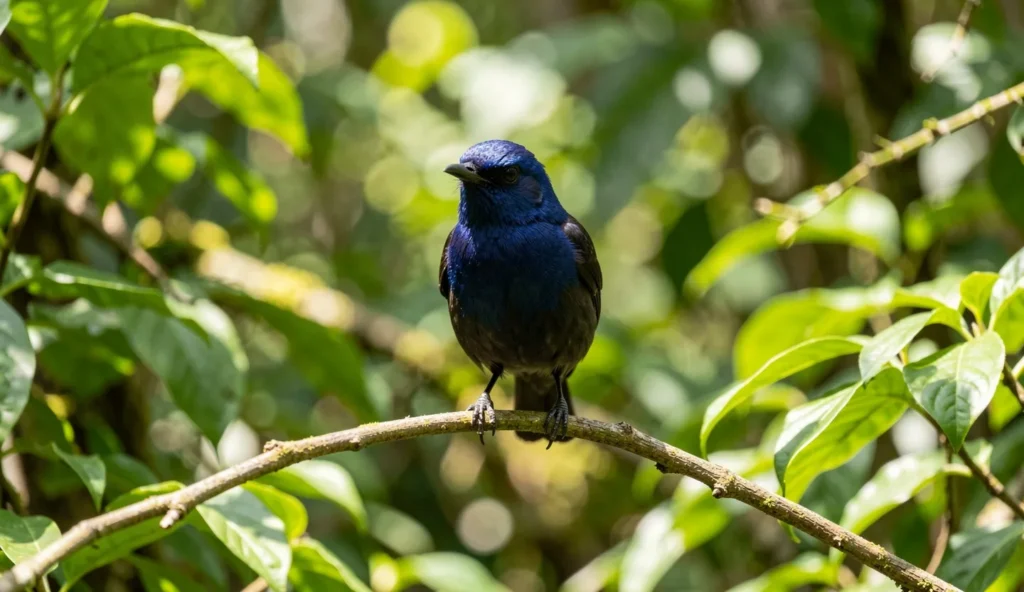
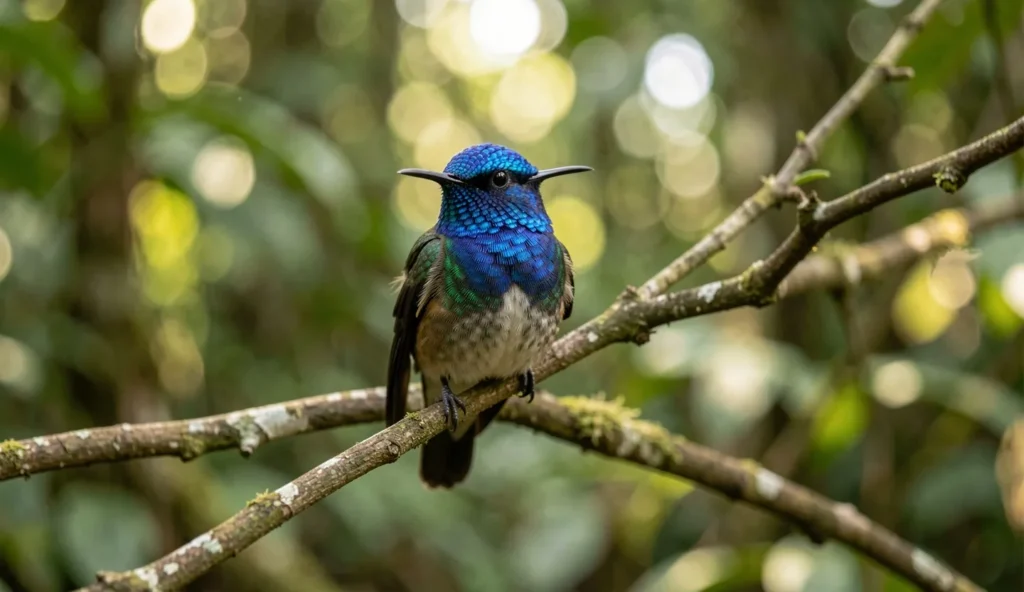
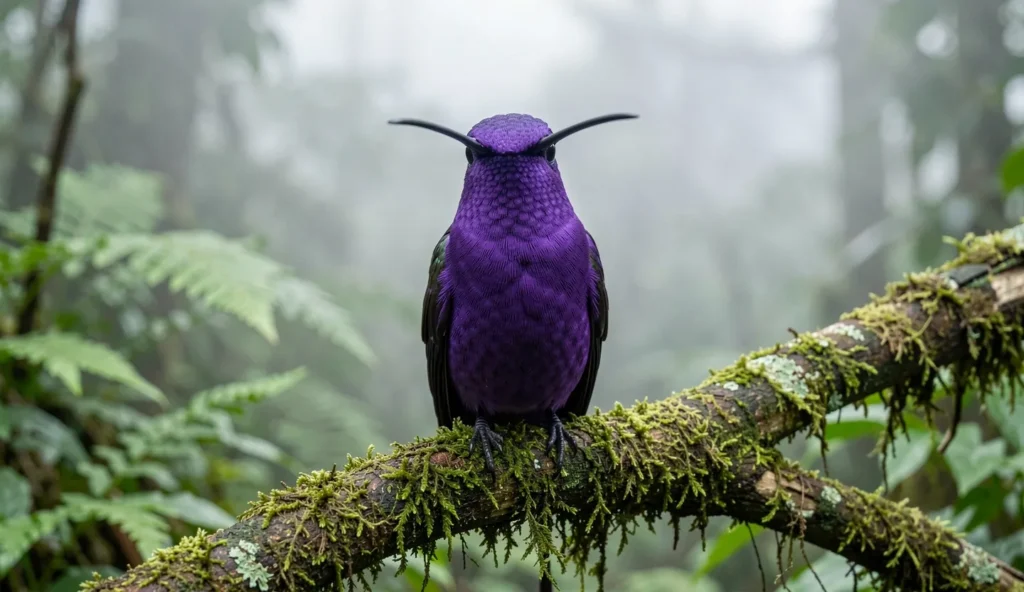
The Violet Sabrewing is a large hummingbird native to select cloud forests in Central America, where it remains largely secretive among mossy canopies. Its most striking feature is the deep violet plumage that catches light with a shimmering iridescence, making it a standout for dedicated birdwatchers.
Taxonomy and Official Name
The Violet Sabrewing belongs to the Campylopterus genus within the Trochilidae family. The species name is Campylopterus hemileucurus, and the common name reflects its distinctive violet coloration.
- Belongs to Campylopterus genus and family Trochilidae.
- Species latest scientific name Campylopterus hemileucurus.
- Commonly known as Violet Sabrewing due to plumage.
Typical Size and Weight
As one of the larger hummingbirds in its range, the Violet Sabrewing has a wingspan of about 11 to 12 centimeters and weighs roughly 6 to 9 grams.
- Wingspan around 11 to 12 centimeters.
- Body mass roughly 6 to 9 grams.
- One of the larger hummingbirds in its range.
Appearance and Physical Features
The Violet Sabrewing displays a commanding presence with deep violet plumage that remains richly saturated in shaded forests and shifts to blue-green tones in bright light. Its size, compared with many neighbors, makes it unusually conspicuous when it visits flowering patches.
Plumage Colors and Visual Traits
The bird’s plumage is a true violet across most of the body, with iridescent qualities that change with observer angle. In the field, its larger stature helps distinguish it from nearby species such as the Violet-crowned Hummingbird, which shares some color features but not the same scale.
- Deep violet plumage across the body.
- Iridescence shifts with light exposure.
- Larger size than many neighboring species.
Bill Form and Flight
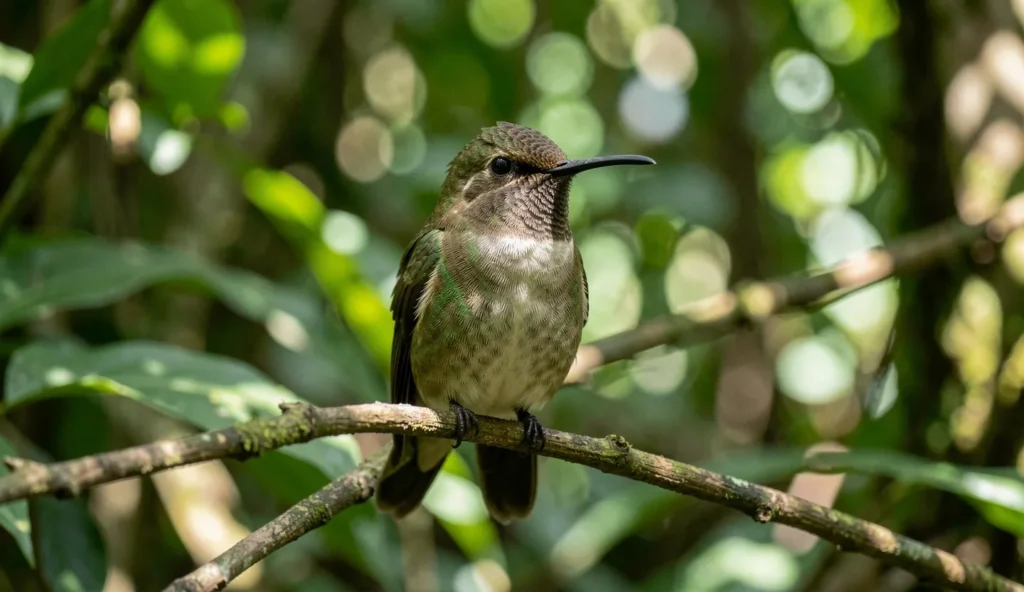
The long curved bill is adapted for nectar extraction from tubular flowers, while powerful wings allow rapid hovering and swift dives. Facial markings are subtle in field views but help separate it from other Central American hummers.
- Long curved bill specialized for nectar.
- Powerful wings enable rapid hovering and swift dives.
- Distinct facial markings are subtle in field view.
Habitat and Range
The Violet Sabrewing inhabits montane cloud forests in parts of Central America, often following nectar-rich corridors within humid, mossy canopies. Sightings remain rare and widely separated, adding to its mystique among birders.
Geographic Distribution
Endemic to select Central American montane forests, the species is typically found in humid cloud forest belts and along sheltered valleys. Its distribution overlaps with other Campylopterus species, including the Magnificent Hummingbird, though populations are usually localized and patchy.
- Endemic to certain Central American montane forests.
- Observed in humid cloud forest corridors.
- Rare and widely separated sightings.
Elevation and Habitat Type
Most records place the Violet Sabrewing at mid to high elevations, where shaded, mossy canopies and flower-rich understory provide abundant nectar. Heights above 1,500 meters are common, and forest gaps near nectar sources attract these birds.
- Typically found at mid to high elevations.
- Prefers shaded, mossy canopy and flower-rich understory.
- Often seen near nectar sources and insect-rich gaps.
Diet and Feeding Habits
The Violet Sabrewing relies on high-energy nectar from tubular flowers, complemented by small insect protein obtained during foraging. Seasonal shifts in available flora influence its feeding patterns and migration-like movements within its range.
Nectar Sources
It favors nectar from tubular flowers accessible with a long bill, such as some native cloud forest batangas and heliconias, while others may be visited by related species like the Costa’s Hummingbird in overlapping zones.
- Feeds on a variety of high-energy nectar flowers.
- Prefers tubular flowers accessible with long bills.
- Seasonal shifts in available flora affect feeding.
Insect Intake
Small insects provide essential protein and minerals, and the Sabrewing forages mid-air and along vegetation edges. Breeding periods may increase reliance on a more insect-rich diet to support egg production and chick growth.
- Consumes small insects for protein and minerals.
- Forages mid-air and from vegetation edges.
- Supplemental diet important during breeding.
Common Health Issues and Conservation Status
Health concerns for the Violet Sabrewing primarily stem from habitat loss and fragmentation, which reduce nectar sources and nesting sites. There is limited data on disease prevalence in wild populations, but stress from habitat change can affect breeding success.
Common Health Concerns
Loss of forest canopy and nectar sources due to deforestation directly impacts this species, while fragmented habitats can increase energy costs for foraging. Monitoring is limited, but similar species show sensitivity to environmental changes.
- Vulnerability to habitat loss reduces nectar sources.
- Limited data on disease prevalence in wild populations.
- Stress from fragmentation can impact breeding.
Conservation Status
Conservation status varies regionally, with many populations localized in protected reserves. Protecting canopy integrity and maintaining connected forest corridors are crucial for long-term survival, while researchers continue to track trends in cloud forest habitats.
- Status varies regionally; many populations are localized.
- Protected areas are crucial for long term survival.
- Important to monitor forest canopy integrity.
Cloud forest enthusiasts will find observing the Violet Sabrewing a rewarding challenge, provided observations are conducted at respectful distances to avoid disturbing natural behavior. For rare bird lovers, this species offers a unique target that highlights the value of forest conservation.
Considerations for Cloud Forest Enthusiasts
Observing from a distance helps preserve authentic behaviors, and access to certain protected areas may be restricted to protect the birds and their habitat. The Violet Sabrewing is an excellent subject for dedicated field naturalists seeking a truly elusive ambassador of montane forests.
- Observing from respectful distances preserves natural behavior.
- Visits are restricted in some protected areas.
- Excellent target for dedicated field naturalists.
Pet Ownership Notes for Rare Enthusiasts
Wild hummingbirds are protected in many regions, and ownership is illegal or tightly regulated to safeguard wild populations. Captive care requires specialized facilities and permits, while the best support comes from conservation and habitat protection.
- Wild hummingbirds are protected; ownership is illegal in many regions.
- Captive care requires specialized facilities and permits.
- Best support comes from conservation and habitat protection.
Frequently Asked Questions
How large is the Violet Sabrewing compared to other hummingbirds?
It is one of the larger hummingbirds in its range, with a substantial wingspan for the group.
Where can the Violet Sabrewing be found in Central America?
It is primarily found in montane cloud forests of select Central American countries and is relatively rare.
What does the Violet Sabrewing feed on to maintain its vibrant color?
Its diet consists mainly of nectar from tubular flowers along with occasional insects for protein.
Is the Violet Sabrewing ever kept as a pet?
In many regions, captive ownership is illegal and discouraged to protect wild populations.
What are the main threats to the Violet Sabrewing and its habitat?
Habitat loss and fragmentation reduce nectar sources and nesting sites, impacting populations.
Final Note
Observing the Violet Sabrewing from respectful distances supports both the bird and conservation efforts, ensuring these remarkable feeders of the cloud forests endure for future generations.