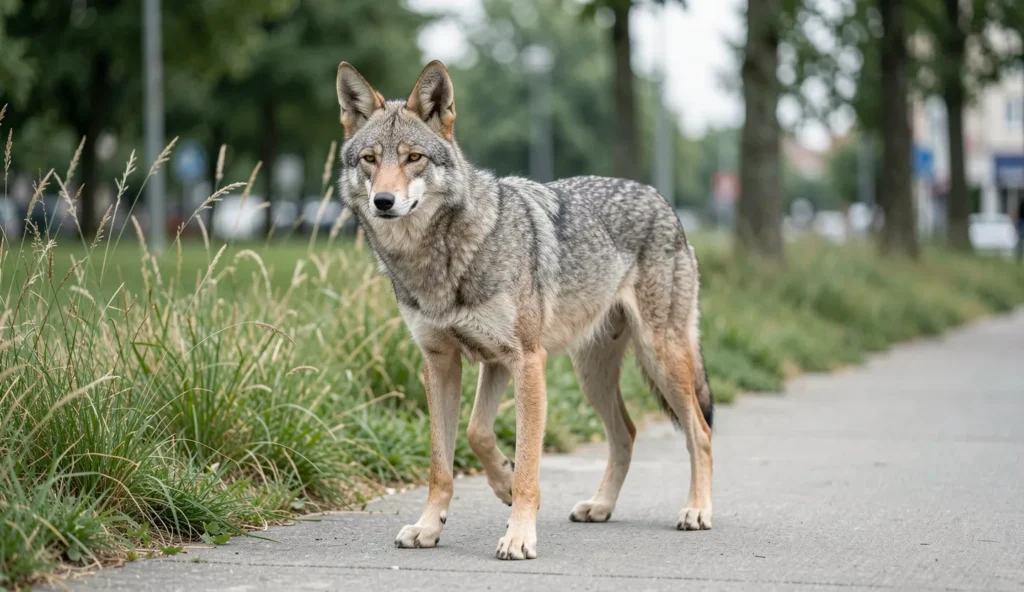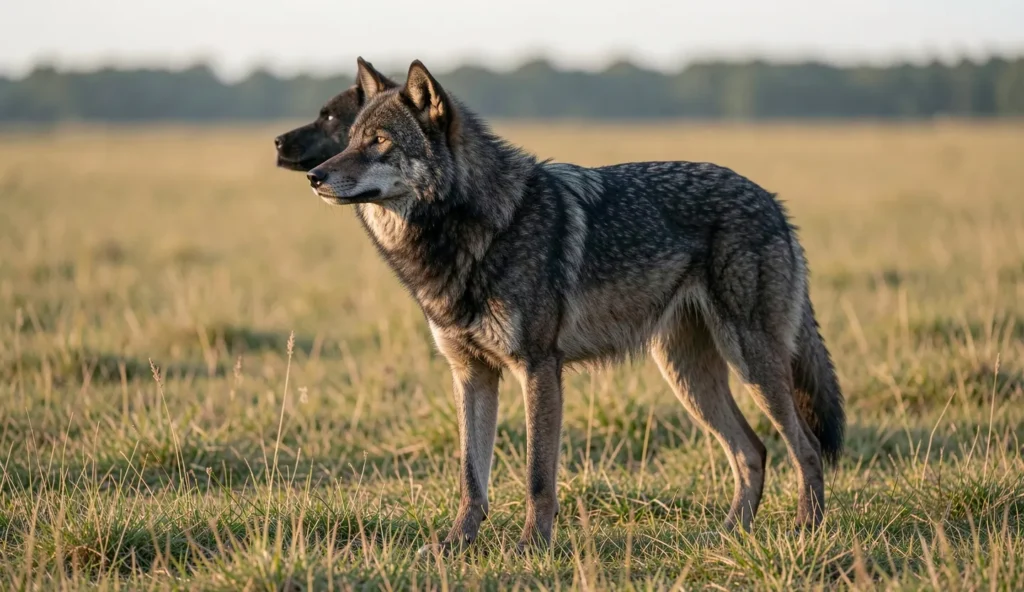
What Is The Great Plains Wolf?
The great plains wolf refers to a historic wolf form reported across parts of the central and northern Great Plains. It is commonly connected with Canis lupus nubilus in many reference materials. Although many accounts discuss it as a regional “plains wolf,” the wording typically describes a subspecies grouping rather than a completely separate species.
For history buffs, the most useful way to read old records is as a mix of wildlife observation and human naming. Over time, similar wolves in nearby regions could be described with different names, depending on the observer’s local context. To avoid confusion, it helps to treat “great plains wolf” as a historical label attached to geography and taxonomy.
Scientific And Common Names Used Historically
Canis lupus nubilus appears as the scientific name used in most references to the great plains wolf. In everyday language, the label “great plains wolf” connects the animal to the central plains. Other older phrases like buffalo wolf and plains wolf show up as well, especially when bison were the dominant prey in local accounts.
Because “wolf” here refers to a subspecies grouping, the name does not always match how people describe other wolf types today. That matters when reading older books, field reports, and settlement-era writing. Also, spellings and classifications can shift between publications, even when describing the same regional form.
Where Records Placed It Across The Great Plains
Historical descriptions typically mapped the great plains wolf to parts of the central and northern Great Plains. Records often place it in areas that include Nebraska, South Dakota, Montana, and nearby regions, depending on the specific source. Sightings and reports also varied by season, prey movement, and changing human settlement patterns.
As a result, observers may have reported wolves in some counties for years, then mentioned them less often after land use changed. Plains geography played a role, since river corridors and grassland travel routes influenced where wolves moved. When prey shifted, wolf sightings usually shifted too.
What Extinction Meant For This Wolf Form
For this subspecies grouping, extinction in practical terms means no confirmed, reproducing population is recorded within the historical range. The loss occurred over time through persecution, predator control, and habitat change. Many modern references therefore treat it as no longer existing as a distinct population.
At the same time, wolves as animals have existed in North America in complex patterns. That difference often explains why people later confuse subspecies labels with general wolf presence. When historical sources use names like plains wolf, it can sound like a single fixed entity.
For a wider sense of how naming and regional forms vary, some readers also compare the great plains wolf story with other historical accounts such as the Gray Wolf and Red Wolf. Those comparisons highlight how scientists and writers used different labels over time, depending on location and classification.
Great Plains Wolf Breed History From Early Records To Decline
Early mentions of the great plains wolf often read like field notes tied to landscape and conflict. Observers characterized wolves by coat tone, body build, and how animals moved in local terrain. However, the record itself reflects both real wildlife behavior and the pressures of hunting, ranching, and settlement.
Over time, several forces combined. When prey systems changed and control efforts increased, the great plains wolf population declined. That long-term shift is why history accounts eventually stop describing confirmed presence.
Early Naturalist Accounts And Field Descriptions
Naturalists and early field observers commonly described plains wolves by their overall appearance. They often noted coat and build impressions, plus the seasonal changes they believed they saw. Pack behavior was also frequently mentioned, since wolves were rarely reported as lone animals in the most detailed accounts.
Still, records were shaped by what people chose to write down. Hunting and frontier settlement influenced observation opportunities, and wolves near human activity drew more attention. In areas with more ranches, accounts often shifted toward conflict-focused descriptions instead of general ecology.
How Bison And Prey Availability Shaped Sightings
Wolves on the Plains were strongly tied to prey availability, especially bison. When bison herds moved across grassland and along river systems, wolves could follow patterns that increased hunting opportunities. Pack hunting strategies were described in broad terms in older writing, with adults and older pups often playing roles during hunts.
Because prey movement affected where wolves traveled, observers in one season might report wolves frequently, while the next season produced fewer sightings. Weather also influenced travel, since winter conditions could push animals toward different corridors. This is one reason historical frequency claims can differ between nearby communities.
Some readers who study the broader canid history also look at comparisons in other regions, including the Eastern Wolf and Himalayan Wolf. Those references help demonstrate how geography and prey shape the way observers label and describe wolves.
Ranching Expansion Increased Conflict Over Livestock
As ranching spread, interactions between wolves and livestock increased. Ranch owners and local authorities often treated wolves as direct threats to animals that represented family income and survival. As a result, persecution intensified where wolves overlapped with grazing lands.
In many areas, trapping and organized bounties reduced numbers quickly. Even when a specific subspecies label was used inconsistently, control actions followed the same logic. Fear of predation drove many actions, and wolves became targets even when wild prey remained available nearby.
Natural Prey Decline Reduced The Recovery Options
Large-scale changes to bison reduced the natural prey base for predators. When bison herds declined, wolves lost a major food source that had supported hunting across the open plains. That shift increased diet pressure and made wolves more likely to approach areas where ranch livestock concentrated.
Habitat fragmentation also limited recovery by breaking travel routes. Even if a few wolves survived longer in some places, dispersal to recolonize empty areas became harder. In historical terms, the subspecies had less room to persist across a shrinking landscape.
Why Absence Records Still Matter In History Accounts
Later surveys and reports sometimes differ from early accounts because they reflect different priorities and methods. Early observers may have looked for wolves near settlements or along known travel paths. Later surveys may have focused on broader monitoring, but the overall presence had already declined in many regions.
Taxonomic revisions can also affect how “extinct” is reported for a subspecies grouping. Some writers might treat the label as a regional form that no longer exists in the wild, while others use broader terms. For readers, the key is to interpret absence records alongside how naming conventions evolved.
What Did The Great Plains Wolf Look Like
Physical descriptions of the great plains wolf come mostly from historical writing, not from controlled measurements. For that reason, it helps to focus on common traits rather than trying to pin down exact sizes. Observers usually relied on coat tone, body proportions, and face markings, especially during brief sightings.
Even so, individual variation could be significant. Coat condition, lighting, and distance also influenced what people thought they saw. As a result, distinguishing this form from nearby wolf forms required more than one field impression.
Coat Color And Seasonal Variation
Descriptions of plains wolves often mention dark gray tones as a common appearance. Coat tone could vary with season and coat wear, so the same animal might look darker in one month and lighter in another. Winter coats usually create a different visual impression than summer coats.
Observers also described color with relative terms rather than standardized charts. Lighting on the Plains, especially at dawn or dusk, could deepen or lighten fur appearance. That is why historical sources may disagree even when describing the same general population.
Body Size And Build In Historical Terms
Historical accounts typically conveyed a “plains wolf” impression rather than detailed metrics. Writers often described proportions of the head, legs, and torso as they appeared from ground distance. These notes helped readers imagine build, even when exact measurements were not recorded.
Because precise measurement was not always part of early fieldwork, some descriptions remain general by design. Many references therefore avoid tight numerical comparisons. Instead, they emphasize overall sturdiness and suitability for open-country movement.
Face And Distinctive Markings
Face markings in older accounts usually describe patterns that stand out in the moment. Some descriptions focus on the contrast between muzzle and surrounding fur, plus how the face looked from the side. Other records mention irregular patterns that varied between individuals.
Pattern variability mattered because no two wolves look exactly the same. Brief sightings increased uncertainty, since readers might have recognized a general face type without capturing all details. That makes identification from stories or hearsay less reliable.
Why Field Identification Could Be Uncertain
Differentiation often relied on coat and size impressions plus regional context. When wolves occurred near overlapping ranges, observers might have grouped animals differently. That uncertainty also explains why subspecies labels in historical writing sometimes appear inconsistent.
Some overlap could have occurred with other forms, especially in frontier regions where ranges were not neatly separated. For readers who want to understand how range and naming can blur, looking at other regional wolf discussions like Pakistani Wolf can show how geography affects description. It also highlights why taxonomic clarity came later than many early records.
How The Great Plains Wolf Lived And Behaved
Behavioral descriptions of the great plains wolf usually come from what people saw near hunting grounds, travel routes, and ranch boundaries. Rather than trying to predict exact behavior like a modern field study, historical accounts describe general patterns. These patterns align with how wolves typically use prey, terrain, and seasonal timing.
Understanding those basics helps interpret why the buffalo wolf label appeared in some sources. When bison were abundant, wolves could act differently than when they faced shifting prey and livestock exposure.
Pack Structure And Hunting Roles
Historical writing commonly used the idea of a pack to describe group hunting and coordinated movement. Packs often included adults and younger animals that learned hunting behavior over time. In broad terms, older pups and adults could take roles depending on the prey target and the situation.
It is also worth remembering that pack behavior can shift when prey abundance changes. If wild prey becomes scarce, wolves may travel differently and take more risks near human settlement. Those changes often explain why conflict accounts rise during periods of ecological stress.
Daily And Seasonal Activity Patterns
Accounts often tied activity to prey movement and season. During times when prey herds shifted, wolves could appear in different areas following the same general logic. Weather influenced where wolves traveled, since harsh conditions can alter how animals use grassland cover and river routes.
Seasonal hunting pressure also shaped what observers reported. In winter, wolves could hunt under different conditions than in spring, and that might change where people noticed them. Even small differences in timing could affect how often communities mentioned wolves.
Habitat Preferences Across The Plains
The Great Plains region includes open grasslands and broad river corridors that support travel and prey movement. Wolves could use those open areas for movement while relying on cover nearby for stalking or resting. Settlement patterns also influenced where people encountered wolves, since farms and towns created predictable routes.
Once farms and fenced grazing increased, wolves adjusted or avoided certain paths. Some reports therefore reflect human-created visibility rather than the full ecological preference. In other words, a decrease in sightings might mean wolves shifted routes, not that wolves vanished everywhere.
Why Buffalo Wolf Phrasing Appeared
Some historical writing used buffalo wolf wording because bison represented the dominant plains prey system. When bison were plentiful, wolves could be described as closely associated with those herds. As bison declined, the same predators faced a different food environment and a different risk profile.
Other prey types also appeared in accounts, but bison remained a key theme. Once livestock depredation increased near ranches, communities were more likely to remember wolves as buffalo wolf rather than as a broader “plains wolf.” That shift shows how human experience shapes terminology.
For readers interested in how prey-driven naming occurs elsewhere, the Ethiopian Wolf story offers a useful contrast in how specific habitats and prey can dominate descriptions. That comparison is not about the Great Plains, but it shows a similar pattern in historical writing.
Why Great Plains Wolves Declined So Rapidly
The decline of the great plains wolf involved both direct and indirect pressures. Ranching expansion increased encounters, and control efforts reduced populations quickly. At the same time, bison decline removed a major stabilizing prey base, which made recovery harder.
None of the factors acted in isolation. Together, they created a downward spiral that reduced survival and limited the ability of wolves to recolonize historic areas.
Persecution And Organized Predator Control Reduced Numbers
Ranching increased encounters, and many actions targeted wolves as predators of livestock. Trapping, hunting, and other forms of organized control often removed wolves faster than natural reproduction could replace them. That rapid reduction helped explain why some communities stopped reporting wolves after intense control periods.
Fear of predation also shaped responses. Even when evidence of losses was debated, wolves were treated as a continuing risk. As a result, many control efforts proceeded as long as wolves appeared in the area.
Bison Loss Increased Diet Stress And Proximity To Farms
The loss of bison changed the food web. With fewer wild prey animals, wolves faced diet stress and increased the chance they would hunt livestock or scavenge near ranches. This shift also kept wolf numbers in areas where control was likely, since human settlements offered easier access to food.
Reduced prey can weaken pack stability by making it harder to maintain healthy pups and consistent hunting success. Over time, packs may have become less stable or smaller. That can reduce overall reproduction and survival, accelerating decline.
Settlement Altered Land Use And Dispersal Routes
Settlement changed land use, including farming patterns, fencing, and the placement of grazing. Those changes could disrupt travel corridors and reduce dispersal opportunities. When wolves could not move freely, recolonization after local losses became more difficult.
Barriers created isolation, and isolation can reduce genetic and demographic recovery. Even if wolves survived in small pockets, it became harder to rebuild a connected population across the plains. This dynamic is often reflected in historical notes about patchy presence.
How “Last Confirmed” Appears In Historical Accounts
“Last confirmed” is commonly used because historical evidence varies in quality. A few sporadic sightings may not equal a confirmed population, especially if observers were uncertain about identification. For that reason, “last confirmed” often reflects the limits of reporting rather than a precise date.
Taxonomic changes can also shift how historical records are mapped to modern classifications. Some sources might treat extinct status differently depending on whether they emphasize a subspecies label or a broader regional grouping. Readers should therefore treat the label as part of a historical framework, not a rigid checklist.
For readers who want a related perspective on how taxonomy and historical reporting interact, it can help to compare with other canid discussions like Red Wolf. Those comparisons show how naming and classification can change even when general animal presence follows ecological rules.
Is The Great Plains Wolf Still Around Today
The current status of the great plains wolf is generally described as extinct in the wild as a distinct subspecies grouping. However, wolves as animals can still exist in parts of North America, which can create confusion. This is why it matters to distinguish between the subspecies label and general wolf presence.
In practical terms, extinction for a subspecies means the specific historic population is no longer confirmed. In other regions, wolves may continue under different subspecies names or under broader regional descriptions. Historical labels do not always map cleanly to modern taxonomy.
What Extinction Means For A Subspecies Grouping
Extinction can be described by the absence of confirmed, reproducing animals linked to a specific subspecies over time. For many readers, this means the last reports fade out and no confirmed population remains. That does not necessarily mean all wolves disappeared from North America.
Instead, it often means the distinct genetic and regional population described by Canis lupus nubilus no longer exists in the wild. That distinction helps explain why some sources may mention wolves in general while other sources say the great plains wolf is no longer present as a subspecies.
How To Read Modern Sources Without Mixing Names
Modern sources may describe “plains wolf” in a general sense or may refer to a subspecies when they have access to specific documentation. When reading an article, it helps to check whether the writer names a subspecies or describes wolves broadly. Naming conventions can change after taxonomic updates, and that can shift which name appears in print.
Because historical records can be limited, modern writers sometimes interpret older specimens and records with updated classification frameworks. Those updates may treat the great plains wolf label differently than earlier publications. A careful reading of how the source uses the term reduces confusion.
Historical evidence often comes from museum specimens, written records, and early survey notes. Those tools support ecology and conservation planning by showing how land use and prey systems affected predators. When prey systems shift, similar patterns often appear across regions, even when the subspecies names differ.
Frequently Asked Questions
What Is The Scientific Name Of The Great Plains Wolf?
The great plains wolf is commonly listed as Canis lupus nubilus in historical and reference materials. Older sources may use different naming conventions, so spellings and classifications can vary.
Why Is The Great Plains Wolf Sometimes Called The Buffalo Wolf?
The buffalo wolf name reflects the close association reported between wolves and bison availability on the Great Plains. As prey changed, wolves were also reported near ranchlands more often.
Where Did The Great Plains Wolf Live?
Records place it across parts of the central and northern Great Plains region. Exact boundaries varied with prey movement and human settlement patterns.
What Caused The Great Plains Wolf To Disappear?
Persecution tied to livestock conflict and predator control reduced populations. Bison decline and habitat change further weakened the subspecies.
How Do Experts Determine That The Great Plains Wolf Is Extinct?
Experts rely on historical records, survey data, and the absence of confirmed populations over time. Taxonomic updates can also affect how “extinct” is reported for a subspecies.
How Can The Great Plains Wolf Be Distinguished From Other Wolf Types?
Historical descriptions used coat tone, size impression, and regional context. Individual variation and overlapping ranges made certainty difficult from brief sightings.
Final Note On The Great Plains Wolf Story
The great plains wolf remains a key example of how prey loss, control pressure, and land use changes can reshape a regional subspecies over a short historical period. Studying the records helps connect ecology and history in a way that is practical and readable.