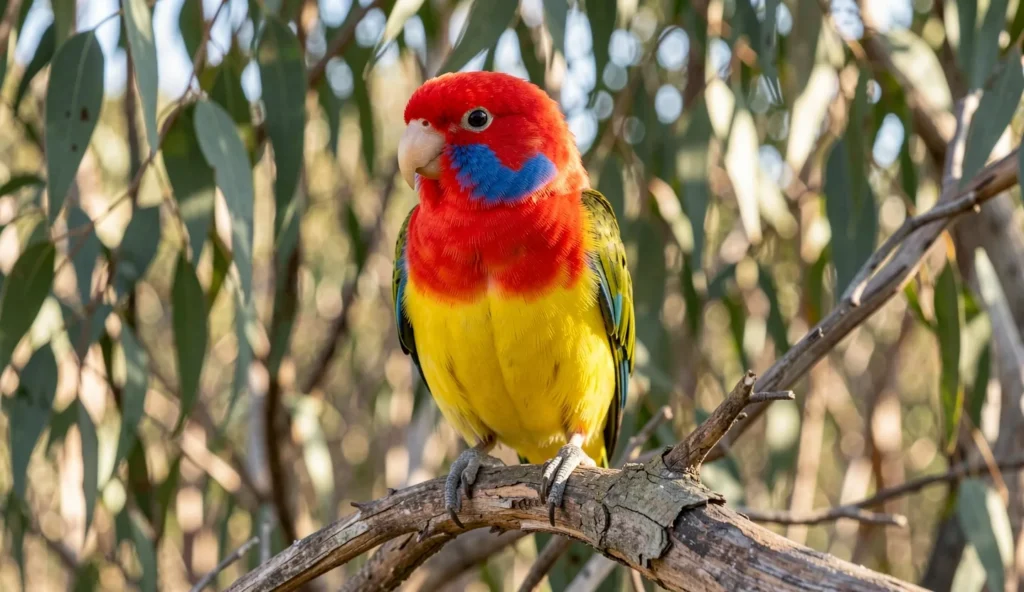
What Is an Eastern Rosella
The Eastern Rosella, scientifically named Platycercus eximius, is a strikingly colorful parrot native to southeastern Australia and Tasmania. This medium parrot is known for its bold red head, yellow breast, and vivid blue cheek patches. With proper care, it becomes a vibrant and engaging companion for experienced owners.
Origin and Natural Habitat
Eastern Rosellas inhabit open woodlands, farmlands, and suburban parks across Australia. They are often seen in pairs or small flocks foraging on the ground for seeds and grasses. Their adaptability to human-altered landscapes makes them common in rural and urban fringe areas.
Appearance and Physical Features
The Eastern Rosella is one of the most visually striking Australian parrots. Its plumage combines bright red, yellow, blue, green, and black in a distinct pattern. This colorful parrot is a favorite among bird enthusiasts for its aesthetic appeal.
Plumage Colors and Patterns
- Bright red head and chest
- Yellow breast and blue cheeks
- Green and blue wings with black scalloping
- Long blue tail feathers
Size and Weight
Adults measure 30 to 33 cm (12 to 13 inches) in length and weigh between 90 and 120 grams. This places the Eastern Rosella in the medium parrot category. Their compact build allows agile flight in both open and wooded environments.
Sex Differences and Juvenile Plumage
Males are slightly larger and display more intense red coloration on the head and chest. Females have duller red tones and less defined black scalloping on the wings. Juveniles emerge with green heads and chests, gradually acquiring adult colors after about 12 months.
Temperament and Personality
Eastern Rosellas are generally calm and independent compared to many other parrots. They can be shy around strangers but form strong bonds with their primary caretakers. Understanding their personality helps owners provide appropriate rosella care.
Social Behavior
These birds prefer the company of their own kind or a trusted human. They are not typically aggressive but may become territorial if housed with smaller parrots. A single bird requires extensive daily interaction to remain tame and content.
Noise Level
Eastern Rosellas produce moderate vocalizations consisting of soft whistling and chattering. They are quieter than cockatoos or macaws, making them suitable for apartment living. Their calls are pleasant rather than piercing.
Bonding with Owners
Birds that receive regular handling from a young age often develop strong attachments to one or two people. They enjoy perching on a hand or shoulder but are not typically cuddly. Daily out-of-cage time and gentle interaction maintain the bond.
Housing and Enclosure Requirements
Providing adequate space is essential for the health of an Eastern Rosella. A spacious cage or aviary allows this active bird to exercise and explore. Proper enclosure design is a cornerstone of good rosella care.
Minimum Cage Size
The minimum cage size for a single Eastern Rosella is 24 x 24 x 36 inches (60 x 60 x 90 cm). Larger cages, especially those that allow short flights, are always recommended. Bar spacing should not exceed 0.75 inches (1.9 cm) to prevent injury.
Perches and Toys
Provide natural wood perches of varying diameters to promote foot health. Include shreddable toys, foraging puzzles, and chewable items to keep the bird mentally stimulated. Rotate toys regularly to prevent boredom.
Indoor vs Outdoor Housing
Indoor cages should be placed in a bright, draft-free area away from direct sunlight and temperature extremes. An outdoor aviary is suitable in mild climates but must include a sheltered area for protection from rain and sun. Some owners combine both setups for seasonal enrichment.
Diet and Nutrition
A balanced diet is vital for the long-term health of this Australian parrot. Eastern Rosellas thrive on a combination of high-quality pellets, limited seeds, and fresh produce. Improper nutrition can lead to obesity and disease.
Staple Pellets and Seed Mix
High-quality pellets should make up 60 to 70 percent of the daily diet. Seed mix should be limited to about 20 percent due to its high fat content. Avoid all-seed diets, as they often cause nutritional deficiencies and fatty liver disease.
Fresh Fruits and Vegetables
Offer dark leafy greens, carrots, bell peppers, and other safe vegetables daily. Suitable fruits include apple, pear, berries, and mango, but remove uneaten fresh food after a few hours. Variety ensures a broad range of vitamins and minerals.
Treats and Forbidden Foods
Treats such as millet spray or small pieces of nut can be given sparingly. Never feed avocado, chocolate, caffeine, alcohol, or high-salt items. High-sugar fruits should be offered only in small quantities to avoid obesity.
Common Health Issues
Eastern Rosellas are generally hardy, but they are susceptible to certain health problems. Prompt recognition of symptoms and preventive care are key to a long, healthy life. Regular veterinary checkups are recommended for all pet parrots.
Respiratory Infections
Symptoms include sneezing, nasal discharge, and labored breathing. These infections often result from drafts, poor ventilation, or bacterial agents. Immediate veterinary attention is required to prevent complications.
Feather Plucking and Psittacine Beak and Feather Disease
Feather plucking is usually a sign of stress, boredom, or insufficient enrichment. Psittacine Beak and Feather Disease (PBFD) causes progressive feather loss and beak deformities. Quarantine new birds and provide ample mental stimulation to reduce risks.
Obesity and Fatty Liver Disease
High-seed diets and lack of exercise are the primary causes. Owners should monitor weight weekly and encourage climbing and flying in safe spaces. Switching to a pellet-based diet and offering foraging activities helps maintain a healthy body condition.
Training and Enrichment
Eastern Rosellas respond well to positive reinforcement training. Short, consistent sessions build trust and teach useful behaviors. Enrichment activities are equally important to prevent boredom and associated problems.
Taming and Step-Up Training
Use favorite treats to reward desired behavior. Start with target training or simply offering a hand for the bird to step onto. Keep sessions to five or ten minutes to maintain the bird’s attention and willingness.
Foraging and Puzzle Toys
Hide treats in foraging toys or puzzle boxes to encourage natural searching behaviors. Use foot toys and paper-based shreddables for additional stimulation. Changing the foraging setup daily keeps the bird engaged and curious.
Is an Eastern Rosella Right for You
This medium parrot requires a committed owner who can provide spacious housing, a varied diet, and daily interaction. It is not a beginner bird but suits intermediate owners with some parrot experience. Those who meet these needs will enjoy a long-lived, colorful companion.
Assessing Compatibility
Consider your living space, noise tolerance, and time availability before acquiring an Eastern Rosella. They thrive in pairs or small groups but can live as single birds with ample human contact. Budget for quality food, veterinary care, and a large cage to ensure proper welfare.
Rainbow Lorikeet owners often appreciate similar care routines, though dietary needs differ. The Eclectus Parrot also displays stunning sexual dimorphism, while the Red Bellied Parrot offers a quieter alternative. For those interested in smaller rosella relatives, the Peach Faced Lovebird provides a different set of challenges. Exploring these options helps new owners choose the right species.
Frequently Asked Questions
How long do Eastern Rosellas live?
In captivity, they typically live 15 to 20 years, though some individuals reach 25 years with excellent care.
Can Eastern Rosellas talk?
They are not known for talking ability but may mimic a few simple sounds or whistles.
What is the best cage size for an Eastern Rosella?
A minimum of 24 x 24 x 36 inches is recommended, with larger aviary-style cages being ideal for flight.
Are Eastern Rosellas friendly with other birds?
They are generally peaceful with other rosellas but may be territorial with smaller parrots.
How much does an Eastern Rosella cost?
Prices range from 200 to 600 USD, depending on breeding, color mutation, and location.
Do Eastern Rosellas need a companion?
They thrive in pairs or small groups, but a single bird can do well with extensive human interaction.
Final Note
The Eastern Rosella is a rewarding medium parrot for owners who can provide spacious housing, a balanced diet, and daily interaction. With proper care, this colorful Australian native will be a vibrant companion for many years.