Flammulated Owl – Secretive Screech Of Ponderosa Pines And Complete Bird Guide
The Flammulated Owl is a small, insectivorous species native to western North American conifer forests. Its secretive habits and nocturnal screech make it a compelling subject for experienced birders and ecologists seeking quiet forest dynamics.
What Is A Flammulated Owl
Species Overview
Flammulated owl facts highlight its insectivorous diet and migratory tendencies in northern ranges. The species is small and reclusive, often detected by call rather than sight. For readers exploring North American owls, the Barn Owl offers a contrasting case in open habitats.
- Small owl native to western North American conifer forests
- Insectivorous diet with migratory tendencies in northern ranges
- Named for its warm-toned plumage and elusive, nocturnal habits
Appearance And Physical Features
Size And Plumage
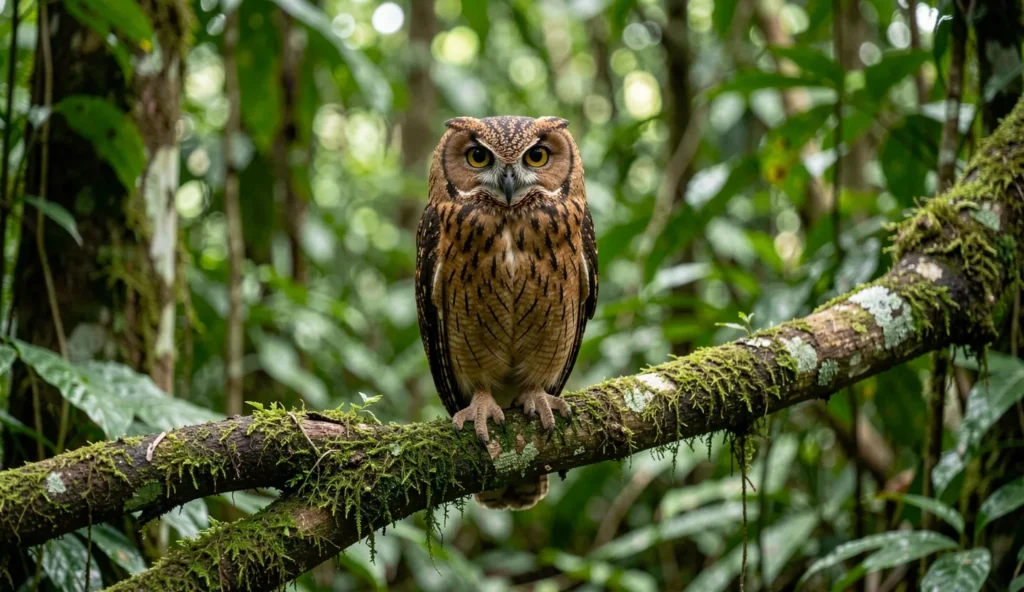
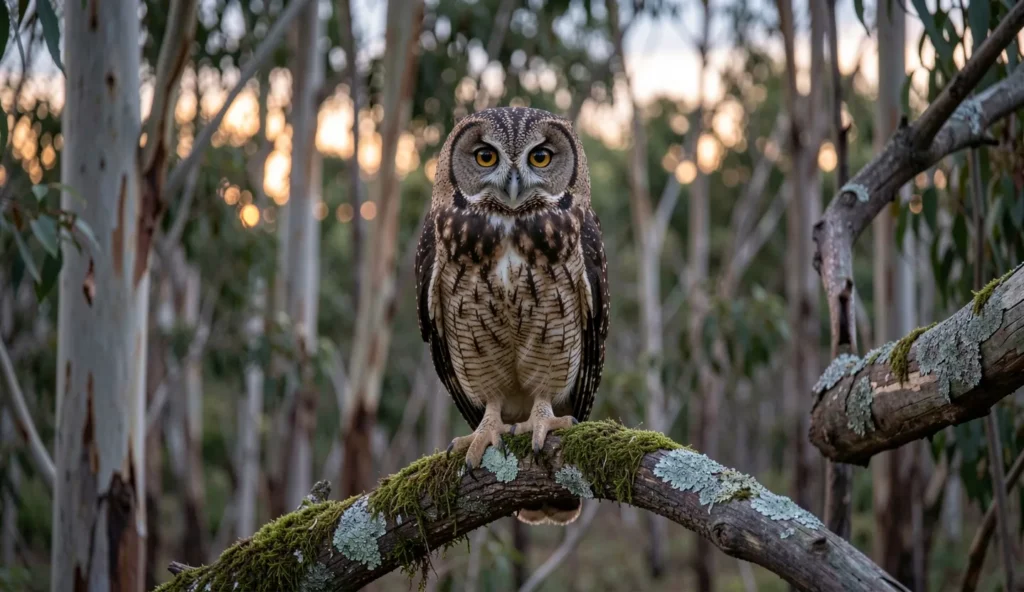
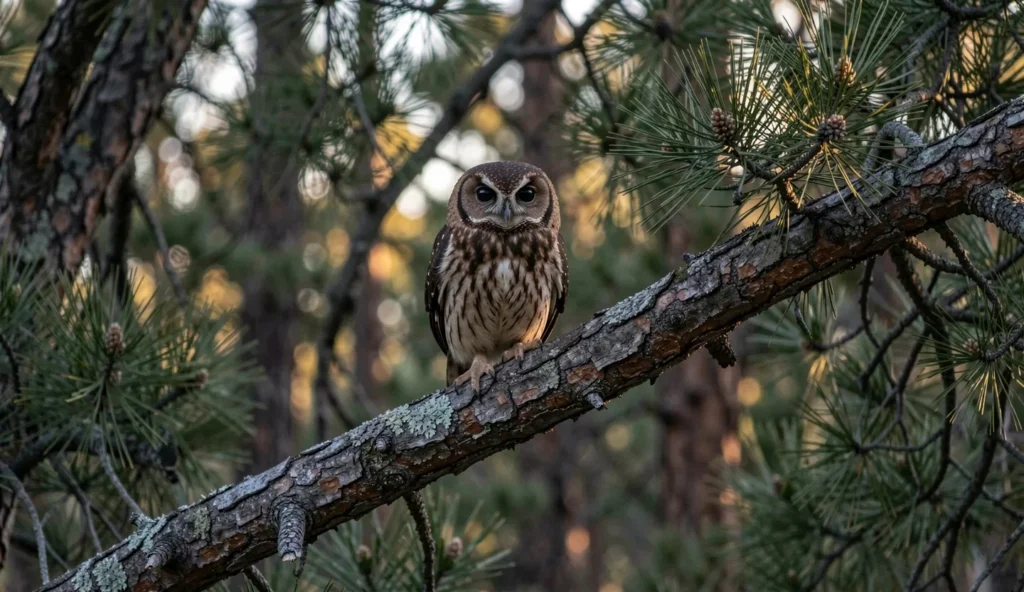
Size and plumage details show a compact, rounded form. The body length is about 15 cm, with reddish brown upperparts and pale streaks.
- Body length around 15 cm
- Reddish brown upperparts with pale streaks
- Buffy underparts with faint streaking
Distinctive Markings
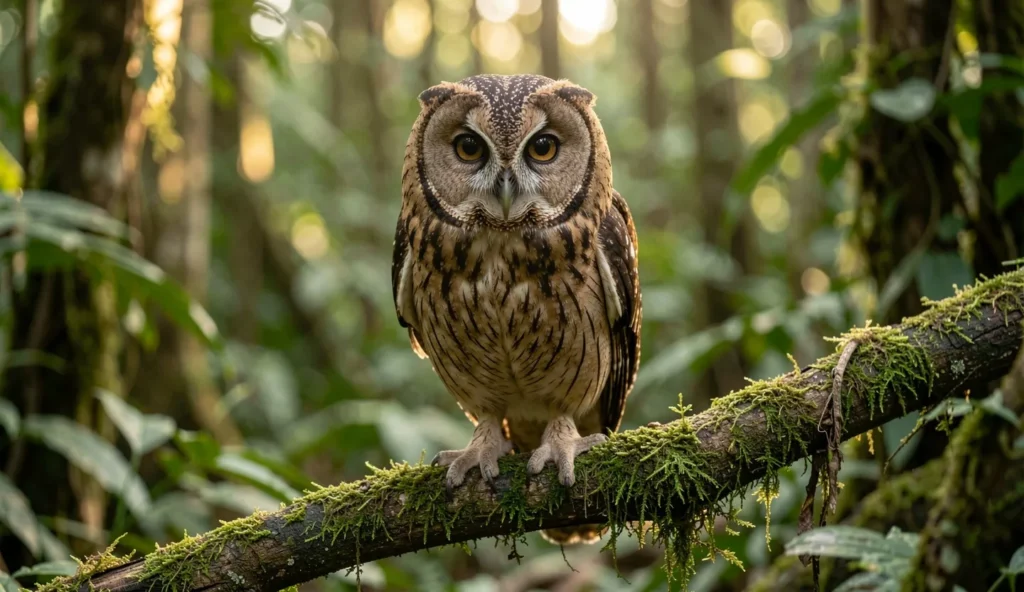
The facial disk is bordered by pale rings, and there are no ear tufts, giving the head a smooth, round silhouette.
- Facial disk bordered by pale rings
- No ear tufts, round head shape
- Dark eyes and small yellowish beak
Habitat Range And Migration
Geographic Range
Found in coniferous forests across western North America, with a preference for mature pine stands that provide cavities. The Eastern Screech Owl is a related species that occupies similar forests but different microhabitat needs.
- Found in coniferous forests across western North America
- Prefers mature pine and mixed forests with ample cavities
Migration And Seasonality
Northern populations migrate to milder wintering areas. Long-eared Owl and Short-eared Owl show similar seasonal movements in overlapping landscapes.
- Northern populations migrate to milder wintering areas
- Southern populations may stay closer to year round habitats
Diet And Foraging
Diet Composition
Diet shifts with seasonal prey availability, and observations of the flammulated owl diet emphasize an insect-based intake. Primarily insects such as moths and beetles, with occasional spiders.
- Primarily insects such as moths and beetles
- Occasional spiders and other small invertebrates
- Diet shifts with seasonal prey availability
Foraging Techniques
Perches quietly and then pounces on prey, often at dusk or through the night.
- Perches quietly then pounces on prey
- Hunts at dusk and through the night
- Relies on healthy pine forests with insect prey diversity
Vocalizations And Behavior
Vocalizations
The flammulated owl call is a soft, short whistle or trill often heard at dusk in pine forests.
- Soft, short hoots used in various displays
- Calls often heard during breeding season at dusk
The Secretive Screech
The distinctive secretive screech is a territorial signal emitted from within dense pine canopies.
- Distinctive screech associated with territorial signaling
- Typically emitted from within dense pine canopies
Breeding And Nesting
Breeding Season
Breeds in spring to early summer, with small clutch sizes commonly 3 to 5 eggs. The female incubates while the male assists with provisioning.
- Breeds in spring to early summer
- Small clutch sizes commonly 3 to 5 eggs
- Female primarily incubates while male assists with provisioning
Nest Location And Reproduction
Nests in tree cavities or knot holes in conifers; nest site selection is linked to mature pine forest density.
- Nests in tree cavities or knot holes in conifers
- Nest site selection linked to mature pine forest density
Is A Flammulated Owl Right For You
Ideal Observers And Field Work
Requires patience for nocturnal sightings and is best suited for experienced birders with access to pine forest habitats. The Barred Owl offers context for nocturnal forest studies.
- Patience for nocturnal sightings
- Best suited for experienced birders with access to pine forests
- Barred Owl provides context for nocturnal forest studies
Final Note
Field study requires patience, proper gear, and respect for nocturnal wildlife in forest habitats. With careful planning, observers can contribute valuable data on this secretive species.
Frequently Asked Questions
Where are Flammulated Owls typically found?
They are primarily found in coniferous forests of western North America.
What does a Flammulated Owl eat?
It primarily eats insects, especially moths and beetles, with occasional spiders.
When do Flammulated Owls migrate?
Northern populations migrate to milder wintering areas, while southern groups may be more resident.
What does the call of a Flammulated Owl sound like?
The call is a short, soft whistle or trill often heard at dusk in pine forests.