Steller’s Sea Eagle – The Giant of Northern Skies
Introduction
The Steller’s Sea Eagle is one of the most powerful and largest eagles in the world, weighing up to 20 pounds — making it the heaviest eagle on Earth. Native to the cold coastal regions of northeastern Asia, this majestic bird is famous for its massive size, striking appearance, and deep, echoing call. With its bold features and commanding presence, the Steller’s Sea Eagle represents both beauty and strength in the wild. While it shares the northern skies with other impressive raptors like the white tailed eagle, the Steller’s Sea Eagle stands apart with its uniquely massive yellow beak and dramatic white plumage.
Origin and Natural Habitat
Steller’s Sea Eagles live mainly in:
- Russia’s Kamchatka Peninsula and surrounding coastal areas
- Hokkaido, Japan (in winter)
- Occasionally seen in Korea and China
They prefer coastal cliffs, riverbanks, and forested shorelines where fish are abundant and human disturbance is minimal. These remote habitats are critical for their survival, much like the pristine wilderness areas that support other apex predators such as the Golden Eagle in mountainous regions.
Physical Characteristics
This eagle is easily one of the most striking birds of prey in the world:
- Height: 2.5 to 3.5 feet (75 to 105 cm)
- Wingspan: 6.5 to 8.2 feet (2 to 2.5 meters)
- Weight: 11 to 20 pounds (5 to 9 kg)
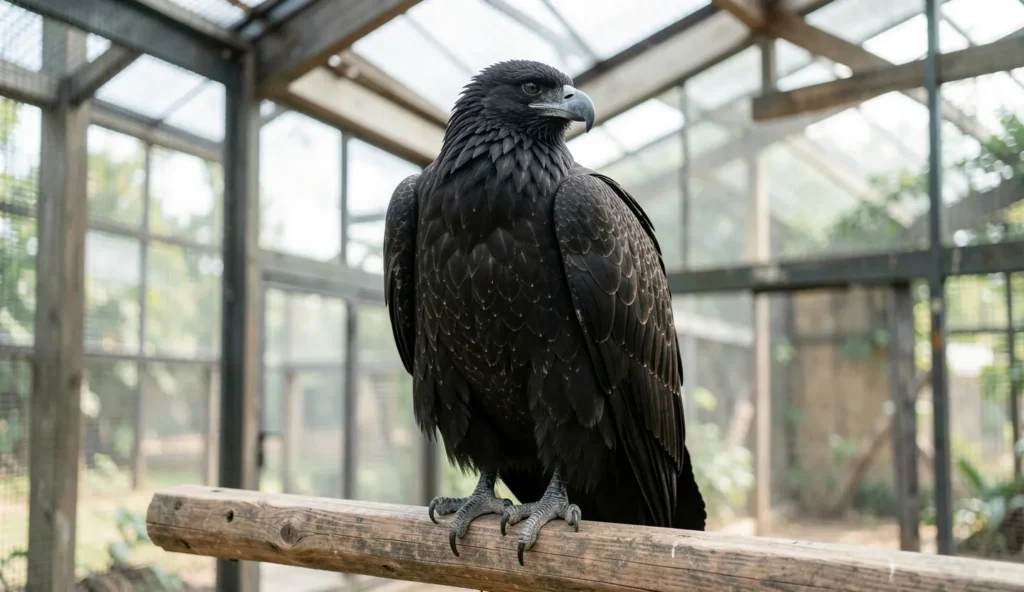
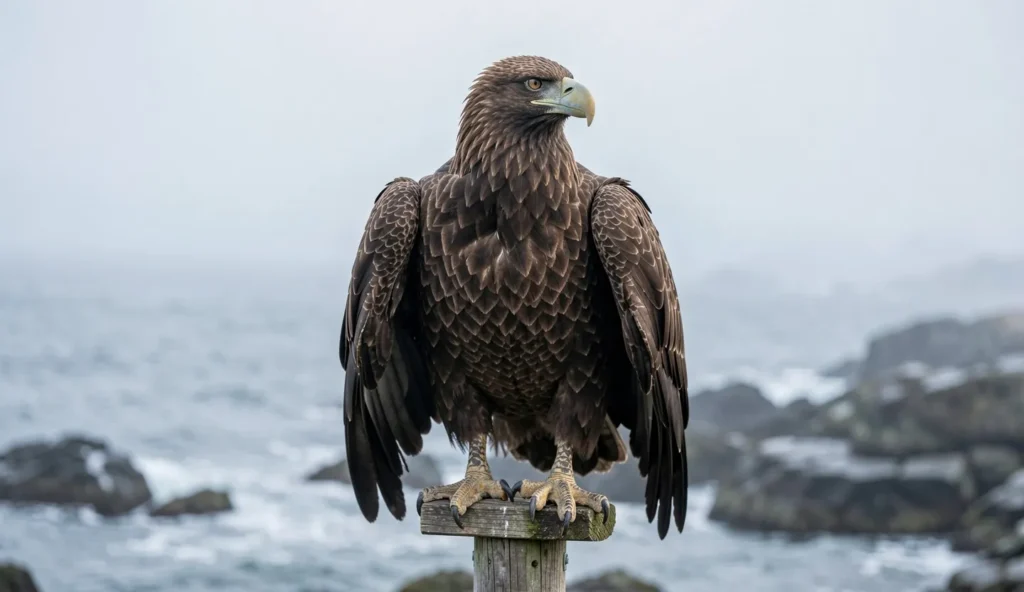
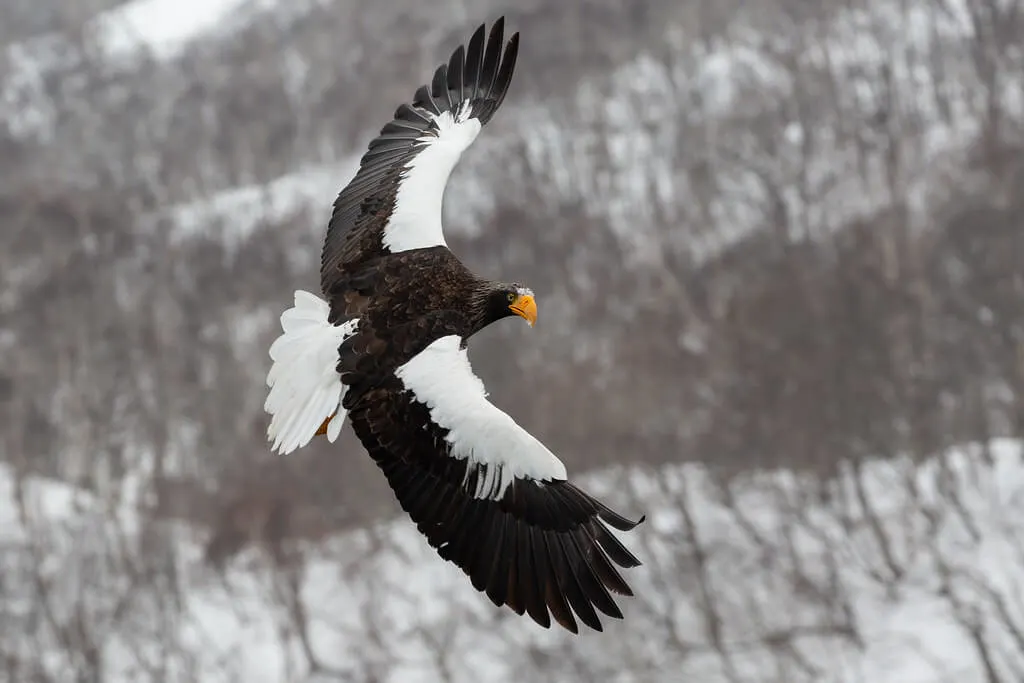
- Color: Dark brown body with bold white shoulders, tail, and leg feathers
- Beak: Bright yellow and massive — perfect for tearing through fish
Its dramatic plumage and massive build make it one of the easiest eagles to identify. For comparison, the Bald Eagle has a similar white head and tail but lacks the Steller’s distinctive white wing patches and oversized beak.
Diet and Hunting Skills
As its name suggests, the Steller’s Sea Eagle loves fish. However, it’s not limited to one food source:
- Salmon (a favorite)
- Crabs and small marine animals
- Waterfowl and seabirds
- Carrion (dead animals), especially in winter
These birds hunt from perches near the water, diving swiftly and powerfully to snatch prey with their strong talons. Their fishing technique is similar to that of the African fish eagle, though the Steller’s Sea Eagle operates in far colder waters.
Mating and Parenting
Steller’s Sea Eagles are monogamous and return to the same nesting sites year after year. They often build huge nests in tall trees or on cliffs near water.
- Usually lay 1–3 eggs per year
- Both parents incubate the eggs and care for the chicks
- Chicks fledge at about 70 days and stay nearby for several more months
They are dedicated parents and help ensure their young survive through harsh conditions.
Role in the Ecosystem
These eagles play a vital role in their ecosystem by controlling fish and bird populations. As apex predators, they help keep the natural balance and also act as scavengers by cleaning up carrion.
Their health reflects the condition of the environment — healthy eagles mean healthy rivers and oceans.
Conservation Status and Threats
The Steller’s Sea Eagle is currently listed as Vulnerable by the IUCN. The main challenges they face include:
- Habitat loss from logging and development
- Water pollution, which affects fish populations
- Human disturbance near nesting sites
- Overfishing, reducing their food sources
There are believed to be fewer than 5,000 individuals remaining in the wild, making them rarer than the martial eagle of Africa.
Conservation Efforts
Efforts are underway across Russia and Japan to help protect this incredible bird:
- Habitat protection and anti-logging campaigns
- Monitoring through tracking devices and wildlife research
- Public education to reduce human disturbance
- Laws protecting their coastal feeding areas
Collaboration between governments and conservation groups is key to their survival.
Cultural Significance
In parts of Russia and Japan, the Steller’s Sea Eagle is a symbol of wild beauty and freedom. Some Indigenous communities see the eagle as a messenger or protector, respecting it as a sacred animal.
Ethical wildlife tours in Hokkaido allow people to admire these birds without harming their natural behavior.
Fun Facts About Steller’s Sea Eagles
- It is the heaviest eagle in the world!
- Their beaks are among the largest of any bird of prey
- Their loud, barking calls can echo across the coastline
- They are well adapted to cold, snowy environments
Frequently Asked Questions
Q1: Where can I see a Steller’s Sea Eagle?
A: You can see them in the wild in eastern Russia or on Japan’s northern island of Hokkaido during the winter months.
Q2: Are they the largest eagles in the world?
A: Yes, Steller’s Sea Eagles are among the heaviest and most powerful eagles, though they share the wingspan record with the Harpy Eagle and Philippine Eagle.
Q3: Do they live in zoos?
A: Yes, a few accredited zoos and raptor centers keep them for education and breeding purposes, but they are rare in captivity.
Q4: How can I help protect Steller’s Sea Eagles?
A: Support conservation groups, avoid disturbing their nesting areas, and advocate for ocean-friendly fishing and clean rivers.
Q5: How long do they live?
A: In the wild, they can live up to 20–25 years. In captivity, with proper care, they may live even longer.
Conclusion
The Steller’s Sea Eagle is a symbol of nature’s strength, grace, and resilience. Towering above icy rivers and snowy coasts, this incredible bird reminds us of the power and fragility of the ecosystems we all share. Protecting these majestic eagles not only saves a species but also preserves the wild places they call home for future generations to admire and learn from. Whether you compare it to the wedge tailed eagle of Australia or the eurasian eagle owl of Europe, the Steller’s Sea Eagle remains a true giant among the world’s birds of prey.