Eurasian Eagle-Owl – The Powerful Guardian of the Night
Introduction
With a wingspan stretching nearly seven feet and talons powerful enough to take down prey as large as a fox, the Eurasian Eagle-Owl (Bubo bubo) stands as one of the largest and most formidable owl species on Earth. Known for its striking orange eyes, prominent ear tufts, and commanding presence, this nocturnal bird is a symbol of wisdom and power in many cultures. Its deep, resonant hoots and silent, powerful flight make the Eurasian Eagle-Owl a master of the night sky, thriving across a vast range of habitats and continuing to fascinate bird lovers and wildlife observers worldwide.
Natural Habitat and Distribution
The Eurasian Eagle-Owl is widely distributed across Europe, Asia, and parts of North Africa. It adapts to a variety of habitats, including:
- Forested mountains and rocky cliffs
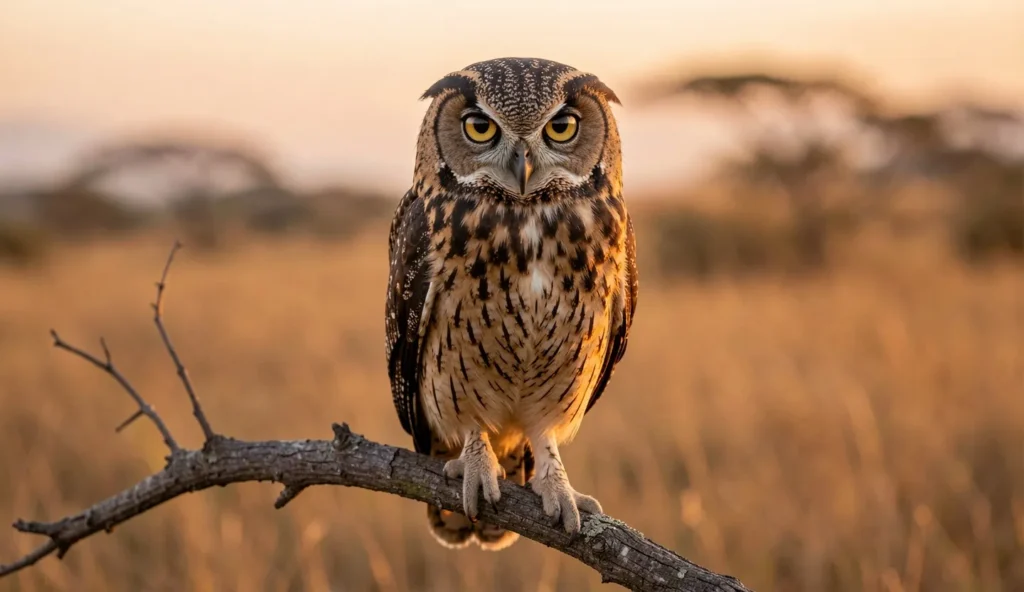
- Grasslands and semi-arid regions
- River valleys and wooded areas
This adaptable bird prefers remote and quiet locations where it can hunt and nest undisturbed. While it shares some habitat preferences with the Great Horned Owl, the Eurasian Eagle-Owl typically occupies more rugged and isolated terrain.
Physical Characteristics
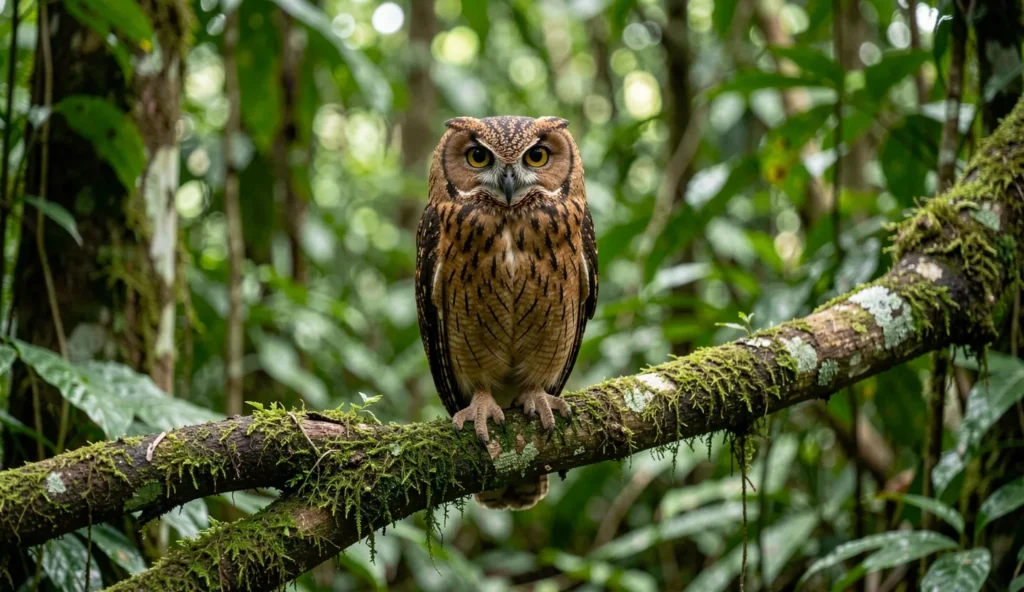
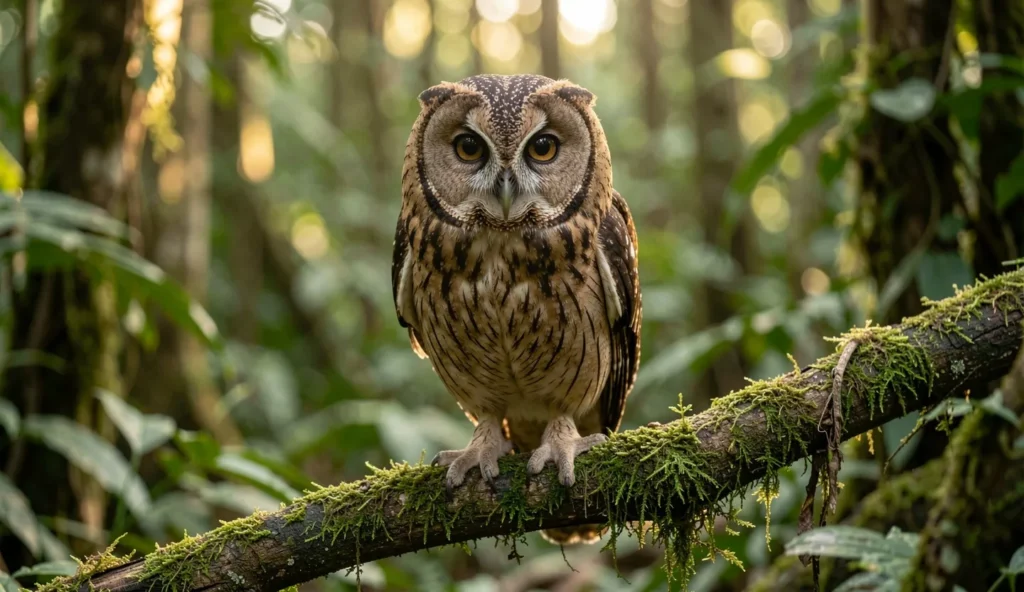
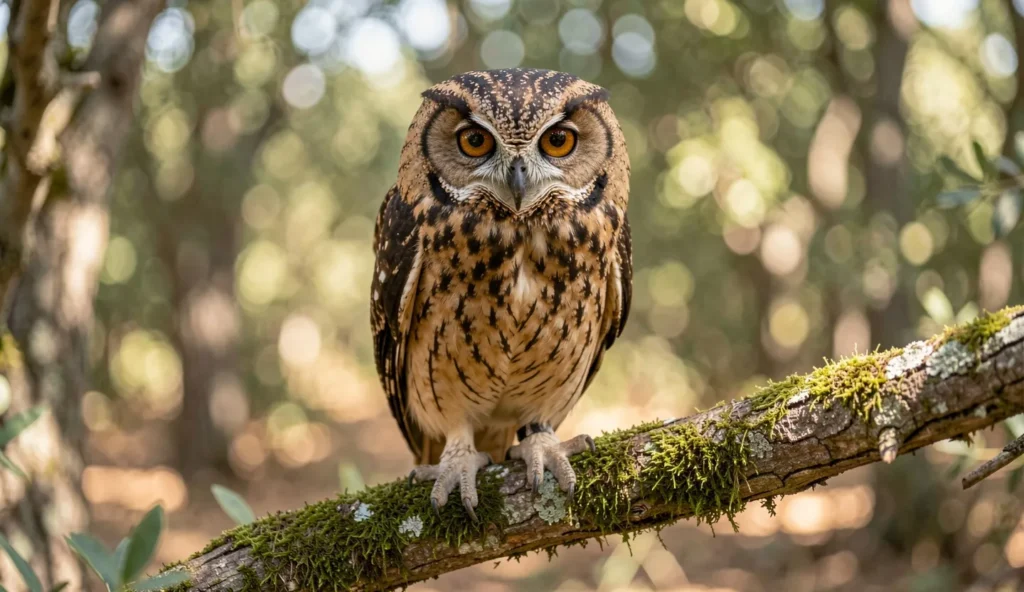
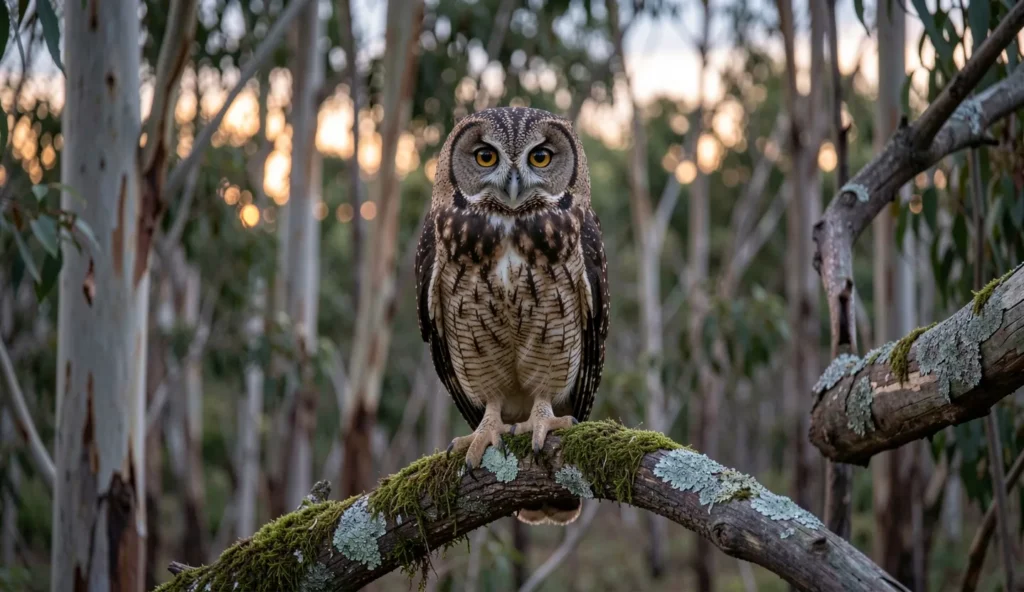
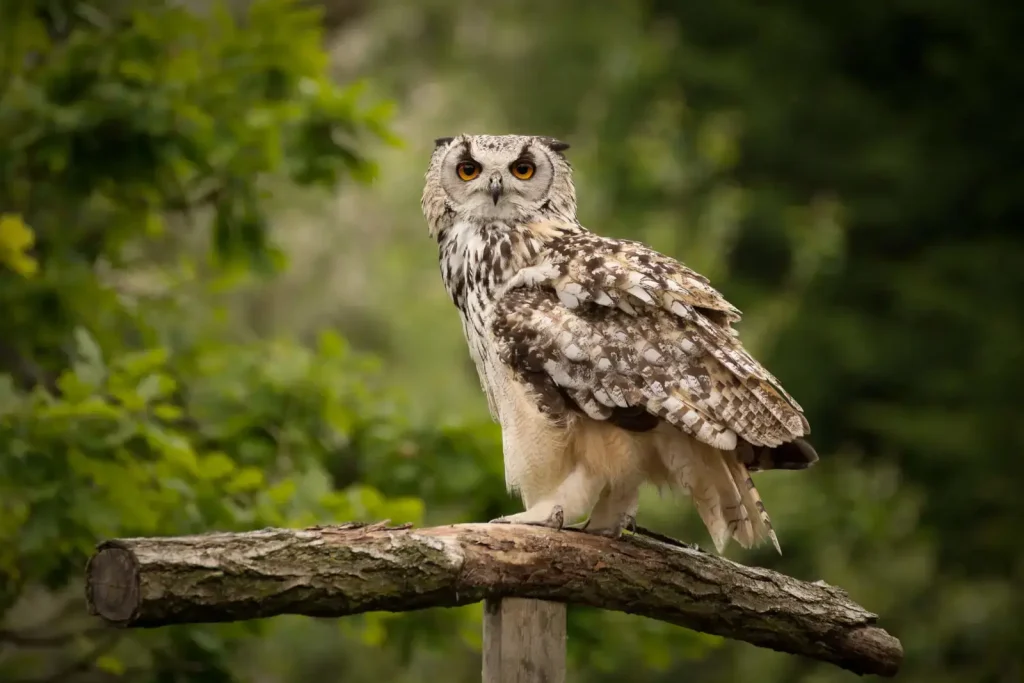
The Eurasian Eagle-Owl is an awe-inspiring bird of prey, admired for its powerful build and intense gaze:
- Length: 26–30 inches (65–75 cm)
- Wingspan: Up to 6.5 feet (almost 2 meters)
- Weight: 3 to 10 pounds (1.5–4.5 kg), with females typically larger than males
- Plumage: Mottled brown, black, and cream for camouflage
- Eyes: Bright orange and forward-facing for excellent night vision
- Ear Tufts: Prominent and upright, used for communication and camouflage
Its silent flight and formidable talons make it an expert hunter. In terms of size and power, it is often compared to the Golden Eagle, though the two species occupy very different hunting niches.
Diet and Hunting Behavior
The Eurasian Eagle-Owl is a top predator in its ecosystem. It primarily hunts at night, using its keen senses to detect prey from great distances. Its diet includes:
- Small mammals such as rabbits, rats, voles, and squirrels
- Birds up to the size of ducks or herons
- Reptiles, amphibians, and insects, when other food is scarce
These owls are ambush predators, striking quickly and silently from elevated perches or while in flight. Unlike the short eared owl, which often hunts during the day over open fields, the Eurasian Eagle-Owl is strictly nocturnal and relies on dense cover for its ambush tactics.
Social Behavior and Reproduction
Eurasian Eagle-Owls are solitary outside of the breeding season but form strong pair bonds when mating. Their nesting and parenting habits include:
- Laying 1–4 eggs in late winter or early spring
- Female incubates the eggs while the male provides food
- Chicks fledge at about 5–6 weeks old and stay with their parents for several months
Nests are usually simple scrapes on cliffs, caves, or forest floors, chosen for safety and visibility. These nesting behaviors are quite different from those of the Barn Owl, which prefers man-made structures like barns and abandoned buildings for its nesting sites.
Adaptability and Habitat Use
While they prefer wild and remote locations, Eurasian Eagle-Owls have shown adaptability to:
- Quarries and abandoned ruins
- Urban green spaces with sufficient prey
- Areas near human settlements with minimal disturbance
This adaptability has helped stabilize populations in regions where natural habitats have declined. However, they remain sensitive to human activity during the breeding season and require undisturbed nesting sites to successfully raise their young.
Conservation Status and Challenges
The Eurasian Eagle-Owl is classified as a species of Least Concern by the IUCN due to its wide range and stable numbers. However, threats still exist:
- Collisions with power lines
- Exposure to pesticides and rodenticides
- Habitat destruction and human encroachment
Conservation efforts focus on habitat preservation, public awareness, and minimizing the use of harmful chemicals in ecosystems they inhabit. Recent studies have also highlighted the risk of secondary poisoning from rodenticides, which can accumulate in owls that prey on contaminated rodents.
Relationship with People
The Eurasian Eagle-Owl is deeply respected in many cultures. While it is a wild bird and not suited for domestication, ethical birdwatching and conservation programs allow people to admire these majestic owls responsibly. Unlike the long eared owl, which is sometimes kept by licensed falconers, the Eurasian Eagle-Owl is almost exclusively observed in the wild due to its size and specialized needs.
Education and community involvement are key to ensuring a positive coexistence and a future where these owls continue to soar freely. Local conservation groups in Europe have successfully installed nesting platforms and insulated power lines to reduce mortality in high-risk areas.
Fun Facts About Eurasian Eagle-Owls
- They can take down prey as large as foxes or small deer in rare cases
- Their hearing is so precise that they can detect rustling under leaves or snow
- Despite their size, they fly nearly silently due to specialized feathers
- Their deep hoots can carry for miles in quiet environments
Frequently Asked Questions
Q1: Are Eurasian Eagle-Owls dangerous to humans?
A: They are not a threat to humans and generally avoid contact. Like all wildlife, they should be observed from a respectful distance.
Q2: Can Eurasian Eagle-Owls be found in cities?
A: Occasionally, yes—especially in quieter urban outskirts where prey and roosting spots are available.
Q3: Do they migrate?
A: No, Eurasian Eagle-Owls are generally non-migratory and stay within their territories year-round.
Q4: How long do Eurasian Eagle-Owls live?
A: In the wild, they live up to 20 years. In protected environments, they can live even longer, sometimes over 30 years.
Q5: What can I do to help protect them?
A: Support wildlife conservation groups, avoid using toxic chemicals, and promote forest preservation initiatives. You can also participate in citizen science projects that track owl populations in your region.
Conclusion
The Eurasian Eagle-Owl is a living symbol of wilderness, wisdom, and strength. From its commanding presence to its silent, graceful flight, this extraordinary bird enriches ecosystems and inspires awe in everyone fortunate enough to see or hear it. By protecting their habitats, reducing the use of harmful pesticides, and promoting responsible wildlife observation, we ensure these incredible owls continue to thrive for generations to come. Whether you are a seasoned birdwatcher or a curious nature enthusiast, the Eurasian Eagle-Owl remains one of the most unforgettable sights in the avian world.