Holstein Friesian – The World’s Champion Dairy Cow
The Holstein Friesian is globally recognized as the most productive dairy cow breed.
Originating in the Friesland region of the Netherlands and parts of northern Germany, Holsteins are
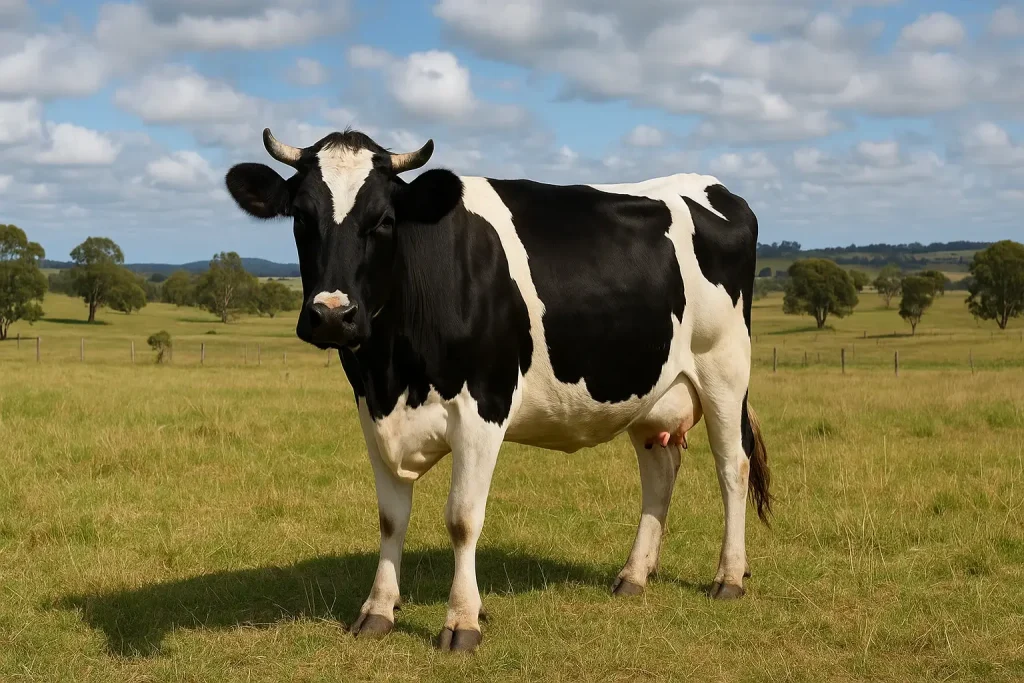
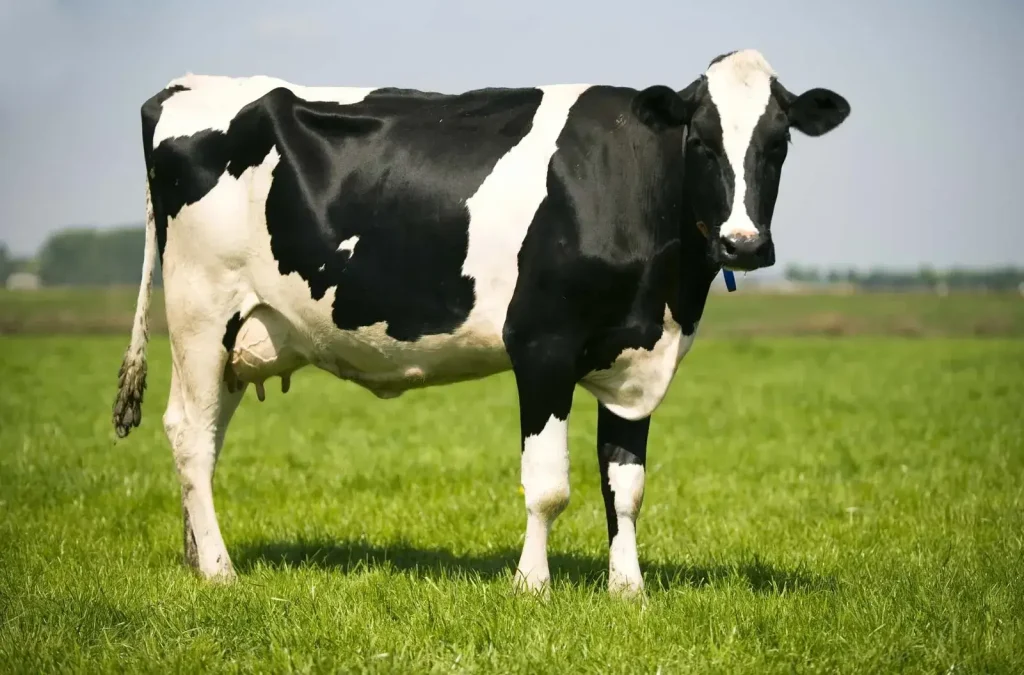
known for their striking black-and-white coats and exceptional milk production. Today, they dominate
commercial dairy farming across continents due to their unmatched productivity, adaptability, and gentle temperament.
History and Origin of the Holstein Breed
The Holstein Friesian lineage dates back more than 2,000 years. Early Frisian farmers selectively bred cattle
for both milk and meat, but over generations focused on high milk yield. By the 19th century, Holsteins were exported to
North America, quickly becoming the leading dairy breed. Today, their genetics continue to improve through selective
breeding, ensuring their presence in Asia, Africa, Europe, and Australia.
Distinctive Physical Characteristics
- Coat: Typically black and white; occasionally red and white.
- Height: Mature cows reach approximately 58 inches (147 cm) at the shoulder.
- Weight: Cows weigh between 580–680 kg; bulls can exceed 1,000 kg.
- Udder: Large and well-developed for high-volume milk production.
- Appearance: Intelligent expression, long legs, and strong body structure.
Milk Production and Dairy Value
- Average daily yield: 25–30 liters per cow; elite Holsteins exceed 40 liters daily.
- Annual yield: More than 10,000 liters per cow under optimal conditions.
- Milk composition: Around 3.5% butterfat and 3.2% protein—excellent for cheese and yogurt.
- System compatibility: Performs efficiently in modern automated milking systems.
Temperament and Behavior
Holstein Friesians are calm, social, and highly intelligent. Their gentle nature makes them ideal for both
small farms and large-scale operations. They adapt well to routine and often form bonds with caretakers,
making herd management smoother.
Environment and Housing Needs
- Clean, dry, and well-ventilated barns with comfortable resting areas.
- Cooling systems and shade in hot climates to prevent heat stress.
- Access to green pastures or balanced indoor feeding environments.
Feeding and Nutrition
- High-quality forage such as silage and hay for roughage.
- Energy-rich grains including corn, barley, and soybean meal.
- Unlimited access to clean, fresh water.
- Mineral supplements and salt licks to balance micronutrient intake.
Health, Lifespan, and Management
With proper care, Holstein cows live 6–10 years on average, though many exceed 12 years in ideal conditions.
Common health issues include mastitis, lameness, and metabolic disorders. Routine hoof trimming, vaccinations,
parasite control, and milk quality testing help maintain herd health.
Recent global data shows Holsteins remain the leading dairy breed, producing the majority of the world’s milk.
Advances in genetics and nutrition continue to extend their productive lifespan and yield.
Economic Importance and Global Dairy Industry Impact
- High milk output provides strong return on investment for farmers.
- Key breed in both industrial-scale and family-run dairy farms.
- Drives milk supply and pricing trends globally.
- Forms the backbone of the world’s dairy economy.
Breeding and Reproduction
- Breeding method: Artificial insemination for superior genetics.
- Calving interval: Average of 13–14 months between births.
- Calves: Fast-growing and resilient with good nutrition and management.
Advances in genetic research and big data have allowed precision breeding for higher yield, better health, and fertility.
Predictive models now help dairy farmers manage milk production more effectively.
Fun Facts About Holstein Friesians
- Holsteins make up over 90% of dairy cattle in the United States.
- Each cow’s black-and-white coat pattern is unique—like a fingerprint.
- The highest-producing Holstein produced over 35,000 liters of milk in one year.
- Holsteins are featured in media worldwide as the symbol of dairy farming.
Frequently Asked Questions
Why are Holstein Friesians preferred in dairy farming?
Their unmatched milk production, adaptability, and gentle temperament make them the best choice for commercial dairy farms.
How much milk does a Holstein produce per day?
On average, 25–30 liters per day; elite Holsteins can produce over 40 liters daily with top-tier management.
Can Holstein cows thrive in hot climates?
Yes, but they need cooling systems, shade, and proper hydration to prevent heat stress.
Are Holsteins suitable for small farms?
They can perform well on small farms if provided with balanced nutrition and comfortable housing, though they have high feed demands.
What is the typical lifespan of a Holstein cow?
Generally 6–10 productive years, though with good management and health care, many live beyond 12 years.
Conclusion – Why Choose the Holstein Friesian Cow
The Holstein Friesian is more than just a dairy breed—it’s a symbol of global dairy excellence.
With its exceptional yield, friendly nature, and adaptability, the Holstein continues to set industry benchmarks.
Whether you’re starting a dairy business or expanding an existing farm, choosing Holsteins means investing in
proven performance, reliability, and profitability.
Holstein Friesian Cow for Sale
The Holstein Friesian cow is available for purchase in many countries through reputable
livestock marketplaces. Check the links below to find listings in your region:
- Holstein Friesian Cow for Sale in India
- Holstein Friesian Cow for Sale in Pakistan
- Holstein Friesian Cow for Sale in UAE
- Holstein Friesian Cow for Sale in Malaysia
- Holstein Friesian Cow for Sale in Canada
- Holstein Friesian Cow for Sale in Australia
- Holstein Friesian Cow for Sale in USA
- Holstein Friesian Cow for Sale in Nigeria
- Holstein Friesian Cow for Sale in Philippines
- Holstein Friesian Cow for Sale in Indonesia
- Holstein Friesian Cow for Sale in United Kingdom