Hereford Cattle — A Practical Guide to the World’s Classic Beef Breed
Hereford cattle are one of the world’s most recognizable and widely raised beef breeds. Valued for their hardiness, docility, and efficient feed conversion, Herefords (red bodies with white faces) have been adapted to very different climates and production systems — from British pastures to Australian rangelands and North American ranches. This guide is optimized for farmers, buyers and researchers and includes the latest breed trends, management tips and market uses.
Quick facts about the Hereford Cattle Breed
- Origin: Herefordshire, England (established breed by 18th century)
- Type: Beef breed (also used for crossbreeding)
- Typical mature weight: Cows ~500–650 kg; bulls often 800+ kg (varies by strain and region)
- Temperament: Docile and easy to handle
- Global presence: Reported in dozens of countries with millions of head worldwide.
History and global spread
The modern Hereford traces to traditional English farm stock selected in Herefordshire for beef production and early maturity. The breed was exported widely during the 19th and 20th centuries and has since become a foundation beef breed in the Americas, Australasia and parts of South America. Today, Hereford genetics are used both as purebreds and as valuable crosses to improve maternal traits and hardiness in commercial herds.
Appearance and main characteristics
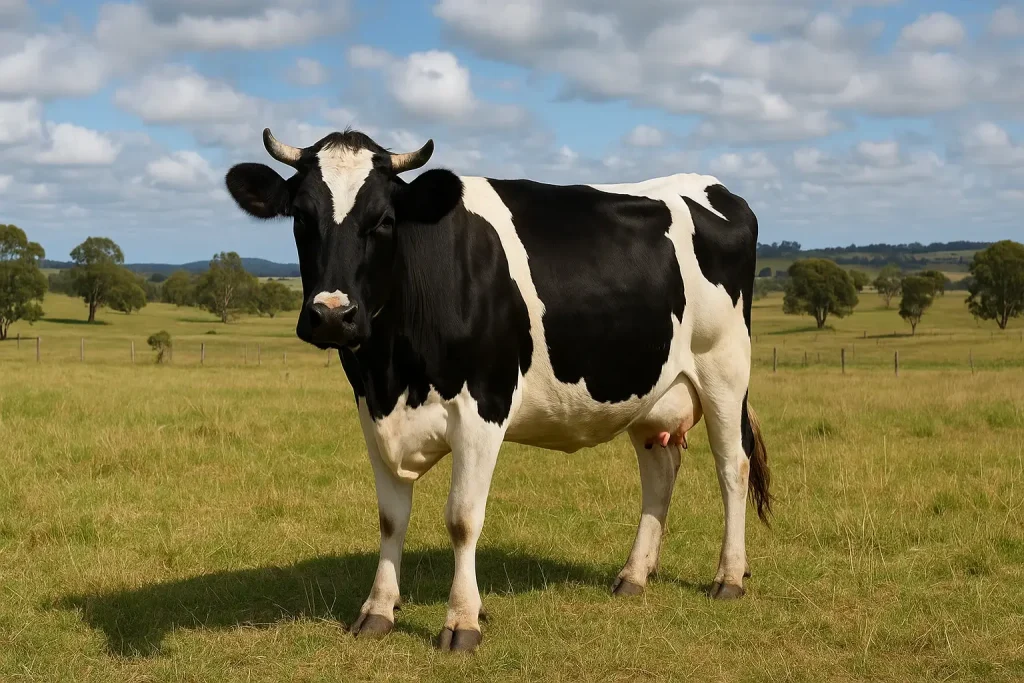
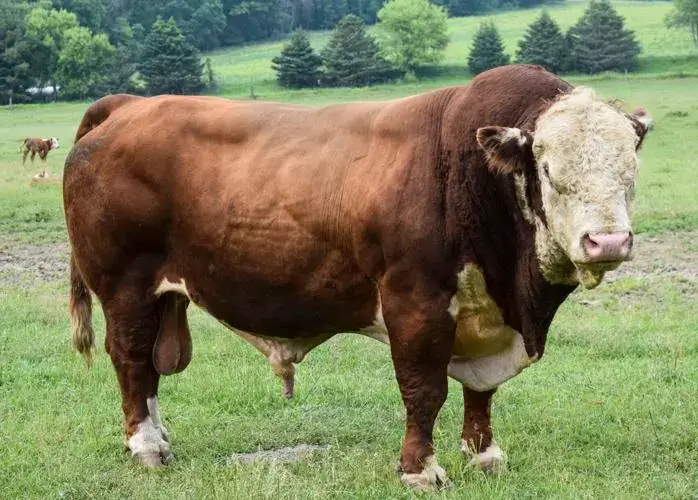
Herefords are typically red to red-yellow with a white face, crest, dewlap and underline. They are medium-to-large framed, with a compact conformation that favours early maturity and good carcass yield. Polled (hornless) strains are common in many countries, while horned lines persist in others. Their thick hides, good foraging ability and solid feet make them well suited to grass-based systems.
Why farmers choose Herefords
- Hardiness: perform well on grass and in variable climates
- Docile temperament: safer and easier to handle on smaller and larger farms
- Carcass efficiency: good beef cuts with consistent conformation
- Crossbreeding value: improve hybrid vigour and maternal traits in commercial herds
Performance: growth, fertility and feed conversion
Herefords are prized for efficient growth and the ability to put on fat at earlier ages compared with some larger continental breeds. Typical management results will vary by region, feed and genetics, but Herefords remain a top choice where feed efficiency and maternal reliability are important. Studies and breed comparisons repeatedly list Herefords among breeds that offer good early maturity and feed-to-gain performance.
Meat quality and market position
Hereford beef is generally leaner than some highly marbled breeds such as Angus but is still valued for flavor and tenderness when managed for finish. Some markets prize Hereford-influenced feeder cattle for consistent yields and ease of finishing. In many regions, Hereford-influenced feeder and store cattle attract a price premium due to predictable performance.
Breeding strategies and modern genetics
Contemporary Hereford breeding blends traditional selection with genomic tools. Breed associations and BreedPlan (or equivalent evaluation programs) provide estimated breeding values (EBVs) and genomic selection that help producers improve calving ease, growth, fertility and carcass traits. Many Hereford associations publish regular BREEDPLAN analyses and encourage use of AI and record-keeping to accelerate genetic progress.
Global distribution and regional notes
Herefords are reported across dozens of countries; estimates indicate millions of head globally, with large populations in the Americas (U.S., Canada, Uruguay, Argentina), Australia, New Zealand and parts of Europe. In South America, Hereford genetics underpin large beef sectors; in Australia, Hereford-influenced cattle are used in many mixed systems and continue to show strong commercial relevance.
Management tips for Hereford herds
- Nutrition: match forage quality to production goals; supplement during dry seasons to maintain condition.
- Breeding: use EBVs and proven sires for calving ease and maternal traits; consider crossbreeding to add heterosis.
- Health: maintain vaccination, parasite control and hoof care; Herefords tolerate many forage regimes but benefit from routine herd health planning.
- Housing & handling: low-stress handling and properly designed yards reduce injuries and increase efficiency.
Market opportunities and commercial applications
Herefords fit well in grass-fed and mixed finishing systems, and their calves commonly supply backgrounding and feedlot markets. They are also used by producers aiming to produce animals for specialty markets (e.g., natural or grass-fed beef) where consistent carcass shape and temperament matter for handling and retail specifications.
FAQs about Hereford Cattle Breed
Are Herefords good for grass-fed beef systems?
Yes. Their forage efficiency, hardiness and carcass conformation make Herefords well suited to grass-fed and pasture-based production.
Do Herefords have good calving ease?
Generally yes—Herefords are known for ease of calving and strong maternal instincts, though selecting for calving-ease EBVs remains best practice.
How do Herefords compare with Angus for beef quality?
Angus tends to produce more marbling; Hereford beef is typically leaner but still highly palatable. Choice of breed should align with market demands (marbling vs lean, grass-fed vs grain-finished).
Where can I buy registered Hereford cattle?
Contact national Hereford associations (e.g., American Hereford Association, Hereford Australia, UK Hereford societies) or reputable breeders listed on association sale catalogs and production pages. Breed associations also maintain sale and AI catalogs for verified genetics.
Conclusion
Hereford cattle remain a cornerstone of global beef production thanks to their adaptability, temperament and consistent carcass performance. For producers focused on grass-based systems, maternal reliability and predictable market outcomes, Herefords — either as purebreds or in crossbred programs — offer strong, long-term value.
Explore more Cow Breeds: