What Is a Senegal Parrot
The Senegal Parrot, scientifically known as Poicephalus senegalus, is a small African parrot native to West Africa. This bird occupies savannas, woodlands, and cultivated areas from Senegal to Nigeria. With a lifespan of 25 to 30 years, the Senegal Parrot makes a long-term companion for dedicated owners.
As a poicephalus parrot, this species stands out for its playful and affectionate nature. It is sometimes called the “yellow-headed parrot” due to its bright yellow head and chest. Beginner and intermediate owners often choose this species for its moderate size and engaging personality.
Origin and Natural Habitat
The Senegal Parrot lives in a broad band across western and central Africa. Flocks gather in open forests and agricultural areas, feeding on fruits, seeds, and blossoms. Their adaptability to different environments contributes to their popularity in captivity.
Appearance and Physical Features
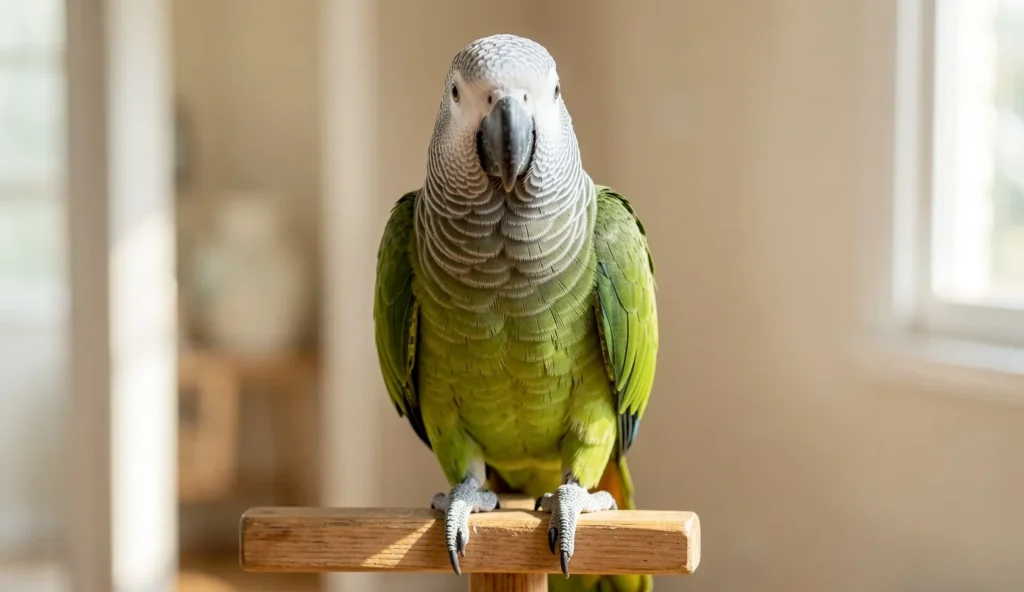
The Senegal Parrot displays a striking combination of colors that makes it easy to identify. Green feathers cover the back, wings, and tail, while the head and chest show a bright yellow hue. A distinctive orange or red patch on the belly gives this bird its scientific species name.
Size and Weight
Adult Senegal Parrots measure about 23 centimeters from beak to tail tip. They weigh between 120 and 170 grams, placing them firmly in the small parrot category. Compact size makes them manageable for most living spaces.
Color and Markings
The green upperparts blend with yellow underparts, creating a clean two-tone look. The belly patch varies from deep orange to bright red depending on the individual. Some birds show a slight green wash on the yellow chest, but the overall pattern remains consistent across the species.
Sexual Dimorphism
Males and females appear identical to the naked eye. No reliable external differences in color or size exist. DNA sexing, either through blood tests or feather samples, provides the only accurate way to determine gender.
Senegal Parrot Temperament and Personality
The Senegal Parrot personality balances curiosity with cautious intelligence. These birds enjoy exploring their environment and solving simple puzzles. Owners describe them as playful yet independent, often entertaining themselves with toys for extended periods.
Playful and Curious Nature
Senegal Parrots thrive on enrichment activities. They love shredding toys, climbing ropes, and manipulating objects with their beaks. Providing a rotating selection of safe wooden or leather toys keeps them mentally stimulated.
One-Person Bird Tendency
This species often bonds deeply with one primary caregiver. The Senegal Parrot may tolerate others but prefers the person who feeds, handles, and spends the most time with it. Strangers might receive wary glances or defensive postures. Early and consistent socialization can reduce this tendency, but the one-person bond remains a strong trait.
Vocalization and Talking
Compared to larger parrots, the Senegal Parrot produces moderate noise levels. It can learn a handful of words and phrases, but its real strength lies in whistling and mimicking household sounds. Owners often hear door creaks, microwave beeps, or telephone rings replicated accurately. Regular interaction encourages clearer speech attempts.
How to Bond With a Senegal Parrot
Building a strong relationship with a Senegal Parrot requires patience and consistency. These birds respond well to gentle routines and positive experiences. Rushing the process often leads to fear or aggression.
Building Trust Through Routine
Offer treats like millet spray or sunflower seeds from your hand each day. Sit quietly near the cage while reading or talking softly. Repeat these actions at the same times daily so the bird learns to expect safe interactions.
Handling and Taming Techniques
Use a perch for step-up training initially to avoid alarming the bird. Hold the perch steady against the lower chest and say “step up” in a calm voice. Reward the behavior immediately. Never grab or force the bird onto your hand; let it choose to approach.
Socialization With Others
Introduce family members one at a time in a calm setting. Have each person offer a favorite treat while speaking softly. Supervised out-of-cage time in a neutral area helps reduce territorial behavior. Consistent positive encounters encourage the Senegal Parrot to accept multiple people.
Training Your Senegal Parrot
Training sessions should be short, frequent, and full of rewards. Positive reinforcement works best for this intelligent species. Harsh corrections damage trust and may cause lasting behavior problems.
Positive Reinforcement Basics
Choose a high-value treat such as a small piece of almond or millet. Present it immediately after the desired action. Pair the treat with verbal praise. Keep sessions to five or ten minutes to maintain the bird’s attention.
Teaching Tricks
Start with simple commands like step up and step down. Progress to waving a foot on cue or picking up a small object. Advanced tricks include spinning in a circle or targeting a stick. Patience and repetition produce the best results.
Step-Up Training
Place your hand or a perch against the bird’s chest just above the feet. Say “step up” firmly and apply slight pressure. When the bird steps onto your hand, offer a reward immediately. Practice daily until the response becomes automatic.
Diet and Nutrition
A balanced diet directly affects the health and lifespan of a Senegal Parrot. Owners must avoid relying on seed mixes alone, as they lead to obesity and nutritional deficiencies. High-quality pellets should form the foundation of every meal.
Pellets as Staple
Feed a premium pellet blend designed for small parrots. Pellets should constitute about 70 percent of the daily food intake. Brands such as Harrison’s, Roudybush, or Zupreem provide complete nutrition for African parrots.
Fresh Fruits and Vegetables
Offer dark leafy greens like kale and spinach, plus chopped carrots, bell peppers, apples, and berries. Wash all produce thoroughly. Never feed avocado, chocolate, caffeine, alcohol, or high-salt foods. These items are toxic to birds.
Seeds and Treats
Limit seed intake to no more than 10 percent of the diet. Use seeds as training rewards rather than free-feeding. Healthy treat options include unsalted nuts in small pieces, whole grain pasta, and millet sprays.
Grooming and Care
Regular grooming keeps a Senegal Parrot comfortable and healthy. Many maintenance tasks can be performed at home after proper instruction. An avian vet should handle complex procedures like full wing clips or beak trims.
Bathing and Misting
Provide a shallow dish of lukewarm water two to three times per week for bathing. Many Senegal Parrots enjoy splashing on their own. Alternatively, mist the bird with a spray bottle set to a fine mist. Avoid soaking the bird in cold water.
Nail Trimming
Check nails every four to six weeks. Overgrown nails can snag on toys or cause discomfort. Use bird-specific nail clippers or a rotary tool with a sanding drum. Stop at the quick to avoid bleeding.
Wing Clipping Considerations
Consult an avian veterinarian before deciding to clip wings. A partial clip prevents full flight while allowing the bird to glide safely to the floor. Unclipped birds need a thoroughly bird-proofed room for supervised freedom.
Common Health Issues
Senegal Parrots are generally hardy, but certain problems appear frequently. Recognizing early signs helps owners seek timely veterinary care. Annual check-ups with an avian specialist are strongly recommended.
Feather Plucking
Feather destructive behavior often stems from boredom, stress, or poor diet. Increase environmental enrichment with foraging toys and puzzle feeders. Evaluate lighting and sleep cycles. A vet should rule out medical causes such as parasites or infections.
Obesity
Seed-heavy diets combined with insufficient exercise lead to weight gain. Monitor your bird’s weight weekly using a small digital scale. Encourage climbing and flying within safe limits. Switch to a pellet-based diet and limit high-fat treats.
Respiratory Infections
Symptoms include sneezing, nasal discharge, tail bobbing, and labored breathing. Drafts, sudden temperature changes, and poor air quality increase risk. Any respiratory sign requires an immediate veterinary examination.
Is a Senegal Parrot Right for You
Prospective owners must evaluate their ability to meet this bird’s social and environmental needs. The Senegal Parrot is not a low-maintenance pet. It demands daily interaction and a steady routine.
Time Commitment
Plan for at least two to three hours of out-of-cage time every day. The bird needs direct attention, play sessions, and training. Neglect can trigger screaming, biting, or feather plucking.
Living Space Needs
A minimum cage size of 61 by 61 by 91 centimeters allows adequate room for climbing and wing stretching. Bar spacing should be between 1.3 and 1.9 centimeters to prevent escapes. A dedicated bird-proofed room for free flight improves quality of life.
Noise Level
Senegal Parrots produce moderate vocalizations compared to large macaws or cockatoos. They do not scream constantly but can be noisy during dawn and dusk. Apartments with thin walls or noise-sensitive neighbors may not suit this species.
Frequently Asked Questions
Are Senegal parrots good talkers?
Senegal Parrots can learn a small vocabulary of words and phrases. They tend to excel at whistling and mimicking household sounds rather than clear speech.
How long do Senegal parrots live?
With proper care, Senegal Parrots live 25 to 30 years. Some individuals reach 40 years under ideal conditions.
Do Senegal parrots bond with only one person?
They often form a strong bond with one primary caregiver. Early socialization can help them accept other family members.
What size cage does a Senegal parrot need?
The minimum cage size is 61 by 61 by 91 centimeters. Bar spacing should be 1.3 to 1.9 centimeters to prevent escapes.
Can Senegal parrots be kept in an apartment?
They have moderate noise levels but can still disturb neighbors. Apartment living is possible with soundproofing and a consistent routine.
What do Senegal parrots eat?
Pellets should form the majority of the diet. Fresh vegetables, fruits, and limited seeds complete the menu.
Final Note
The Senegal Parrot offers years of companionship for owners who respect its intelligence and social needs. Providing consistent care, enrichment, and positive interaction will reward you with a playful and loyal friend.