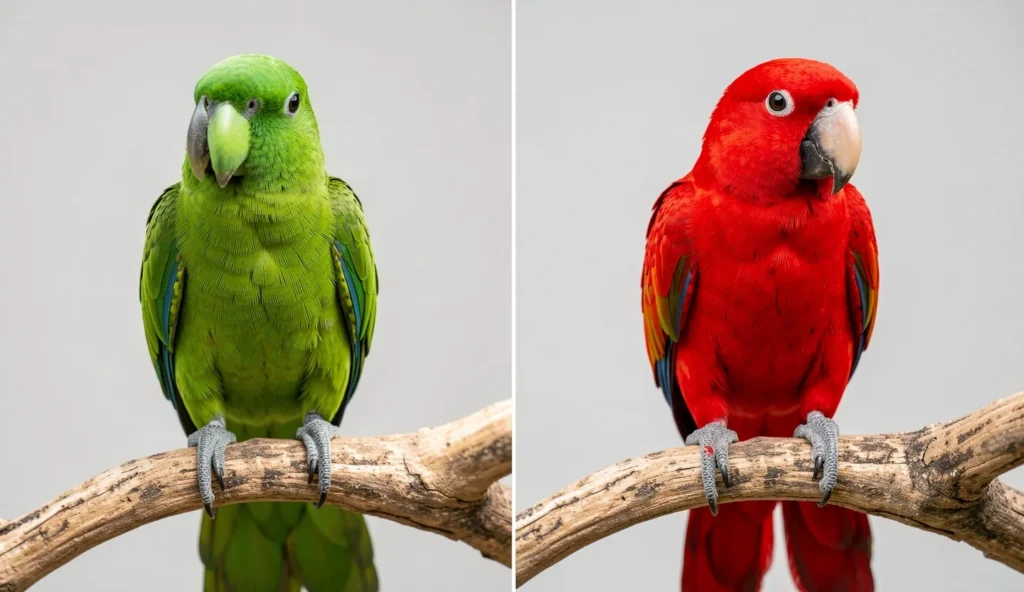
What Is an Eclectus Parrot
The Eclectus Parrot is a large parrot species native to the Solomon Islands, New Guinea, and northeastern Australia. Its most striking feature is the extreme sexual dimorphism that makes males and females appear as completely different birds. This guide covers the unique diet and care requirements that every owner must understand. Among the rare parrots breeds, the Eclectus stands out for its vibrant plumage and specialized needs.
Appearance and Sexual Dimorphism in Eclectus Parrots
The visual differences between male and female Eclectus parrots are so dramatic that early naturalists thought they were separate species. Adult males display bright green plumage while females are predominantly red and purple-blue. This dimorphism is consistent across all subspecies of Eclectus roratus.
Male Eclectus Parrot Appearance
- Bright green plumage overall
- Red underwings and blue tail feathers
- Orange or yellow beak
The male’s green feathers help it blend into the forest canopy while foraging. Its beak color ranges from coral orange to yellow, contrasting with the green head.
Female Eclectus Parrot Appearance
- Vibrant red and purple-blue plumage
- Black or dark grey beak
- Duller green on wings compared to male
The female’s coloration provides camouflage when nesting inside tree hollows. Her dark beak is a reliable visual cue for sex identification. No other dimorphic parrot shows such a complete color reversal between genders.
Why Eclectus Parrots Are So Different Between Genders
Evolution and Camouflage
Evolutionary pressures drove this extreme dimorphism. Female Eclectus parrots must remain hidden from predators while incubating eggs inside tree cavities. Their red and purple plumage resembles the shadowed hollow interior. Meanwhile, green males forage openly in the canopy, where their color offers camouflage from aerial predators. This adaptation is unique among parrots and explains why male vs female Eclectus look so different.
Temperament and Personality Differences by Gender
Male Eclectus Temperament
Males are generally more outgoing, playful, and vocal. They often interact readily with owners and enjoy learning tricks. Their friendly nature makes them easier to socialize with strangers.
Female Eclectus Temperament
Females tend to be more independent and assertive. They can become territorial during breeding season and may show aggression toward other birds or people. Owners should respect their need for personal space. Like the Umbrella Cockatoo, female Eclectus require consistent handling to maintain a balanced temperament.
Diet Essentials for Eclectus Parrots
High Fiber Requirements
The Eclectus Parrot has a longer digestive tract than other parrots, requiring a low-fat, high-fiber diet. Specialized pellets formulated for Eclectus are recommended. Fresh vegetables such as leafy greens, carrots, and bell peppers should form the daily staple. Fruits like papaya and mango can be offered in moderation. This eclectus diet differs significantly from that of seed-eating parrots.
Foods to Avoid
High-fat seeds and nuts should be limited to occasional treats. Toxic foods include avocado, chocolate, caffeine, alcohol, and salty snacks. Fruit pits and apple seeds contain cyanide and must be removed. Avoid processed human foods entirely.
Sample Feeding Schedule
- Morning: fresh vegetables and a small portion of Eclectus pellets
- Evening: fruit and additional pellets
- Always provide clean water
Remove uneaten fresh food after a few hours to prevent spoilage. This schedule mirrors the feeding routine recommended for the Rainbow Lorikeet, another species with specialized dietary needs.
Common Health Issues Related to Diet
Vitamin Deficiencies and Obesity
Improper feeding leads to obesity, fatty liver disease, and vitamin A deficiency. A diet too high in seeds causes feather plucking and lethargy. Calcium imbalances can occur if pellets are not balanced. Regular avian checkups help detect issues early. Owners of large parrots like the Scarlet Macaw should be aware of similar diet-related health risks.
Is an Eclectus Parrot Right for You
Considerations Before Adoption
Eclectus parrots require a committed owner who can provide a high-fiber diet and spacious enclosure. Their long lifespan of 30 to 40 years demands a long-term plan. The extreme dimorphism means potential owners should decide whether they prefer the outgoing male or the assertive female personality. Those unable to meet these specialized needs should consider less demanding species among rare parrots breeds.
Frequently Asked Questions
Why are male and female Eclectus parrots different colors?
Extreme sexual dimorphism evolved to help females camouflage while nesting in tree hollows while males blend with foliage as they forage.
Can you tell the gender of an Eclectus parrot by behavior alone?
Not reliably, because individual personalities vary. DNA sexing or surgical sexing is the most accurate method.
What is the best diet for a pet Eclectus parrot?
A high-fiber, low-fat pellet specifically made for Eclectus parrots, supplemented with fresh vegetables, fruits, and limited seeds.
How often should I feed my Eclectus parrot?
Twice daily with fresh food each time. Remove uneaten fresh food after a few hours to avoid spoilage.
What foods are toxic to Eclectus parrots?
Avocado, chocolate, caffeine, alcohol, high-salt foods, as well as fruit pits and apple seeds.
Do Eclectus parrots need supplements in their diet?
Generally not if fed a balanced pellet and varied fresh foods. Consult a vet before adding any supplements.
Final Note
The Eclectus Parrot rewards diligent owners with stunning beauty and engaging personality. Meeting its dietary and environmental needs ensures a long, healthy companionship.