Introduction
The Tundra Swan (Cygnus columbianus) is an elegant, migratory waterbird that captivates wildlife lovers with its gentle presence and long-distance travels. These snowy-white swans breed in the Arctic tundra and undertake incredible journeys across North America, often traveling up to 4,000 miles each year. Also known as the “Whistling Swan” for its soft, musical calls, the Tundra Swan symbolizes endurance, beauty, and the wonders of seasonal migration. Unlike the larger Trumpeter Swan, the Tundra Swan is more compact and vocal, making it a favorite among birdwatchers who appreciate its melodic calls echoing across wetlands.
Origin and Natural Habitat
Tundra Swans are native to the Arctic regions of North America. During the warmer months, they breed across:
- Northern Alaska
- Canadian Arctic tundra
In winter, they migrate to more temperate areas, often seen in:
- Coastal bays and estuaries
- Wetlands and marshes in the United States
- Inland lakes and large rivers
They prefer shallow water habitats rich in aquatic vegetation and space for landing and taking off. These habitats are critical for their survival, and conservation efforts continue to protect these vital stopover points along their migration routes.
Physical Characteristics
Tundra Swans are slightly smaller than their Trumpeter cousins but just as majestic. Here’s what makes them unique:
- Size: 47 to 58 inches long
- Wingspan: Up to 6.5 feet
- Weight: 13 to 21 pounds
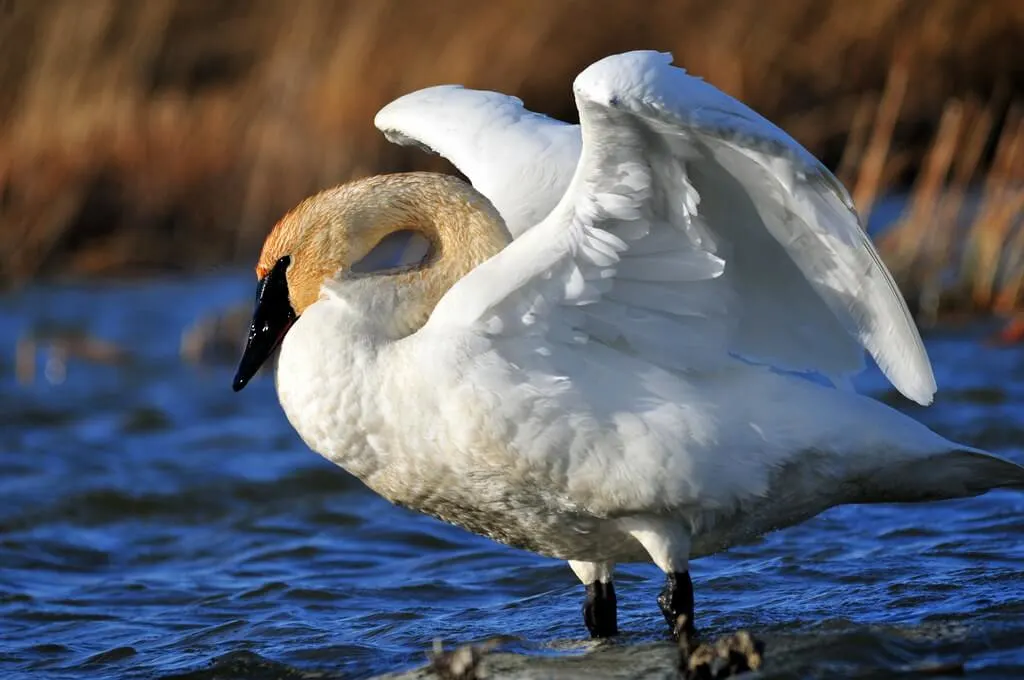
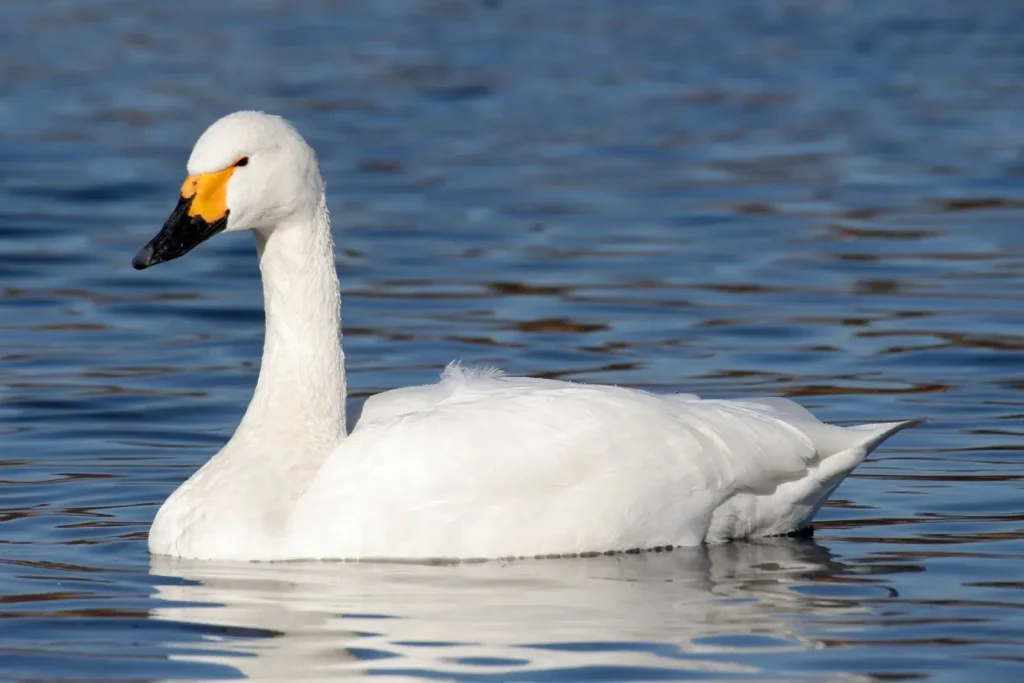
- Color: Pure white plumage with a black bill, often with a yellow spot near the eyes
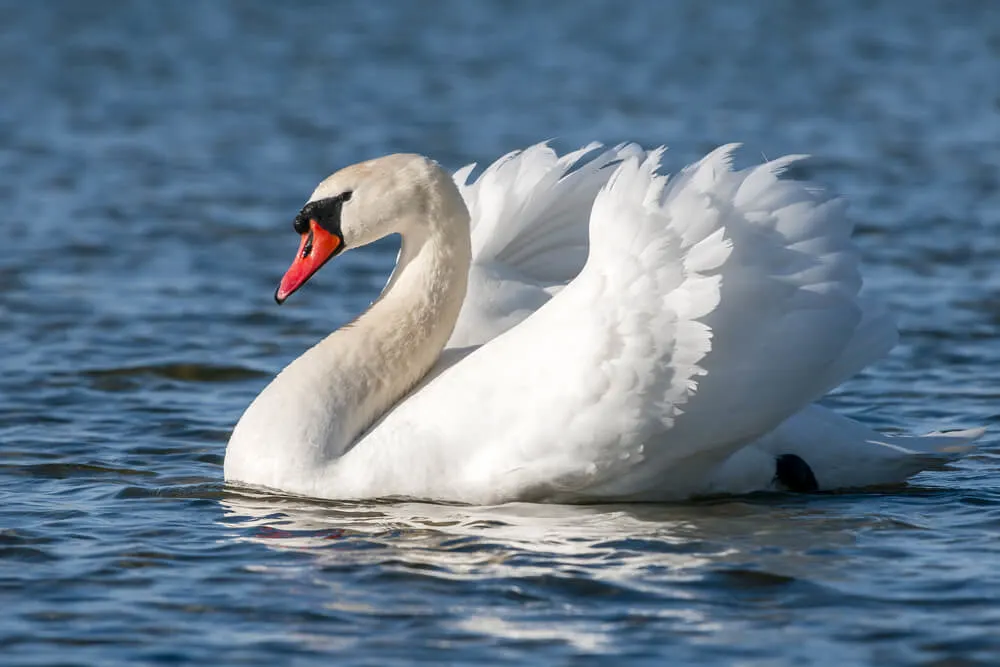
Their slender necks and buoyant bodies allow them to glide effortlessly across water. For comparison, the Mute Swan has a more curved neck and orange bill, while the Tundra Swan’s straight neck and yellow eye spot make it easy to identify in the field.
The “Whistling Swan”
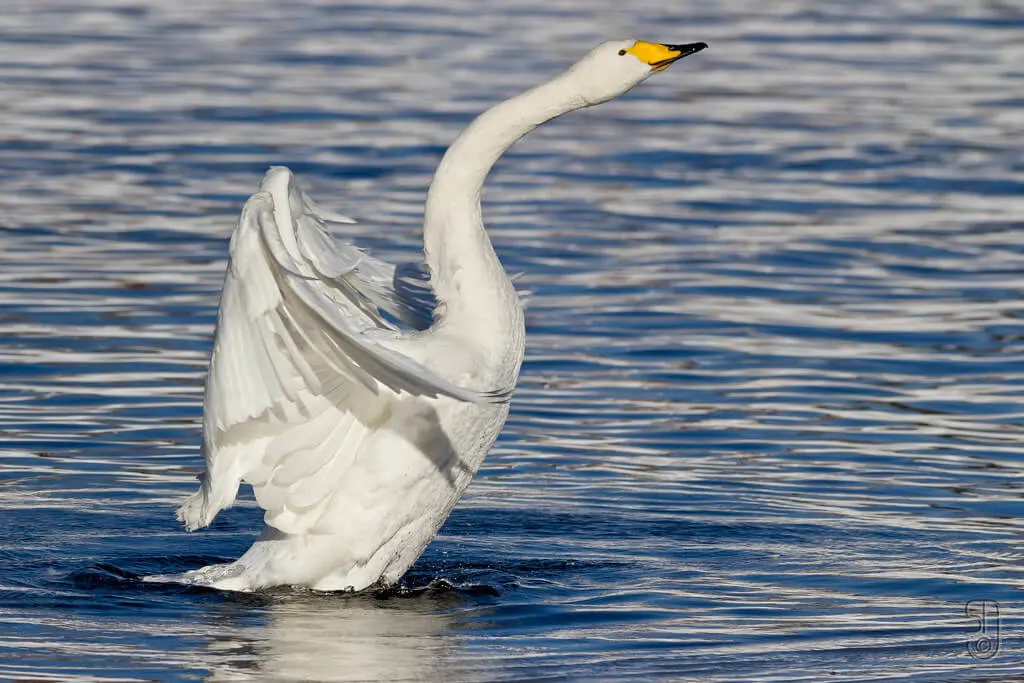
The Tundra Swan earned its nickname from its gentle, whistling calls. These vocalizations play a key role in communication within flocks and between mates and cygnets. Their calls are higher-pitched than those of the Whooper Swan, which produces deeper, more resonant trumpeting sounds. Birders often use these distinct calls to locate Tundra Swans during migration.
Social Behavior and Mating
Tundra Swans are deeply social and family-oriented birds:
- Monogamous—pairs often stay together for life
- Nest on the ground in remote Arctic areas
- Both parents raise and protect the young
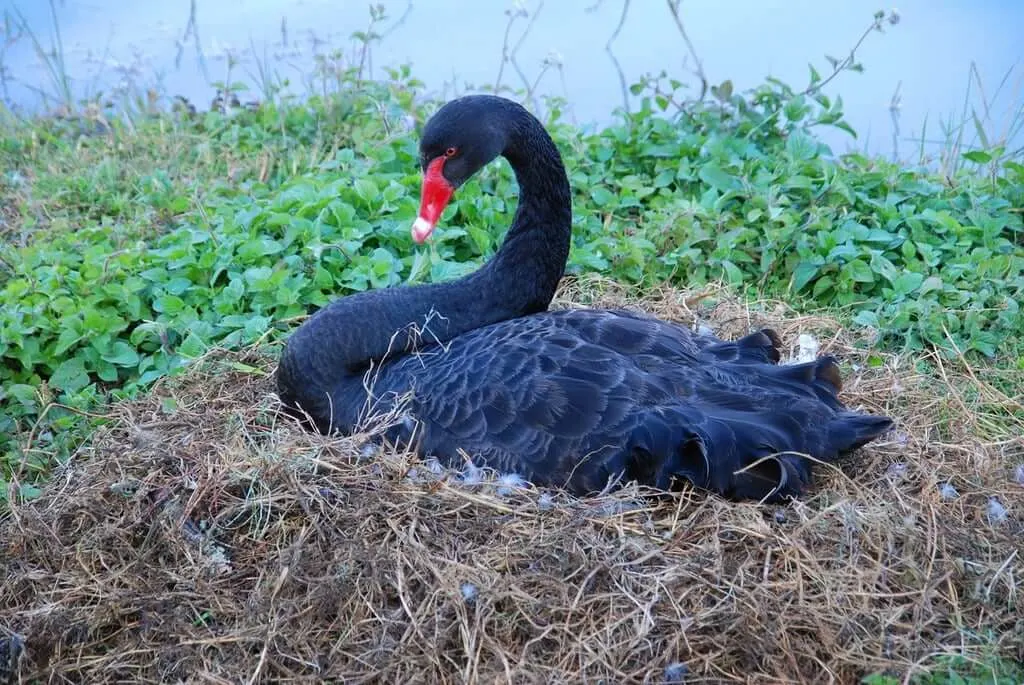
Their flocks can number in the thousands during migration, creating breathtaking scenes in the sky and on the water. This strong pair bond is similar to that seen in other swan species, such as the Black Swan, which also forms lifelong monogamous relationships.
Diet and Feeding Habits
These swans are herbivorous and forage both in water and on land. Their diet includes:
- Aquatic plants and tubers
- Grasses and grains (especially in farmlands)
- Algae and pondweed
They often feed by tipping forward in the water, reaching down with their long necks to graze. In agricultural areas, they have adapted to feeding on leftover grains in harvested fields, which provides a crucial food source during winter months.
Migration and Range
One of the most amazing traits of the Tundra Swan is its long migration:
- Travels up to 4,000 miles between breeding and wintering grounds
- Common winter locations include the Atlantic and Pacific coasts, the Great Lakes, and California’s Central Valley
- Flocks fly in V-formations, communicating through constant vocalizations
Their migration is one of nature’s most inspiring events and is closely watched by birders across the continent. Recent tracking studies have shown that some individuals complete their journey in as little as three weeks, making nonstop flights of up to 12 hours over open water.
Reproduction and Cygnets
Breeding occurs in the high Arctic:
- Females lay 3 to 5 eggs in shallow nests made of moss and down
- Incubation lasts about 30 days, primarily done by the female
- Young cygnets can swim within hours of hatching
Families migrate together, and parents fiercely protect their young from predators. This protective behavior is a hallmark of swan parenting, ensuring that cygnets have the best chance of survival during their first perilous year.
Health and Conservation
Tundra Swans are currently considered stable, but they face several threats:
- Habitat loss due to development and climate change
- Collisions with power lines during migration
- Exposure to pollutants and lead shot in wetlands
Conservation efforts focus on preserving migration routes, reducing pollution, and monitoring population health. Organizations like the U.S. Fish and Wildlife Service conduct annual surveys to track population trends, and recent data shows that the Eastern Population has remained relatively stable at around 100,000 birds. However, climate change poses a growing risk to their Arctic breeding grounds, where warming temperatures are altering the tundra ecosystem.
Human Connection
Tundra Swans are beloved by birdwatchers, nature photographers, and wildlife researchers. Ethical birding and habitat protection projects help humans coexist peacefully with these majestic birds. They are often seen at national wildlife refuges during migration, offering a magical sight for those lucky enough to witness them. For beginners interested in swan watching, the Tundra Swan is an excellent species to start with due to its widespread winter distribution and approachable nature.
Fun Facts About Tundra Swans
- A group of swans in flight is called a “wedge.”
- They communicate with over a dozen vocal sounds
- Their migration flights can last up to 12 hours nonstop!
- Cygnets are born gray and gradually become white as they mature
Frequently Asked Questions
Q1: Are Tundra Swans the same as Trumpeter Swans?
A: No, while they look similar, Tundra Swans are smaller and have a distinctive yellow spot near the eyes. Their calls are also higher-pitched. For a detailed comparison, see our guide on the Trumpeter Swan.
Q2: Where can I see Tundra Swans in the U.S.?
A: Popular viewing spots include Chesapeake Bay, California’s wetlands, and the Great Lakes during migration and winter months. Many national wildlife refuges offer viewing platforms and guided tours during peak migration periods.
Q3: What do Tundra Swans eat?
A: Their diet consists of aquatic vegetation, grasses, and grains. In winter, they may feed in agricultural fields, particularly on leftover corn and soybeans.
Q4: Are Tundra Swans endangered?
A: No, their population is considered stable, but continued conservation is essential due to habitat changes and migration risks. Climate change remains the most significant long-term threat to their Arctic breeding grounds.
Q5: How long do Tundra Swans live?
A: In the wild, they can live 10 to 20 years, with some reaching up to 25 years under ideal conditions. Banding studies have recorded individuals exceeding 20 years of age.
Conclusion
The Tundra Swan is a stunning reminder of nature’s seasonal rhythms. From their icy Arctic homes to their winter wetlands, these elegant travelers show resilience and grace in every phase of their journey. Whether you are a seasoned birder or a curious nature lover, observing a flock of Tundra Swans in flight is an experience that stays with you forever. As we work to protect wetlands and migratory paths, we help ensure future generations can marvel at the beauty and spirit of the Tundra Swan. To learn about other magnificent swan species, explore our complete collection of swan breeds from around the world.