Leopard Gecko – Complete Care Guide for Beginners
Leopard Geckos are popular, gentle, and easy-to-care-for reptiles that make excellent first pets for new reptile owners. Unlike many exotic pets that require complex setups, the leopard gecko thrives with a straightforward habitat and a consistent feeding routine. This guide covers their appearance, housing, diet, handling, common health issues, and simple care tips to keep them healthy and calm for years to come.
What is a Leopard Gecko?
The Leopard Gecko (Eublepharis macularius) is a ground-dwelling lizard native to parts of Asia, including Afghanistan, Pakistan, and India. It is known for its spotted pattern, stout body, and friendly nature. Unlike many geckos, leopard geckos have eyelids and a calm temperament, which makes them one of the most beginner-friendly reptiles available. If you are exploring other beginner-friendly reptiles, you might also enjoy learning about the Corn Snake, another gentle and easy-to-care-for species.
Appearance and Morphs
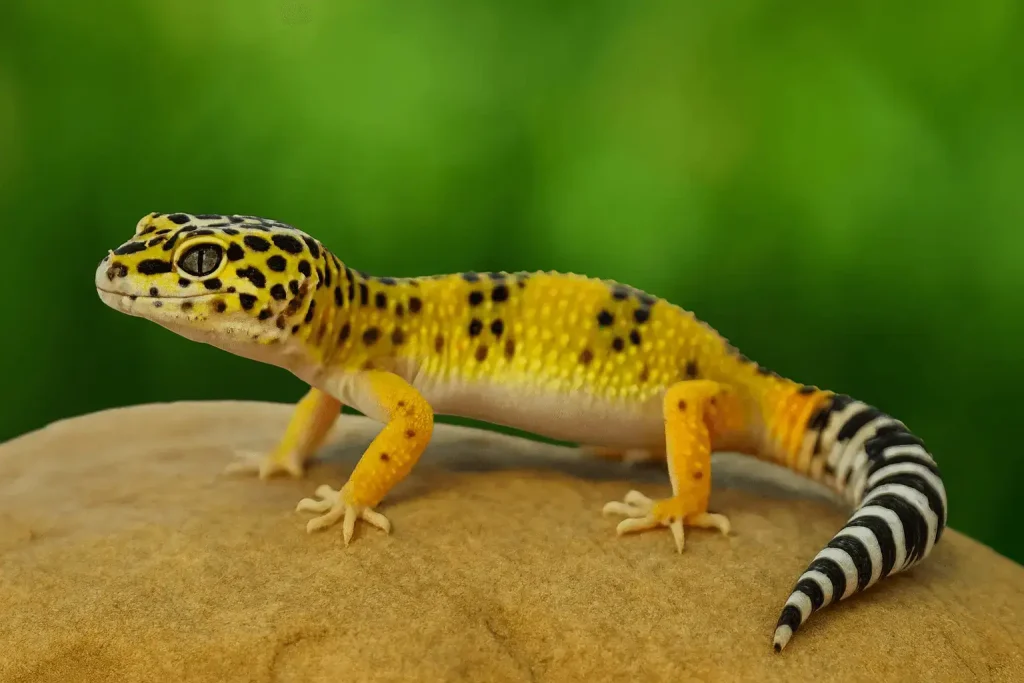
Wild-type leopard geckos have yellow to tan skin with dark spots. Captive breeding has produced many morphs that change color, pattern, or eye type. Common morphs include albino, tangerine, blizzard, and patternless. The variety of morphs available today is staggering, with new combinations appearing regularly through selective breeding programs.
Housing Essentials
A good enclosure keeps a leopard gecko safe and stress-free. Use the following as a basic checklist.
- Tank size: Minimum 20 gallons for one adult gecko. A 40-gallon breeder tank is even better for enrichment.
- Substrate: Use reptile carpet, tile, or paper towels. Avoid loose sand for young geckos to prevent impaction. For adults, a bioactive substrate mix can work well with proper drainage.
- Hide boxes: Provide at least three hides — warm, cool, and moist (for shedding).
- Temperature: Warm side 88–92°F (31–33°C). Cool side 75–80°F (24–27°C).
- Heating: Use an under-tank heater (UTH) or heat mat connected to a thermostat. Avoid hot rocks, as they can cause burns.
- Lighting: Leopard geckos are crepuscular. UVB is optional, but low-level UVB (2-5%) can support calcium metabolism and overall health when provided on a 12-hour photoperiod.
- Humidity: Keep ambient humidity 30–40%. Provide a moist hide with sphagnum moss for shedding.
Diet & Feeding
Leopard geckos are insectivores. A varied, gut-loaded diet helps them stay healthy. Feed appropriately sized live insects — the prey item should be no larger than the space between the gecko’s eyes.
- Main foods: Crickets, dubia roaches, mealworms, black soldier fly larvae. Rotating these insects prevents nutritional deficiencies and keeps your gecko interested in eating.
- Supplementation: Dust insects with calcium at most feedings. Use a multivitamin powder weekly. For geckos kept without UVB, use a calcium powder that contains vitamin D3.
- Feeding schedule: Juveniles: daily. Adults: every 2–3 days.
- Water: Always provide a shallow bowl of fresh water. Change it daily to prevent bacterial growth.
Handling & Temperament
Leopard geckos are generally calm and tolerate handling well when introduced correctly. Start slowly and keep sessions short — 5 to 10 minutes at a time is ideal for building trust.
- Approach from the side rather than above to avoid startling.
- Support their body and do not grab the tail; they can drop it to escape as a defense mechanism.
- Allow the gecko to walk onto your hand. Offer short, frequent handling sessions to build familiarity.
Common Health Issues
Knowing common problems helps with early detection and treatment. Many health issues in leopard geckos stem from improper husbandry, so maintaining correct temperatures and humidity is your best prevention.
- Impaction: Caused by ingesting substrate or large prey. Use safe substrates and monitor feeding. Signs include a swollen belly and lack of appetite.
- Metabolic Bone Disease (MBD): Results from calcium or vitamin D3 deficiency. Use proper supplements and UVB if advised. Symptoms include soft jaw, tremors, and difficulty walking.
- Shedding problems: Retained shed on toes or tail can cause constriction and loss of digits. Provide a moist hide and proper humidity. Soak the gecko in shallow warm water if shed does not come off.
- Parasites & respiratory infections: Watch for weight loss, wheezing, or runny eyes. Seek a reptile vet immediately if you notice these signs.
Breeding Basics
Breeding leopard geckos requires experience and preparation. Key points to consider before attempting to breed:
- Sex adults carefully; males may fight if housed together. Males have visible hemipenal bulges and femoral pores.
- Provide seasonal temperature shifts to mimic natural cycles. A cooling period of 60–70°F for 6–8 weeks can help trigger breeding behavior.
- Egg incubation requires consistent moisture and temperature control. Incubate at 80–90°F depending on desired sex ratio.
- Only breed if prepared for hatchling care and finding homes. A single clutch can produce 2 eggs, and females can lay multiple clutches per season.
Starter Checklist for New Owners
- 20–40 gallon tank (depending on plans)
- Under-tank heater and thermostat
- Safe substrate (tile or reptile carpet)
- Three hides: warm, cool, and humid
- Digital thermometer and hygrometer
- Feeder insects, calcium, and multivitamin powder
- Reptile-safe cleaning supplies
FAQ: Leopard Gecko
How long do leopard geckos live?
With proper care, leopard geckos often live 10–20 years. Some reach 20+ years in excellent conditions. This long lifespan means they are a significant commitment, similar to other long-lived pets like the Ball Python, which can also live 20–30 years with good care.
Can leopard geckos live together?
Housing multiple geckos can be risky. Males will fight. A single male with multiple females requires experience and careful monitoring. Even females can become aggressive if space or resources are limited.
Do they need UVB light?
UVB is not strictly required, but low-level UVB (2-5%) can support overall health and calcium metabolism. Many keepers use UVB safely with a proper photoperiod. If you choose not to use UVB, ensure your calcium supplement contains vitamin D3.
What temperature is best for breeding?
Breeding setups often use a warm side around 88–92°F (31–33°C) and a cooler side of 75–80°F (24–27°C). Seasonal temperature variation helps trigger breeding behavior. A cooling period of 6–8 weeks at 60–70°F is commonly used before introducing males to females.
What food should I avoid?
Avoid wild-caught insects (risk of pesticides and parasites) and large prey items that exceed the size of the gecko’s head. Also avoid feeding only one type of insect, as this can lead to nutritional imbalances over time.
Final Notes
Leopard geckos are resilient and rewarding pets that can bring years of enjoyment. They require a stable habitat, a balanced diet, and gentle handling. Regular vet checks and attention to environmental quality will keep them healthy for many years. For keepers interested in expanding their reptile collection, the Green Tree Python offers a more advanced challenge with stunning visual appeal, while the Corn Snake remains another excellent beginner-friendly option. Start with the basics, observe your gecko daily, and you will quickly learn to read its behavior and needs.