Qinling Panda – The Rare Brown Bear of China’s Mountains
Introduction to the Qinling Panda
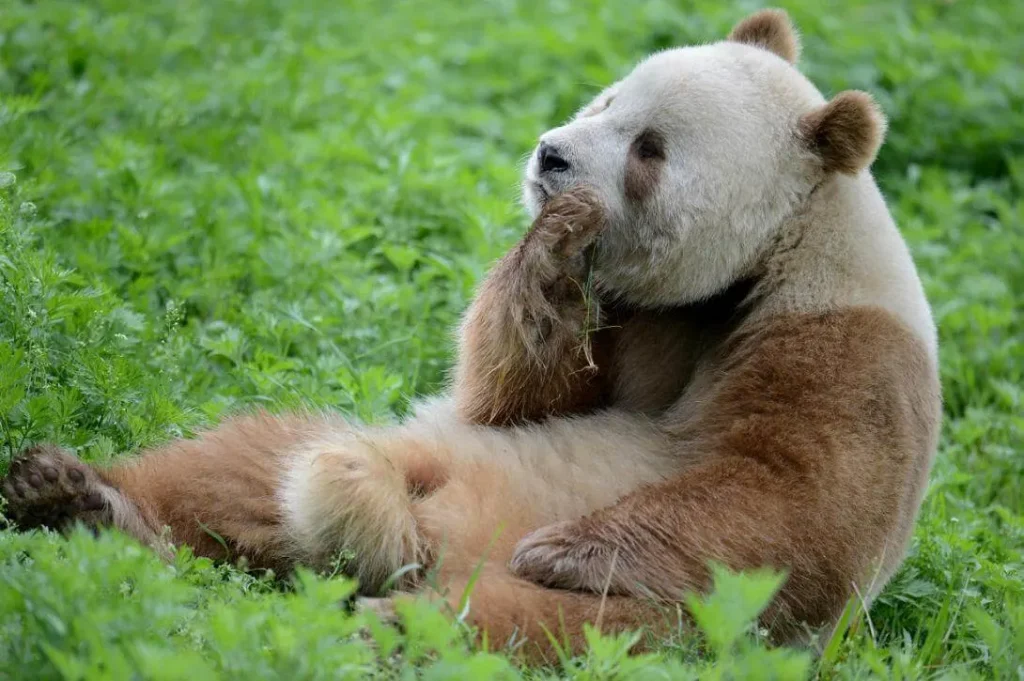
Imagine a panda that looks like it stepped out of a sepia-toned photograph. The Qinling Panda is a rare and fascinating subspecies of the Giant Panda, found only in the remote Qinling Mountains of central China. Unlike the iconic black-and-white Giant Panda, the Qinling Panda is known for its unique brown-and-tan coloration, making it one of the most visually distinctive bears in the world. This subspecies is not just rare—it is a symbol of the ecological richness and mystery of China’s mountainous regions. With fewer than 300 individuals remaining in the wild, this elusive bear is even rarer than its better-known cousin, the Giant Panda, and its survival depends on urgent conservation action.
Scientific Classification
- Scientific Name: Ailuropoda melanoleuca qinlingensis
- Common Name: Qinling Panda
- Family: Ursidae (bear family)
- Subspecies of: Giant Panda (Ailuropoda melanoleuca)
- Conservation Status: Endangered
- Habitat: Qinling Mountains, Shaanxi Province, China
Unique Appearance
The Qinling Panda stands out from its black-and-white relatives due to:
- Brown and light brown fur instead of black-and-white
- Smaller skull and shorter snout than the standard Giant Panda
- Similar body size, averaging 70–100 kg in weight
- Golden-brown rings around the eyes
This rare coloring is believed to be a result of genetic variation or environmental adaptation. Recent genetic studies suggest the brown coat may be linked to a recessive gene that is more common in the isolated Qinling population.
Natural Habitat
The Qinling Panda lives in an isolated mountain region:
- Endemic to the Qinling Mountains in Shaanxi, China
- Dense temperate forests at elevations of 1,300–3,000 meters
- High rainfall, foggy conditions, and rich bamboo undergrowth
- Habitat fragmentation due to road building and deforestation
This remote habitat is also home to other rare species, such as the critically endangered South China Tiger, making the region a priority for biodiversity conservation.
Diet and Feeding Habits
Like all pandas, the Qinling Panda is a bamboo specialist:
- Diet is 99% bamboo shoots, stems, and leaves
- Occasionally eats eggs, insects, or small mammals
- Spends up to 14 hours daily feeding
- Has strong molars and jaw muscles adapted for crushing bamboo
Reproduction and Life Cycle
Qinling Pandas have a similar reproductive cycle to Giant Pandas:
- Mating season occurs between March and May
- Gestation period is 95 to 160 days
- Typically, one cub is born, blind and tiny (around 100 grams)
- Cubs stay with their mothers for up to 18 months
- Lifespan: 20 years in the wild, up to 30 years in captivity
Threats and Challenges
Qinling Pandas face serious conservation challenges:
- Habitat loss from human activity and development
- Vulnerable to diseases due to a small population
- Genetic bottleneck due to limited gene pool
- Climate change is affecting bamboo availability
These threats are compounded by the subspecies’ extreme isolation. Unlike the broader Giant Panda population, which has seen recovery efforts pay off in recent decades, the Qinling Panda remains highly vulnerable. Conservationists draw lessons from protecting other rare species, such as the Red Panda, which faces similar habitat pressures in the eastern Himalayas.
Conservation Efforts
Efforts to protect the Qinling Panda include:
- Qinling Panda Reserves were established in Shaanxi Province
- Scientific research to understand genetic traits and health
- Reforestation and habitat restoration programs
- Wildlife corridors to connect fragmented habitats
- Public education campaigns about their uniqueness
In 2024, Chinese authorities expanded protected areas within the Qinling Mountains, creating new wildlife corridors to connect isolated panda populations. These corridors are designed to reduce inbreeding and improve genetic diversity, a strategy that has proven effective for other rare wild animals breeds around the world.
Qinling Panda vs Giant Panda
| Feature | Qinling Panda | Giant Panda |
|---|---|---|
| Coloration | Brown and tan | Black and white |
| Location | Qinling Mountains | Sichuan, Gansu, Shaanxi |
| Skull Size | Smaller | Larger |
| Population | Less than 300 | Over 1,800 |
| Rarity | Extremely rare | Rare |
Interesting Facts About Qinling Pandas
- First discovered in the 1960s and officially classified as a subspecies in 2005
- Their brown color might be a mutation or an inbreeding effect
- Sightings are so rare that each one makes headlines
- Fewer than 300 are believed to exist in the wild
Cultural Significance
Though lesser known than their Giant Panda relatives, Qinling Pandas are beginning to gain attention:
- Seen as symbols of the unique biodiversity of the Qinling Mountains
- Used in academic and genetic research for conservation
- Featured in Chinese art as mysterious forest guardians
Why the Qinling Panda Matters
Preserving the Qinling Panda helps protect a whole ecosystem:
- Ensures biodiversity in China’s central mountains
- Aids the survival of many species sharing the same habitat
- Provides critical data for panda evolution and genetics
- Acts as a flagship species for regional conservation
Frequently Asked Questions
Q1: What makes the Qinling Panda different from other pandas?
A: Its brown-and-tan fur, smaller skull, and restricted range in the Qinling Mountains make it a unique subspecies.
Q2: How many Qinling Pandas are left?
A: Fewer than 300 are estimated to be alive in the wild, making them extremely rare.
Q3: Can Qinling Pandas breed with Giant Pandas?
A: Yes, they can interbreed, but due to their isolation, this rarely occurs in nature.
Q4: Are Qinling Pandas more endangered than Giant Pandas?
A: Yes. While Giant Pandas are listed as Vulnerable, Qinling Pandas are considered endangered due to their small and isolated population.
Q5: Are there any Qinling Pandas in captivity?
A: Very few exist in captivity, and they are mainly part of Chinese conservation and research programs.
Conclusion – Protecting a Rare Mountain Treasure
The Qinling Panda is one of the rarest animals on Earth, a mysterious gem hidden in China’s lush mountain forests. With its brown fur, gentle behavior, and limited range, this panda subspecies reminds us how diverse—and fragile—our natural world truly is. Protecting the Qinling Panda means preserving an entire ecosystem, from the bamboo forests it depends on to the countless other species that share its mountain home. As conservation efforts continue to expand, there is hope that this rare brown bear will survive for generations to come.