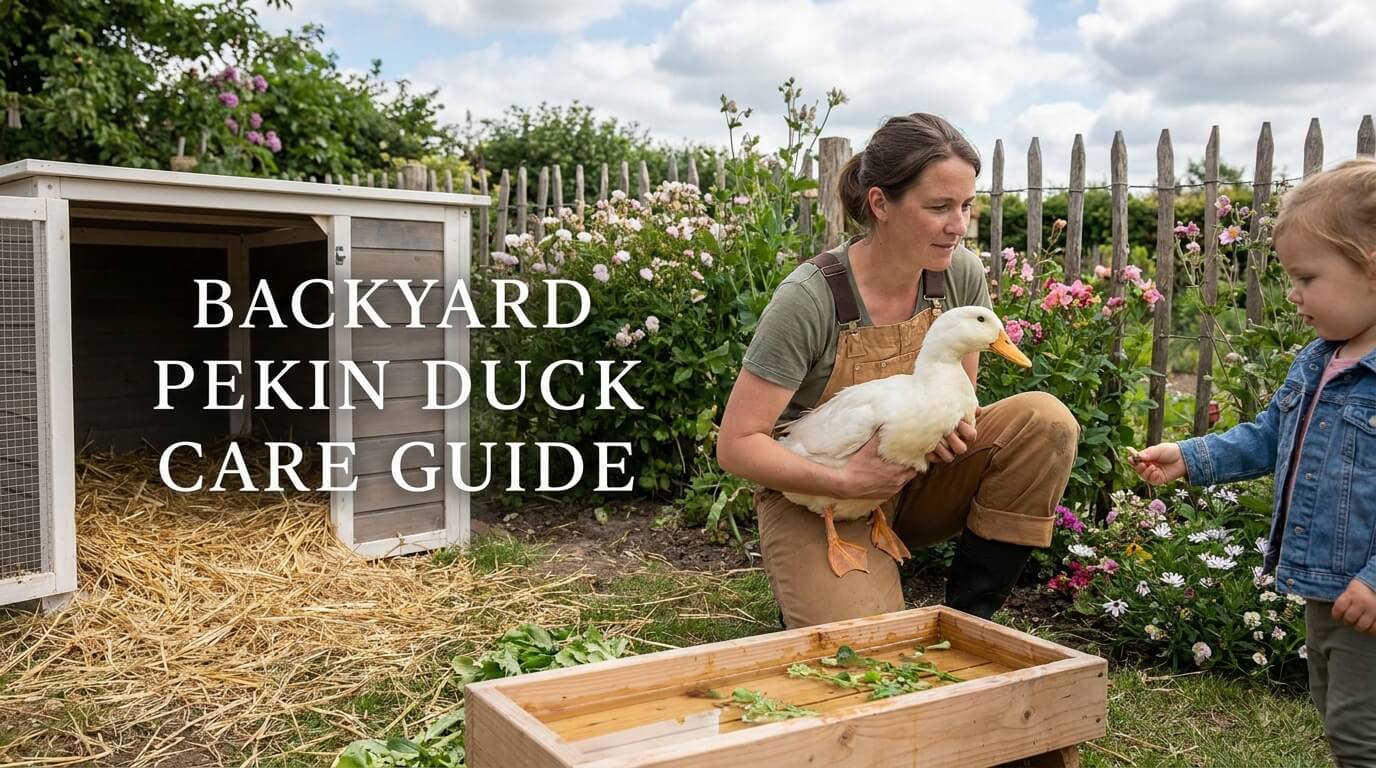
The American Pekin is a well-known domestic duck breed that many backyard keepers choose for calm behavior and manageable care. This breed fits common pet and backyard setups when owners can provide secure shelter, clean water, and consistent duck breed care. Owners who want a sturdy, friendly Pekin duck often start with a simple routine and then build from there.
What Is An American Pekin Duck?
The American Pekin is a domesticated duck breed developed from Pekin duck lines and shaped for daily farm and backyard use. Many people recognize this duck by its solid white feathers, broad body, and steady temperament.
Breed Origin And General History
American Pekin ducks come from long-running Pekin duck breeding programs focused on meat production and reliable growth. Over time, the domestic duck breed became common in small flocks and starter backyard poultry groups. Today, many backyard ducks owners keep Pekin ducks as calm companions as well as practical farm animals.
Key Traits Backyard Keepers Notice First
Backyard keepers often notice the American Pekin’s broad, stocky build and thick body form. Many owners also report a friendly, calm temperament that makes routine care simpler than with more nervous breeds. Compared with smaller duck breeds, this bird often reaches a substantial body size, which can influence coop spacing and feed needs.
Appearance And Physical Features
A beginner-friendly way to evaluate American Pekin appearance starts with body shape, feather quality, and basic posture. Healthy ducks usually look smooth, solid, and alert during normal daily activity.
Typical Size, Body Shape, And Weight Range
Expect a broad chest, thick rounded body, and a sturdy stance. Males and females may differ in overall size, so weight and body condition matter more than exact numbers. Body condition scoring helps identify underfeeding or overeating early, before issues become obvious.
- Broad chest with a heavy, rounded body
- Normal posture includes steady standing and active walking
- Body condition improves with correct feeding and clean housing
Color, Bill, And Feet Markings
Most American Pekin ducks show white feathers with light-colored bills and feet. Minor variations can appear depending on breeding line genetics, but the overall look remains recognizable. Owners should still use daily care observations, because feather dullness, swelling, or unusual discharge can signal health issues even when coloration looks normal.
What Healthy Plumage Looks Like
Healthy plumage should lay smoothly without bald patches or large gaps. Oily, ragged, or heavily soiled feathers can point to skin irritation, wet bedding exposure, or dirty water routines. Bright, clear eyes and normal head posture provide a simple baseline check for daily wellness.
Temperament And Personality For Backyard Flocks
Temperament strongly affects daily handling and how well a backyard setup supports stress-free duck breed care. The American Pekin is commonly described as steady and easygoing, which helps beginners manage routines.
Typical Social Behavior With Other Ducks
American Pekin ducks often form flock order naturally, even when kept with other ducks. Mixed age groups can still show mild chasing during early settling, but space reduces repeated stress. Owners who keep backyard ducks in a secure, roomy run usually see calmer group dynamics.
- Steady social behavior in most backyard flocks
- Flock order still forms, especially with mixed ages
- Space reduces stress and reduces chasing
Interaction With People And Handling Tolerance
Many owners report that American Pekin ducks habituate quickly to feeding time and daily checks. Gentle, predictable handling helps prevent fear responses and improves cooperation during health checks. Short sessions with calm movement and regular routines work better than long handling periods.
Activity Level And Curiosity Signs
Healthy ducks often forage actively when conditions feel safe and food or forage is available. They typically explore, eat, and rest in predictable cycles. Sudden hiding, very low activity, or staying away from water can indicate illness and should prompt closer observation.
Exercise And Enrichment Needs
Exercise and enrichment support normal comfort, natural foraging behavior, and consistent preening. Even though the American Pekin is calm, backyard keepers still need a safe plan for movement and mental engagement.
Daily Foraging Time And Safe Space
Provide a secure outdoor area where the duck can graze and forage safely. Predator control matters for backyard ducks, so owners should use fencing or netting and check for weaknesses after storms. Rotating access areas can help reduce mud buildup, which lowers wet-bedding problems and helps feet stay comfortable.
Swimming And Water Play Basics
Water supports preening and overall comfort for a domestic duck breed. A safe setup includes easy entry and exit, along with a non-slippery surface around the water. Clean and refreshed water also reduces odor and disease risk compared with stagnant water that turns dirty quickly.
Enrichment Ideas Without Overcomplication
Enrichment can stay simple and still work well for the American Pekin. Scattering feed encourages natural search behavior, and placing sturdy objects gives safe exploration points. Shade, dry resting areas, and wind protection help prevent stress during extreme weather.
- Scatter feed to encourage search and pecking
- Add sturdy objects for safe exploration
- Provide shade and dry resting spots
Housing Essentials For American Pekin Ducks
Housing determines how easily owners maintain dry, clean duck housing and stable daily comfort. The American Pekin benefits from a sheltered indoor sleeping area and a protected outdoor run that supports clean routines.
Coop Size And Space Requirements
Plan indoor space for dry resting, comfortable sleeping, and easy turning without piling. Overcrowding raises stress and speeds up waste buildup, which increases ammonia exposure. Adequate room also helps ducks keep distance during minor conflicts.
- Dry resting space for each duck
- Room to stand and turn without crowding
- Avoid piling that traps dampness and waste
Bedding, Ventilation, And Dryness Targets
Use absorbent bedding to manage moisture that comes from water use and wet feet. Maintain steady airflow to help reduce ammonia buildup, which can harm breathing. Spot cleaning daily prevents odors from building, and deeper bedding changes should follow when materials become damp or soiled.
Outdoor Run Setup And Predator Protection
Outdoor safety needs secure fencing, hardware cloth in gaps, and careful coverage of openings predators could enter. Secure gates and inspect the run after storms or heavy winds, since small gaps can appear quickly. When the outdoor space remains secure, backyard ducks can roam with less stress.
Weather Protection In Cold And Heat
Provide shelter from wind and wet conditions during cold weather and avoid drafts that increase chilling. During hot weather, shade and airflow protect ducks from heat stress, and owners should monitor for open-mouth breathing and reduced activity. Wet, muddy areas should be managed to prevent feet and skin irritation.
For additional waterfowl comparisons that can help with planning, owners often cross-check housing ideas from Pekin duck profiles like Pekin Duck (American Pekin) and similar backyard keepers’ guides.
Diet And Nutrition For A Healthy Pekin Duck
Diet drives growth, egg production for appropriate females, and day-to-day health in the American Pekin. A strong duck diet plan also supports stable droppings and reduces digestive upsets tied to sudden feed changes.
Core Feed Options For Domestic Ducks
Use a duck starter feed for ducklings, because young birds need balanced protein and minerals for early development. As the duck matures, use an appropriate grower or layer formulation based on age and purpose. Keep feed available in clean, covered containers to reduce contamination from moisture, pests, and spoiled ingredients.
- Duck starter feed for ducklings
- Appropriate grower or layer feed as mature
- Covered containers reduce spoilage and contamination
Feeding Schedule That Works For Backyard Keepers
Many backyard keepers feed once or twice daily depending on forage access and flock routine. Owners should refill after leftovers are removed and keep feed amounts consistent to prevent excess calories. Fresh water should stay available at all times, because water quality and digestion connect closely in ducks.
Safe Treats And Forage Additions
Vegetables can work as small, occasional treats when offered in limited portions. Natural grass and insects can supplement diet when outdoor areas remain safe from toxins and heavy pesticide exposure. Treats should not replace the main feed, because duck breed care depends on a balanced base diet.
- Small vegetable portions as occasional treats
- Forage and insects when the yard stays safe
- Keep treats as a minor part of daily calories
Foods To Avoid
Avoid any duck diet ingredient that looks moldy, smells off, or has spoiled during storage. Do not offer salty or sugary foods, since these can harm digestive balance and overall health. Owners also need to avoid toxic plants and unsafe yard items, because ducks can peck and ingest unintended materials.
How To Tell If Feeding Is On Track
Healthy American Pekin ducks tend to show steady weight gain appropriate to age and active foraging behaviors. Very rapid weight gain can suggest excess calories, while watery droppings and poor appetite may point to diet issues. When droppings change suddenly, check feed type and water quality first, then observe for other symptoms.
Some owners also compare feed plans with other upright foragers like Indian Runner Duck to understand how foraging style can affect enclosure design and feeding timing.
Grooming Care Tips And Cleanliness Habits
Grooming for the American Pekin often means managing cleanliness rather than frequent bathing. Strong cleanliness habits protect feather condition, reduce odor, and lower the chance of foot problems tied to damp ground.
Routine Preening Support And Water Management
Provide water for normal preening behavior, since ducks use water to keep feathers in workable condition. Clean water reduces contamination and helps prevent foot problems that can start from wet, dirty surfaces. Owners should avoid long periods of standing dirty water, because it increases bacteria exposure and increases dampness around the enclosure.
Bedding Changes And Waste Control
Spot clean daily to reduce ammonia exposure in the duck housing area. Replace bedding whenever it becomes damp or visibly soiled, since wet materials raise moisture against the skin and feathers. Manage runoff so water does not spread into sleeping areas, because dryness keeps feet and skin healthier.
Quick Health Checks During Grooming
Daily grooming moments double as health checks for feet, feathers, and overall posture. Check feet for swelling, cracks, or limping and look for feather loss or skin irritation around the body. Monitor eyes, nostrils, and posture, because breathing changes and alertness shifts can show up before major illness develops.
Training And Handling For Beginners
Training improves safety and care efficiency by reducing stress during routine tasks like feeding, pen entry, and health checks. American Pekin ducks often respond well to calm, consistent training routines.
How To Approach And Calm An American Pekin Duck
Move slowly and avoid sudden grabbing, since ducks startle quickly when handling feels unpredictable. Use consistent cues for feeding and routine checks so the bird learns what to expect. Start with short sessions and calm handling, then increase duration only when the duck stays relaxed.
Teaching Simple Routines Like Getting Into A Pen
Use the same time and the same pathway each day when closing pens. Reward calm movement with small allowed treats and avoid chasing, because chasing increases panic. Sessions should stay short and end before stress increases, especially for new ducks learning the routine.
Safe Handling During Health Checks
Support the body to avoid twisting and keep handling gentle during leg, foot, and vent area checks. Check legs and feet for swelling or limping and watch skin areas for irritation. If stress rises, return the duck to a dry, warm area and reassess later rather than forcing more handling.
Owners with mixed flocks sometimes compare handling style across other breeds such as the Rouen Duck to adjust space needs and reduce stress during routine barn tasks.
Common Health Issues And When To Get Help
Most health problems in the American Pekin connect to housing dryness, water cleanliness, diet balance, and early detection. Owners can reduce risk with preventive care and by responding quickly when symptoms appear.
Preventive Care That Lowers Risk
Keep housing dry and well ventilated, because moisture and ammonia exposure often worsen breathing and skin problems. Quarantine new birds before mixing with the flock so illnesses do not spread unnoticed. Maintain clean water and food containers, since dirty supplies raise contamination risk in backyard ducks.
- Keep bedding dry and airflow consistent
- Quarantine new birds before mixing
- Clean water and feed containers regularly
Respiratory Issues And Wet Cough Clues
Watch for nasal discharge and labored breathing in daily observations. Ammonia from dirty bedding can worsen breathing, so bedding changes often improve comfort quickly. Isolate sick ducks when needed to limit spread and to support focused care.
Digestive Problems And Dietary Triggers
Monitor appetite and droppings consistency as an early health signal. Sudden diet changes can upset digestion, so adjustments should occur gradually when possible. Persistent diarrhea needs prompt diagnosis because it can cause dehydration and nutrient loss.
Foot Problems And Skin Irritation
Wet, dirty ground can irritate feet and lead to limping. Check for swelling and limping during routine care and improve dryness and traction before relying on treatments. Better drainage and cleaner walking areas often prevent recurring problems.
Parasites And When Deworming Is Considered
External parasites can cause itching, feather damage, and restless behavior. Internal parasites can affect weight and energy, which can look like a general decline in activity. Use a veterinarian plan for fecal testing and treatment so deworming happens for the right reason.
Warning Signs That Need Veterinary Care
Loss of appetite for a full day can become serious, especially in young or otherwise healthy ducks. Open-mouth breathing, severe lethargy, or major weakness requires urgent help. Bloody droppings or significant injuries also warrant immediate veterinary attention to protect recovery chances.
Starter Checklist For New American Pekin Duck Owners
A good setup prevents many common problems before they start. This starter checklist helps backyard keepers prepare for a smooth first week of duck breed care.
Must Have Items Before Bringing Ducks Home
Secure coop space and create a predator-proof outdoor run before the ducks arrive. Plan duck-appropriate feed and reliable clean water access, because routine feeding depends on simple, repeatable supplies. Prepare absorbent bedding, cleaning tools for spot work, and non-slip water entry and exit space.
- Predator-proof coop and outdoor run
- Duck-appropriate feed for age and clean water access
- Absorbent bedding and spot cleaning tools
- Non-slip water entry and exit space
- Isolation plan for any sick duck
First Week Care Routine
Keep feeding consistent with the recommended duck-appropriate formulation and a predictable schedule. Observe appetite, posture, and droppings morning and evening to detect early problems. Minimize handling stress while learning normal behavior patterns, since new environments can temporarily change activity levels.
At the same time, adjust bedding and drainage to maintain dryness in sleeping and walking areas. When the area stays mostly dry, the ducks often settle faster and show more predictable comfort behaviors.
Ongoing Monitoring That Catches Problems Early
Check weight and body condition weekly so feeding and growth stay on track. Inspect feet and feathers during routine care sessions, because small changes can forecast larger issues. Track breathing, activity, and appetite daily so health problems do not go unnoticed for too long.
Is An American Pekin Duck Right For Backyard Keepers?
The American Pekin often suits backyard keepers who want a friendly, calm domestic duck breed that tolerates routine care. This duck also works well when owners can provide dry housing, clean water, and daily monitoring for common health signals.
May Be A Strong Fit If Backyard Care Habits Are In Place
American Pekin ducks do well when daily checks cover feeding, water cleanliness, bedding dryness, and basic foot and feather inspection. They also benefit when owners plan secure shelter from predators and adjust routines for weather changes. For people looking for a beginner-friendly starting domestic duck breed, the temperament often makes routines easier.
May Not Be The Best Fit If
American Pekin ducks may not fit if outdoor space cannot be predator-proofed or if wet bedding and waste management cannot stay consistent. They also become harder to manage when owners cannot monitor ducks daily, since early signs of illness require prompt response. Without these care basics, duck housing and duck health targets are difficult to maintain.
FAQs: American Pekin Duck Care For Backyard Keepers
How Much Space Does An American Pekin Duck Need In A Backyard Run?
Provide enough space to avoid overcrowding and piling. Give room to stand, turn, and access dry resting spots with predator protection.
What Should American Pekin Ducks Eat Every Day?
Feed a duck-appropriate formulation based on the duck’s age. Provide fresh water at all times, and use treats and forage only as extras.
Do American Pekin Ducks Need A Pond To Stay Healthy?
American Pekin ducks benefit from water for comfort and preening. A safe, clean water setup with easy entry and exit can work, and dirty standing water should be avoided.
How Can Backyard Keepers Prevent Foot Problems In Pekin Ducks?
Keep bedding and the walking ground as dry as possible. Provide traction and check feet daily for swelling, cracks, or limping.
What Are Common Signs American Pekin Ducks Are Sick?
Watch for reduced appetite, major drop in activity, breathing trouble, and nasal discharge. Persistent diarrhea, limping, or isolation behavior also signal a need for closer evaluation.
How Long Do American Pekin Ducks Typically Live?
Lifespan depends on housing quality, diet balance, and disease control. Healthy ducks with good care can live for several years, and prompt veterinary help improves outcomes when illness appears.
Final Note On American Pekin Duck Care
American Pekin duck care becomes easier when routines stay consistent and housing stays dry, clean, and secure. With steady feeding, clean water, and daily health checks, the Pekin duck often settles well into backyard life.